
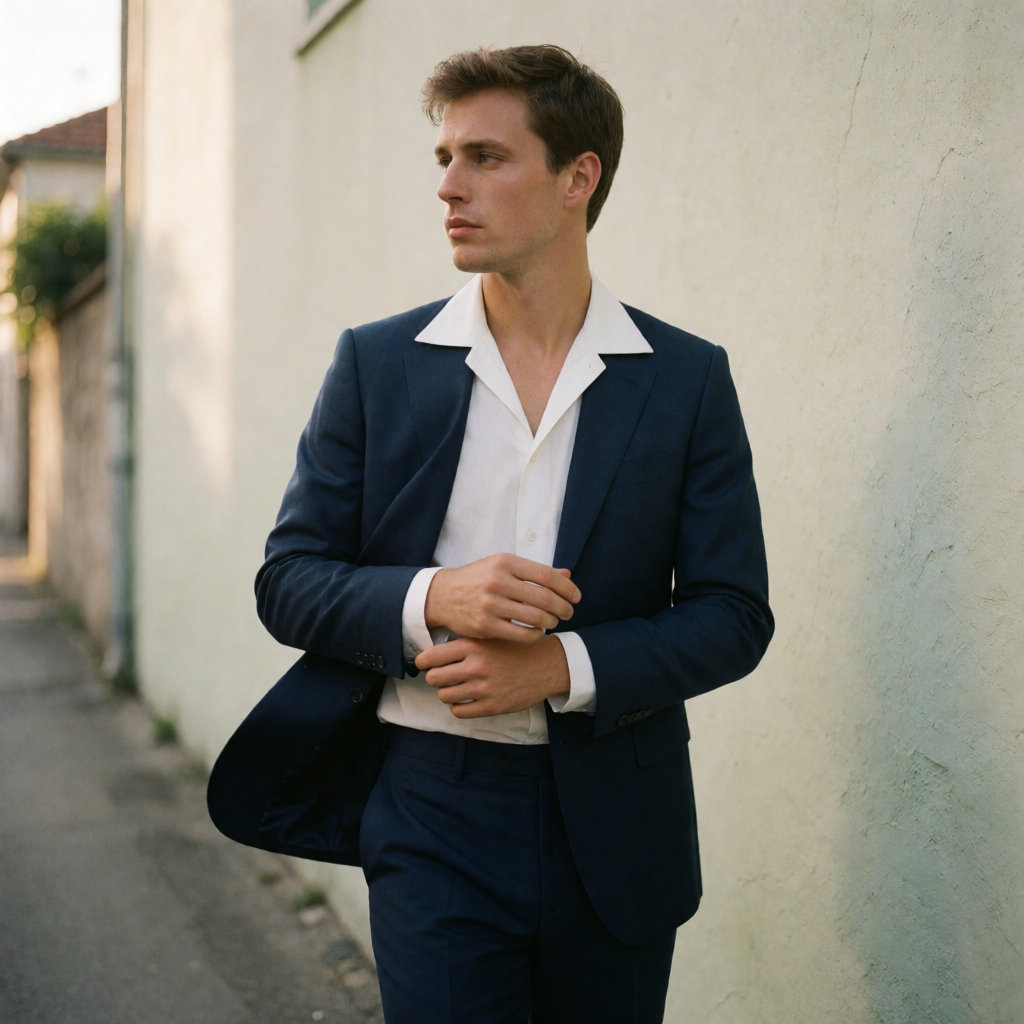
You flick through a fashion magazine, land on a man in a nipped-in jacket, and think: these days it isn't cinema setting the trends — it's the actors on the red carpet. An open shirt, a long coat, a shoulder sitting exactly right: three details are all it takes for a supporting role to become a campaign face. The wardrobe now carries almost as much weight as the filmography, and the fashion houses have clocked it.
The silhouette first, the role second
You've probably noticed it: a few years ago, a breakout actor dressed "well", but you couldn't have told anyone how his jacket was cut. Now it's the other way round. The man playing the second lead in a sci-fi series becomes, within two seasons, the face of a house looking for exactly that kind of presence — neither too polished nor too buttoned-up. Houses aren't hunting for the perfect model any more; they're hunting for an attitude. And the season ahead only reinforces it: we want character, fabric that lives, shoulders that say something.
What's changed is that men's fashion — or at least its most visible shop window — no longer settles for dressing interchangeable silhouettes. It plays on very different kinds of presence — the lanky and the solid, the austere and the sunny — because a garment reads precisely through that difference. That's probably why you remember a 1.96 m frame in a calf-length coat, or a 1.78 m one in a plain white vest. Clothes don't correct, they underline.
What their wardrobes tell us
First there's the tailoring crowd, the ones who dare. The kind who stack structured coats, play with layering, slip a statement piece in where nobody expects it. With these actors, nothing is big by accident: the length, the nipped waist, the hem are thought through down to the centimetre. An open collar, a strong texture breaking up a matte block of colour, and the silhouette becomes instantly recognisable. You love it, then you think how good that kind of piece would look over a simple pair of jeans. Budget-wise, it pays to be patient.

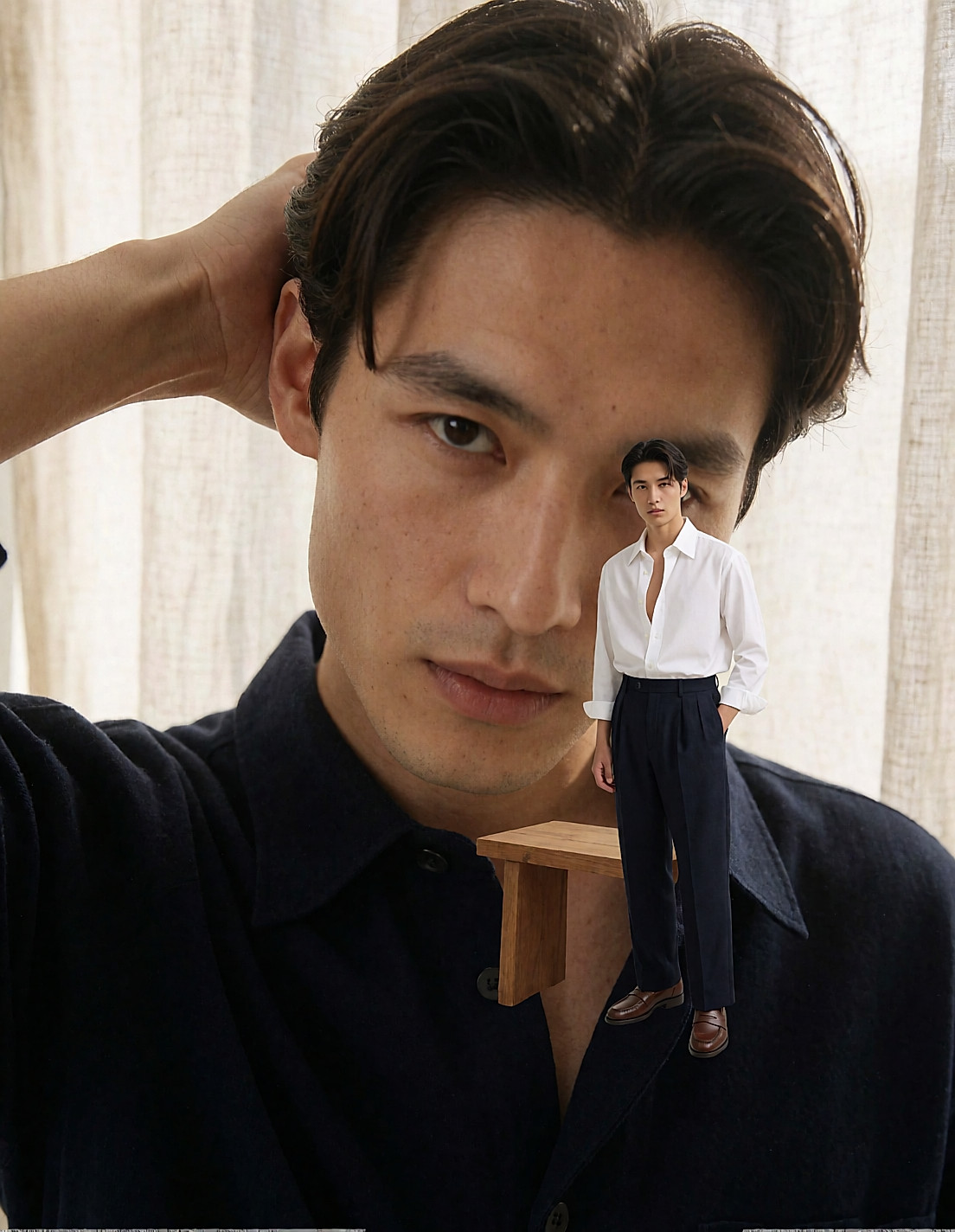
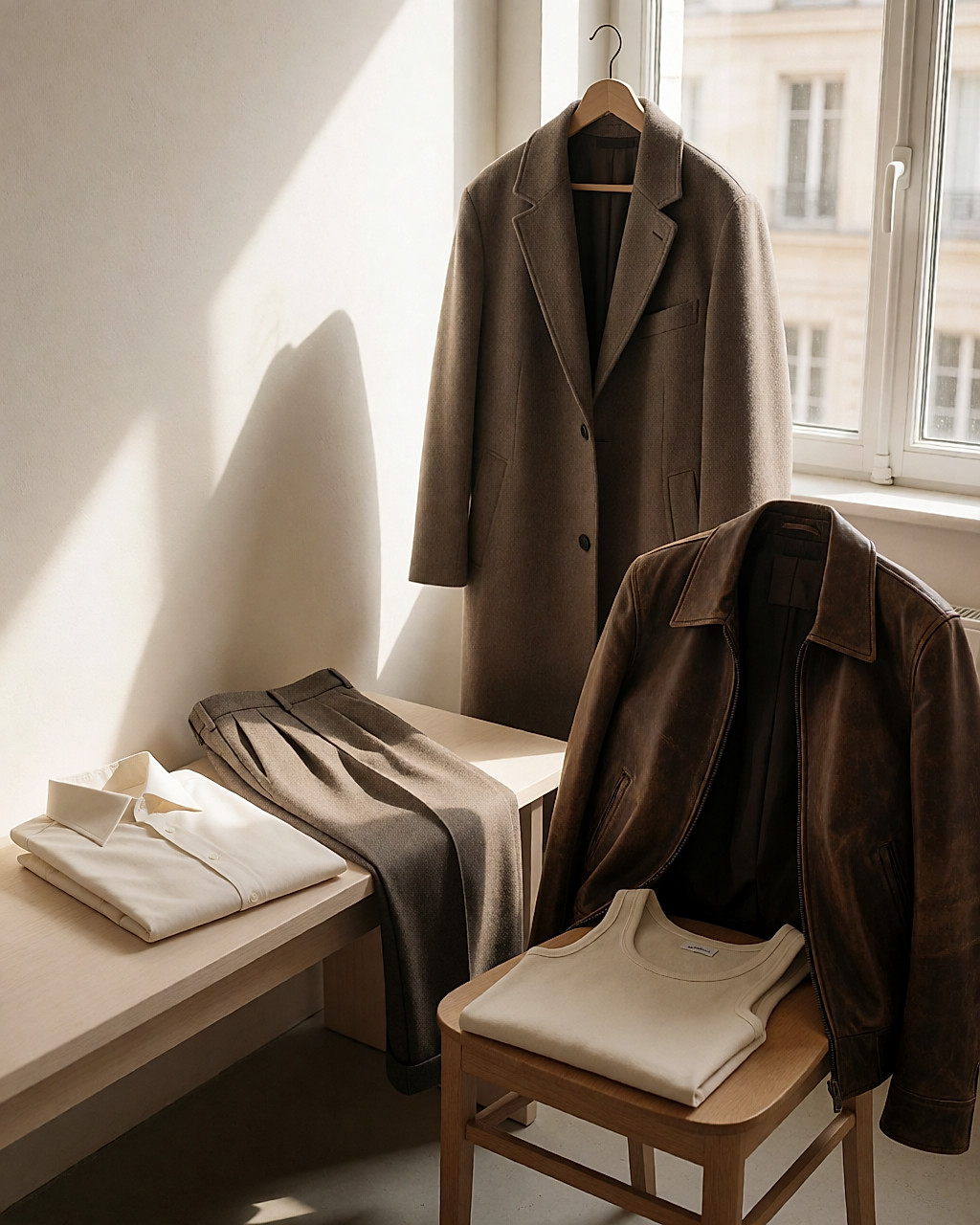
Then there are those who've understood that the classics, when they hang right, are unbeatable. A slightly open white shirt, navy pleated trousers, a loafer, and that's the whole look. Their secret is that nothing is ever snug: the straight cut does the work. The palette narrows to three colours that travel right through the wardrobe. It's soft, it's smart, it's the kind of look you could copy without breaking the bank — as long as you find the right length.
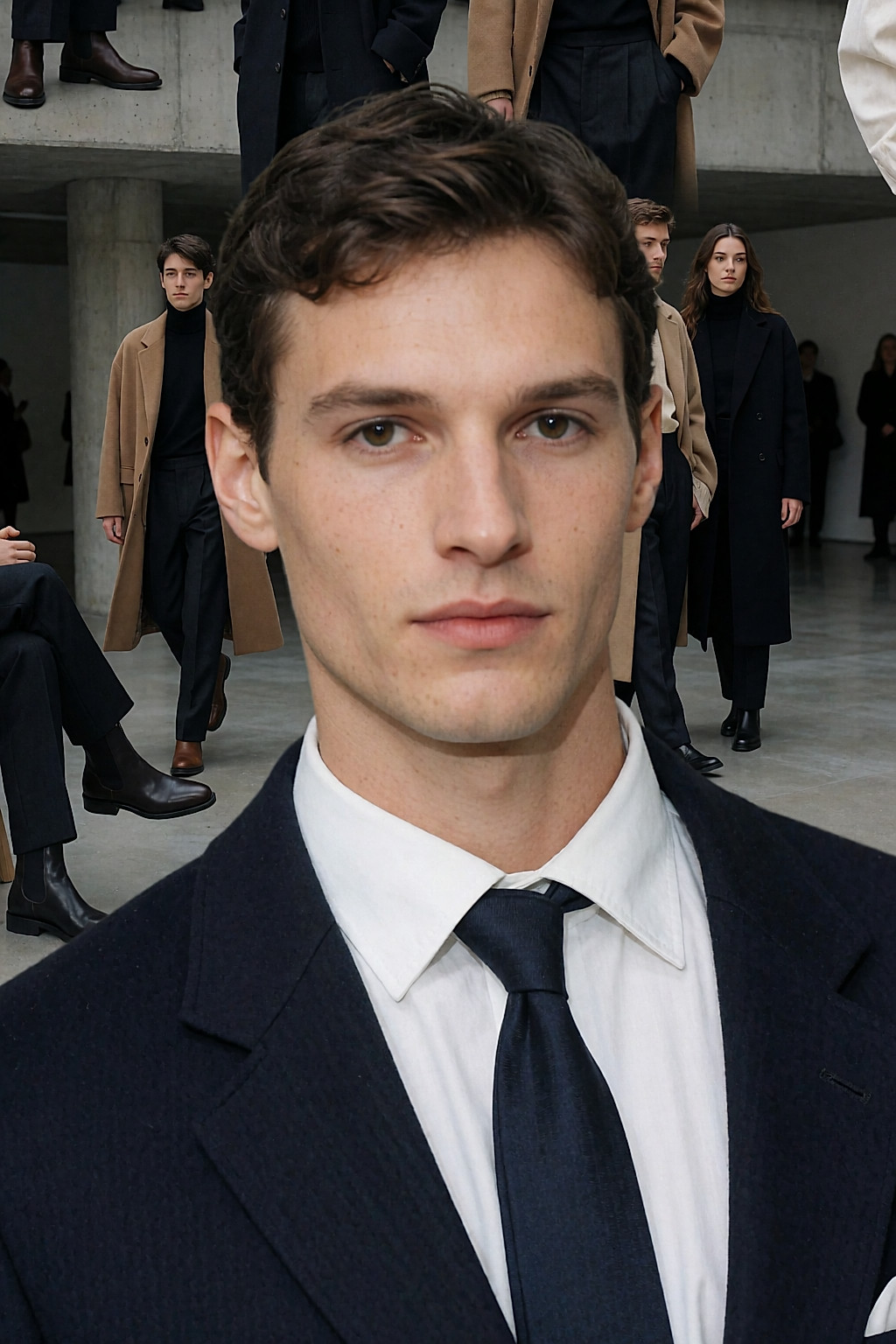
At the other end are those playing the austerity that lands. Long coats falling to the calf, patinated leathers, volumes kept in check but never overdone. One strong texture per outfit, everything else in neutral tones so nothing muddles the read. Proof that you can be minimal and striking — you just need to know where to place the one decisive note.
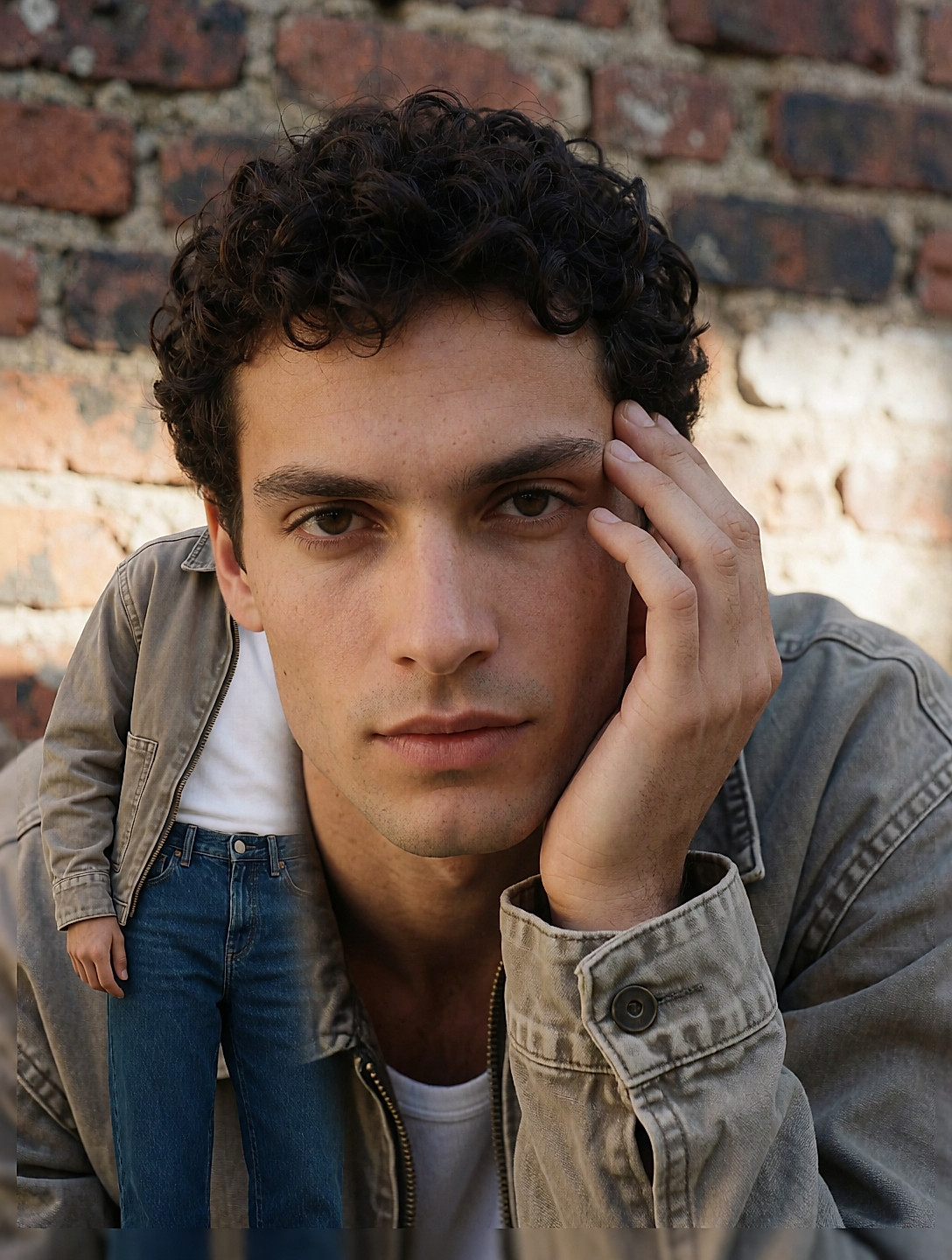
And let's not forget the ones whose wardrobe boils down to three pieces: a white vest, straight jeans, a chore jacket. Nothing invented, nothing precious. And that's exactly where it all plays out. On a basic, the slightest cutting error shows: a sleeve that gapes, a hem that drags, and the whole look collapses. Flip it around, though, and a well-placed shoulder and the right length transform the silhouette with no need for a single dramatic piece.
Second-hand: there's never been a better moment
The most interesting part is probably what's happening on the vintage rails. The men's tailoring wardrobes of the 1990s — long coats, pleated trousers, slightly oversized shirts — are flooding back into charity shops and onto resale platforms. And because these pieces were cut in an era when the straight line reigned, they often hang better than plenty of today's styles. Add a quick alteration and you get an impeccable line for next to nothing.
That's where drape comes into its own. Before you even think about colour or label, look at how the fabric falls at the shoulder and the hem. A shirt that's too light and floats badly will age a silhouette, even if it cost a fortune. After that, one strong piece per outfit: if the coat is oversized, keep the trousers straight; if the leather shines, keep everything else matte. Then bet on texture — a bouclé wool, a heavy cotton, a lightly patinated leather — rather than a print, which tends to date faster.
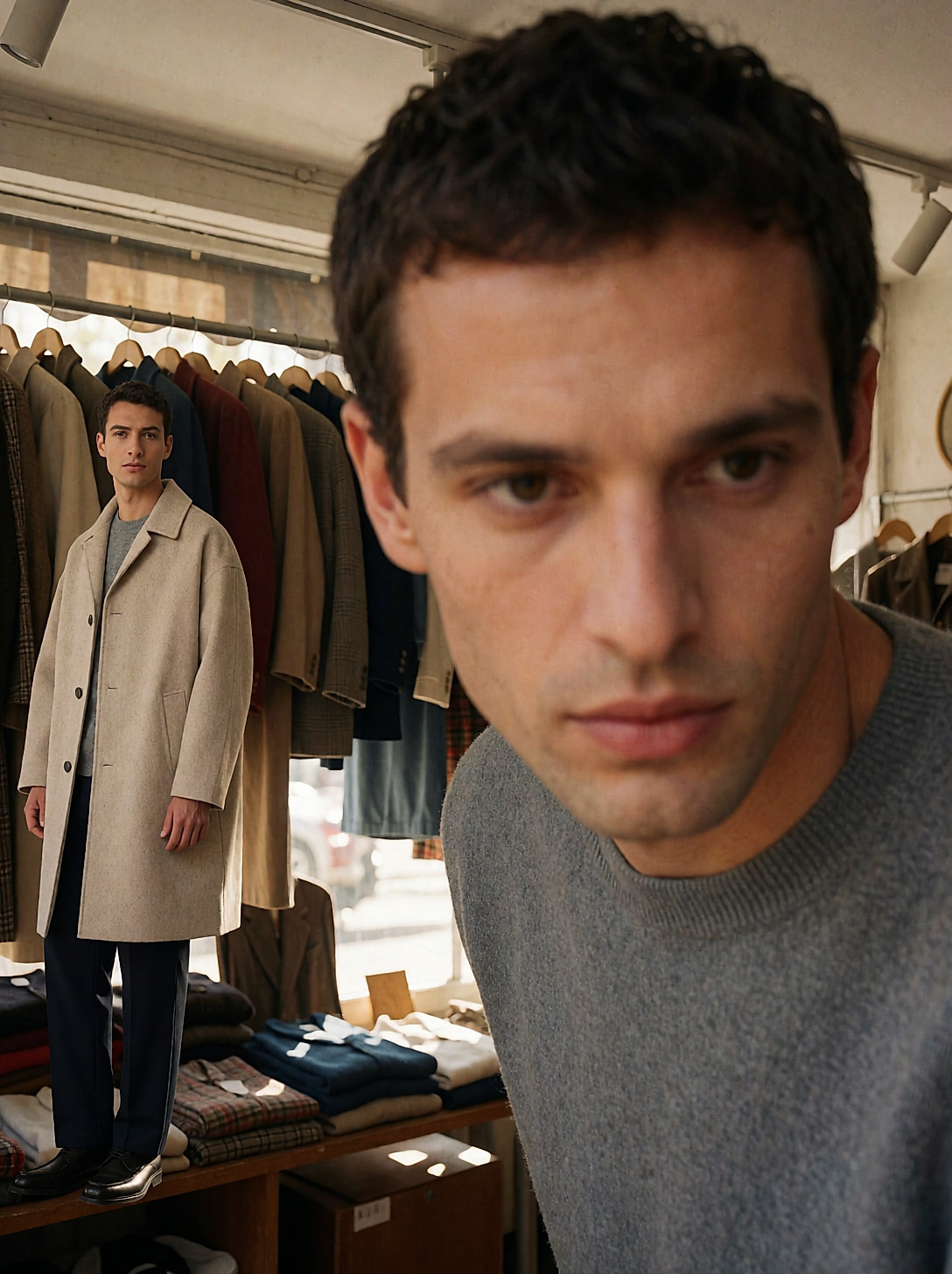
The rule of three. Before you buy a statement piece, check it works with three things you already own. If you can only find two, you'll probably wear it once. If you can find five, you've just met your statement piece. Simple, but surprisingly effective.
Budget
A few ballpark figures seen in the UK, to give you a sense of things without blowing the budget.
- Cotton shirt: around £50 to £130 new. For a version certified GOTS (organic cotton, from field to finished garment) or OEKO-TEX Standard 100 (textile tested against limit values for harmful substances), add £20 to £35. Second-hand: £13 to £35.
- Wool pleated trousers: £100 to £260. The higher the wool content, the more the price climbs. How they wear depends above all on the weave, the blend and how you care for them; a higher wool content is no absolute guarantee.
- Long wool coat: £215 to £700 new, but there are beautiful pieces to be found between £50 and £215 in charity shops and on resale platforms.
- Leather biker jacket: £260 to £1,050. Below around £170 new, be wary of the quality of the leather.
- Organic cotton vest: £20 to £40, a basic that forgives no approximation.
What moves the figure is, first, the fabric; then where it was made and where you buy it. The high street pushes prices down, second-hand lets you aim for better fabric on the same budget, and for new denim made in the UK, brands like Hiut Denim start around £150. It's up to you what matters most: the cut, the fabric, or the promise of a piece that will last ten years.


Comments
Your opinion matters: rate the article, react and reply to comments.
Comments are moderated; AI-assisted comments are flagged. Text emoticons (8-), :-), <3…) are automatically shown as images.