
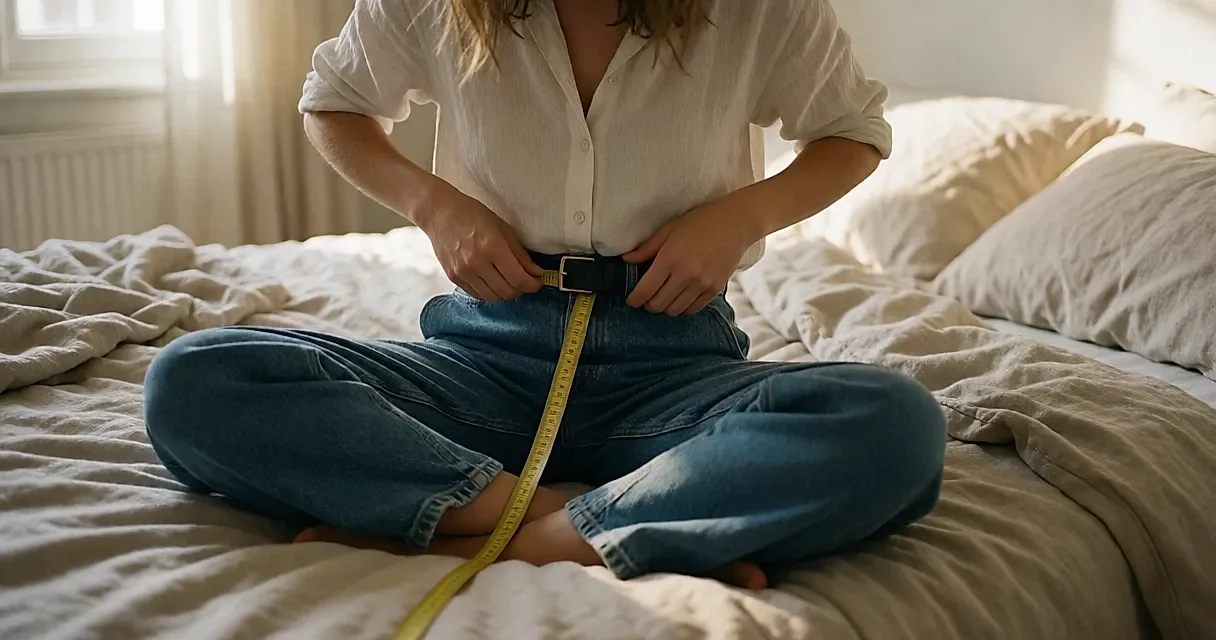
A pair of trousers can have belt loops narrower than you expect. The belt you spotted online is advertised with a generous width. You thread it through, the leather jams at the first loop, and back it goes in its box. Measure before you buy, never afterwards — and measure inside the loop.
The belt loop sets the limit
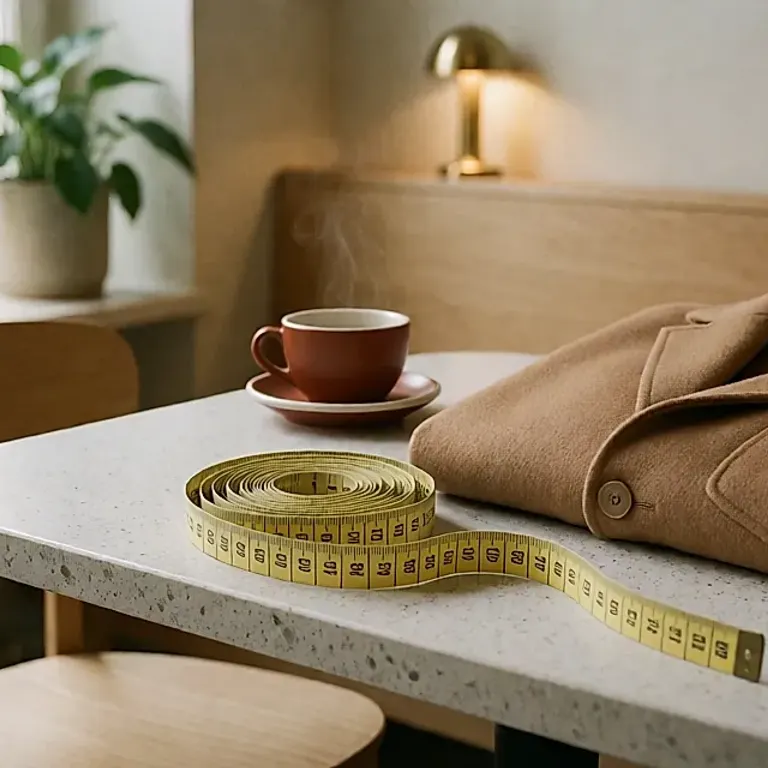
Take a sewing tape measure, or a strip of paper if you are shopping without your kit: slide it through the loop, mark it with a pencil and measure later. Check two loops, one at the front and one at the back, because they are not always stitched identically. In practice, leave a few millimetres of margin between the width of the loop and the width of the belt. Enough for the leather to slide through without forcing, but not so much that the belt floats about.
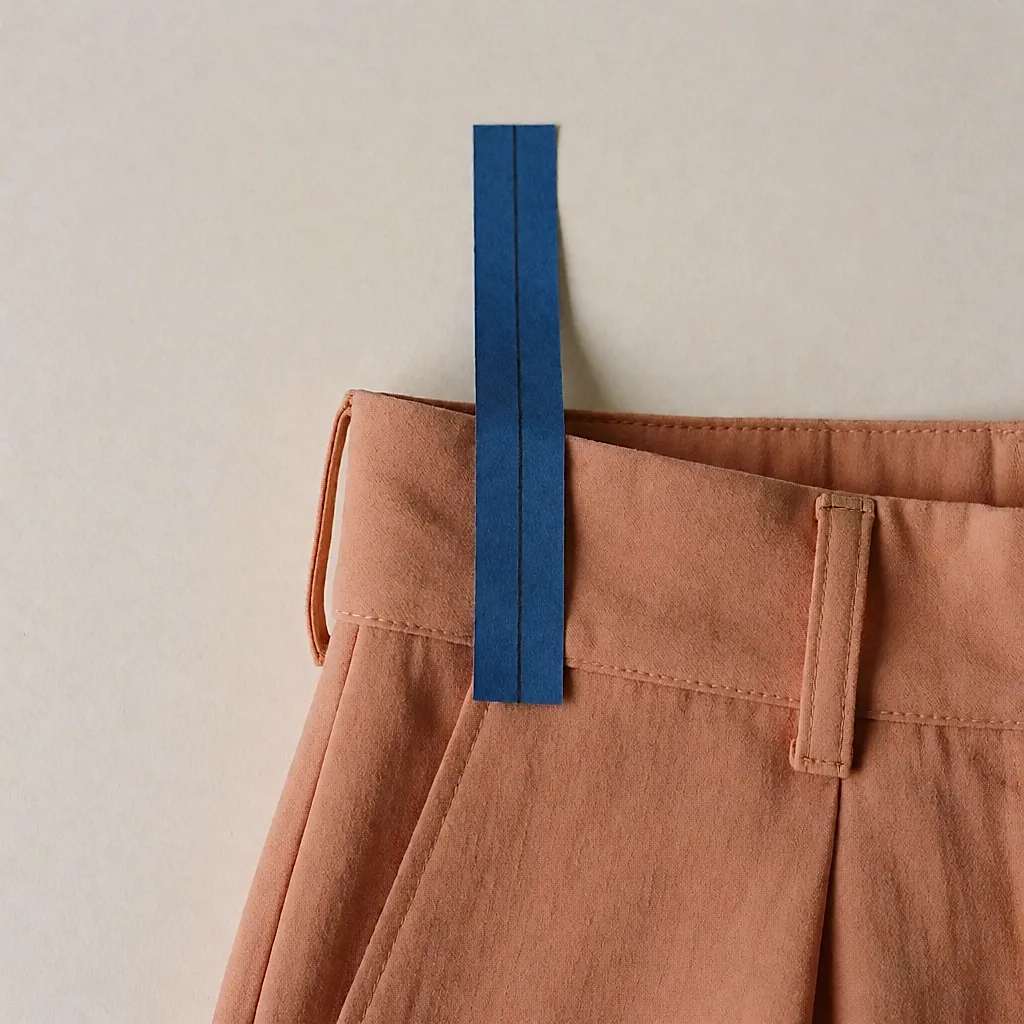
Everything then depends on the trousers. Jeans have generous loops and will take a wide belt in a workwear spirit. Chinos and tailored trousers tend to have narrower loops. Softly draped pleated trousers have slim loops that call for a narrow belt; otherwise, the fabric will pucker quickly.
And when a belt is too narrow? It twists inside the loop, fails to hold the waist and lets the trousers twist round. Less dramatic than a belt that is too wide, but just as irritating.
What an over-wide belt does to the drape
A belt is a relatively stiff band. If it is wider than the loop, it cannot lie flat against the waist: it presses on the top of the loop, pulls the fabric towards it and creates small horizontal waves all around. You will not see the result in the shop mirror; you see it after sitting down and standing up again over the course of the day.
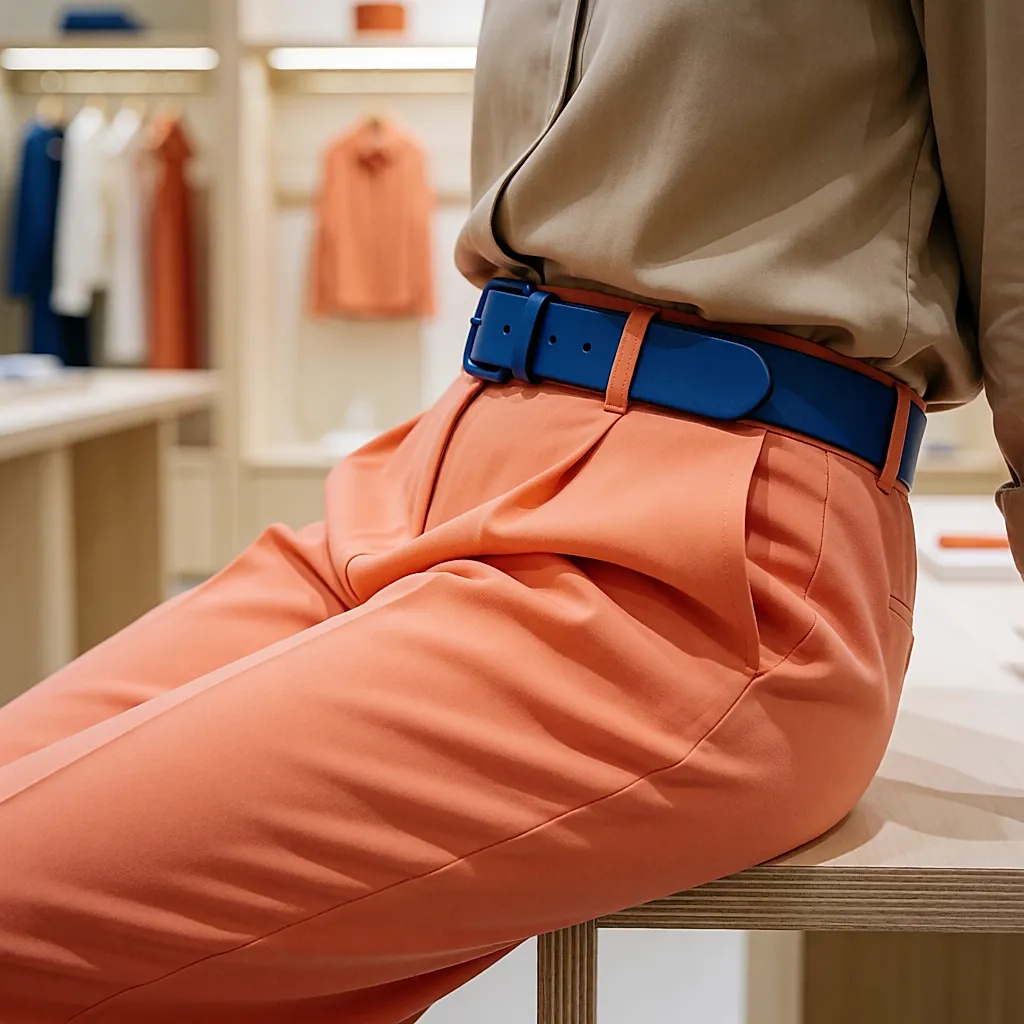
Have you hitched your trousers up fifteen times without understanding why? This is often the reason. A belt that cannot sit properly tends to slip or ride up at the back, taking the trousers with it: the waistband gapes, the crotch slips down and the crisp drape you left the house with becomes creased by the end of the day. Thick denim is forgiving. On linen, viscose or fluid wool, the mark is immediate, with a shiny crease where the leather has pressed.
A wide belt on trousers with narrow loops creates a thick horizontal line just above the hips, and the eye stops there before it takes in the outfit. It is not about body shape: it is about the proportions between the piece and what is holding it.
Two leathers, two very different outcomes
Full-grain, vegetable-tanned leather often starts a little stiff. That is normal, and not a fault: it softens exactly where your waist folds it, takes the shape of your hips and keeps fine creases rather than cracks. A piece of leather broken in over a few weeks can last for years.
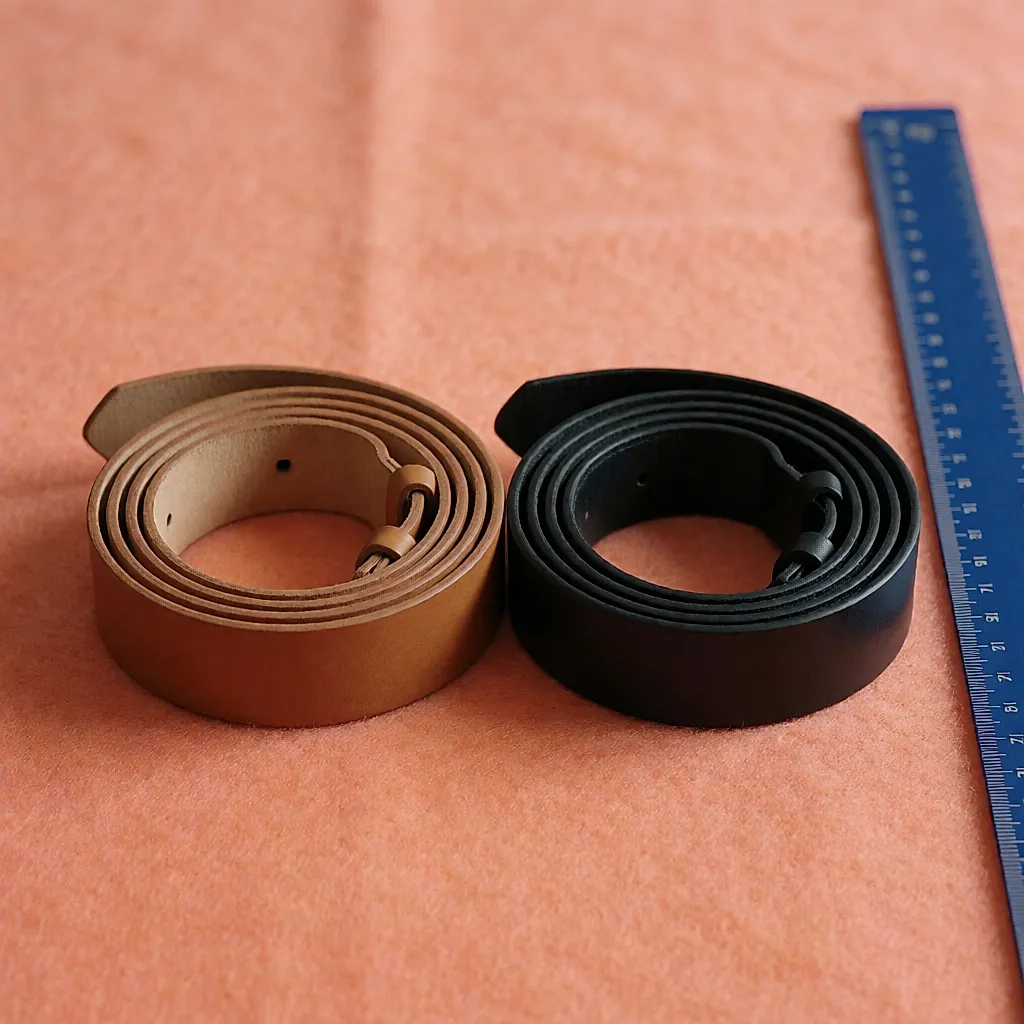
Then there is lined leather: leather assembled with a lining — textile or leather — which reinforces its structure. Do not confuse it with corrected-grain or coated leather, where split leather is covered with a smooth coating: there, it is the finish that changes.
How to spot them in ten seconds? For a lined belt, look at the cut edge: two layers of material may be visible. For corrected-grain or coated leather, look for a fibrous core under a film, a uniformly smooth surface with no pores, and a fold that whitens sharply instead of wrinkling gently. The latter is the leather that may crack at the holes, flake around the buckle and reveal a fibrous core with use.
Useful nuance: a belt lined with textile on the inside is not suspicious at all; on the contrary, it is comfortable and helps it hold its shape. The problem is corrected-grain or coated leather, not the lining.
Budget
At the lower end, you will mostly find corrected-grain or coated leather: it can do the job, and it is an acceptable choice for a coloured belt you plan to wear for one season. For a piece you intend to keep, expect to pay in the region of £60 to £130 at a leather goods shop or a small workshop that explains its tanning process; often, beyond £150, part of the price is the label as much as the leather, which is still a legitimate pleasure. For finishing touches, having an extra hole punched or a belt shortened at a cobbler often costs £5 to £15 — far less than buying a replacement. And in a charity shop, for £10 to £30, the reflex is the same: turn the belt over and inspect the cut edge.
The fitting-room test. Thread the belt through two loops before you even try on the trousers. Sit down: if the leather rides up or the fabric creases under the loops, it is a no. And if you are hesitating between two widths, take the narrower one — it is more forgiving than a wide belt.
Then there is the belt you do not buy: the one on a pair of trousers you already love, wear and have repaired. If it slips, sometimes it is just one hole short — a trip to the cobbler and it is back in service. For everything else, the method is simple: measure the loop, choose the leather, then the buckle. In that order, the belt keeps its promise — trousers that hang straight from morning to night.
Comments
Your opinion matters: rate the article, react and reply to comments.
Comments are moderated; AI-assisted comments are flagged. Text emoticons (8-), :-), <3…) are automatically shown as images.