

Gloves should be chosen inside out, lining facing you — the way you would check the inside of a jacket before taking it to the till. Right side out, everything looks good: the shape, the colour, the leather gleaming under the shop lights. Inside out, you finally see what will happen after ten minutes of walking. That is where the difference is decided between warm hands and two blocks of ice at the end of your sleeves.
What the inside tells you
Turn the pair inside out like a sock, gently, and read the lining label. Polyester? That usually means a synthetic or fleece lining, which absorbs very little — check the texture for yourself. Wool, merino wool, sometimes wool and silk: another story entirely. The second thing to check is whether the lining is stitched down at the fingertips or simply slipped inside the leather. A loose lining comes away with your hand when you pull the glove off, twists, and ends up in little clumps at the bottom of the fingers.
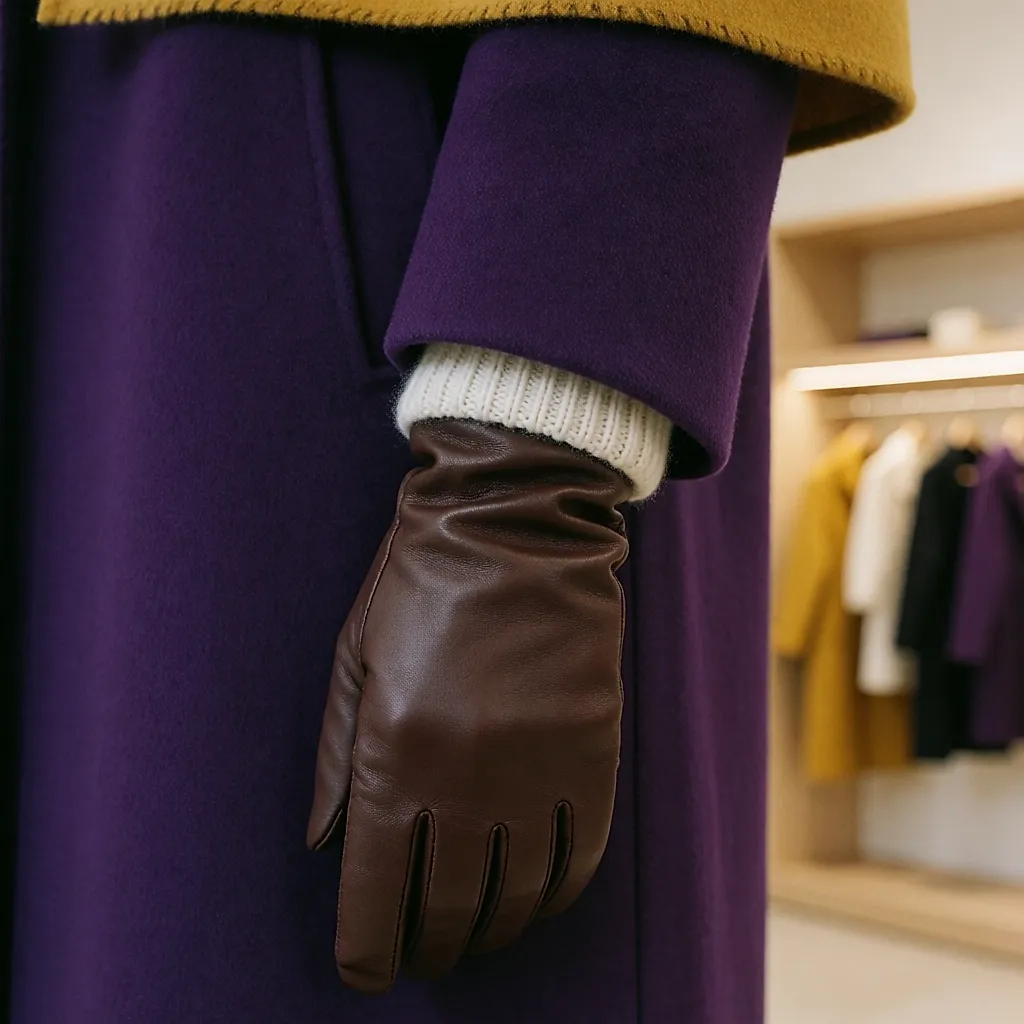
Then there is the thumb seam, the area nobody looks at and which does the most work. Inside, the seams should be flat, with no ridge pressing on the joint. Hand-stitched gloves — a few invisible stitches, often three — cost more, but the thumb is far more supple. If the budget will not stretch, at least check that nothing rubs: the thumb is what decides whether you keep the pair for ten winters or ten days.
Then comes the cuff, the poor relation. A glove that is too short lets a draught settle between sleeve and leather edge, and nobody is coming to rescue you then. The edge should cover the wrist bone and tuck under your coat sleeve. That detail already makes a big difference, especially with three-quarter-length sleeves.
Fleece or wool: what changes when you wear them
A hand sweats, even in winter. Fleece, which often absorbs very little, can leave your hand feeling clammy; wool, generally considered more absorbent, is often chosen to limit that sensation. Your hand can then turn damp, the cold settles into that thin layer of moisture, and you feel cold even in a thick glove — the opposite of the point.
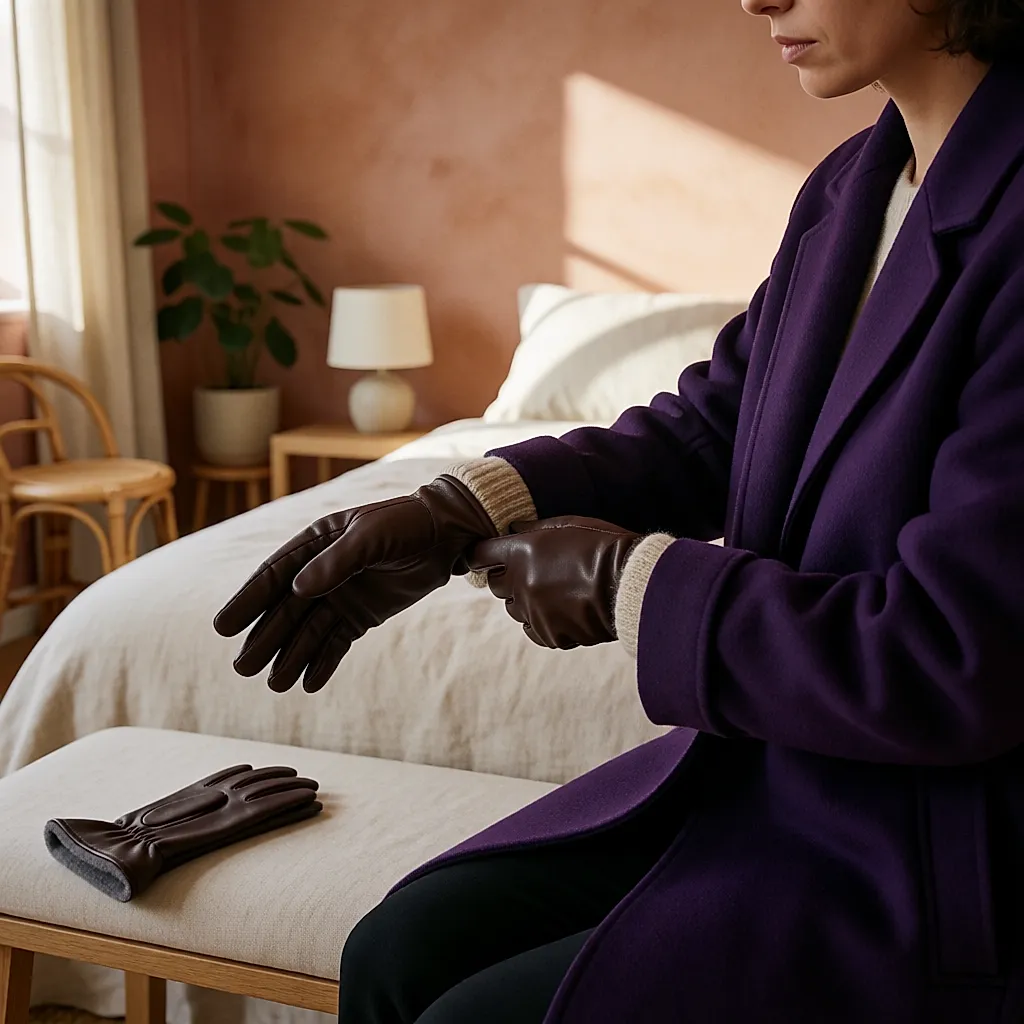
Which is why wool costs more, and why it works so well as a lining: you do not need bulk for it to do its job. One caveat — a slightly rustic wool will itch. Sensitive skin? Look for merino or a wool-cotton blend, and rub the lining against the back of your hand before you buy.
What to budget
On price, expect to pay £8 to £25 for a knitted wool pair — the basic kind that lives in your pocket and gets lost on the bus. For wool-lined leather, a reasonable range sits between £45 and £120 at a leather goods shop or a glover. Above £90 you are often paying for French manufacturing, hand stitching and a finer leather.
What moves the price: the leather (lambskin, very supple but fragile; goatskin, tougher), the lining (merino rather than basic wool), where it is made and how the cuff is finished. In charity shops or vintage, expect £10 to £35, but always turn the pair inside out: that is where you spot a dead lining or a thumb that has already worn through. The historic glovers of Millau in France, such as Agnelle, remain a reliable reference.
Greasy leather fears the radiator more than the rain
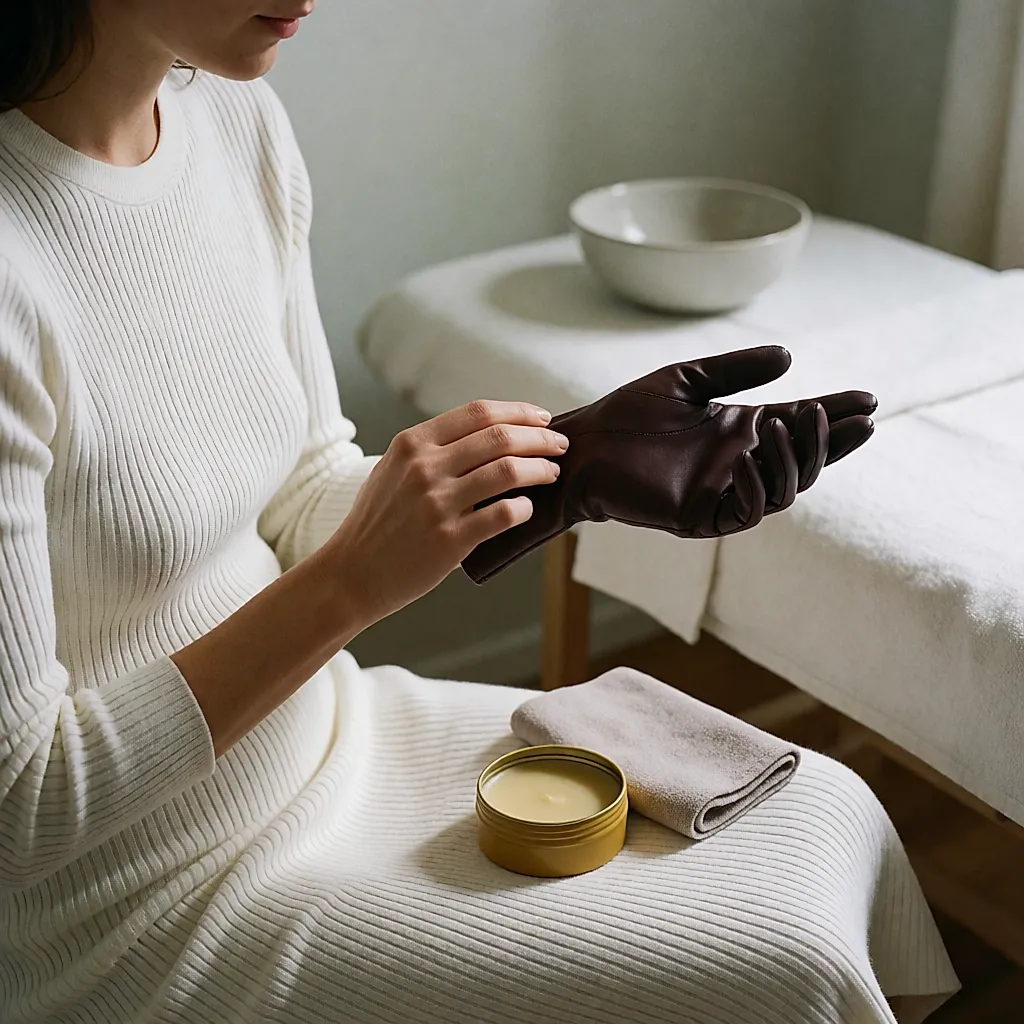
A glove in greasy leather should be cleaned dry first: a soft cloth for dust and salt marks, then, if needed, a soap made for leather. No washing machine, no drying on the radiator — heat stiffens the leather and the lining shrinks. Leave them to dry at room temperature, gloves half turned inside out so the air can circulate.
In practice, you can feed the leather once or twice a season: colourless grease or a nourishing cream, massaged into the seams and the creases at the cuff. It takes no longer than a skincare step, and it changes the look of the glove. Store them flat, never squashed under a pile of hats.
The three-step check. Turn the glove inside out and read the lining (wool rather than fleece); pinch the tip of the thumb to feel whether a raised seam presses on the joint; pull the cuff edge up under your sleeve to check there is no gap. In a few seconds you will know whether the pair deserves your card.
Next time you are torn between two pairs, turn both inside out and compare: shiny leather tells you nothing, the lining tells you everything. For £45 to £120 you can have gloves that see you through several winters — provided you check the thumb and the cuff before you get to the till, and do not leave them on a radiator. The rest is hand comfort, and you only see it from the inside.



Comments
Your opinion matters: rate the article, react and reply to comments.
Comments are moderated; AI-assisted comments are flagged. Text emoticons (8-), :-), <3…) are automatically shown as images.