
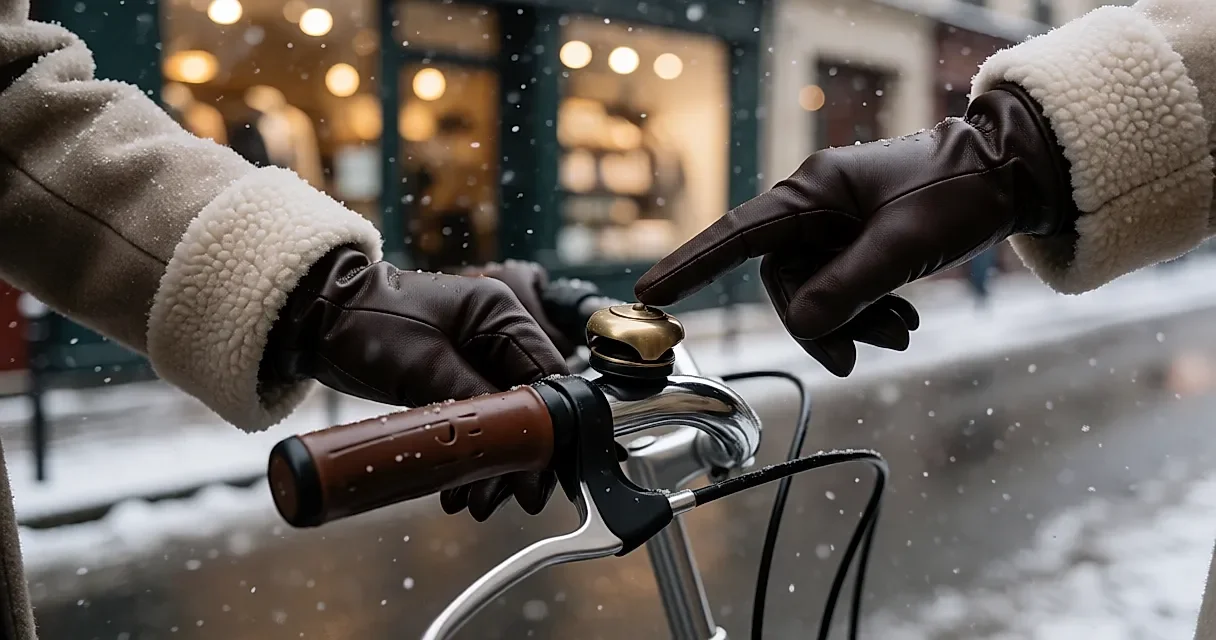
Two pairs of leather gloves can carry the same price tag and have nothing in common. One lets your fingers fish out a travel ticket; the other turns them into little flippers the moment you need to undo a coat button. The difference is not visible on the shop display: it is felt with your hand inside, and it is written on a label you rarely think to turn over.
The hand inside is the real judge
Put the glove on, push each finger right to the end, then close your fist. If the fingertips float a few millimetres short of the end, air can circulate and leave you cold — leather keeps you warm best when it sits close to the hand. If they are cramped, it is the opposite: your nail presses, the leather pulls, and after ten minutes all you want to do is take the glove off. The right length touches without squeezing and lets your thumb turn easily.
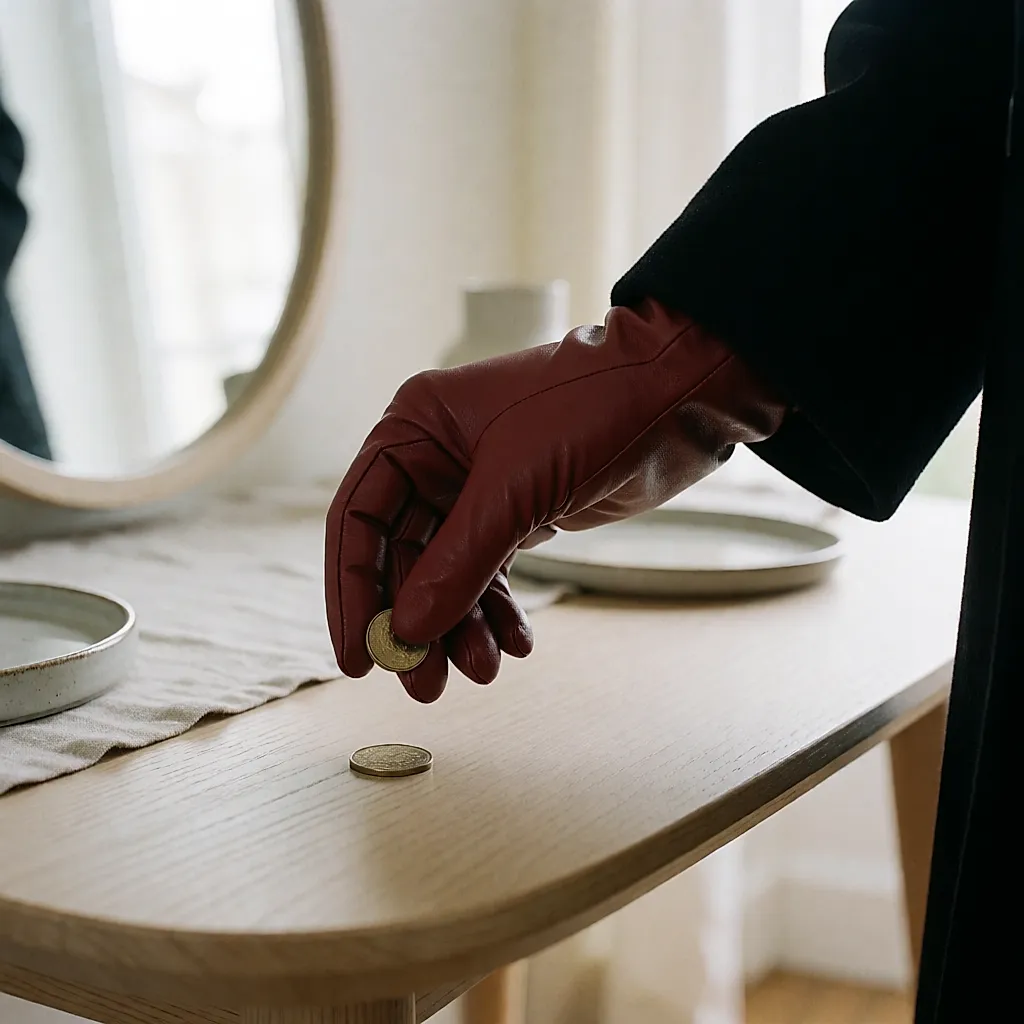
Then there is the movement people forget in the fitting room: pretend to pick up a coin, then to hold a steering wheel or the handle of a bag. That is where the stitching reveals itself. On a well-made glove, the seam runs along the outside of the fingers, silent against the palm. If you feel a ridge under the fingertip pad, the pair is badly finished — or designed to be sold rather than worn. You may end up with a red mark, and the lining may give up before winter is out.
What the label gives away
Turn the glove inside out and read the small label sewn inside the cuff. Wool lining: that is the wording to look for, perhaps with a little cashmere for softness. 'Polyester lining' or '100% polyamide' signals the classic economy option: it slides on easily, though some people find synthetic linings less breathable than wool. You can check the synthetic fibre content before you reach the till: no one will mind.
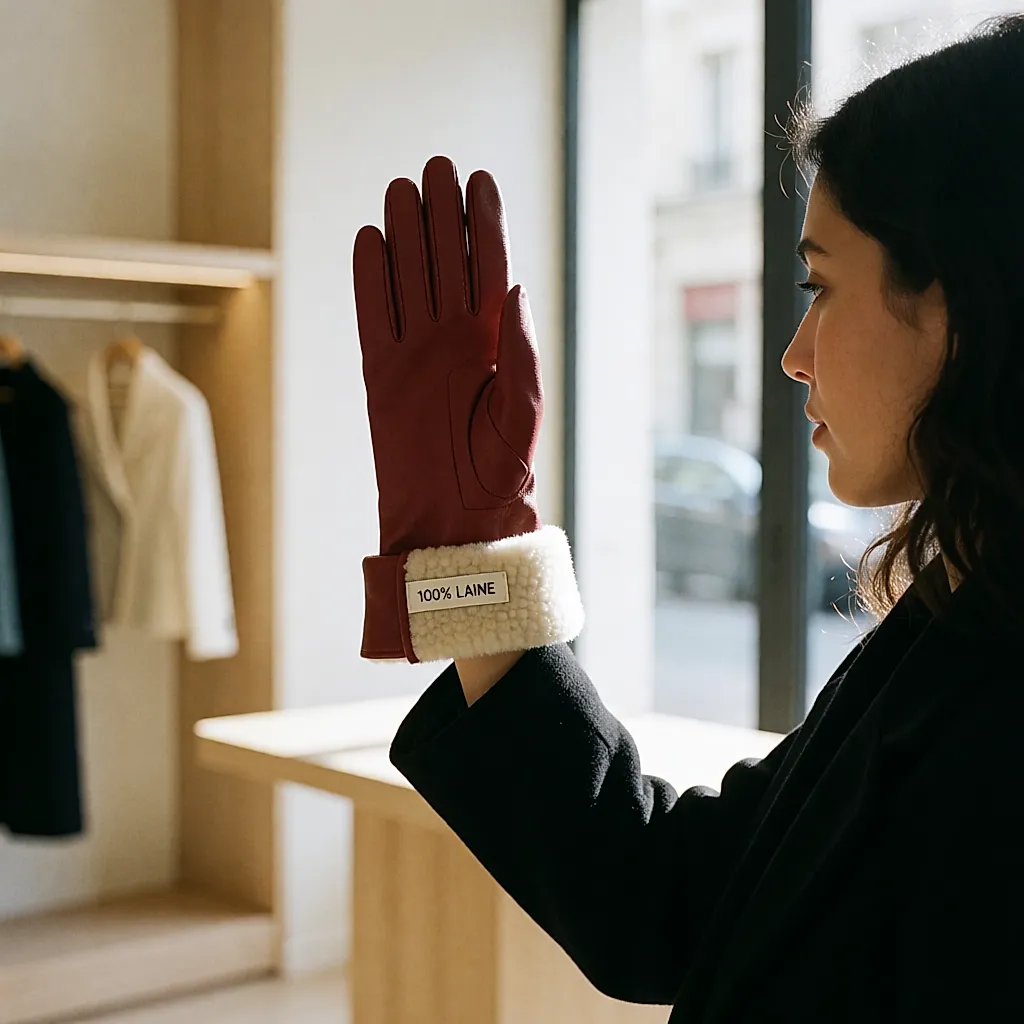
Leather matters as much as the lining. Lambskin or kid for suppleness, full-grain for shape, vegetable tanning when the information is given: these are material clues, not promises. Thickness does not guarantee warmth: a glove's fit and its lining matter more than the leather's thickness alone.
Thin or thick leather: warmth is not only about thickness
People often assume a glove is warm because it is heavy and greasy. In practice, drape decides. Thin leather with a good lining hugs the hand, helps remove pockets of cold air and keeps warmth where it counts: at the fingertips, rather than at the bottom of the glove. Thick, badly cut leather with fingers that are too long and a seam across the fingertip pad gives you the silhouette of a motorcyclist's glove for the warmth of a holey mitten.
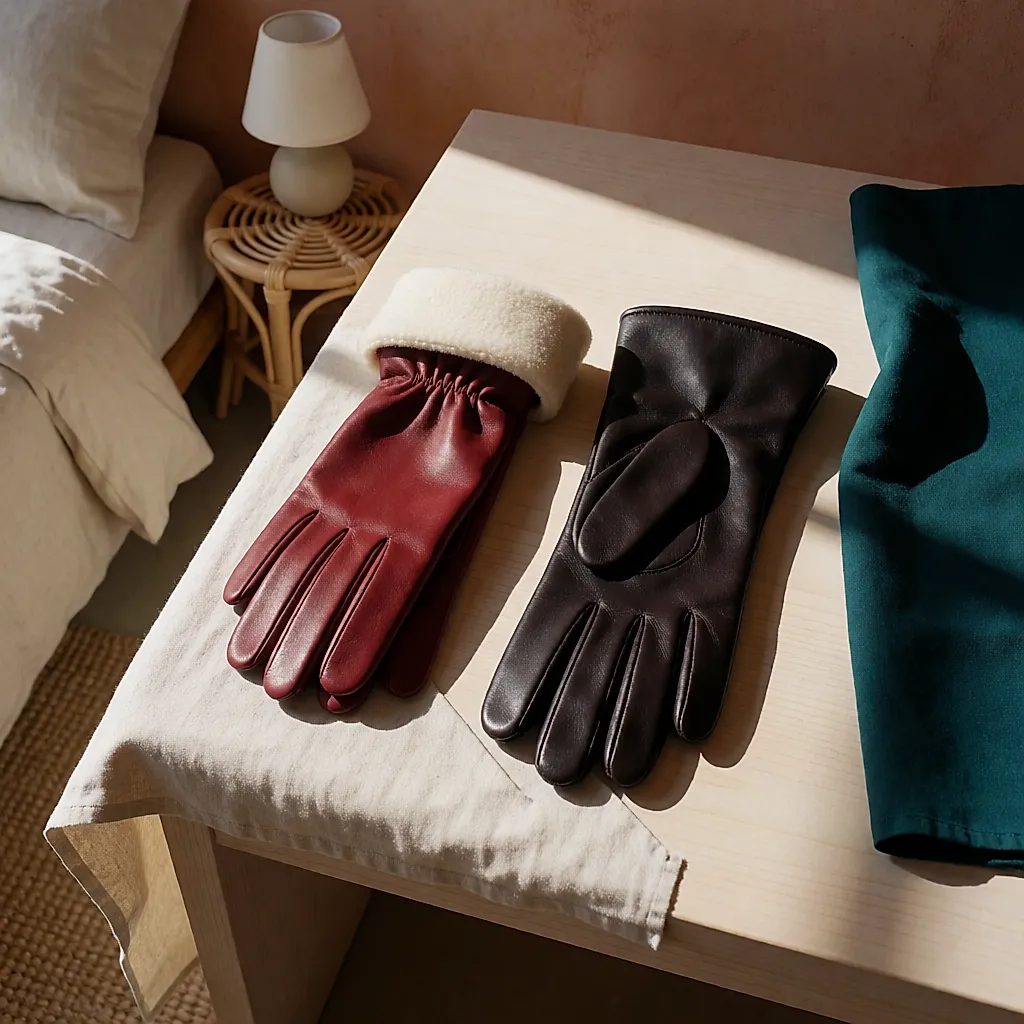
Also check the cuff length. A glove that stops sharply at the wrist bone can let wind through as you move; two or three centimetres more, with your coat over the top, does the rest. And let's be honest: a pair that fits properly gives you country-cottage hands, which is quite a lot for a Tuesday morning.
Budget
As a guide, expect to pay around £15–£30 for very thin leather with a synthetic lining from a high-street retailer: it may see you through one season, rarely three. Around £40–£90 buys lambskin with a wool lining in a leather goods shop or department store — this is the mid-range where genuine finds turn up, as long as you try on both hands and check the label. At a specialist glover, or with an online glove brand, prices rise to about £110–£220: the cut is finer, the size range wider and repair is possible.
A quick detour to the second-hand market: in a charity shop, vintage shop or on resale sites, a leather pair at £10–£30 can be excellent if the lining is intact and the leather is not cracked at the creases. For dry days, a knitted wool pair (merino, recycled wool) costs around £20–£45 and slips into a bag as a spare.
The three-second test, glove in hand: the fingertips touch the end without being cramped; you cannot feel the seam under the fingertip pad when you clench your fist; the label says wool, not polyester. Three yeses, and you can pay.
Leather gloves are not washed: they are brushed, left to dry away from a radiator and stored flat. This is the kind of purchase you can keep for several winters and not regret — unlike the £20 emergency pair, which too often ends with a gaping finger. Now all you have to do is hold out your hand.

Comments
Your opinion matters: rate the article, react and reply to comments.
Comments are moderated; AI-assisted comments are flagged. Text emoticons (8-), :-), <3…) are automatically shown as images.