
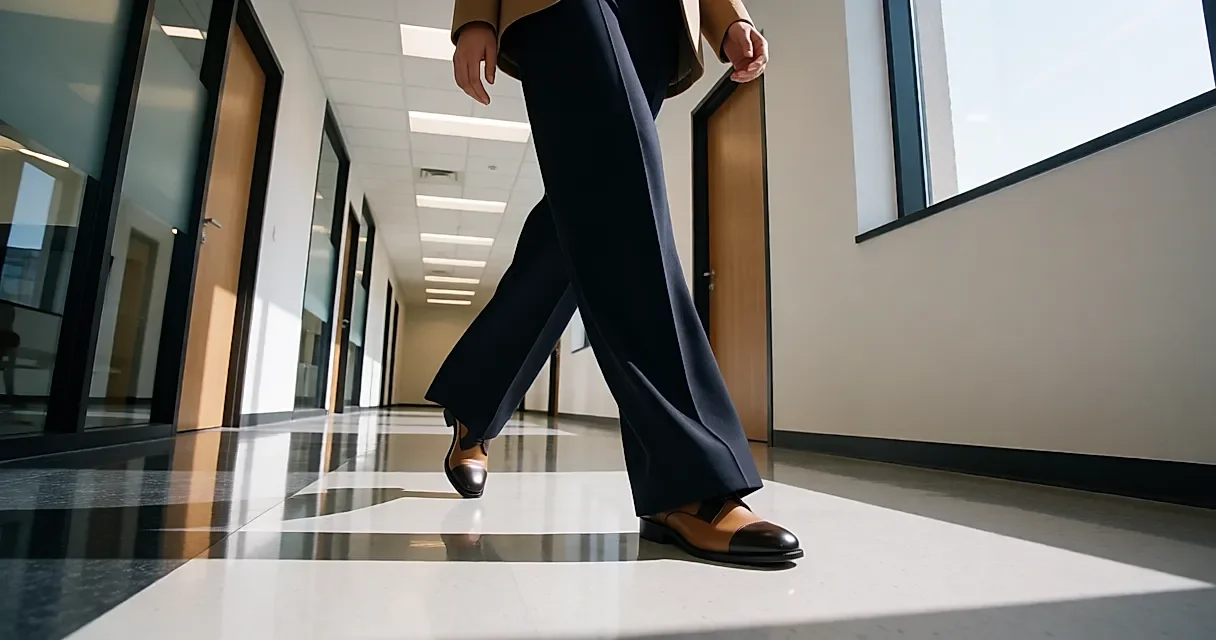
Soft leather, a flat sole and a toe box wide enough to let your toes spread: the barefoot shoe has arrived at the office. It has left the trails behind, swapped mesh for leather and changed its brief: to get through a working day without punishing your feet. On paper, they still look sharp and the toes have room to breathe. In real life, you need to see how you style them, what they cost and whether they suit your day-to-day.
We knew the trail version, a little technical. Here it comes as a derby, loafer or smarter ankle boot, with more restrained lines. The principle is unchanged: wide toe box, flat sole, zero drop (no height difference between heel and toe) and without cushioning. The foot sits flat, the toes have room and the shoe isn't trying to do their job for them.
A barefoot feel, in town-ready leather
The shape is what strikes you first. The toe box widens noticeably to give toes room without squashing them, but on a soft-leather derby the effect stays subtle. With fluid trousers or a midi skirt, the line is clean. It's the silhouette that shifts, not the category.
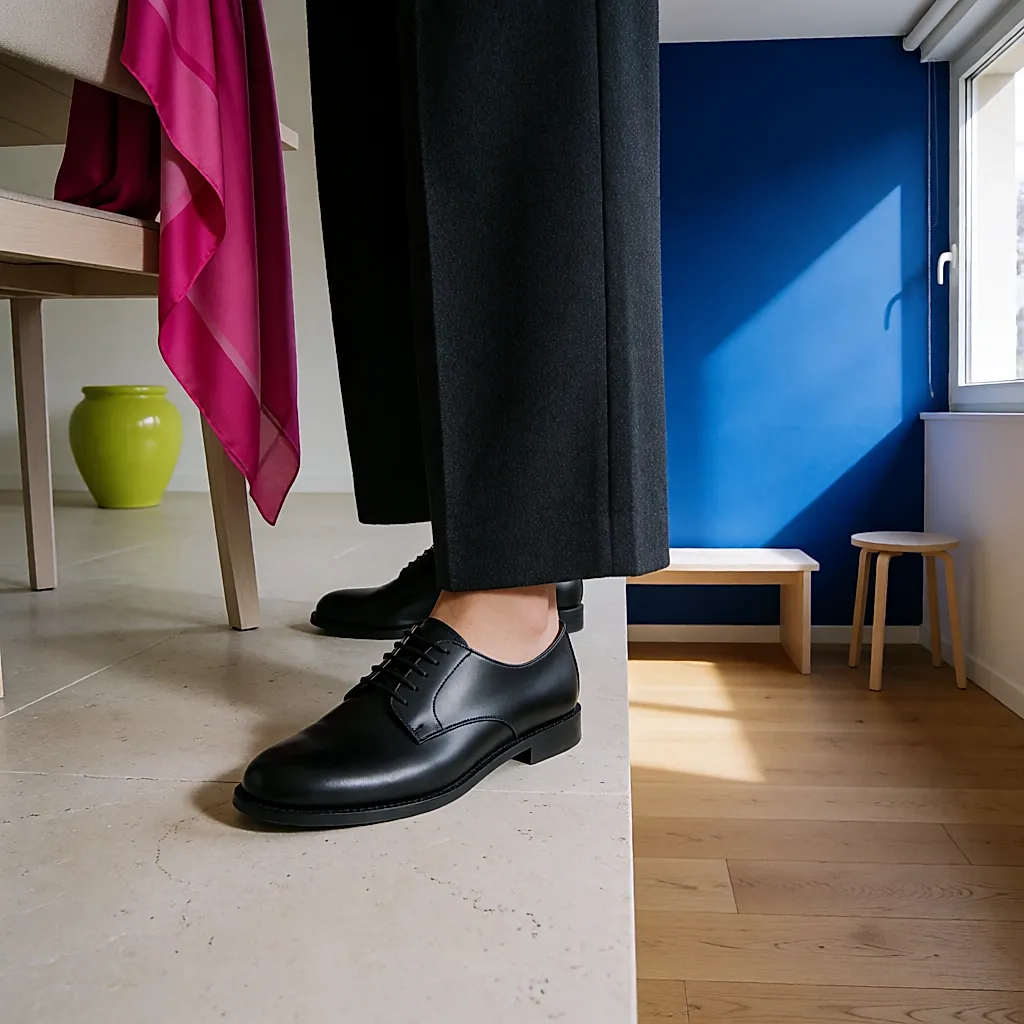
The sole, meanwhile, is thin and flat. You feel more of the ground, which won't appeal to everyone: some people love that stability, while others find the pavement much noisier than before. And that's where use matters. An office shoe, yes, but for which office? Ten minutes to the station, or a whole day between meetings?
What changes at work, and what doesn't
In everyday wear, the most tangible benefit is in toes that no longer overlap and a heel that isn't trying to balance on a point. For anyone who ends the day with seam marks across the top of the foot, that's already significant. For days spent standing, though, the lack of cushioning needs a transition: you don't go from a chunky trainer to a flat sole like switching handbags.
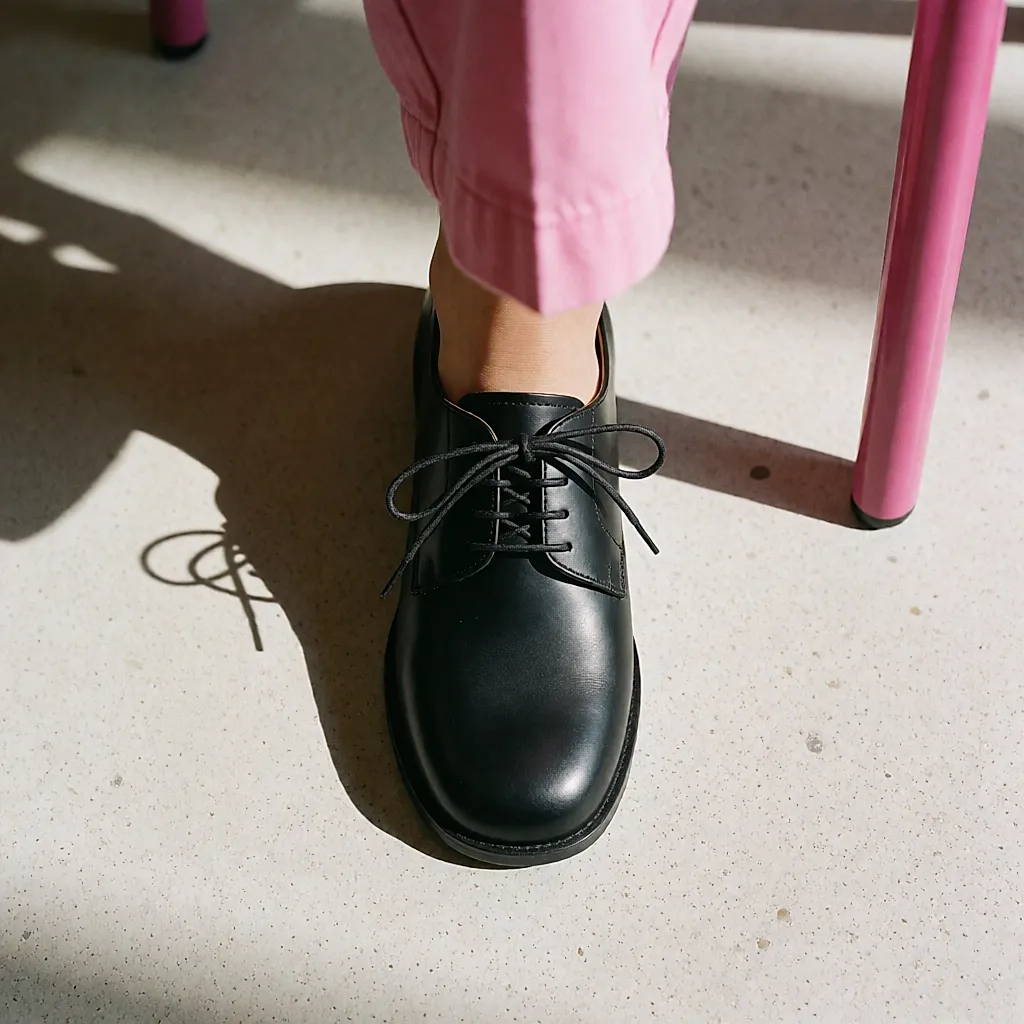
There are limits, too, and it's worth saying so. Not every foot shape is comfortable in such a thin sole, and not every office will accept a slightly wide derby with a suit. If pain develops, a fashion article isn't the place to make that call: speak to a healthcare professional. Barefoot shoes are not a medical remedy; they are a choice of shape.
How to wear them without looking ready for a hike
Don't overdo the technical side. A black or cognac leather derby, a discreet sole and a wide toe box that isn't clownish: the shoe can blend into a city wardrobe. Pair it with wide-leg trousers that fall well, a wool midi skirt or slightly cropped raw denim jeans. The drape of the trousers matters more than the shoe itself: too long and it breaks the line; too short and it puts all the attention on the toe.
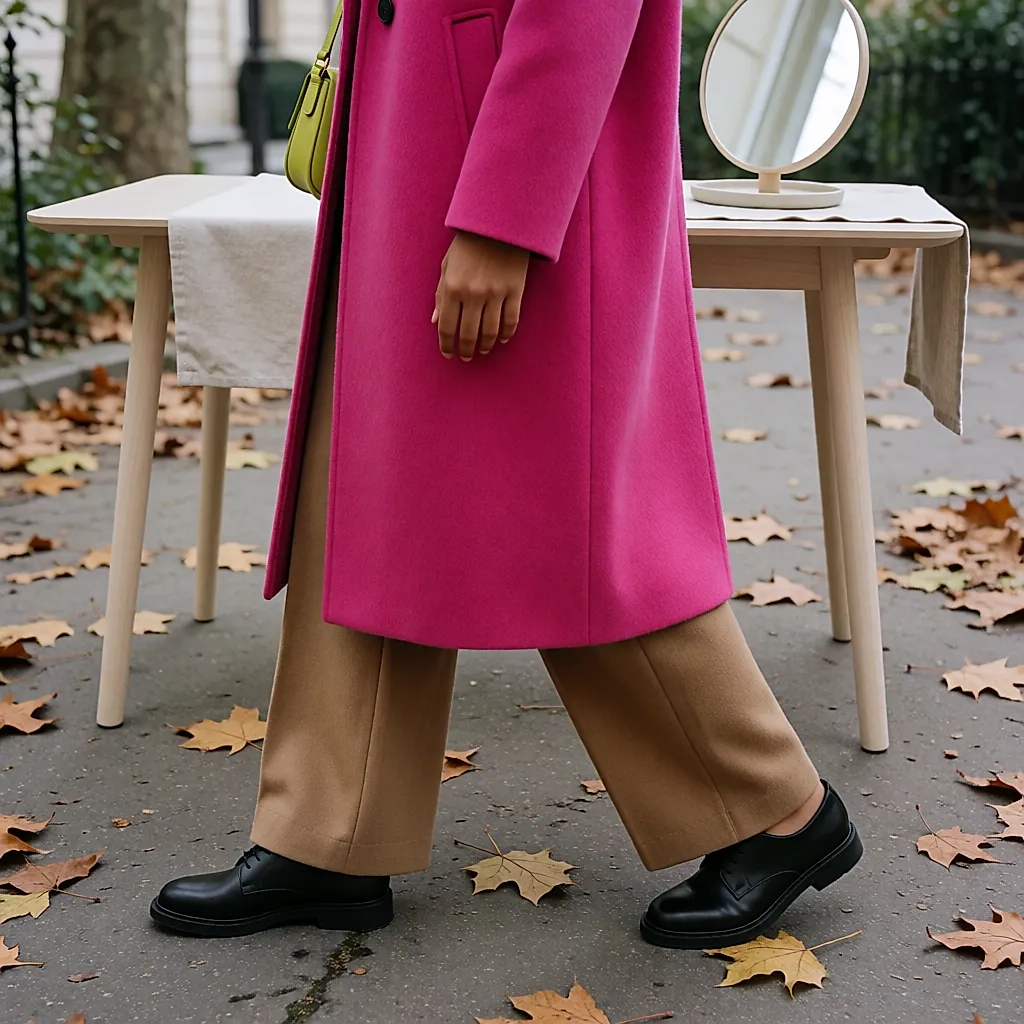
For colour, stick to classics that wear well: black, brown, camel, cream. Patent leather or an animal print can be fun, but let the rest of the outfit breathe. And for rainy days? Soft leather doesn't like puddles: regular care and a spare pair in the cupboard avoid complicated mornings. Allow for an adjustment period, too: wear the pair at home first, then on short journeys. If they hurt, don't force it.
Trying them on in the shop: take out the insole if it is removable and stand on it. Your toes should be able to spread without touching the edges. Take three steps, then check that the heel stays put. A wide toe box is pointless if your foot slides around inside.
What to budget
Expect to pay around £90 to £180 for a decent leather pair with a thin sole and neat stitching. At that price you can already find specialist barefoot brands in shops or online, but leather quality varies a lot. Check suppleness, lining and whether the sole can be repaired.
Is it really worth the money? Above £180, and up to around £250, you're into vegetable-tanned leathers and European manufacturing, sometimes with smarter shapes. If money is tight, second-hand is still a serious option: £40 to £90 for a lightly worn pair, provided you check wear and how the leather is holding up. Where to look? Specialist shops, sustainable fashion concept stores, online brands that give exact measurements, charity shops and resale sites.
Wide-toe shoes aren't here to replace your entire wardrobe. They are one more piece, chosen like a good pair of trousers: for their cut, their material and the number of days they make life easier. If they get you to the office without counting the minutes until you can take your shoes off, they've earned their place. And that's a win in itself.

Comments
Your opinion matters: rate the article, react and reply to comments.
Comments are moderated; AI-assisted comments are flagged. Text emoticons (8-), :-), <3…) are automatically shown as images.