
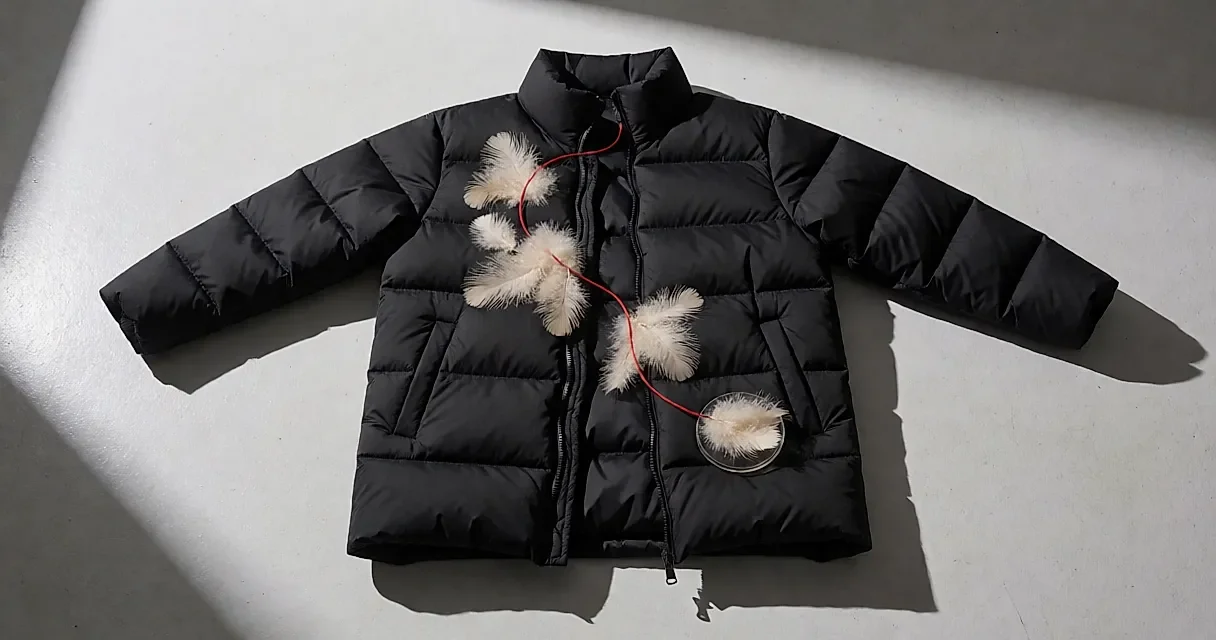
The label gives the ingredients, not the whole story
“90/10” does not mean “90% premium down”. It means 90% down and 10% feathers: down is the small clusters without a stiff quill that trap air; feathers have a quill. The higher the down share, the more loft a jacket has for the same weight — that is fill power, shown in cubic inches per ounce (cuin) or simply as a number (550, 700, 800) when the brand is willing to state it. At 700, you need less fill than at 550 to trap the same volume of air; but the cut, seams and lining do half the job too. A very lofty jacket that is badly put together is still a sieve for draughts.
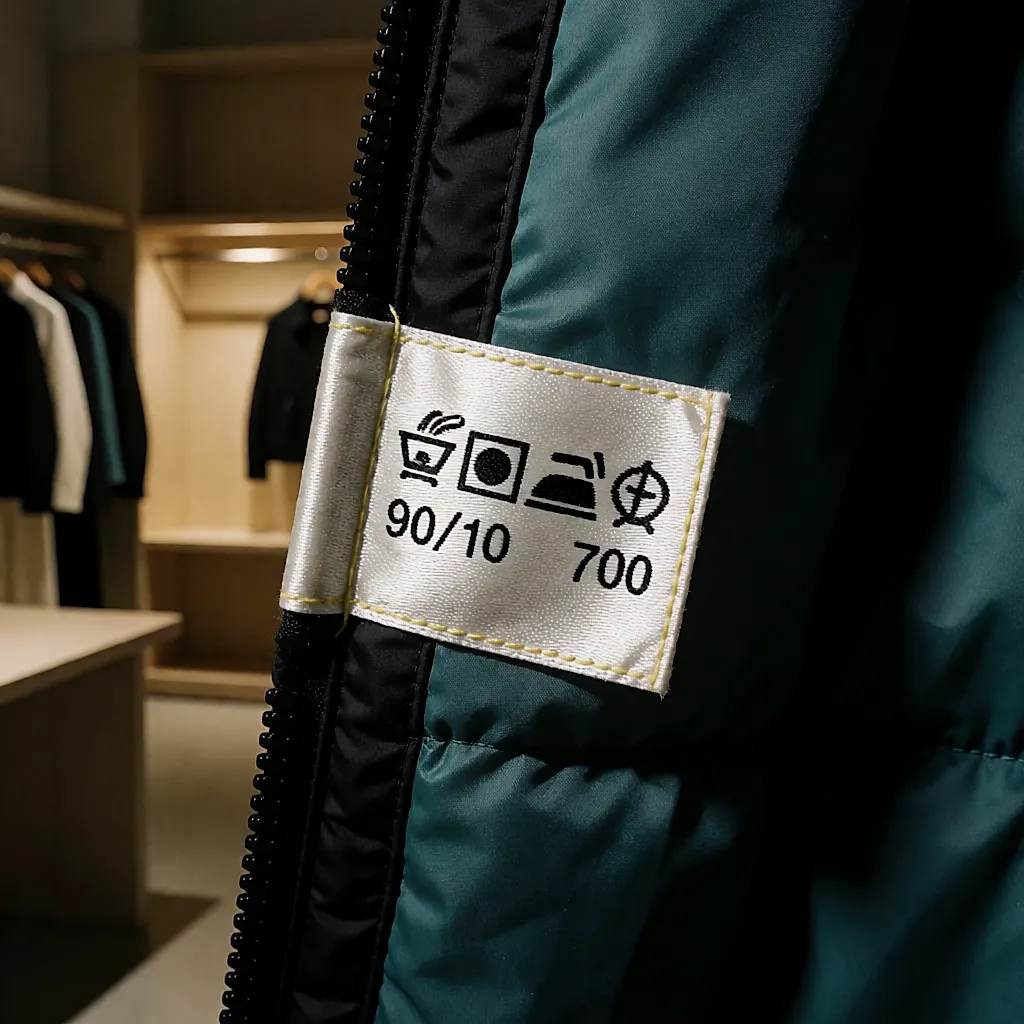
Then comes the limit: the label shows the fibre composition — and that is roughly it. Not where the down came from, not the farming conditions, not the country of manufacture. In other words, it tells you what is inside the jacket, never what happened before. It is a spec sheet, not an investigation.
What “traceable” actually covers
“Traceable” is not a standardised word, and that is where it gets tricky. In the down supply chain, traceability means a documented chain: you know which collection area the feathers came from, where they were washed and sorted, and the whole thing is checked by audits at the intermediary stages. It is a guarantee of industrial rigour, not a certificate of good intentions. That is why two jackets stamped “traceable” can have absolutely nothing in common.
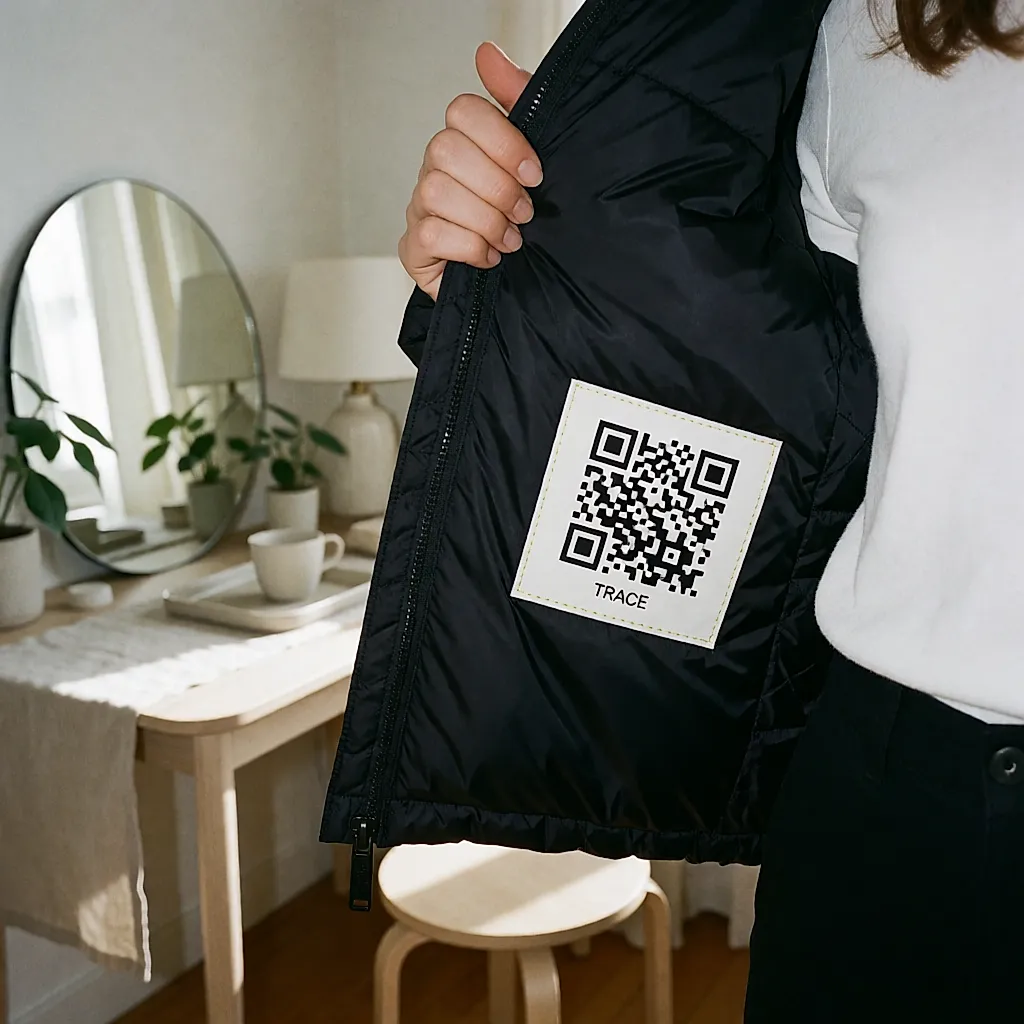
In practice, it answers “where does the down come from?” and “is the chain checked, or just described?” Two brands can use the same word with very different levels of precision: one goes back to the collection region, the other to the farm, sometimes via a QR code sewn into the lining. A code that opens a pretty brand story tells one story; the same code pointing to an independent certifier’s certificate tells another. Do the clicking before you do the paying.
Animal welfare: RDS is a separate standard
Animal welfare is a separate subject, with its own standards, including the RDS (Responsible Down Standard). This standard is dedicated to the welfare of geese and ducks in the down supply chain: it sets rules on farming conditions, bans force-feeding and live-plucking, and includes audits of the supply chain, including collection practices. The detail of its requirements is in the certifying body’s official documentation, which is worth checking before you treat the label as a reason to buy.
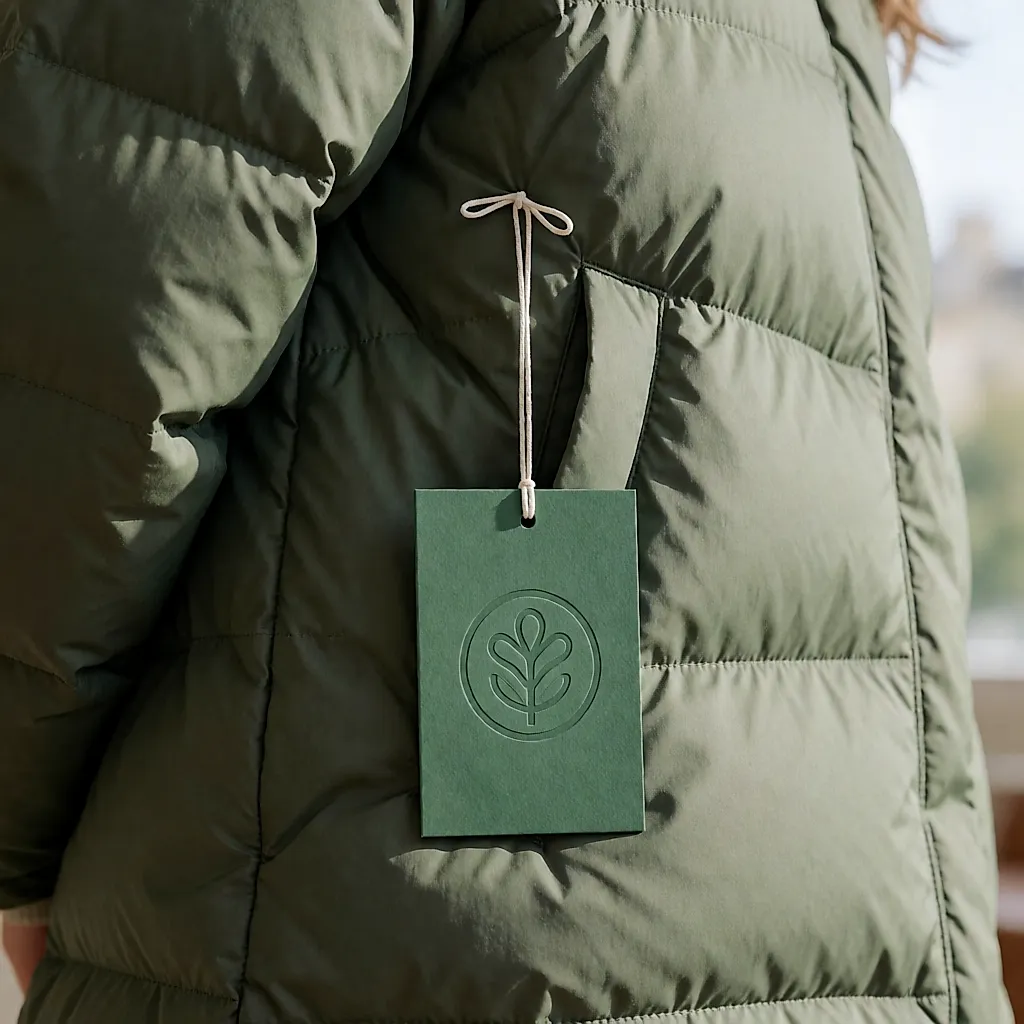
What RDS does not do is judge the drape, the cut or the durability of the fabric. A fully certified jacket can have seams that leak after two winters. The label answers one precise question; it does not replace trying the jacket on or gently tugging at the seams in the changing room. And if the lining has a large share of synthetic fibres, check the percentages before you buy.
When both claims appear together
That is the key question. Before you pay more, check that both the welfare certification and detailed traceability are there: sometimes you find one without the other, or just “90/10 down” with no mention of the supply chain. That is not automatically a con, just a shorter specification.
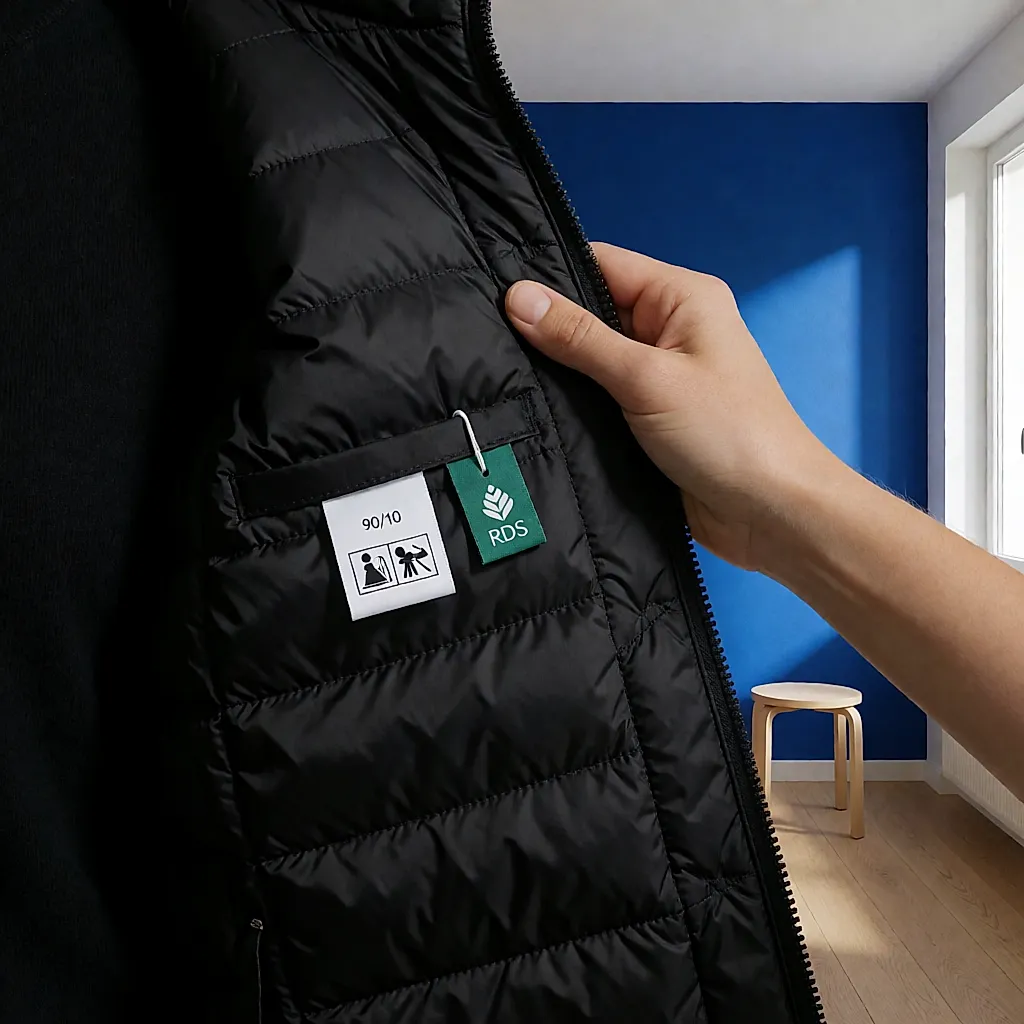
When both claims appear together, RDS covers the down and traceability sometimes goes back to the collection area. Do you have to go higher? Beyond that, you are mainly paying for farm-level traceability, premium European down, repairability and after-sales service. Second-hand, an RDS-certified piece can be a good option — provided you read the inner label, which gives the composition but does not replace the RDS certificate or the traceability.
Three checks in the changing room. Read the composition before the sales pitch: “90/10” and a stated fill power is already a good start. Then look for the name of the label and the body that certifies it, not just a round logo. Finally, scan the QR code: a verifiable certificate tells you something about the down, while a storytelling page mainly tells you that the brand has a communications budget.
Budget
A rough guide helps you place a jacket — treat it as a practical marker, not a price carved in stone. Expect roughly £70–£130 for a decently filled jacket from a UK high-street retailer or online, often without advanced certification; around £130–£300 for a piece that is both RDS-certified and traceable, the core of the market; and above £400, where you are mainly paying for the brand, premium down, repairability and after-sales service. Second-hand, an RDS-certified jacket often costs around £35–£130 depending on condition. What moves the price: the retailer and the city, the down share and stated fill power, the welfare label and documented traceability, but also care and repairability. At every budget, read the label before you pay.
The puffer you keep
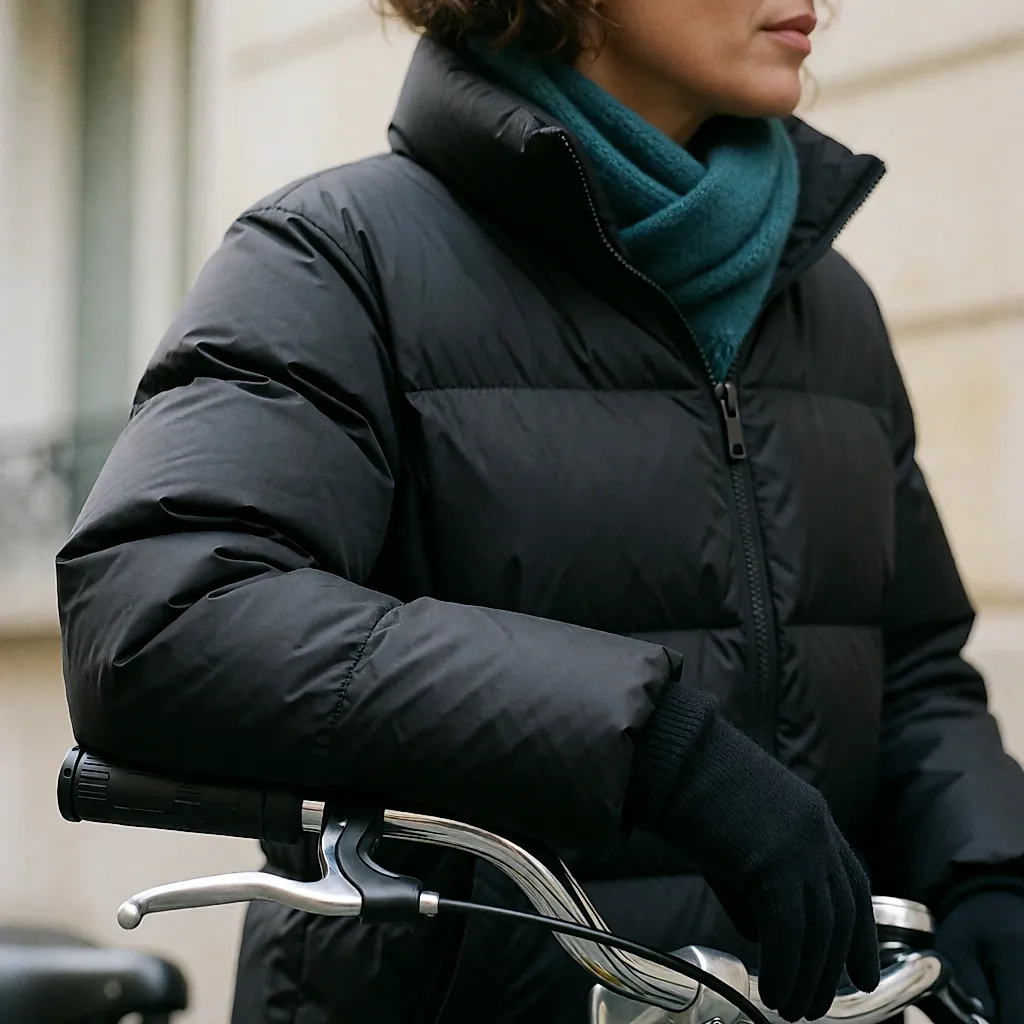
A traceable, certified jacket costs more, but it is supposed to last longer if the build quality follows — cut, seams, fabric and care included — and that is when the calculation shifts. For a city winter, a well-cut RDS jacket is plenty; if you cycle or spend time at altitude, look towards the more technical models and check the seams and repairability before the logo. And if you live somewhere mild like Cornwall, there is no point aiming for high-mountain kit: the best buy is the one you will wear for three winters running without wanting to replace it, label included.
Comments
Your opinion matters: rate the article, react and reply to comments.
Comments are moderated; AI-assisted comments are flagged. Text emoticons (8-), :-), <3…) are automatically shown as images.