
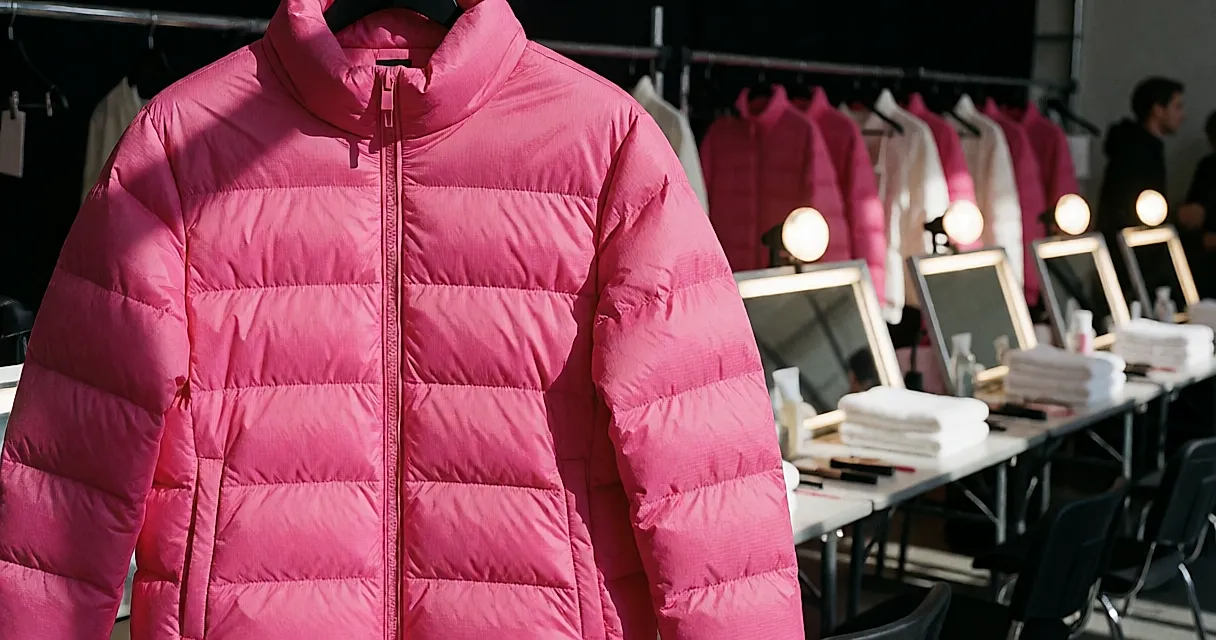
A soaked down jacket stops keeping you warm: the clusters stick together, the air they were holding escapes, and your packable down jacket turns into a bag of cold feathers. Synthetic fill takes a shower without collapsing. It is less lofty and less premium, but it will still keep you warm when you get home soaked. That is why the down-versus-synthetic debate cannot be settled in the shop under flattering fitting-room lights. It gets settled on your everyday commute.
The fill-power figure people read without understanding
Down does not generate heat: it traps air between its clusters, and that air holds the warmth in. The ability to loft back up is measured as fill power, expressed in cuin (cubic inches per ounce) or in millimetres depending on the brand's standard. In practice, most down jackets are advertised between 550 and 800 cuin: around 700 is already very good, and high-end mountaineering kit goes higher.

Except fill power says nothing about quantity. An 800-cuin jacket with three grams of down will be less warm than a well-filled basic at 600 cuin. So the number to hunt for on the label is also fill weight in grams, which is often missing from the product page. If it is not there, ask for it or walk away. Check the composition while you are at it: a 90/10 down-to-feather ratio insulates better than 70/30 at the same weight, because feathers are heavier and less lofty.
When water arrives, everything is decided in minutes
Wet down loses most of its insulation, and it does not recover quickly: allow a good night lying flat—often longer if the jacket has taken a proper soaking—or a low-temperature tumble dryer with dryer balls to break up the clumps. Down treated with a water-repellent finish slows the ingress of water, but it does not stop it; a treatment is not a membrane.
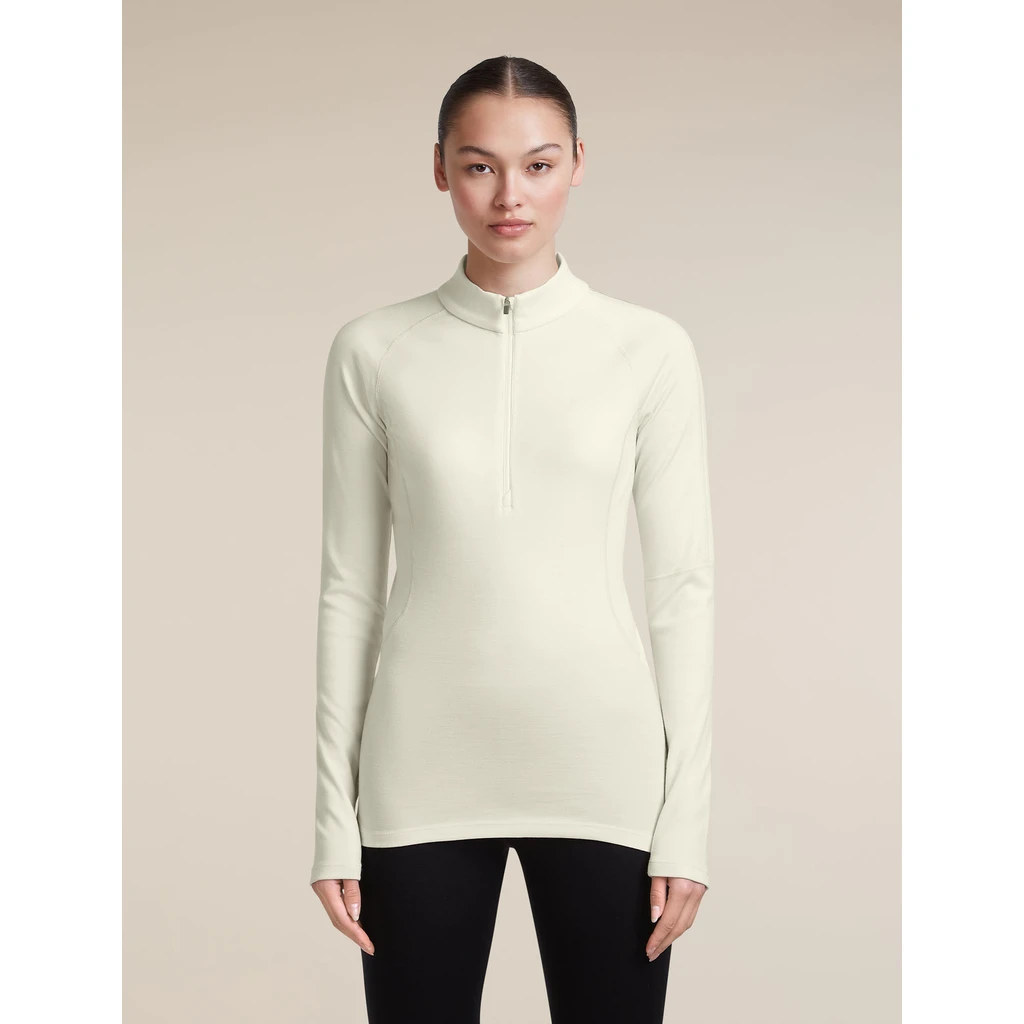
Synthetic fill, by contrast, keeps you warm even when damp: it flattens, but it does not collapse, and it dries while you are still on the bus. Should you give up on down altogether? No—and synthetic has its downside: for the same warmth it is heavier and bulkier, it loses loft over the seasons, and it is petroleum-based with a risk of microfibres when washed. Check the jacket's composition before you buy, and remember that a puffer is not a garment you replace every two years.
Seams and outer fabric: the weak points are in the stitching
Look inside a puffer: if the two layers of fabric are sewn directly to each other, those are stitch-through seams. Where the thread passes through, there is no fill, so you get a cold spot—literally a cold line down your back. Box-wall construction (closed baffles) keeps the fill at full volume from edge to edge. It costs more, weighs a little more, and is noticeably warmer over time.

On the outer fabric, denier indicates the fineness of the yarn: the lower the number, the lighter and more fragile the fabric. A water-repellent fabric is enough for fine rain, but not for sustained, prolonged rain; for that, a waterproof-breathable membrane is better suited, though it is heavier and less breathable than a simply water-repellent fabric. With down, insist on a tight down-proof fabric—if feathers are already escaping in the shop, they will keep escaping later.
The compromise, depending on your region and commute
A cold, dry winter—the Cairngorms, the Pennines, inland parts of eastern England—is still down territory: it is unbeatable for warmth per gram. A wet winter—Cornwall, Wales, western Scotland, the Atlantic coast, and that London slush that is neither snow nor rain—makes a strong case for synthetic, which will not surrender at the first sodden pavement.

Your commute matters as much as your postcode. Cycling, a station platform, waiting for a bus, a Sunday run: synthetic, no question. If you go from car door to office door in a dry climate, a very light down jacket will do the job better under a smarter coat. In both cases, a merino wool layer underneath does more for your comfort than extra fill.
A useful test in the shop: run your hand under a shoulder seam and along the sides. If you can feel the cold fabric against the thread, that is a cold spot. Second test: detach the hood, check the cuffs and the storm flap behind the zip—on a puffer, leaks rarely sit in the middle of the back.
Budget: what the right choice really costs
For synthetic, look for a good deal between £60 and £150 at sports chains and high-street retailers; budget £150 to £250 at outdoor brands, where the price reflects the membrane, fabric quality and seam finishing. For down, an honest 700-fill-power jacket sits between £150 and £300, and you should budget £350 to £500 to move clearly above 800 fill power.
And for a smart budget, second-hand is still very worthwhile for down, provided you check three things: the fill should not form clumps or flat patches, the zip should be in good order, and the fabric should not let feathers through. A puffer can last several years if you wash it infrequently and gently, and reproof the water-repellent finish from time to time.
Verdict: if your puffer sees more rain than sun, go synthetic and put the price difference into a good merino base layer. If your winter is dry and you only have one jacket to buy, down still offers the best warmth-to-weight ratio—provided you keep it for a long time.


Comments
Your opinion matters: rate the article, react and reply to comments.
Comments are moderated; AI-assisted comments are flagged. Text emoticons (8-), :-), <3…) are automatically shown as images.