
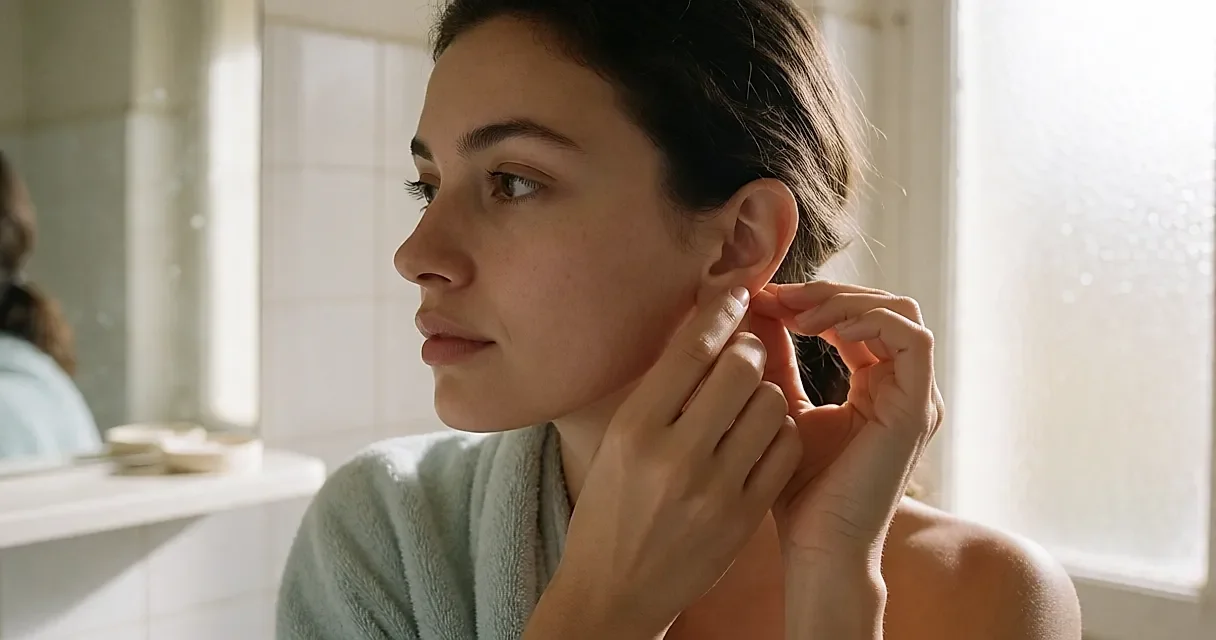
The price tag on a pair of earrings tells you nothing about what is actually in them. A £12 pair can suit a sensitive earlobe while another at £90 can make it hot before lunchtime. And the word that matters on the label is almost never the one printed in the biggest type.
What makes an earlobe flare up
Nickel is the first suspect, and it doesn't have to be visible to do its work. It turns up in cheap fashion jewellery, but also in some brasses, in steel clasps and in white-gold alloys. Add friction and moisture — the earlobe stays damp under an earring — and the metal has all the time it needs to make itself felt.

A coating is not armour: gold plating, lacquer and rhodium wear first on the post and on the edge of the clasp, the two places that rub. The earring hasn't changed its nature; its protective layer has gone. And sometimes the metal isn't the culprit at all: a clasp that's too tight, an earlobe that wasn't dried properly, a thick post pressing on the skin. Before you blame nickel, it is worth trying a genuinely neutral pair.
Titanium and niobium: the posts worth trying for reactive ears
Titanium used for piercings contains no nickel — but you need to check the grade: grade 1 or grade 2 titanium, or implant-grade. 'Titanium' with no further detail on the product page is a word, not a promise. Niobium is used pure and coloured by anodising: the colour is part of the metal, so there's no coating to wear away.
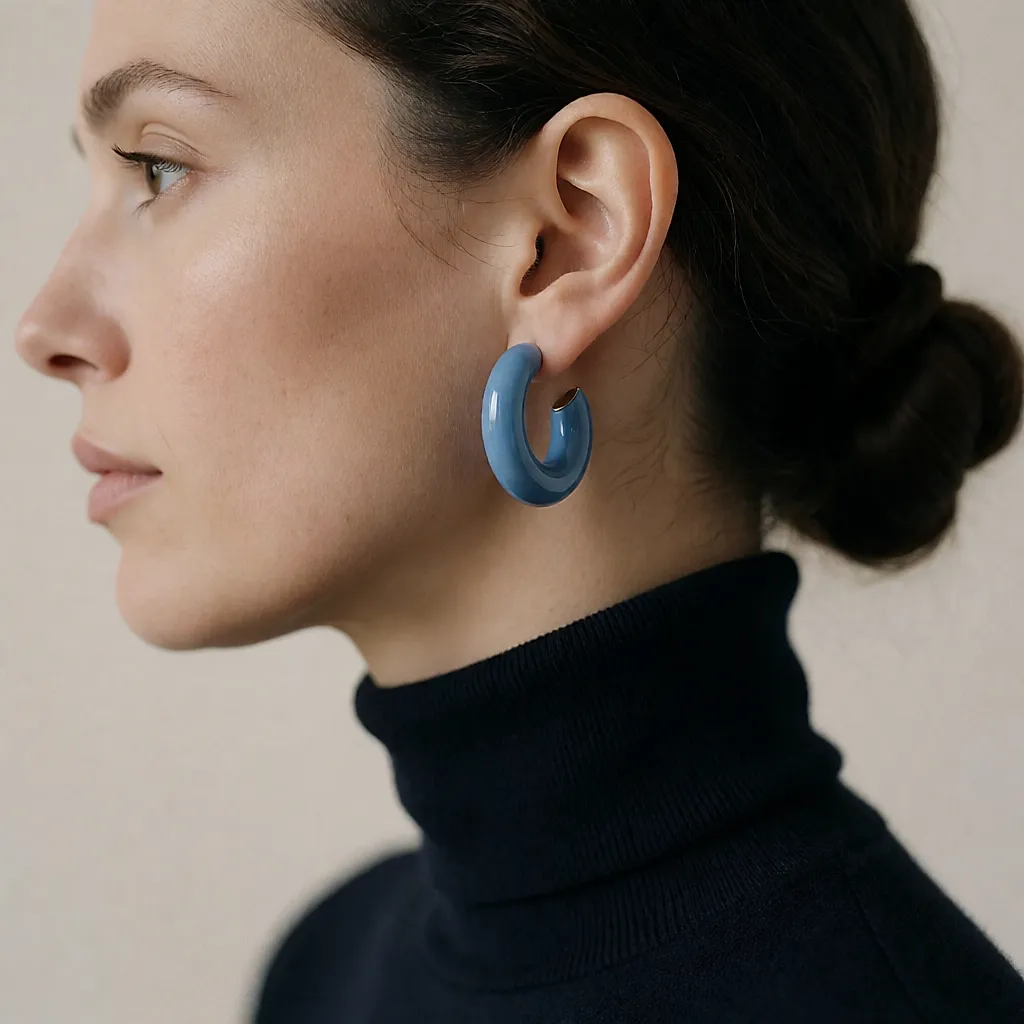
On looks, let's be honest: neither is a styling hero. Titanium stays grey, almost technical; niobium, which is softer, is worked into thicker shapes and small batches, with a limited palette — bronze, blue, violet. They are the best posts on the market for a reactive earlobe, not the most photogenic.
The clasp is the blind spot
You choose earrings in front of the mirror and forget what's happening behind. The butterfly back, screw or clip touches skin for as long as the post does, with no promise about its composition: a titanium post with a nickel-containing steel butterfly back and the problem starts all over again.
Ask for the composition of both parts, favour a titanium or silicone clasp where possible, and check that it isn't too tight. For unpierced ears there are titanium clips: they're uncommon, but they're one of the few reliable options.
14-carat gold plating is lovely, but not a safeguard
14-carat gold plating is pretty, shiny and gives a piece that heirloom air. Does it protect the ear? Not necessarily. Under the gold there is a base metal, often brass, which may contain nickel; and 14-carat gold is itself an alloy, at around 58% gold. White-gold alloys frequently contain nickel.
The wording is vague, too: 'gold finish' promises no particular thickness, while 'gold plated' implies a more controlled layer — one that still wears at friction points. Plating is there for the look, not as a technical barrier.
A magnet proves nothing
The test circulates everywhere: if the magnet doesn't stick, you're fine. Except it means nothing. A magnet attracts only certain metals; plenty of nickel-containing alloys don't react to it at all, and a piece that a magnet does attract isn't necessarily one to avoid. Your fridge magnet is not a laboratory.
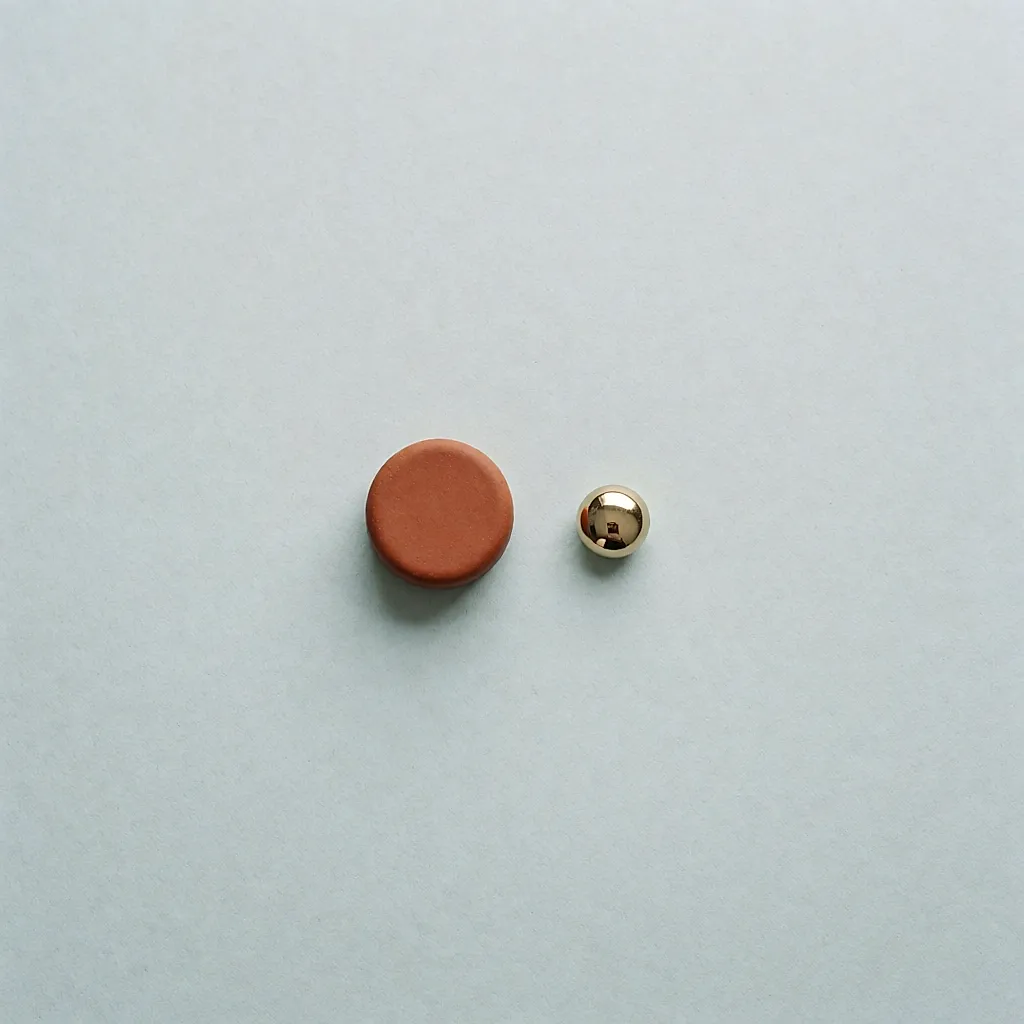
Same for magnetic clasps: they contain metal, and nothing tells you which. What actually helps is a composition written down in black and white — or a seller who can give it to you.
Budget
How much should you spend? As a rough guide, expect to pay around £15–£40 for titanium studs or hoops (more at a piercing studio, where the fitting is included), and around £20–£50 for niobium, often from small-batch makers. Standard gold plating sits between £15 and £60: nice for a change, as long as you accept that the layer will live its own life. Solid 14-carat gold, with no layer to wear away, starts at around £80 and climbs quickly.
The shopping list. A grade 1 or 2 titanium post (or niobium), a clasp with its composition stated, and just one pair to start. Wear it for a few days to check how your ear reacts before ordering more. And dry your earlobe properly; take your earrings out to sleep.
There remains the possibility that nickel isn't the culprit: if a titanium post changes nothing, speak to your GP, who may refer you to a dermatologist for patch testing rather than keep guessing. In the meantime, a plain titanium pair and a clasp that doesn't pinch, and you're good to go. Less sparkly than fresh gold plating, but a good deal calmer for the day ahead.

Comments
Your opinion matters: rate the article, react and reply to comments.
Comments are moderated; AI-assisted comments are flagged. Text emoticons (8-), :-), <3…) are automatically shown as images.