

A flannel shirt and a flannel jacket share a name, the same soft handle and, on the hanger, much the same promise. Only a genuinely heavy flannel shirt can stand in for a jacket in November. What separates a shirt from a jacket doesn't show up in a photograph: you have to weigh it.
The weight decides everything
Flannel isn't a fibre, it's a finish. You start with wool — sometimes cotton — which is carded, woven and then fulled: the cloth is worked and pummelled until the fibres tangle into that faintly fuzzy surface you'd recognise with your eyes shut. The tighter the fulling, the denser, more opaque and more wind-resistant the cloth becomes. The trade calls it milling (fulling, if you prefer the older word), and it's what separates the indoor garment from the outdoor one.
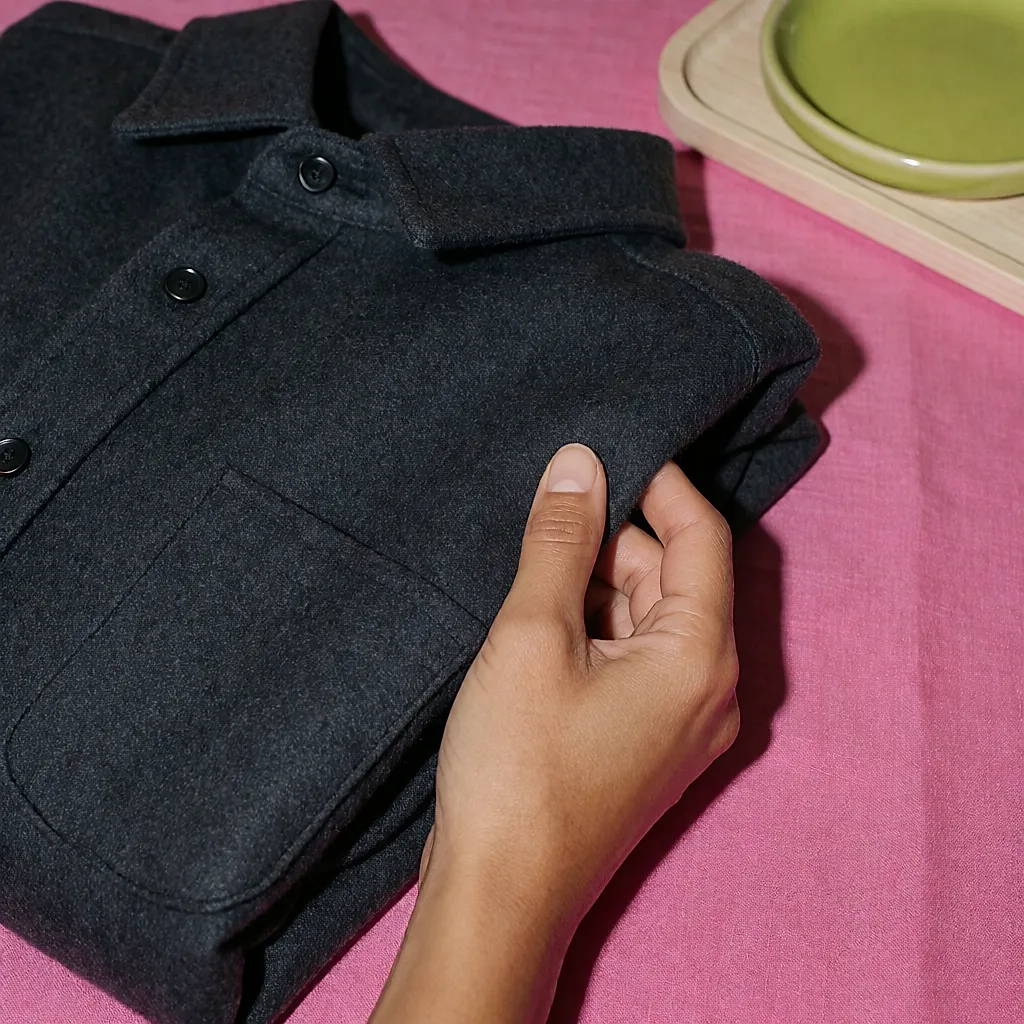
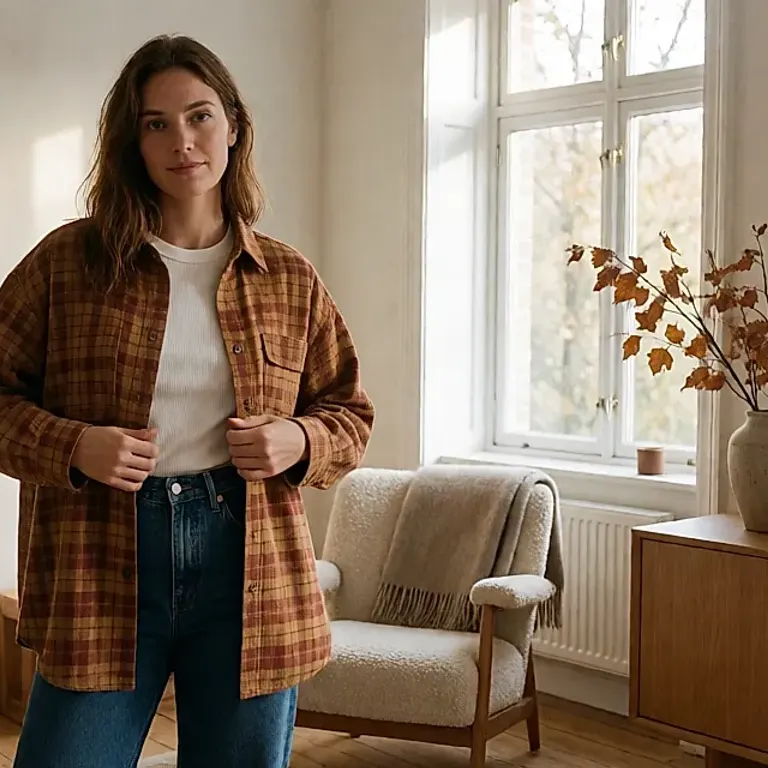
All that remains is to measure it, and the useful number here is the weight: grams of cloth per square metre. In practice you meet three families. Fine flannels, 150 to 200 g/m² — winter shirt territory, soft and fluid, perfect under a collar but not enough on its own when the temperature drops. The middle ground, 250 to 320 g/m², worn open over a T-shirt as an overshirt. And the heavyweights, 350 g/m² and up, with the drape and structure of a jacket, and often its price tag.
Which brings you to the question to ask in the shop, before you even look at colour: are you after a warmer shirt, or are you trying not to get the coat out? They aren't the same garment, and they aren't the same budget.
Three checks and you'll know
The first is in the hand. Scrunch a corner: a fine flannel creases like cotton and springs back quickly; a heavy one holds the fold for a second, then relaxes as if digesting it. Tight weave, cloth that will age well.
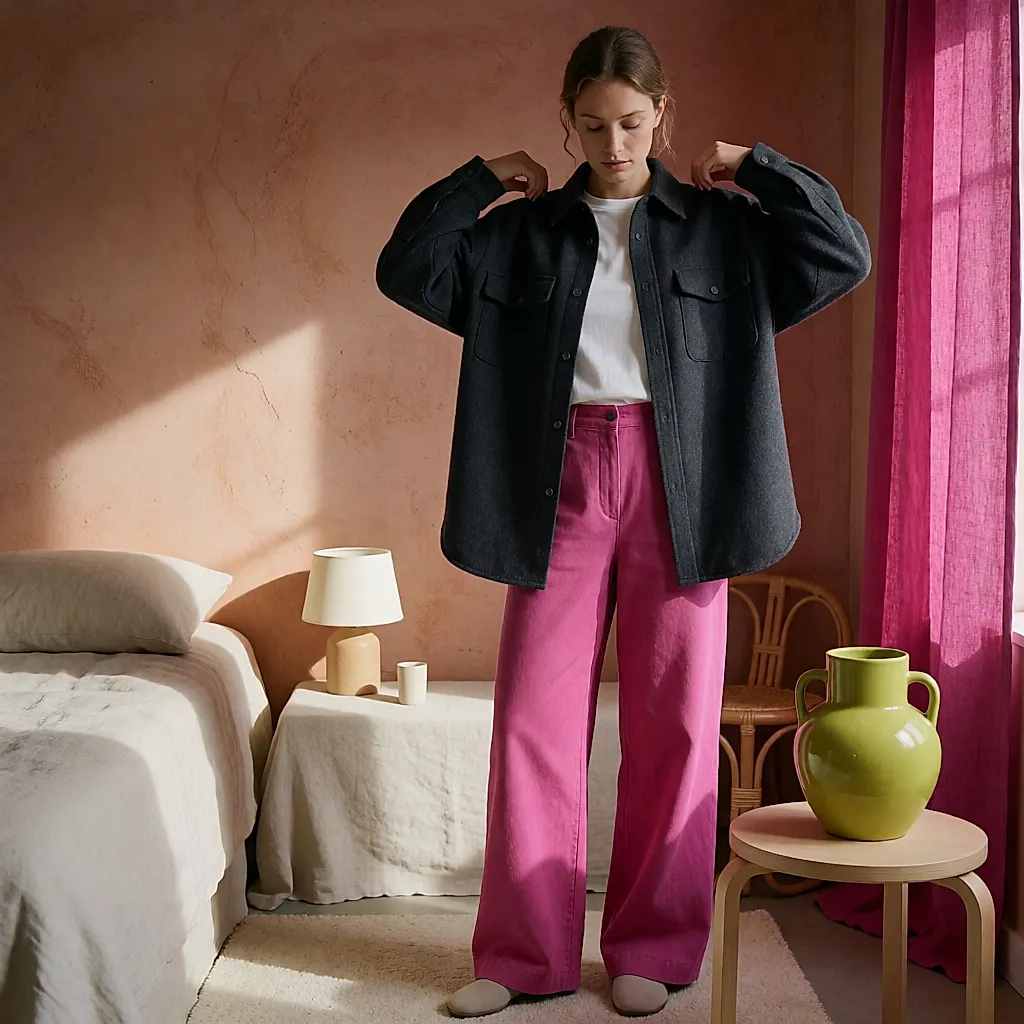
The second is done with your arms in the air. A piece meant to replace a jacket shouldn't announce itself every time you move. If the armhole pulls and the shoulders ride up, it'll be on the hook by the first squall. Drape matters more than shade: a well-cut flannel holds the shoulder and lets the rest move.
The third is the only one that really settles it — try it on over what you actually wear. A chunky knit? A shirt? A plain T-shirt? If it closes over a fine knit, it's a jacket. If it only closes over a T-shirt, it's an overshirt — which isn't a fault, it's another life. And if you're unsure, don't size up: one size larger on a straight cut makes it swim at the shoulders and takes away much of its drape.
A pretty colour won't rescue a thin flannel
Caramel, bottle green and tartan get sold to us as seasonal arguments. They're lovely, but they carry no weight in the thermal balance: a thin flannel in a nice rust is still a thin flannel. A well-milled charcoal, by contrast, does the job of a coat without announcing itself — and it's usually the piece you wear most and photograph least.
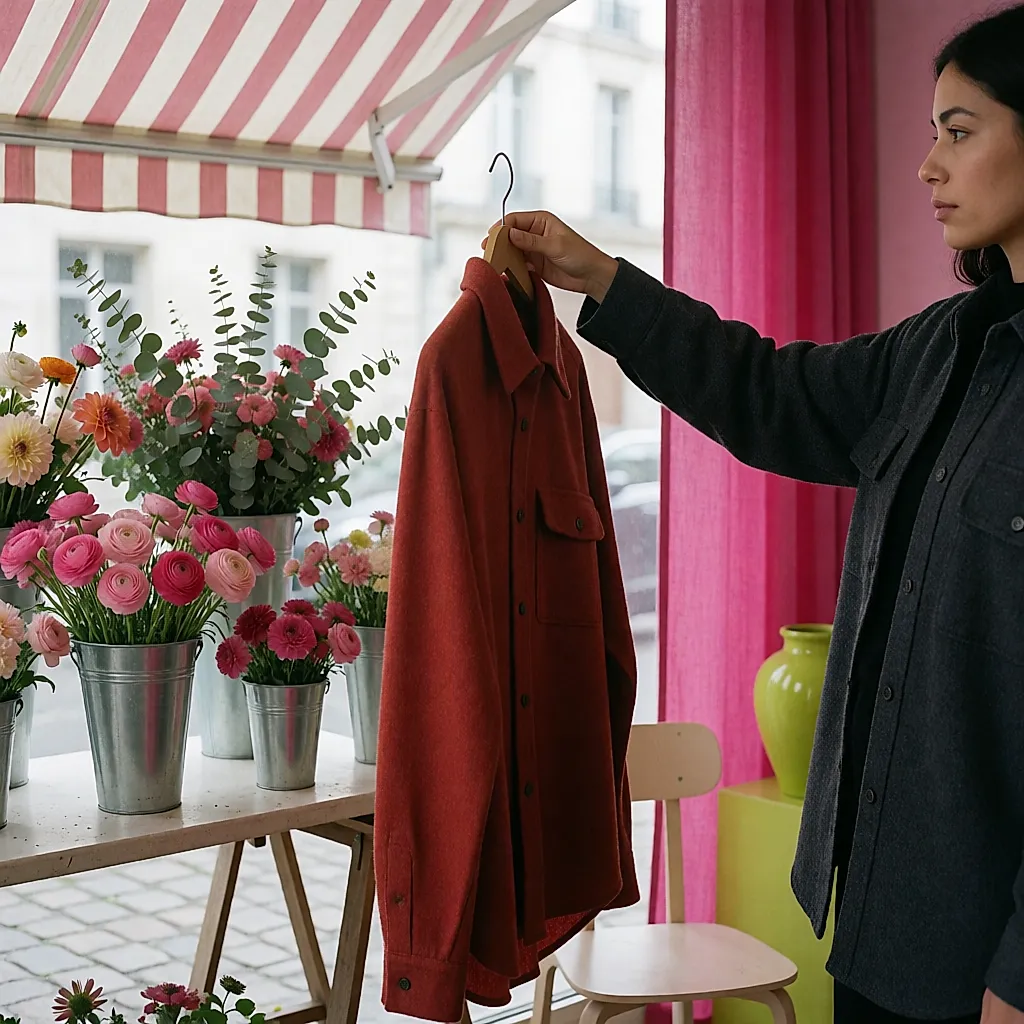
Colour does change something else, though: the way the cloth reads. Pale shades and ecru play up the fuzz and give a softer, almost pyjama-like look that needs a clean pair of jeans and a slightly stiff shoe to stop it drifting. Darks absorb light and make the fabric look heavier than it is — handy when you want a jacket silhouette without paying for the thickness. Prints, meanwhile, are less forgiving of a false crease than a solid colour.
Where the money goes
The bands hold up pretty well. Expect to pay in the region of £35–£80 for a high-street flannel, often a blend — check the label. £100–£220 buys a mid-range piece that's mostly wool, with a better cut and seams that won't give up in the first winter. Beyond £250 you're mostly paying for the cut and the quality of the wool: that's where you find the flannel that genuinely replaces a jacket. In charity shops, vintage shops and at car-boot sales, £15–£50, with a risk you accept — second-hand milling is uneven, and some pieces have already been washed too many times.
Worth knowing when money is tight: a second-hand workwear overshirt, often heavier than average, or a boiled-wool gilet slipped under a light jacket. Less spectacular, perhaps, but often just as warm and a good deal cheaper.
Turn the label over before you pay. The wool (or cotton) content gives you a decent idea of how it will wash and how it will hold up over time. A synthetic lining isn't disqualifying on a heavy piece, but it affects breathability. And be wary of a flannel billed as "ultra-soft" with no clear composition: that's often the sign of a blend that's mostly synthetic.
How it copes with washing
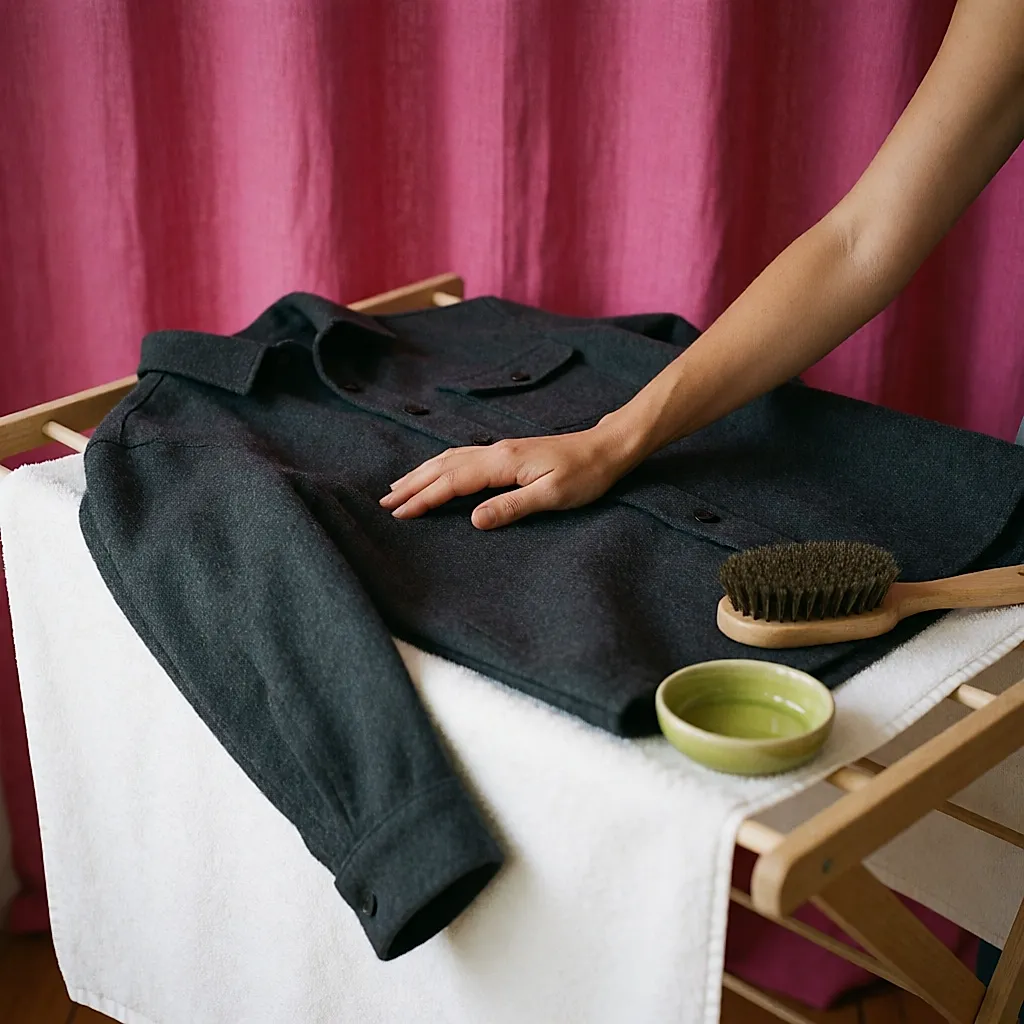
A heavy flannel doesn't like hot water and hates the tumble dryer, which mills it for good and robs it of its softness. In practice, wear it three or four times before washing — it doesn't hold odours the way thin cotton does — then wash cold, on a delicate cycle, with a gentle spin, and dry it flat. A brush-down between wears does the rest.
And if it itches? Another machine wash won't fix it: that's usually just the wool doing what wool does. A cotton or silk T-shirt underneath and the matter is settled.
In the end, the criterion that counts isn't the one you'd expect. A successful flannel is the one you pull on without thinking to pop out for the Sunday paper on a November morning, and don't take off when you get back. If you're still hesitating in front of the mirror, the weight isn't there — and an honest overshirt beats a jacket that's only pretending.

Comments
Your opinion matters: rate the article, react and reply to comments.
Comments are moderated; AI-assisted comments are flagged. Text emoticons (8-), :-), <3…) are automatically shown as images.