

Trainers can go through the wash without complaint; a leather bag has never asked for anything more than a soft cloth and a quiet life. That's the best news of the season: the most expensive piece in your wardrobe is also the least demanding. As long as you stop slathering it like butter on toast.
A leather bag is still a skin: fibres, suppleness and a structure that lets it sit upright on your shoulder instead of collapsing like a sock. And it's that structure you wear out by trying too hard.
The over-creaming trap
Let's be honest: we've all had a 'right, I'm going to look after this' phase. One motivated Sunday, out comes the jar, you use a pea-sized amount, then a bit more, then you rather enjoy it and do the same the following weekend. The trouble is that leather loaded with oil goes soft — and soft leather means a bag that gapes open, whose corners get crushed and whose surface catches everything it brushes against: dust, coat fluff, crumbs from the bottom of the tote.
Cream isn't bad in itself. It's the frequency that's the problem: in a thick, repeated layer, it builds up in creases, dulls the grain and leaves that sticky film you mistake for shine. Leather doesn't need feeding every month; it needs keeping an eye on. A subtle difference in wording, a real difference in the result.
A care rhythm to suit how you use it
Our practical cue is to give it some attention when the seasons change — when the winter coat replaces the sandals, and vice versa. It isn't an official rule: this rhythm follows your wardrobe rather than a clever timetable, and it often lands at the right time, because that's when the bag changes routine, and therefore demands.
You can, of course, adapt the rhythm to real use. Heavy use may justify extra targeted care on the areas that rub — handles, corners, flap — depending on the condition of the leather. An evening bag that rarely comes out needs nothing more than a wipe with a dry cloth. And if you catch yourself reaching for the pot thinking 'ooh, it's been a while', put it away: that's a sign there was nothing to do.
The routine, step by step
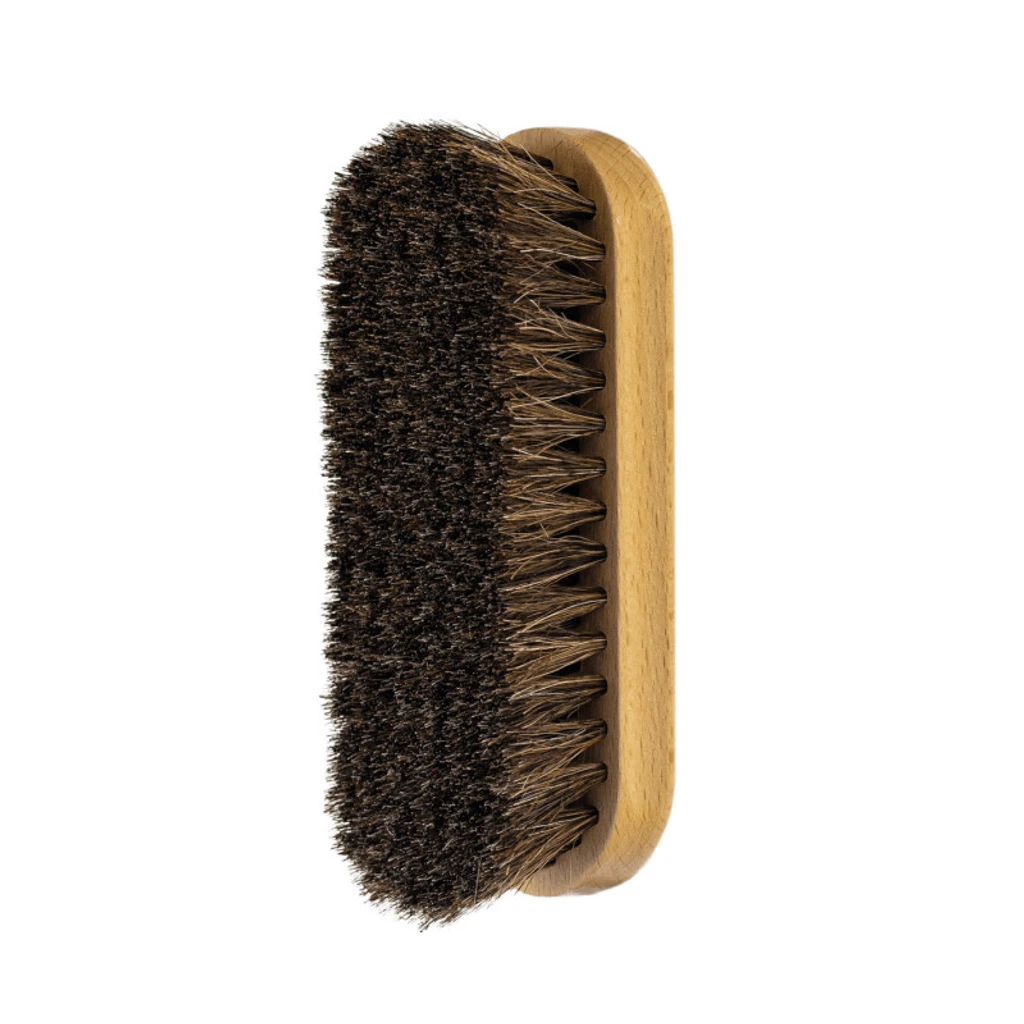
Always start by emptying it. Not a symbolic sort-out: everything comes out, including the 2023 receipt and the pen that left its little signature. Then go over it with a soft-bristled brush or a slightly damp — never wet — microfibre cloth to remove dust from the seams and folds. Clean leather dry, or nearly so; excess water marks it, especially on untreated vegetable-tanned hides.
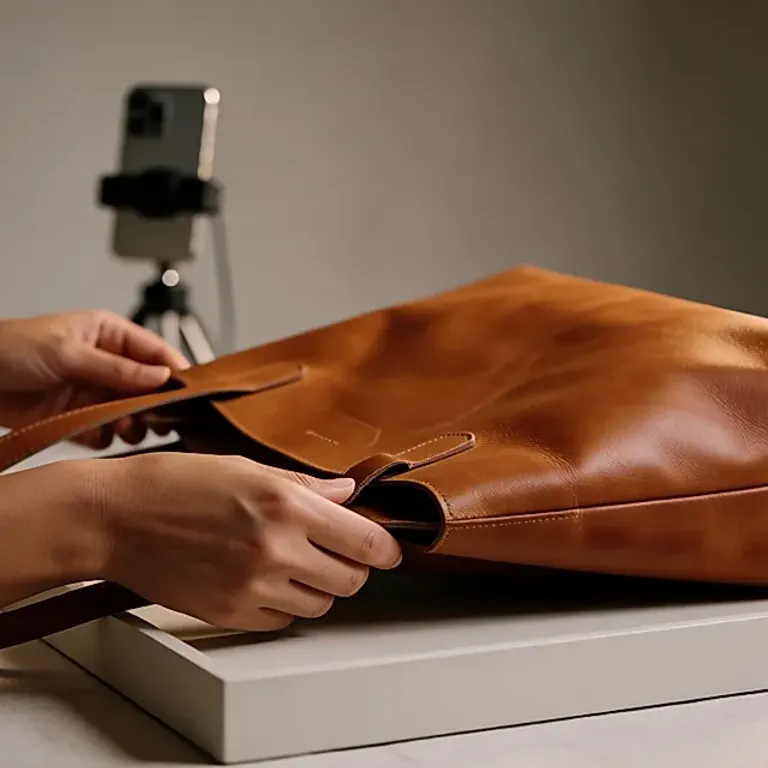
Then comes the cream, in a thin layer, applied by hand or with a cloth in small circles, then left to sink in before buffing the leather with a clean cloth. The advice people often forget: test on a hidden area under the flap or at the back before treating the whole surface, especially on light or patinated leather. And no hairdryer, no radiator to speed things up — leave it to dry in the air, in the shade.
Storage does half the work
A well-cared-for bag that is badly stored can deteriorate early. Enemy number one isn't time, it's dry heat: a radiator, a cupboard next to a south-facing window, and the leather cracks without warning. Enemy number two is the empty bag squashed under three pairs of boots.
So: stuff it with tissue paper to keep its shape, store it in a cotton dust bag — never a plastic bag, which traps moisture — and lay the handles flat or hang them, rather than folding them. A bag that keeps its structure also keeps its resale value, which is not the least of its qualities.
The paper-towel test. If your bag leaves a greasy mark on a paper towel wiped over the leather, there is too much product: stop using cream, rub gently with a clean cloth and let it breathe for a while before you start caring for it again.
Budget
Good news: over-treating a bag costs more than looking after it. A nourishing leather cream costs around £7–£18 in a chemist, hardware shop or shoe repairer's, and £18–£35 for a specialist leather-care range — one pot will easily last several years at this rate. Add a soft-bristled brush (£5–£12) and a microfibre cloth (£3–£7): the initial outlay comes to around £15–£40.
For services, allow £20–£55 for a full clean at a shoe repairer's, depending on the size and condition of the bag; it's worth using one when the leather needs it, or before selling the bag on. For storage, a cotton dust bag costs £10–£20; a pad made from saved tissue paper does the job perfectly, for free. And if the leather is already cracked or stained, head to the shoe repairer rather than the cream pot: at that point it's no longer care, it's repair.
A leather bag is a bit like a good pair of jeans: the less you fiddle with it, the better it ages. Occasional sessions, by hand, a thin layer, storage away from the radiator — and you'll see the patina settle in quietly, year after year. That's where a piece earns its value: not when it's new, but in the worn-in version that still holds its shape.
Comments
Your opinion matters: rate the article, react and reply to comments.
Comments are moderated; AI-assisted comments are flagged. Text emoticons (8-), :-), <3…) are automatically shown as images.