
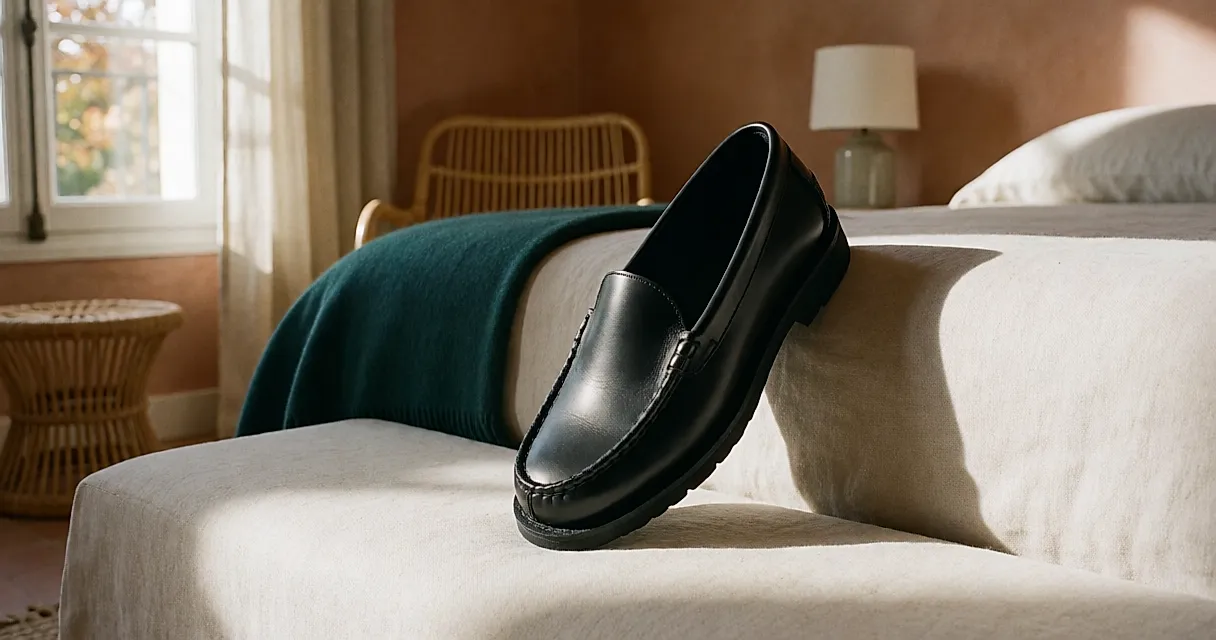
The difference between a pair of loafers that lasts for years and a pair that gives up before the season is out comes down to a few centimetres of thread, tucked under your feet. That thread is the stitching that joins the upper to the sole, and it decides almost everything: whether the pair can be repaired, or whether it will end up in the bin along with that small sting of having paid for cardboard. Nobody points this out at the till. So it is worth knowing how to spot it yourself.
The thread, the glue and the welt
A stitched loafer is held together by stitching: a thread runs through the upper and the sole, sometimes visible all the way around the shoe, along that welt—the narrow strip that creates a neat ridge. A glued loafer is held together by glue pressed with heat, and nothing else. The difference is not obvious in a shop window—it becomes obvious when you turn the shoe over and look for the stitch.
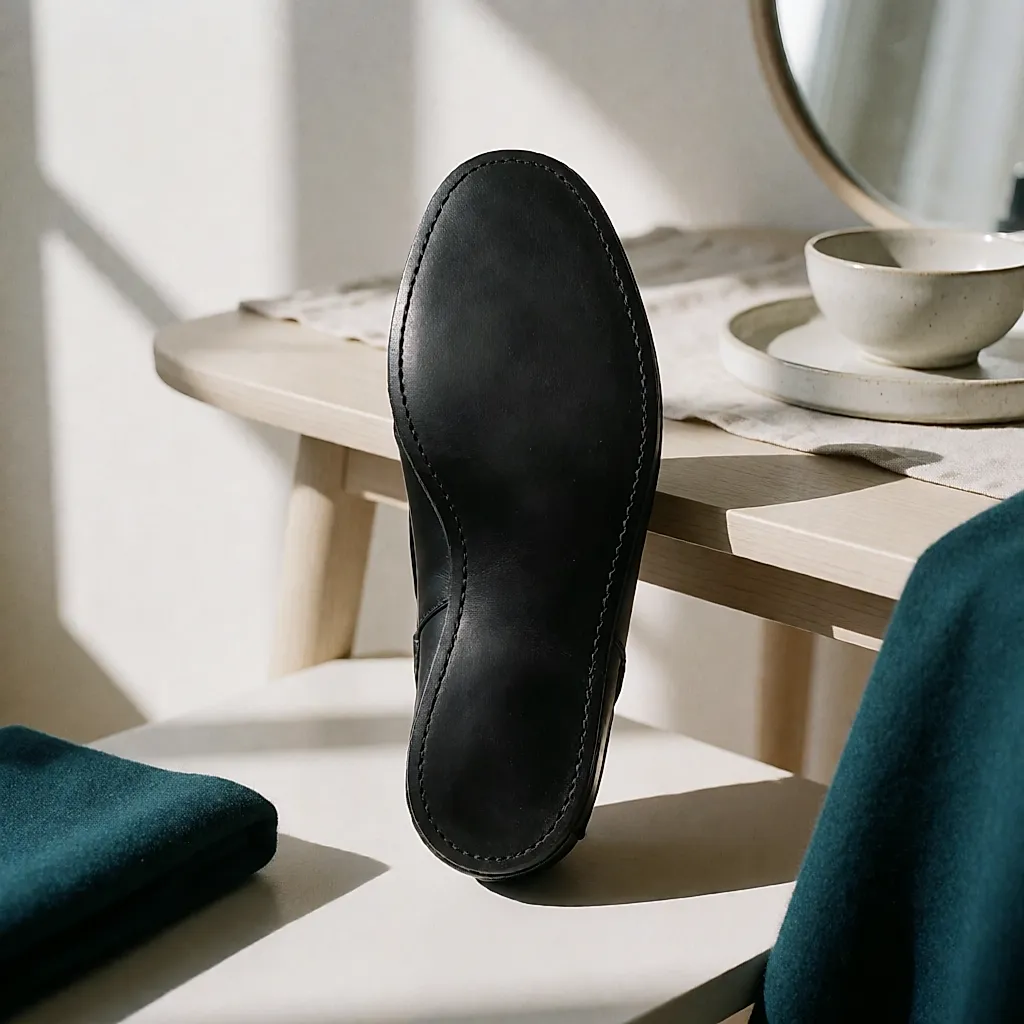
The check takes ten seconds, and it is worth looking a little odd in the middle of the shoe department. Lift the loafer and look at the edge of the sole: a thread running all the way round is a strong sign of stitched construction, often Goodyear welted. But the absence of one does not prove the shoe is glued: with Blake construction, the stitching may not show in that spot. For Blake, check the sole underneath or the inside. Above all, trust an explicit mention of the construction on the product page: look for Blake stitched (through-stitching, flexible sole, can be resoled by a properly equipped cobbler) or Goodyear welted (stiffer, but the sole can be replaced several times). If the description mentions glued construction, or says nothing at all, ask the sales assistant: a clear answer, or a vague one, tells you as much as the shoe itself.
One important caveat: decorative stitching can imitate the real thing. The explicit construction note is still the best clue; the thread only confirms it.
Why glued pairs win in the shop window
A glued sole is cheaper to produce: glue, a press, no stitching labour. The result is loafers at £50–£120, against £180–£350 for a new, well-made stitched pair. In the moment, the calculator leans towards glued—and for some uses that is a perfectly reasonable choice: a pair for two seasons, a few outfits, a tight budget. You own it and don't kid yourself.
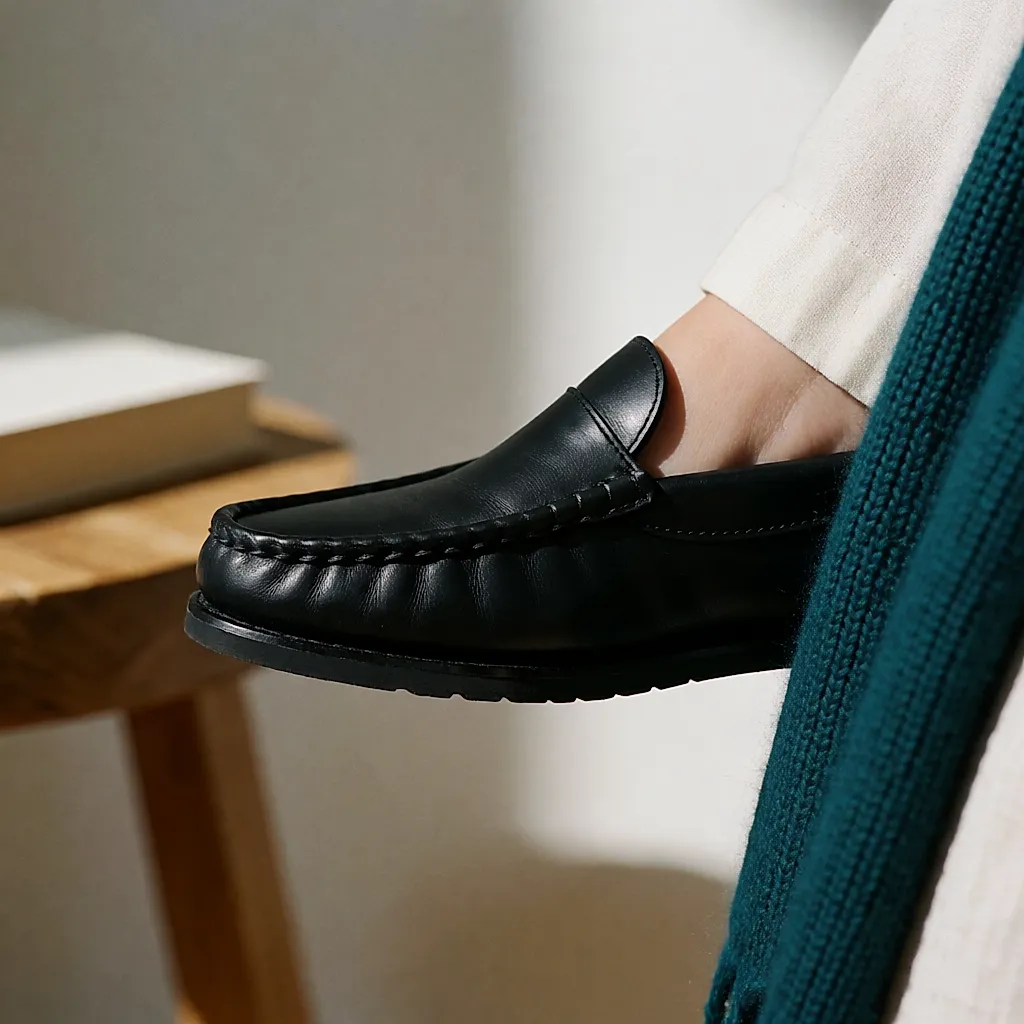
Except that glued pairs have a shelf life. When the sole wears out, replacing it can be a real slog, whereas a stitched pair goes to the cobbler for a resole at £60–£120. If you walk a lot, if you like keeping your things or if you want a pair that will stay with you for years, glued is not your ally. A professional can re-glue a sole that is gaping—but giving a worn glued sole a second life is, in practice, another story.
Second-hand shopping rewards stitched soles
This is where stitched pairs become a smart buy: on second-hand platforms, a used pair of stitched loafers often goes for £40–£120. Add a resole and you end up with a shoe for years, at the price of a new glued pair—a genuinely good find.
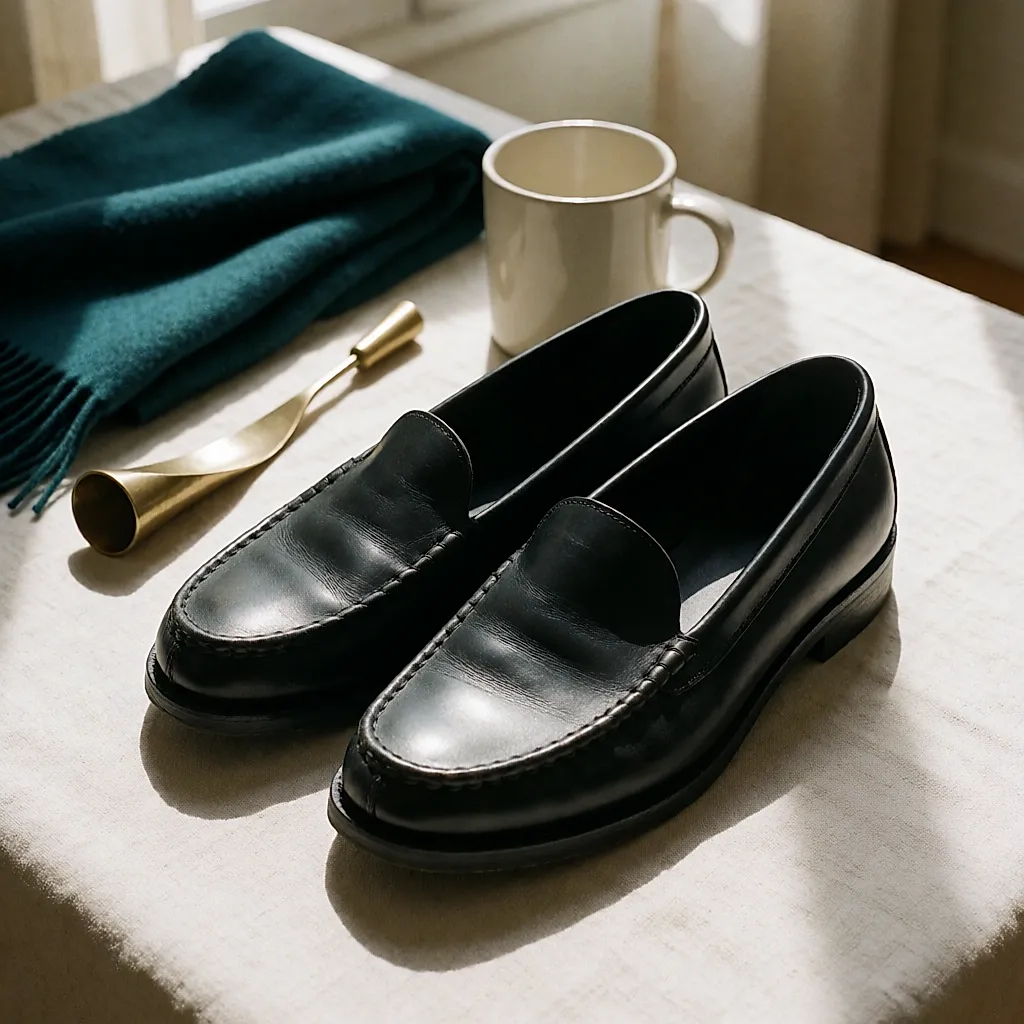
But you need to know what you are looking at. Ask for a photo of the sole (heel wear, any holes), the inside (a marked insole can sometimes be replaced) and the edge, that famous welt. Surface-cracked leather, on the other hand, cannot be rescued: walk away without feeling guilty. And if the seller does not know whether their pair is stitched or glued, rely on an explicit mention of the construction and ask for a photo of the sole underneath: the edge alone cannot always settle it, especially with Blake.
Care is what really makes the difference
A badly treated stitched pair is no better than a well-worn glued one. The rule comes down to three habits: wooden shoe trees slipped in as soon as you take them off, a day's rest between wears to let the leather breathe, and a little conditioning cream when the leather starts to feel tight. Vegetable-tanned leather responds well to this care—it darkens beautifully over the years and stays supple instead of splitting.
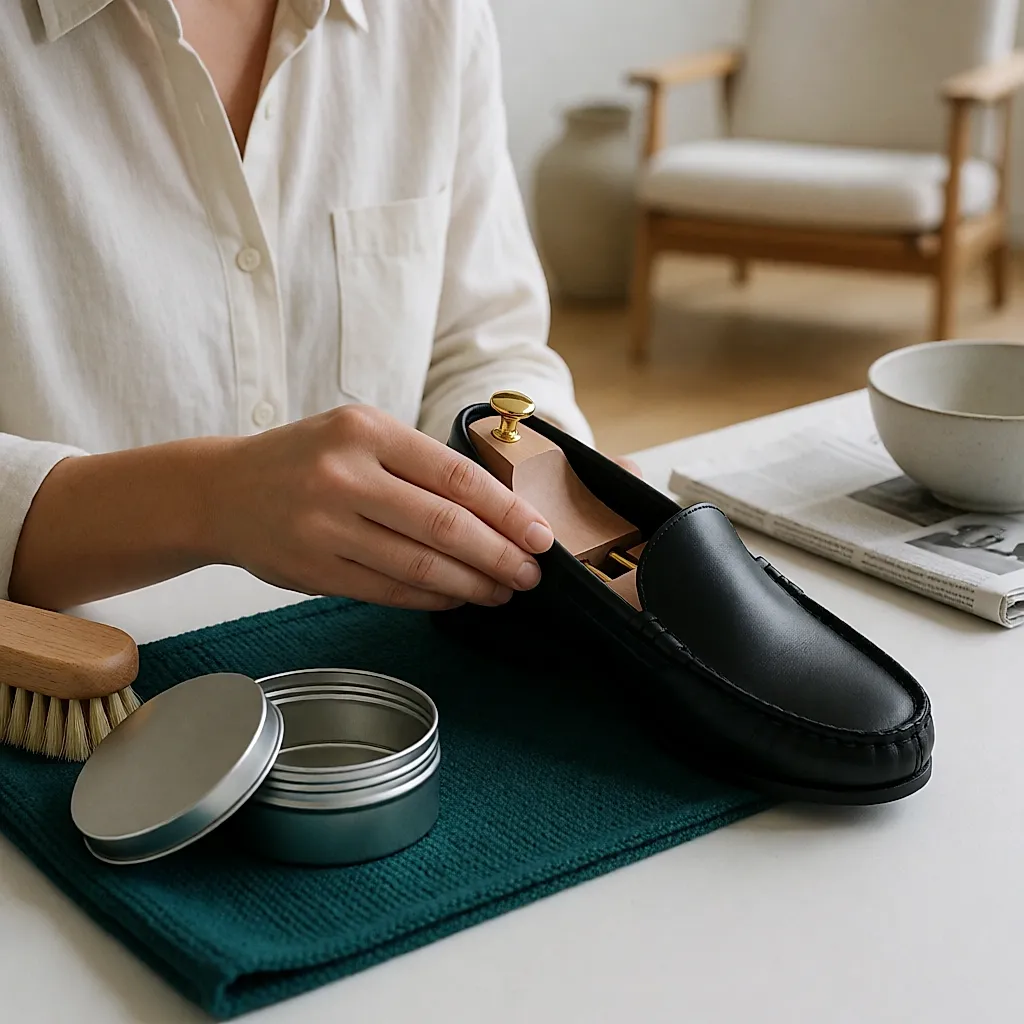
And then there is the cobbler, an underrated local figure: heels, sole protectors, resoling. A pair that is looked after can go through several soles without the upper giving out. That is when the initial price starts to divide itself in your head, and 'it was expensive' turns into 'it was an investment'.
The ten-second check, whether you are in a shop or looking at a second-hand listing:
- Turn the shoe over and look for a neat line of thread around the sole edge: it is a sign of stitched construction, often Goodyear welted.
- Read the product page: 'stitched', 'Blake', 'Goodyear'—or nothing at all, which is already an answer. The stated construction comes first.
- Ask the seller, even online. A hesitant answer says a lot.
- On a listing, ask for a sharp photo of the sole underneath, the inside and the edge before you pay: with Blake, the stitching may not show on the edge.
Budget
Expect to pay £50–£120 for a new glued loafer (high-street chains, department stores, online), £180–£350 for a new stitched pair made in Europe, and more at some brands. Second-hand, a stitched pair can be found for £40–£120 depending on condition, on resale platforms, in charity shops or at consignment stores. A resole costs around £60–£120 at a local cobbler, depending on the city and the type of sole; cedar shoe trees cost £15–£30.
The final choice is simple. If you change shoes on a whim and don't walk much, a well-chosen glued pair will do the job. If you want the pair you keep, repair and love a little more each year, put your budget into a stitched sole—and find it a cobbler you trust. Your feet will thank you, and so will your wallet, over time.


Comments
Your opinion matters: rate the article, react and reply to comments.
Comments are moderated; AI-assisted comments are flagged. Text emoticons (8-), :-), <3…) are automatically shown as images.