
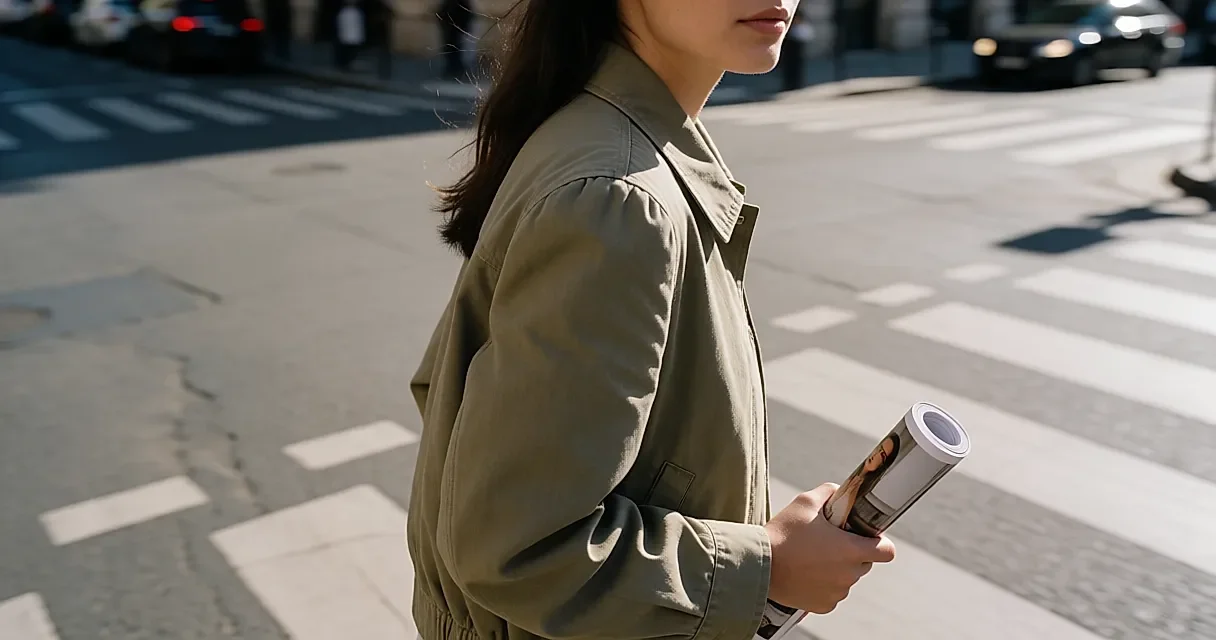
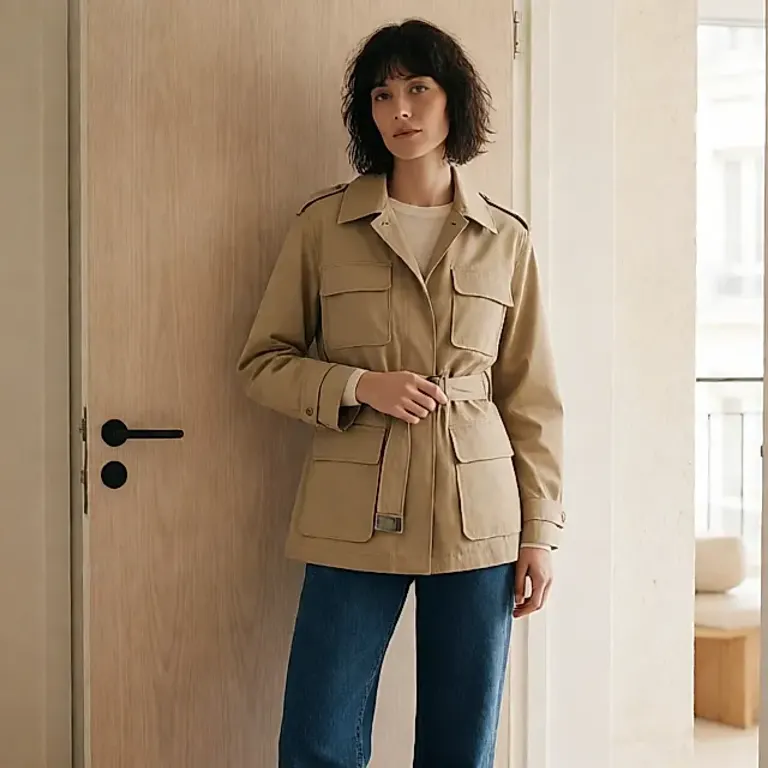
On the hanger, the jacket's shoulder makes a neat little dome, almost a shell. You put it on expecting a removal man's shoulders, and nothing of the sort happens: the padding moves with you instead of arriving first. That is the nuance of the moment — the structured shoulder is back, but it has learned how to disappear.
The shoulder that holds, not the one that broadens
A jacket with no construction is just an expensive shirt: it slips off the shoulders, the neckline gapes and the front hangs askew. A structured shoulder — a shoulder pad, a little wadding, sometimes only two layers of fabric — is there first of all to hold the line. It gives the lapel something to hold itself up with and the front of the jacket something to fall straight from.
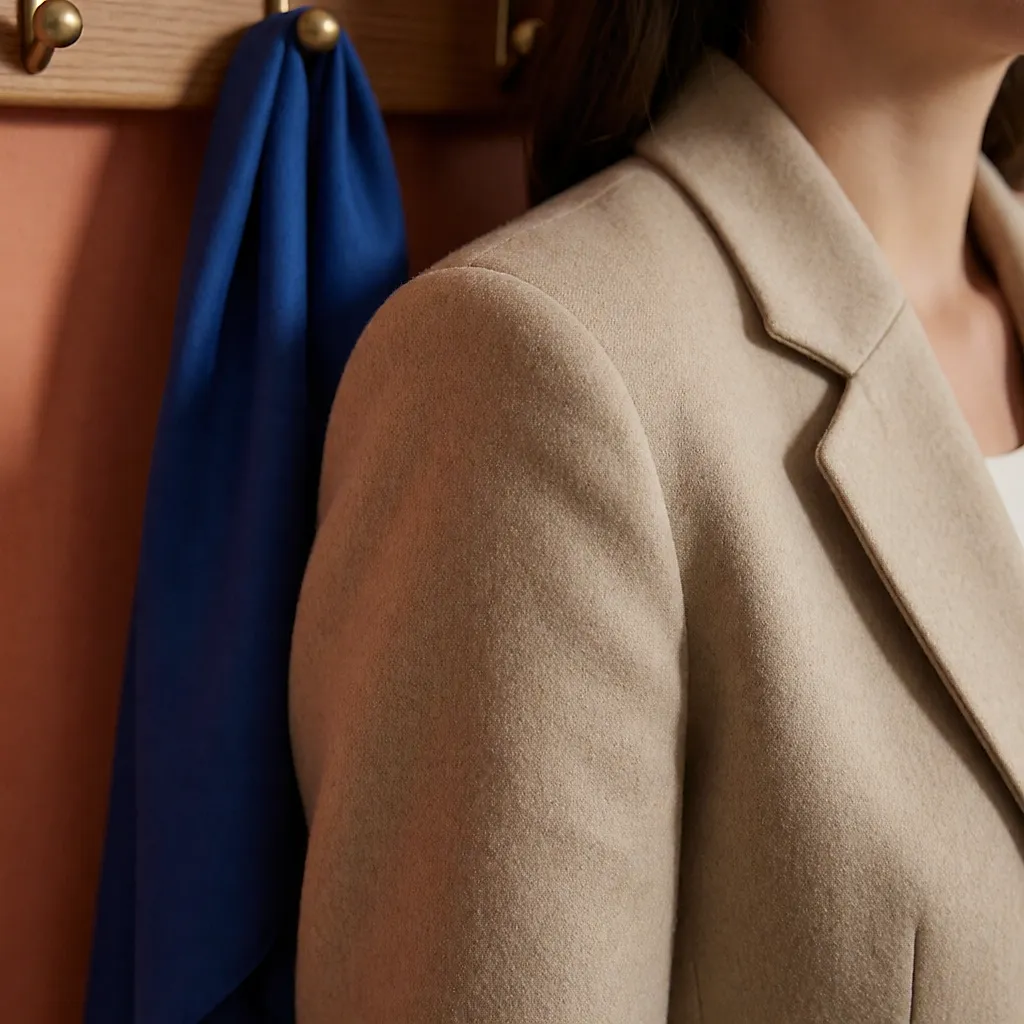
Then comes the dose. In the 1980s, shoulders were stacked: the shoulder entered the room before you did. The versions around now are finer, often soft, sometimes reduced to a barely marked structured shoulder. Which raises a fair question: what is the point of padding you cannot see? Because it is no longer about widening, but about structuring. The silhouette does not gain five centimetres across the shoulders; it gains drape.
The fabric does half the work
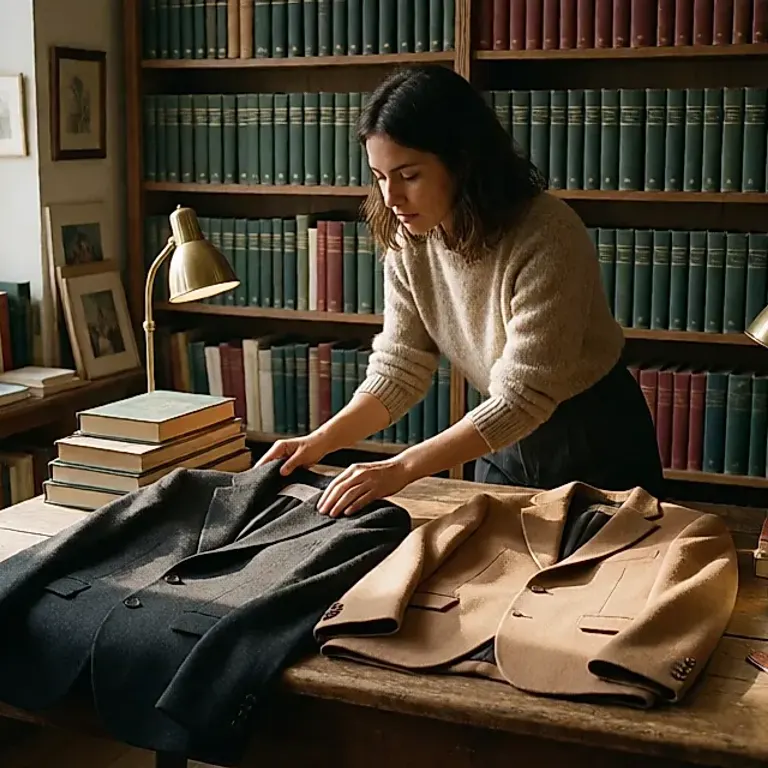
It all comes down to the shoulder-fabric duo. A slightly dry wool cloth, a gabardine, a tweed: the fabric holds itself, the shoulder stays crisp and the jacket keeps its poise from morning to evening. A very soft wool or a fine jersey, by contrast, lets the shoulder slump, and the padding starts floating in mid-air like a cushion that is too big for its cover.
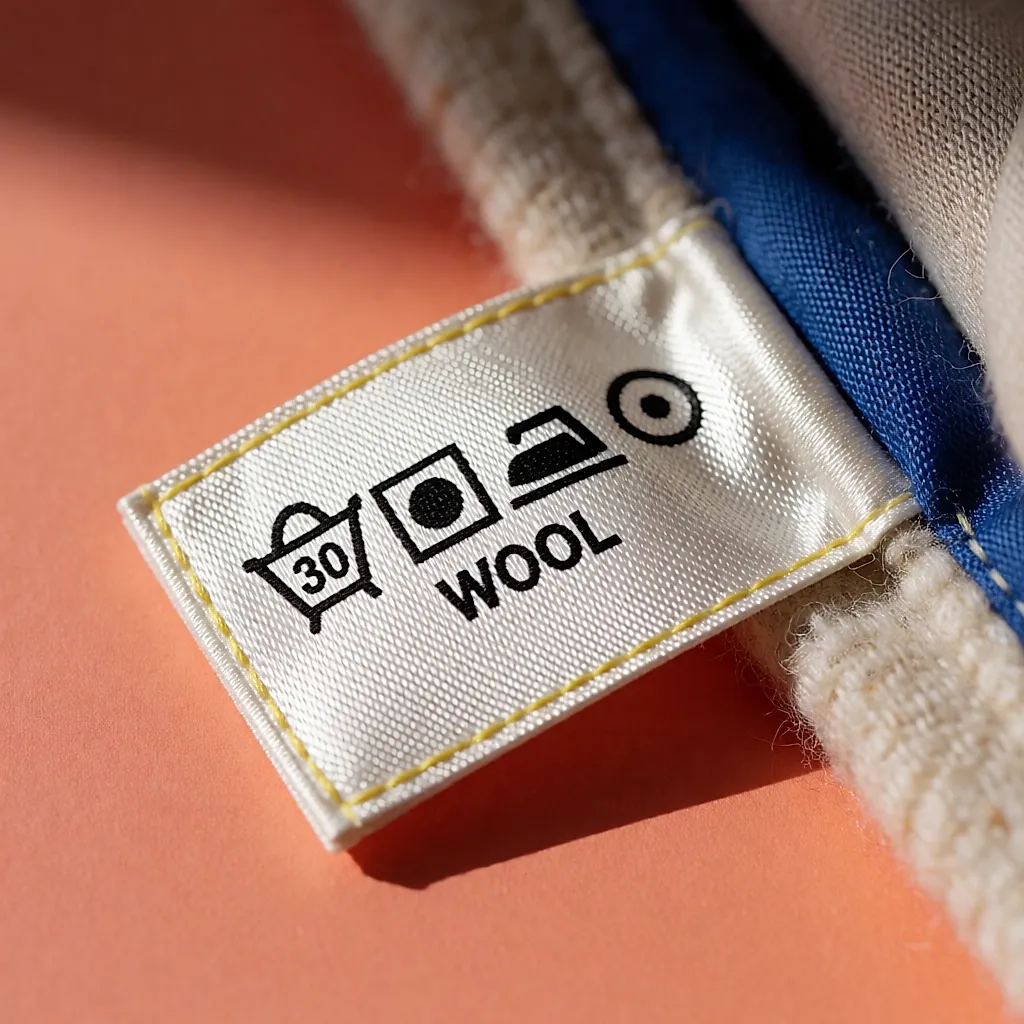
How do you decide before you get to the till? Look at the label, then judge the drape. A structured-shoulder jacket in a fluid fabric can be a very good find — it wears like a cardigan, without the armour effect — provided the fabric stays close to the body. Merino wool, recycled wool, organic cotton, linen, silk: these are the fabrics that can give that hold. Just check the share of synthetic fibres: they sometimes make a piece heavier without adding anything to the look.
Three moves in the fitting room
The first: raise your arms, then bring them forward as if you were reaching for the back of a chair. If the shoulder climbs up to your ears or the armhole gapes, the jacket is too narrow there — and no simple alteration will really put that right.
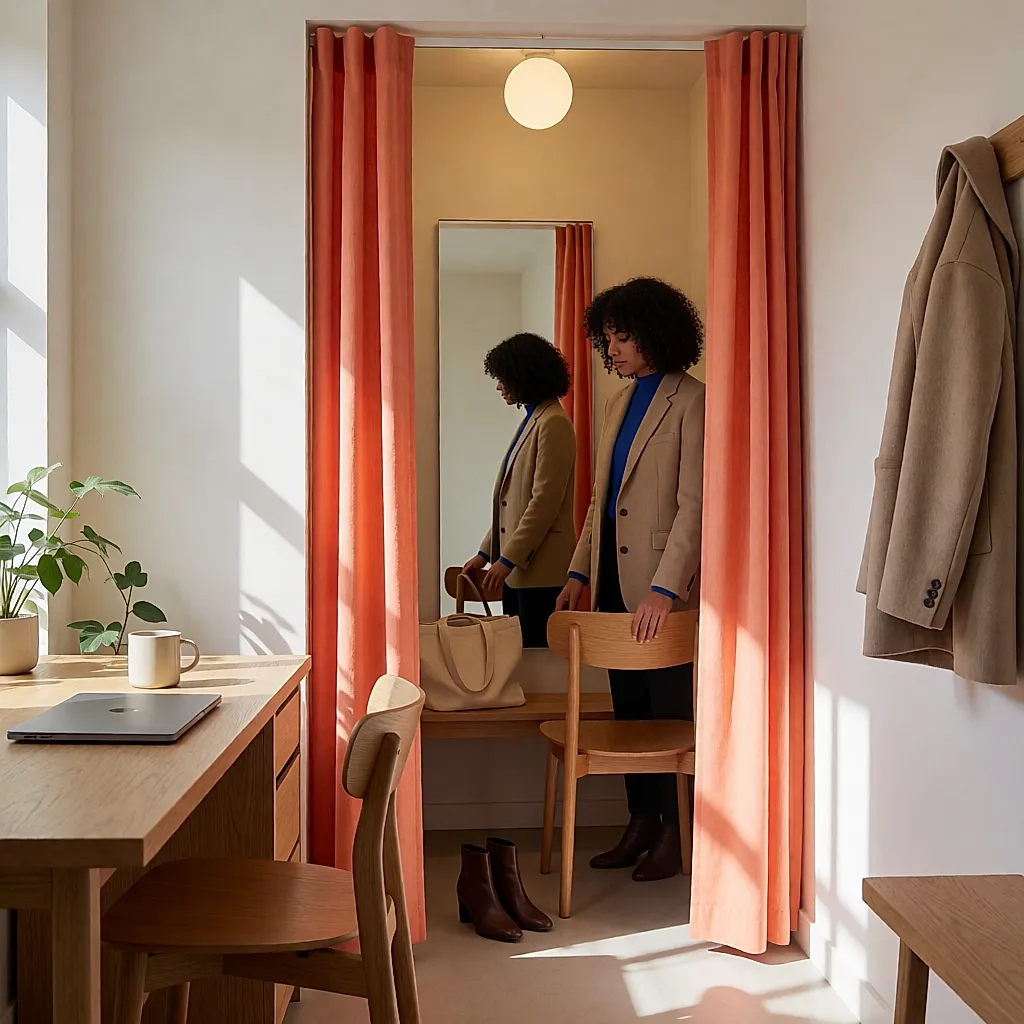
The second: sit down. Your shoulders should neither lift nor push the collar away from your neck. The third: put the jacket on over the jumper you will actually wear in December, not over a July T-shirt. This is the classic jacket that is perfect in the fitting room but too tight at home — do not get caught out again.
The landmark that matters stays the same: the shoulder seam falls at the tip of the shoulder bone. Not before, not after. If it floats beyond it, the jacket will float around you.
For the office or for the weekend?
Good news for narrow frames and slightly sloping shoulders: a lightly structured shoulder straightens the line without adding anything artificial. It is also an ally for anyone who finds 'shapeless' jackets dull as dishwater.

If your shoulders are already broad and the padding is thick, though, you are close to the coat-stand effect. Go for a shoulder that is only just hinted at, or a jacket whose structure comes from the fabric rather than the wadding. Then there is the question of use: the crisp version holds up through a day at the office without wilting, while the soft version is lovely at weekends but creases on public transport. Two lives, two jackets — there is no point asking one to do everything.
Budget
Expect to pay £60 to £150 on the high street for a decent structured-shoulder jacket, often in a wool blend: that is where the good mid-range finds are, provided you read the composition. Between £200 and £450, you are into tailoring-led ready-to-wear, with more substantial fabrics and better-shaped armholes. In second-hand and consignment stores, a well-made jacket can turn up for £30 to £80, sometimes less: a good way to try the trend without committing.
Also budget for alterations: £20 to £40 to shorten the sleeves or take a jacket in slightly, and a £40 second-hand jacket often ends up fitting better than a badly cut new buy. Just check first that the shoulder is right for you — it is the one thing a tailor cannot redo without taking the whole jacket apart.
The hanger test: hang the jacket on a wide hanger. If the shoulders slump or break inwards, the construction is weak. If they keep their line, you have a piece that should wear well over time.
That leaves a simple decision. Small frame, tight budget, everyday wear: a lightly structured wool jacket, around £100, will do the job. Broad shoulders, or a preference for softness: look for structure in the fabric rather than the wadding. And if you are still dithering in front of the mirror, remember that the right question is not 'can I see it?' but 'does it hold?' A good shoulder is the one you forget as you put the jacket on and find still intact at the end of the day.
Comments
Your opinion matters: rate the article, react and reply to comments.
Comments are moderated; AI-assisted comments are flagged. Text emoticons (8-), :-), <3…) are automatically shown as images.