
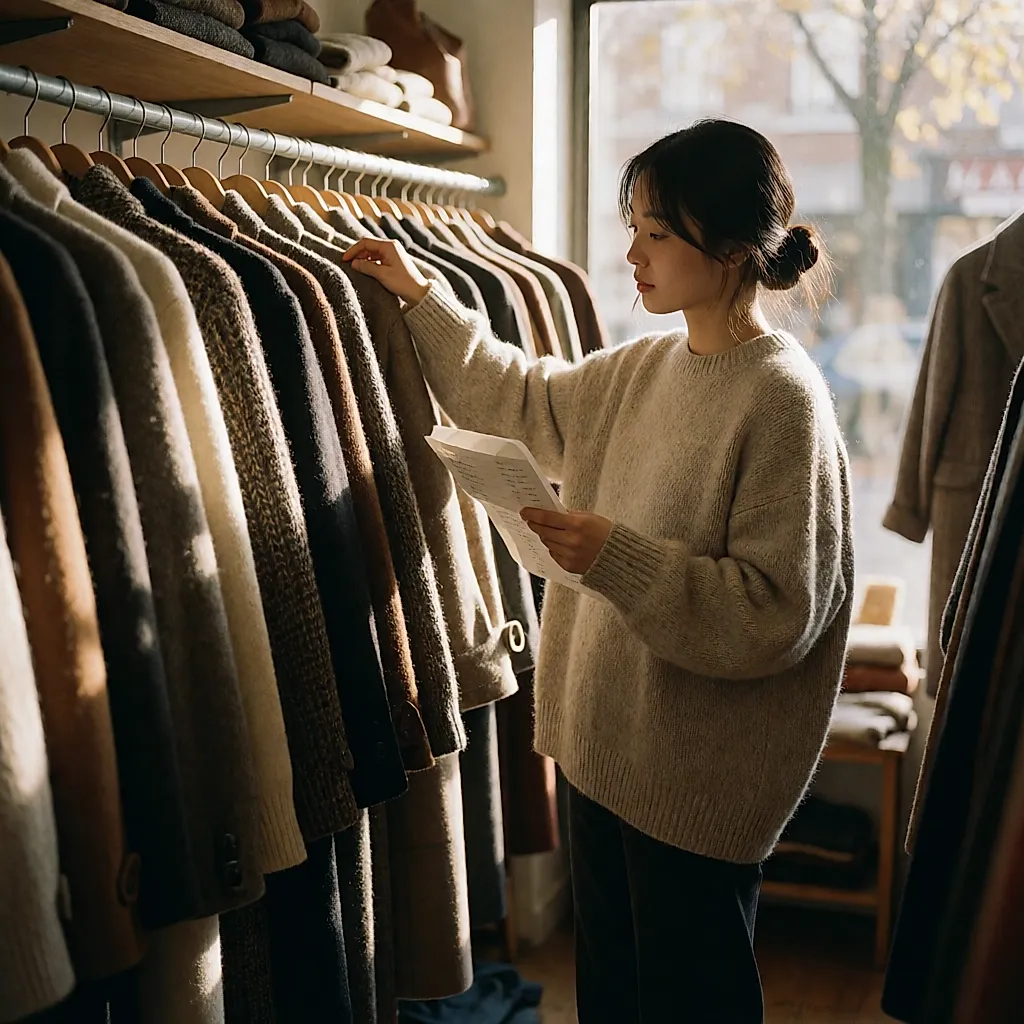
The rail creaks, the air smells of washing powder and damp wool, and you're already holding three hangers in your left hand when you only came in 'just to look'. We know how this ends.
Autumn is still the best season for second-hand. Back-to-school pop-ups take over old retail units, neighbourhood charity shops bring out coats and knits, and it's often when charity clothing outlets refresh their rails. All worth a detour—as long as you arrive with a plan rather than hope.
Walk in with three gaps, not a wish list
The reflex is to set off with a vague urge ('something woolly', 'something bold') and come home with anything. We reverse it: before you go out, open your wardrobe and write down three real gaps, stated precisely. A mid-season jacket that fits under a coat, black trousers that finish at the ankle, a fine knit that slips under a blazer. Three, not five.
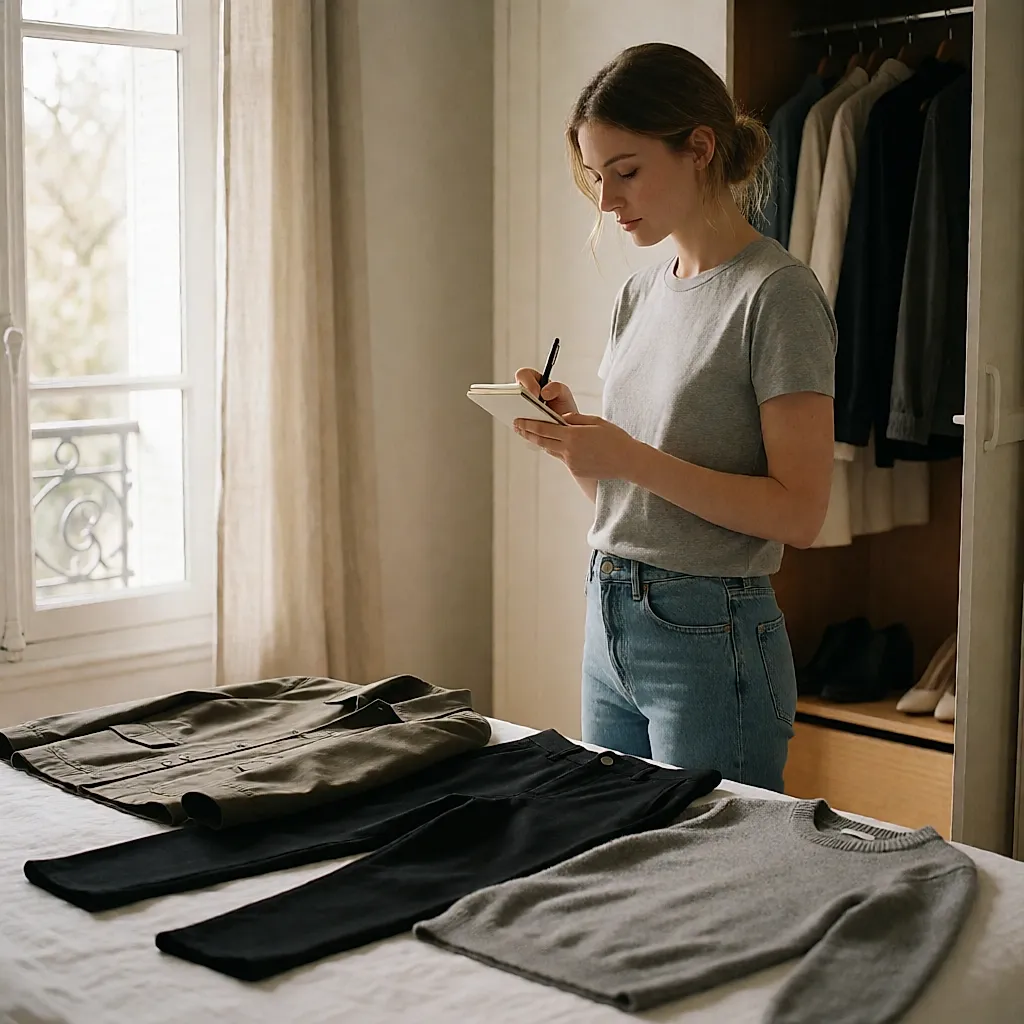
This short list is mostly there to help you say no. Because the real trap in a charity shop isn't a high price, it's a low one: at £4, you convince yourself it will find a use one day. Spoiler: no. The question to ask in the mirror is one sentence—would I have bought it at double the price? If the answer is no, it goes back on the rail.
Fabric first, label second
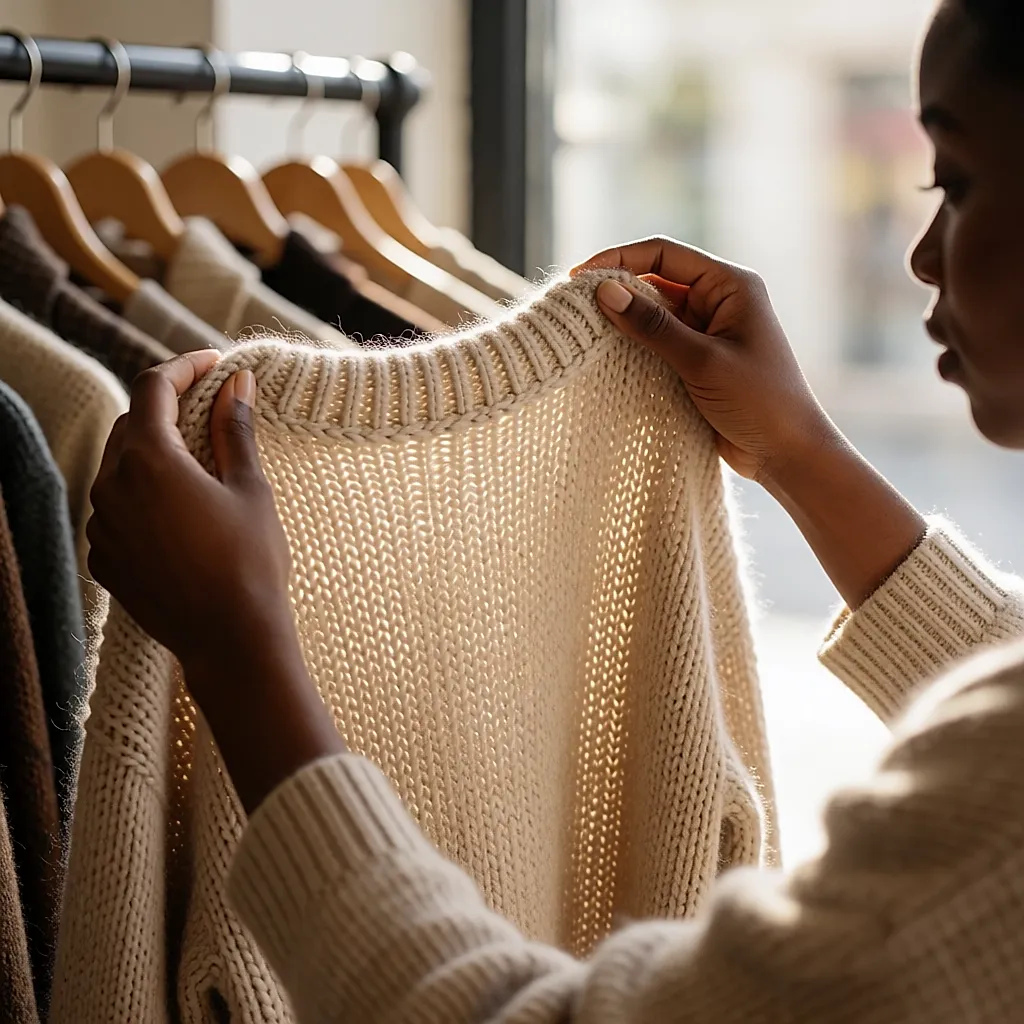
Touch before you read anything. Wool is judged by hand: dense and a little dry. Cotton by its weight; linen by its irregularities; leather by its grain and suppleness. Then hold the piece against the light: that's when you see the weave, its regularity, its thin patches. A knit that lets light through unevenly has already lived.
Look at the label for care more than brand. Hand wash, dry flat, dry clean only: these notes aren't decorative; they affect the real price of the piece. And if you spot a significant share of synthetic fibres—common in cheap knits and linings—just know what you're buying: it keeps you warm, bobbles quickly and recycles poorly. The warning is enough; second-hand already has so much to offer in wool, cotton, linen or leather.
Seams, wear and the sniff test
Turn the piece inside out: that's where it all plays out. Shoulder and armhole seams, hems, fastenings, buttons—tug gently, check whether the threads hold. Then go over the wear zones: the crotch of jeans, the underarms of a blouse, the elbows of a jumper, the cuffs of a jacket. A knit stretched at the elbows doesn't bounce back.
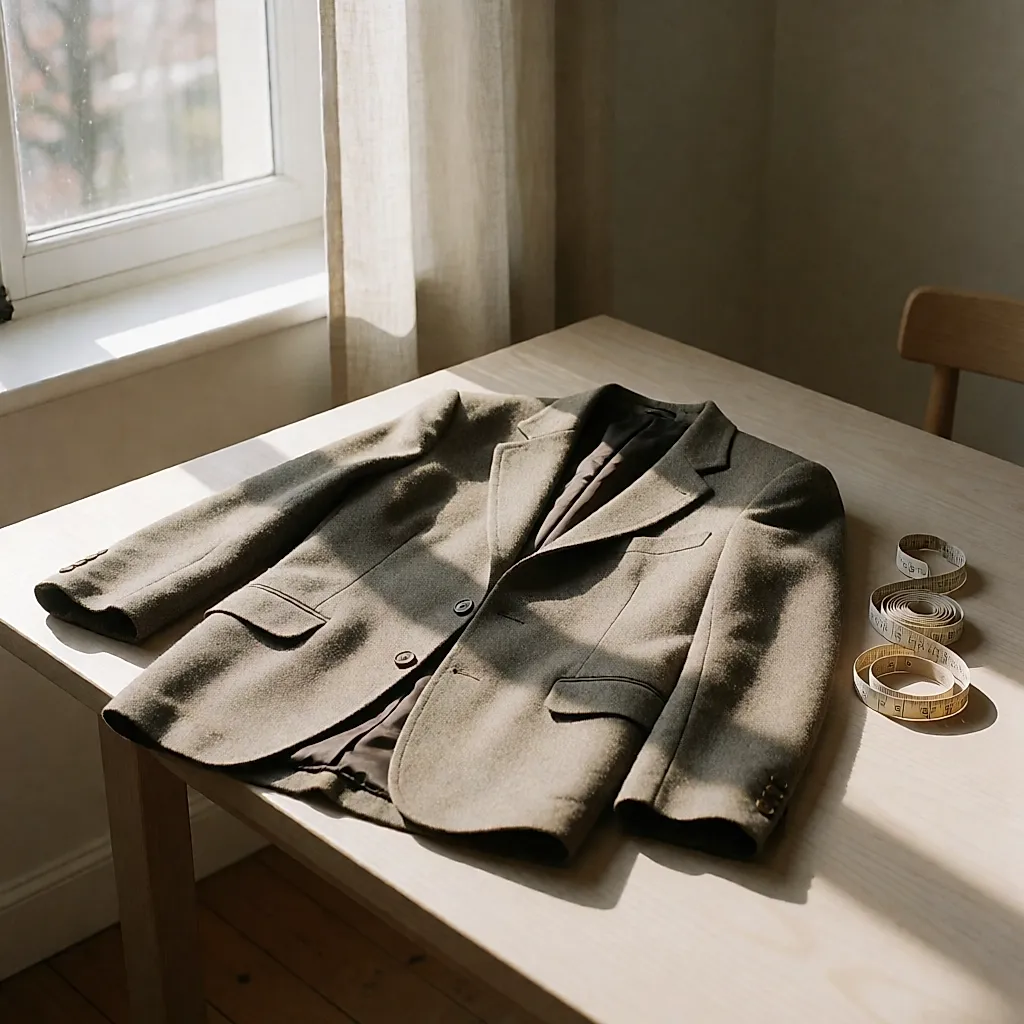
Two clues people forget. The first is smell: a musty note, or a very strong perfume, can mask damp storage—and dry cleaning won't erase everything. The second is structural: a hanging lining, a catching zip, a belt that's lost its shape all signal costs. That's how you tell a good find from a future donation bag.
The three-outfit test
The piece is on you, and the right question isn't 'is it pretty?' It's 'what will it go with?' The three-outfit test is ruthless and remarkably effective: if you can't mentally match it to three outfits already in your wardrobe—jeans and a jumper, a skirt and a blazer, a dress and boots—it will stay on its hanger. A moment of enthusiasm isn't enough to wear a garment.
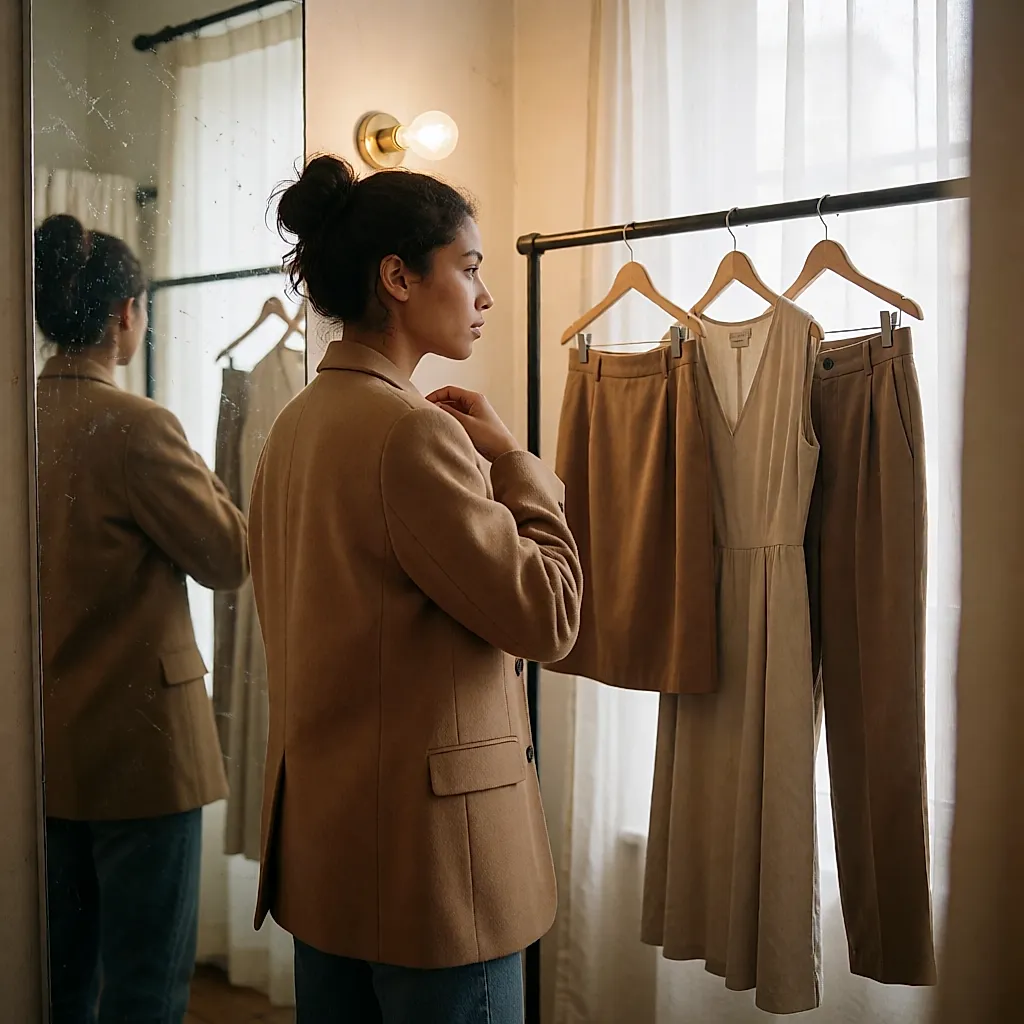
And you have to learn to leave empty-handed. It stings the ego; it's excellent for the wardrobe. An afternoon with no find isn't wasted: you leave with a clearer idea of what you're missing, which makes the next hunt more precise. The pieces you keep for ten years almost always arrive without being hunted for—but never without being recognised.
What the till doesn't tell you
The price tag isn't the final price. Before you pay, two questions. Are alterations possible? A hem, a take-in or shortened sleeves are straightforward on a structured piece; on a knit or lined garment, it's trickier, sometimes impossible—and that makes a real difference. Then, what care does it need? A jumper that demands hand washing every fortnight doesn't live the same life as jeans you leave alone for three weeks.
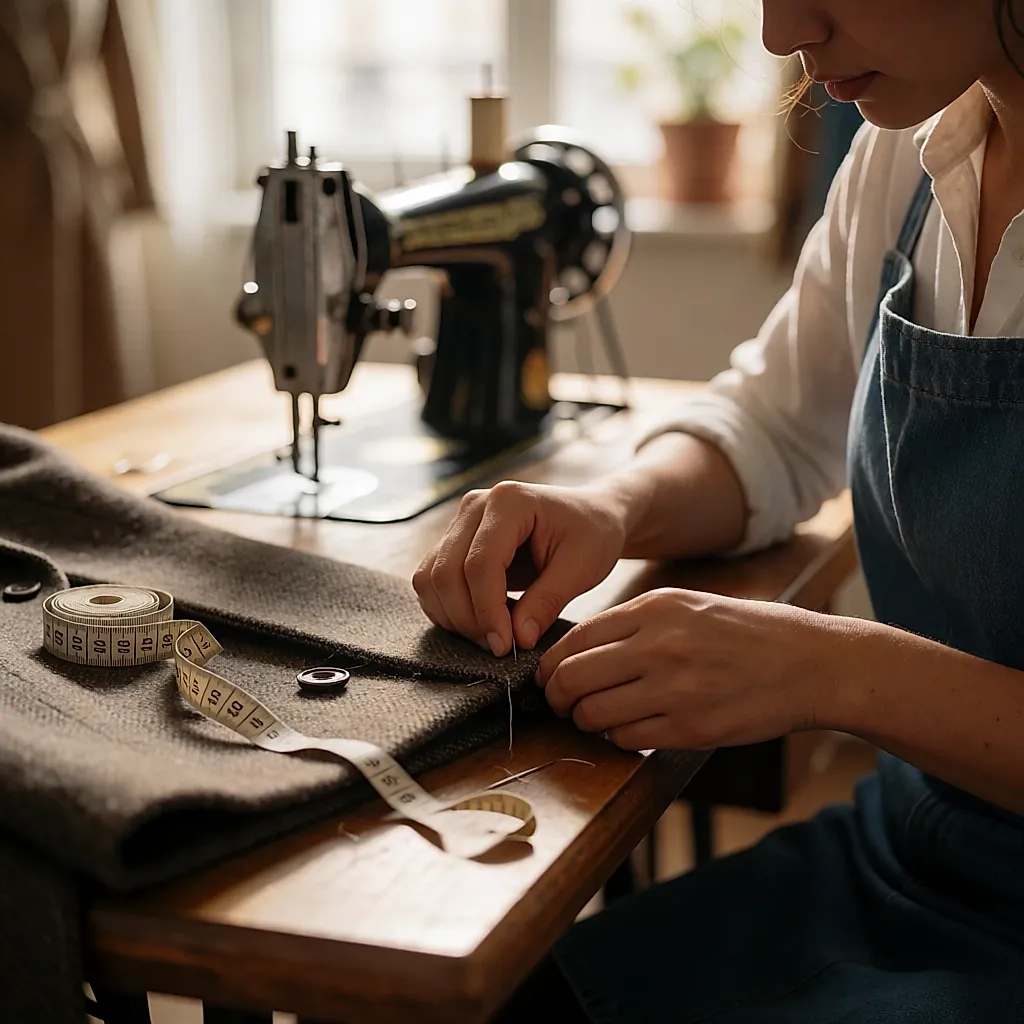
Then there's the question of fair price. A £30 piece that needs £25 of dry cleaning and £20 of alterations isn't a £30 piece: it's £75, and at that price it has to be worth it. That's not a reason to shun second-hand, it's a reason to count cleaning in before—and to negotiate when the piece already shows its scars. In charity shops, prices are usually fixed; in consignment shops or pop-ups, it's often fine to ask.
Budget
Rough UK ranges, to give you a sense of scale. In charity shops or reuse centres, expect about £2–£12 per item, £15–£35 for a coat. In neighbourhood second-hand shops, £5–£30. In curated vintage or consignment shops, £25–£100 depending on fabric and condition. At brand second-hand pop-ups, more like £30–£120.
On top, budget for: £10–£20 for a simple hem, £20–£40 to take something in, £8–£20 to clean a jumper or jacket, £20–£45 for a coat. You'll find second-hand pieces at reuse centres, charity shops, textile collection schemes, consignment stores, car boot sales and online resale platforms—with the last, you can't touch before you buy.
The pocket checklist before the till. Does the piece answer one of the three gaps on your list? Does the fabric hold up against the light? Are seams and wear zones sound? Will it work with three outfits from your wardrobe? Are cleaning and alterations budgeted? Two noes are enough to put it back on the hanger.
Second-hand isn't a treasure hunt, it's an edit. You gain a more coherent wardrobe, fabrics you could never have afforded new, and a particular little pleasure: wearing a piece nobody else will have that night. So, are we going in with the list?


Comments
Your opinion matters: rate the article, react and reply to comments.
Comments are moderated; AI-assisted comments are flagged. Text emoticons (8-), :-), <3…) are automatically shown as images.