
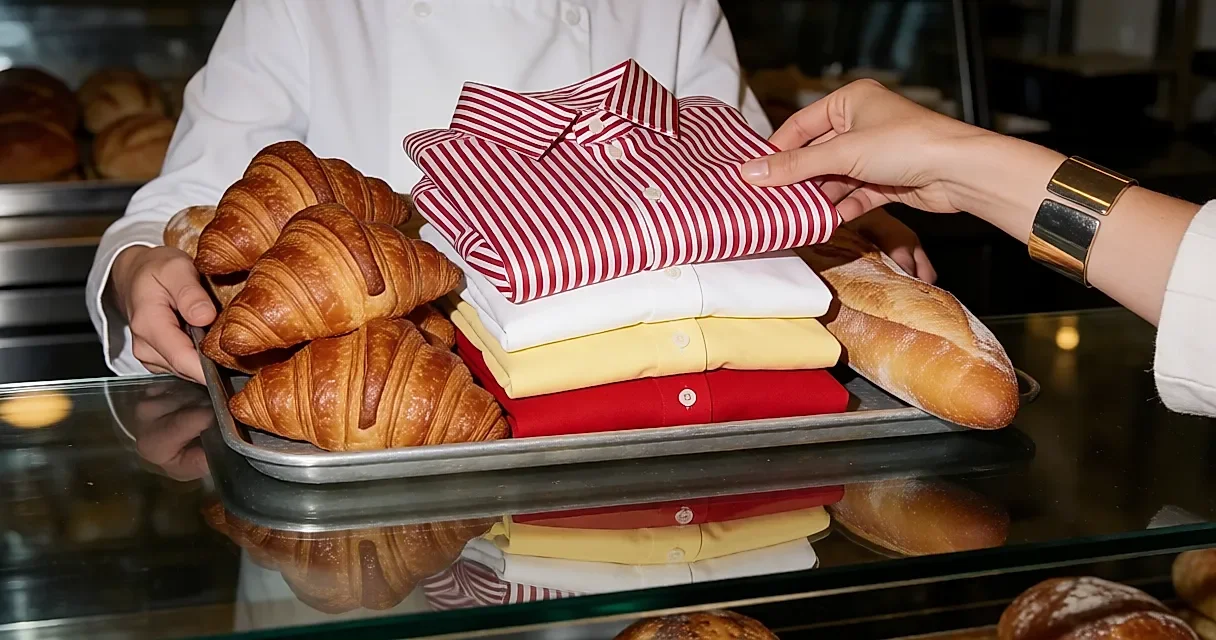
A thick canvas tote bag, a hand-stitched label, a price scribbled in marker on a piece of card — all sitting between the basket of pains au chocolat and the till. That is where you now come across certain limited editions: not in a concept store window, but on the counter of your local bakery. It sounds odd, and yet it holds up: short supply chains are no longer just for carrots.
Why the counter instead of the website
An e-commerce site is expensive in photography, advertising and logistics; a neighbourhood counter costs a conversation. That, in short, is the argument of the young brands choosing this odd retail channel. A bakery has what plenty of boutiques envy: daily footfall, a queue where people actually look around, staff who know the regulars. A few seconds of attention each morning, with no ad budget — case closed.
Then there is the question of stock. A co-branded collection sitting on a shelf is usually a small batch that often sells through in a few days and leaves little unsold to store in a warehouse. The brand pays no rent, the bakery takes a commission or buys the batch depending on the arrangement, and you walk out with a baguette and an accessory. The catch? No fitting room, tricky returns, and often a one-size-fits-all approach that won't suit every body. For a beanie or a bag that's fine; for a cut garment, not so much.
What's in the collection
Often, the trio comes down to the same formula: a tote bag in canvas, a seasonal accessory, a hand-care product. Canvas first — thick cotton, reinforced handles, flat base: a bag designed to cope with the shopping as well as with notebooks, provided the care label lets you wash it. Some collections go for certified organic or recycled cotton, others settle for conventional cotton. The label, where there is one, needs to be legible on the product tag, not just in a social media caption.
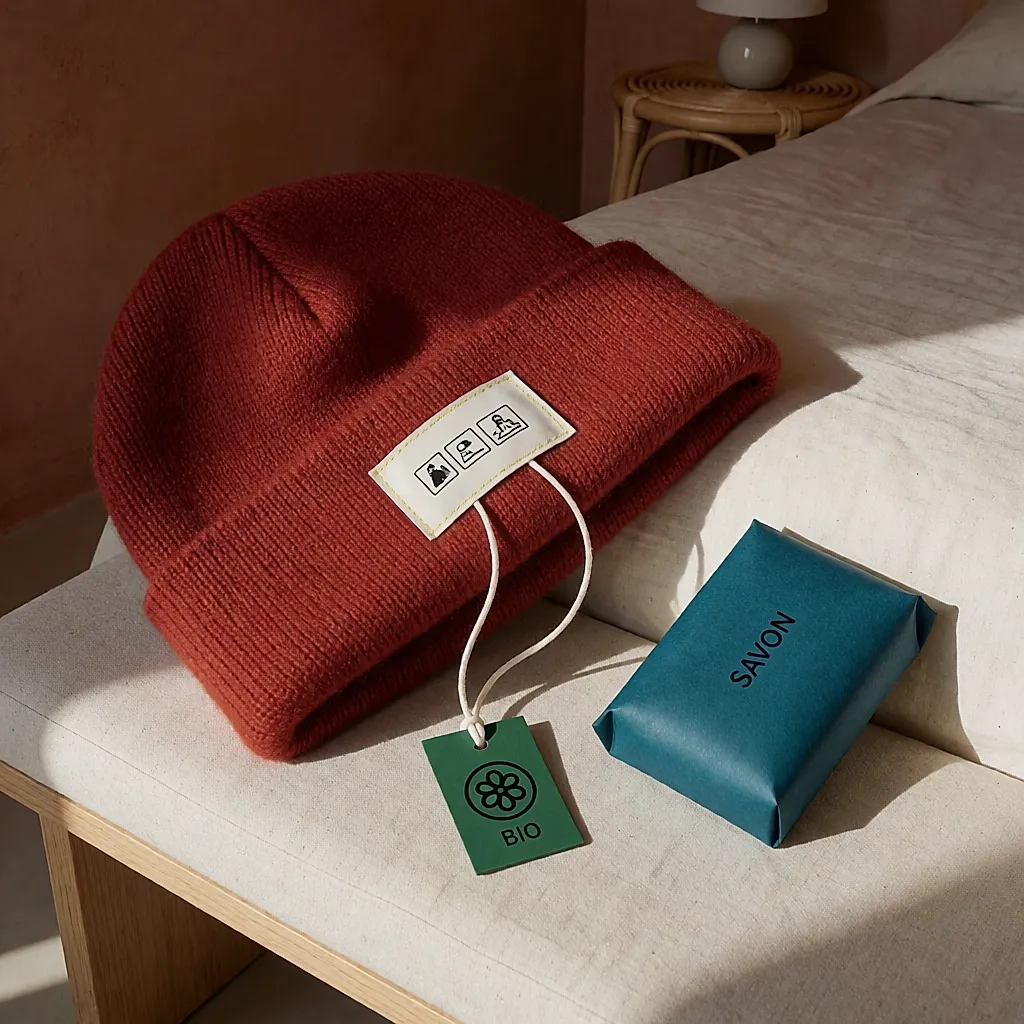
The accessory follows the season: merino wool beanie, scarf, socks, pouch. This is where the collaboration shows — a print, a colour, a nod to the neighbourhood. The skincare, finally, often takes the form of a solid soap or a hand balm: waterless, in card or glass, which can keep the packaging lighter and sometimes the price lower. It's worth a look at the ingredients list: a balm built on plant oils and wax doesn't behave like a heavily fragranced gel, and your hands will tell you.
Budget
In the UK, expect roughly £15 to £35 for the tote bag alone, £20 to £45 for the wool accessory, £8 to £20 for the care product, and £45 to £70 for the set of all three. Prices vary with the city, the material — merino rather than a blend — and the number of pieces. Before you commit, check how much synthetic fibre is in there: the composition and the quality of the knit both affect how it holds up over time.
As for promotions, don't bank on them: these collections generally don't get marked down, they simply disappear. It's also why you often won't find them online, and why you sometimes have to cross town to see what all the fuss is about. Smart buy or collector's trap? A set still costs less than a designer bag, but you have to accept buying without trying.
How to find out if a bakery near you stocks it
Three signals, in order. The notice in the window, often an A4 sheet taped between the bread list and the opening hours. The bakery's social media, which often announces the sale in the days beforehand. And the brand's website, which should list its stockists at launch. If nothing shows up, the simplest method is also the oldest: ask at the counter. Staff often know what's on its way.
Another habit worth adopting: go early. Limited runs go fast, and the first day is often the only one where there's still a choice. You can also ask whether the bakery takes reservations — some do, others won't hear of it, and the morning rush doesn't help anyone keep a notebook.
Three questions to ask before you pay
- Is the collection sold only here, or elsewhere in town?
- Are there several sizes, or just one?
- Can the bakery let you know when the next delivery lands?
And one simple rule: if the material doesn't feel right, the print won't rescue it.
The real question remains: is it worth the detour? If you're after a sturdy bag under £35, the neighbourhood collection does the job very well, and the story that comes with it is friendlier than an online shopping basket. As a gift, the set at around £50 is a good pick — provided you like the idea of an object you're less likely to see everywhere. As for the rest, we'll be keeping an eye on it: the next collection may land two streets away, between the sourdough and the till.



Comments
Your opinion matters: rate the article, react and reply to comments.
Comments are moderated; AI-assisted comments are flagged. Text emoticons (8-), :-), <3…) are automatically shown as images.