
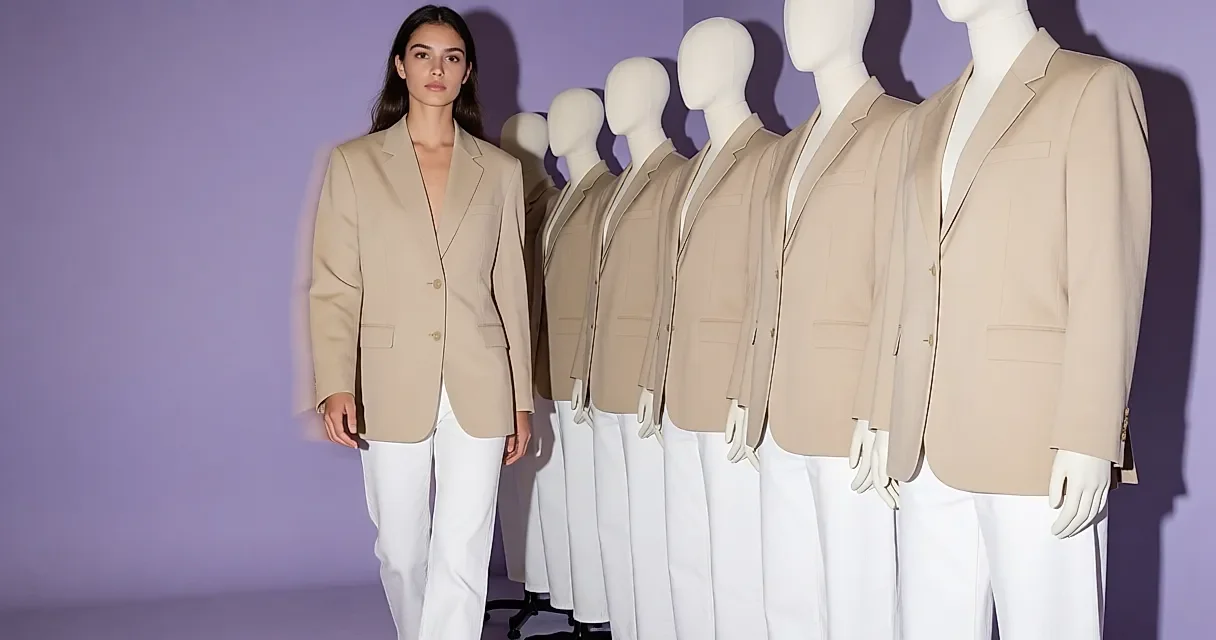
Three tabs open, three retailers with nothing in common, and yet the same ribbed knit jumper, the same straight-leg cut, the same sandy beige. You scroll through online fashion and it feels like you're walking round the same shop. That's not entirely wrong — and it isn't your fault.
What sites put in front of you — the hero piece in the carousel, the 'popular right now' tag, the six items on the homepage — is often shaped upstream by recommendation systems, which may draw on trend data: what people search for, what they click, what photographs well. Retailers tend to read the same signals at the same moment, so plenty of them end up pushing the same thing. It starts to look like the market speaking, when really it's a ranking.
The algorithm doesn't create the trend, it narrows it
A trend exists before the ranking: it starts in the street, on the catwalk, in a film, in a print you keep noticing. What algorithmic curation does is compress it. It spots what's working and pushes it to the front of the page, across many retailers at once, often from the same search data and, at times, the same suppliers.
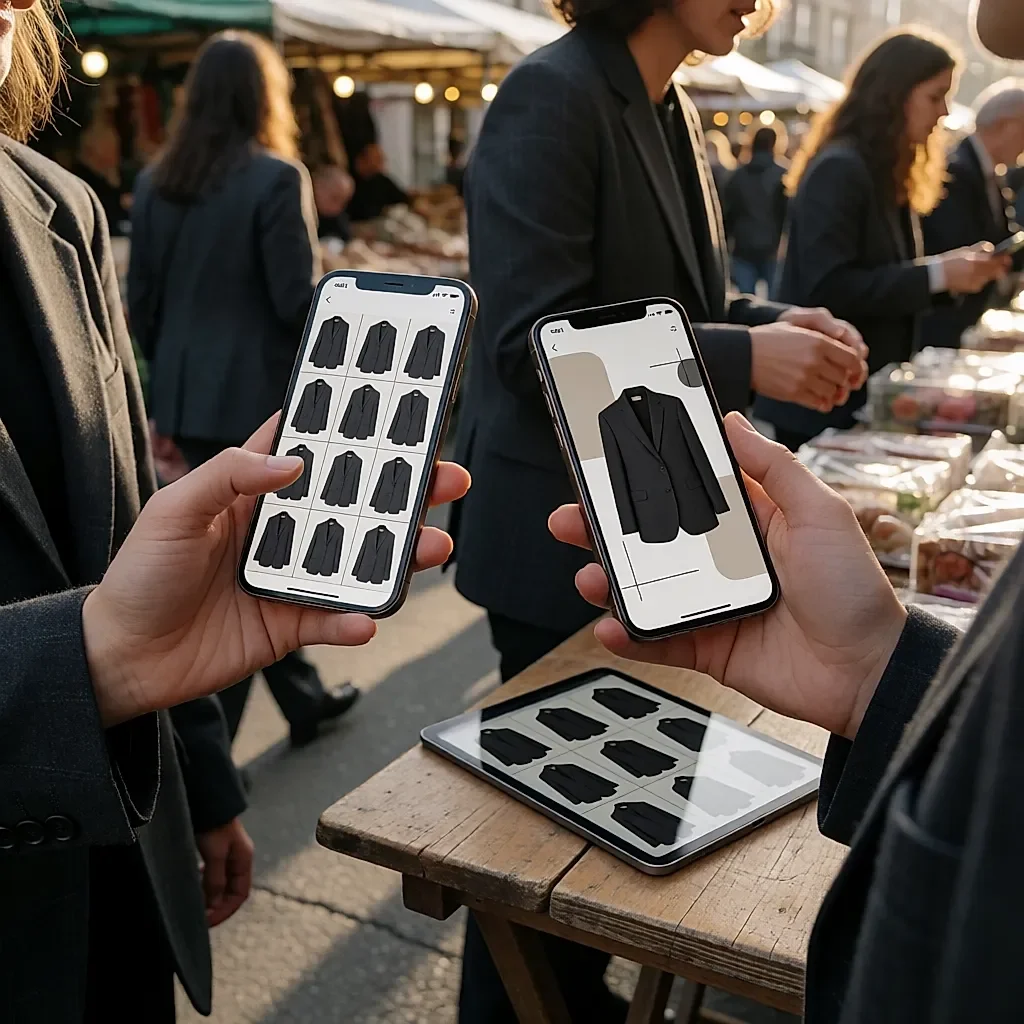
The result is oddly smooth: same colours, same cuts, same textures in every thumbnail. The risk isn't buying badly — it's buying the same thing as everyone else while thinking you've found something. There are better feelings out there, aren't there?
And then there's the mechanics of the click. Sites often push what sells rather than what suits you. That distinction is a big one, and it explains part of the gap between the photo and the mirror.
What the curation doesn't know about you
It doesn't know your body shape, what's already in your wardrobe, or how you actually live. It doesn't know you already own three white blouses, that you hate belts, that you cycle everywhere and that your hems trail on the ground. It knows what appealed to people who resemble you statistically — which is not the same thing.
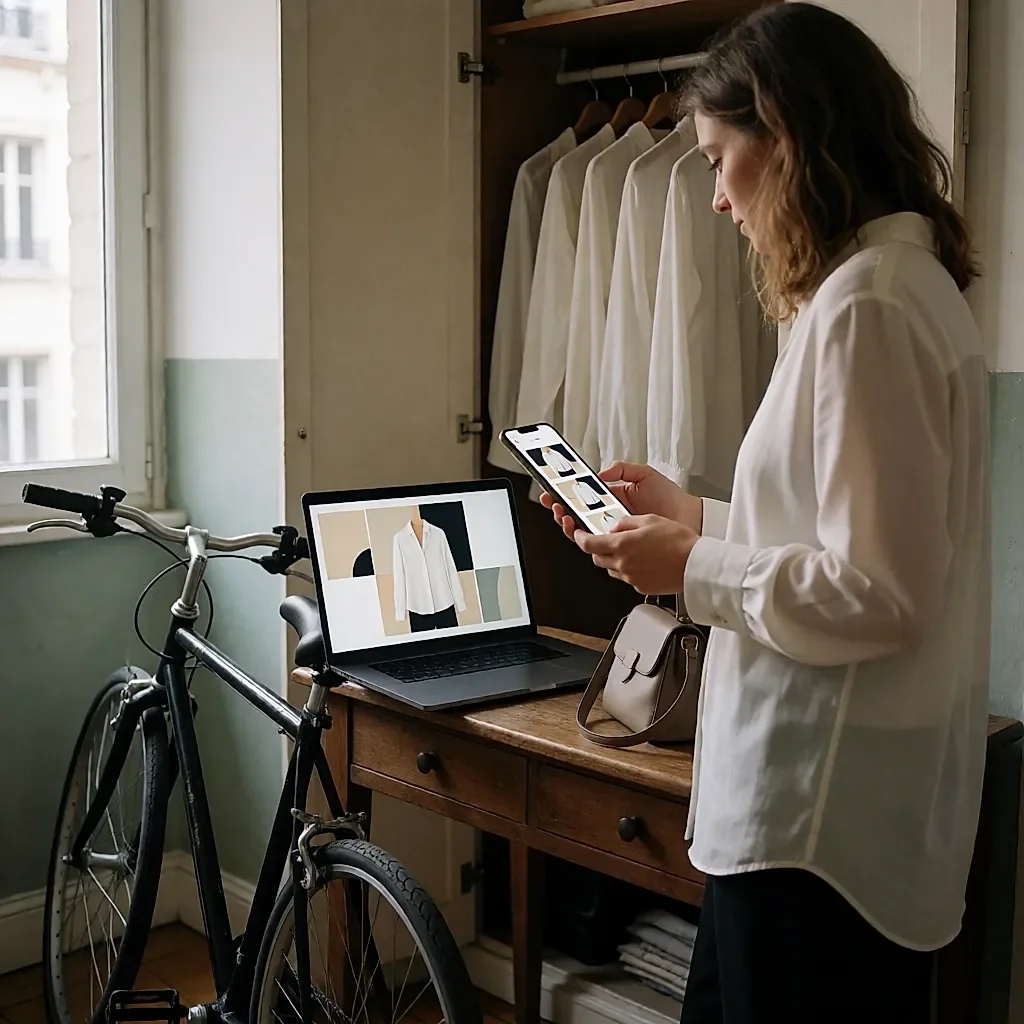
That's where service takes over again. A site that shows the full composition, how the fabric moves, the piece worn on several body types and an accurate size guide does more for you than a slick carousel. You can see the piece; the service is what tells you whether it will fit.
Buy the service, not just the piece
In practice, before you click, look at what the site is doing for you. Product shots on several body types, flat measurements, full composition and detailed care instructions, a returns policy you can actually read? That's what separates a genuinely useful rail from a plain shop window.

On fabric, go for what lasts: merino or recycled wool, organic cotton, linen, silk. A well-cut wool basic can stay with you for years; a piece that bobbles after three washes isn't worth its price, even in the sale. Check the share of synthetic fibres on the label — not to rule anything out, just so you know what you're buying.
As for that 'popular right now' badge, it tells you nothing about yourself. It only says that other people clicked before you did.
Three filters to switch on before you check out: the size the model is wearing (for scale), the composition (for how it will wear), and the returns window (for returning it, funnily enough). Three clicks, and you're that bit less reliant on the carousel someone built for you.
Underneath it all, the question isn't how to avoid sites that look the same, but knowing what you're looking for. One piece that works with three things you already own beats ten new-in items you've seen everywhere. The sensible move? Open two tabs, compare the composition before the photo, and ask yourself: is this really worth the money, in your actual life?
And if the answer is no, that's what returns are for. No judgement here.
Budget
As a rough guide, expect to pay around £30–£80 for a basic knit or cotton shirt, £60–£200 for a wool coat or jacket, and £40–£120 for jeans. Prices move with fabric, cut, brand and where you shop — high-street stores, online retailers and second-hand platforms all sit at different points. Check the composition and returns policy before you buy; a cheap piece that bobbles or doesn't fit is no saving.

Comments
Your opinion matters: rate the article, react and reply to comments.
Comments are moderated; AI-assisted comments are flagged. Text emoticons (8-), :-), <3…) are automatically shown as images.