
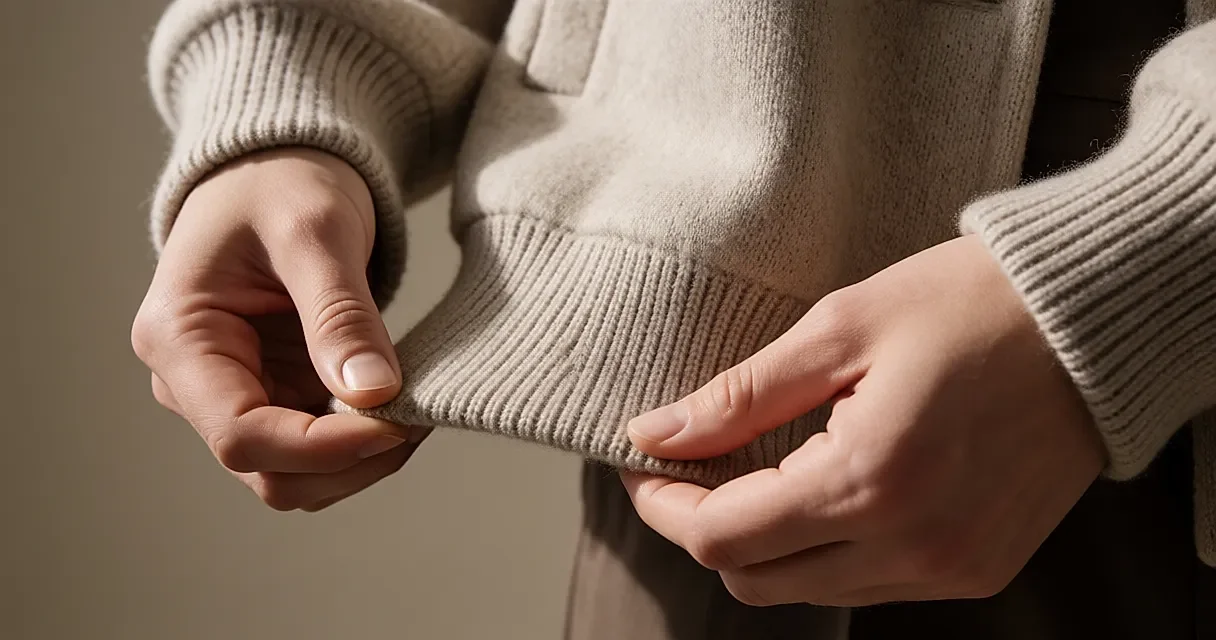
On a knitted jacket, the ribbed hem at the bottom looks like an afterthought. A few centimetres of ribbing, a fairly ordinary-looking edge — and yet it's often where everything is decided. Too tight a hem rides up over the hips, the jacket gapes at the waist, and you spend the day pulling it back down. The criterion that really matters, and the one many of us check far too late in the changing room, is elasticity — much more than size or silhouette.
The hem decides how the jacket sits
It's the detail you only look at once the jacket is on. We've probably all owned the jacket that climbs faster than a lift. You tug it back into place in front of the mirror, pull down the sides, sigh, and ten minutes later it's up again. The cut isn't always to blame: a ribbed hem that's too tight behaves like an elastic band. It contracts, rides up, and takes the whole drape of the garment with it. The jacket looks too short and out of balance when all that's wrong is a finish that doesn't suit you.
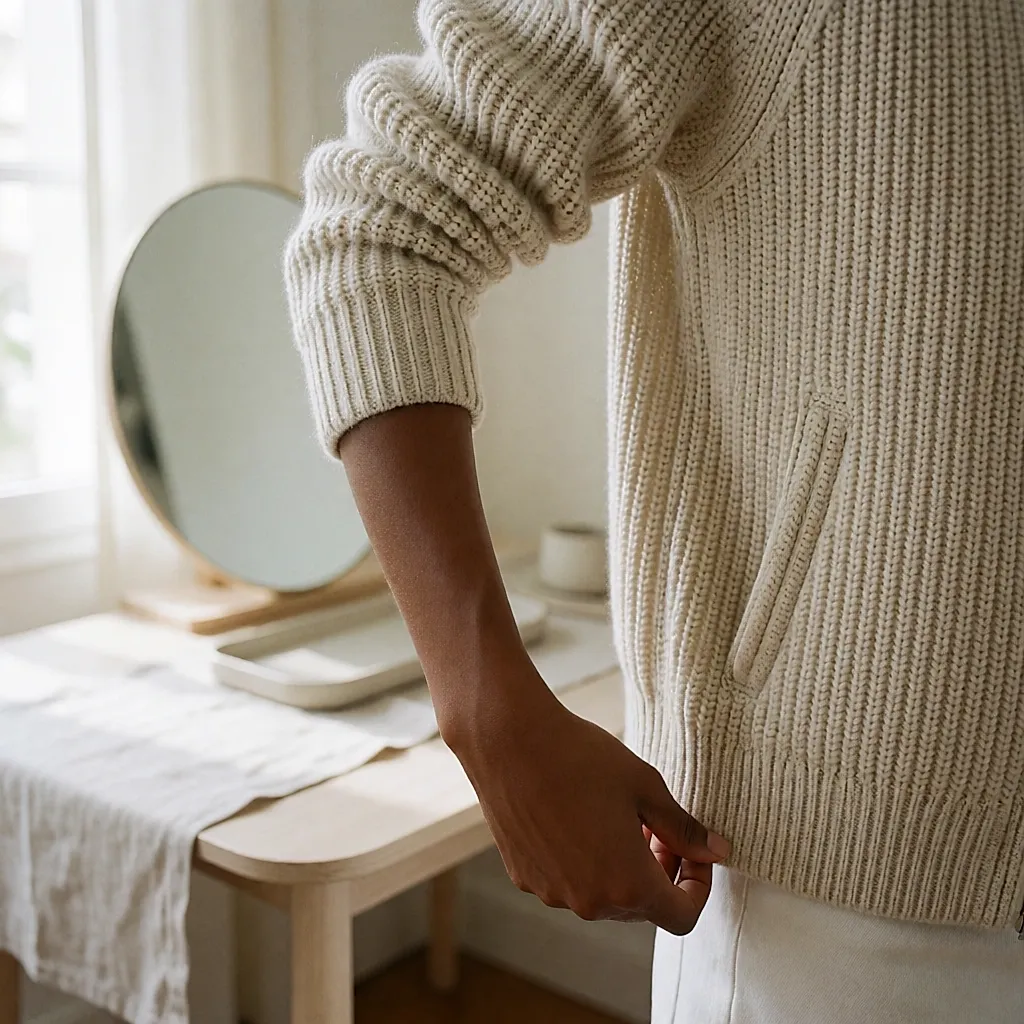
A good test: as you put it on, the hem should settle gently back against the body, without marking the skin or creating a horizontal fold across the front. If you feel pressure around the hips, it's already too much. A hem that's too soft is the opposite problem: it can hold nothing, the jacket floats and falls open, and the look turns sloppy. The sweet spot is somewhere in between: holding the jacket in place without compressing it.
The fitting room test
In the changing room, don't just stand there in front of the mirror. We tend to judge a jacket with our arms by our sides, which isn't the best position for checking a hem. Sit down, raise your arms, walk about for a couple of minutes, bend over to pick up an imaginary object. If the jacket rides up and you have to pull it back down, it probably won't behave any better in real life. Try it on with the knitwear or shirt you'll actually wear underneath, too: the extra layer can change everything.
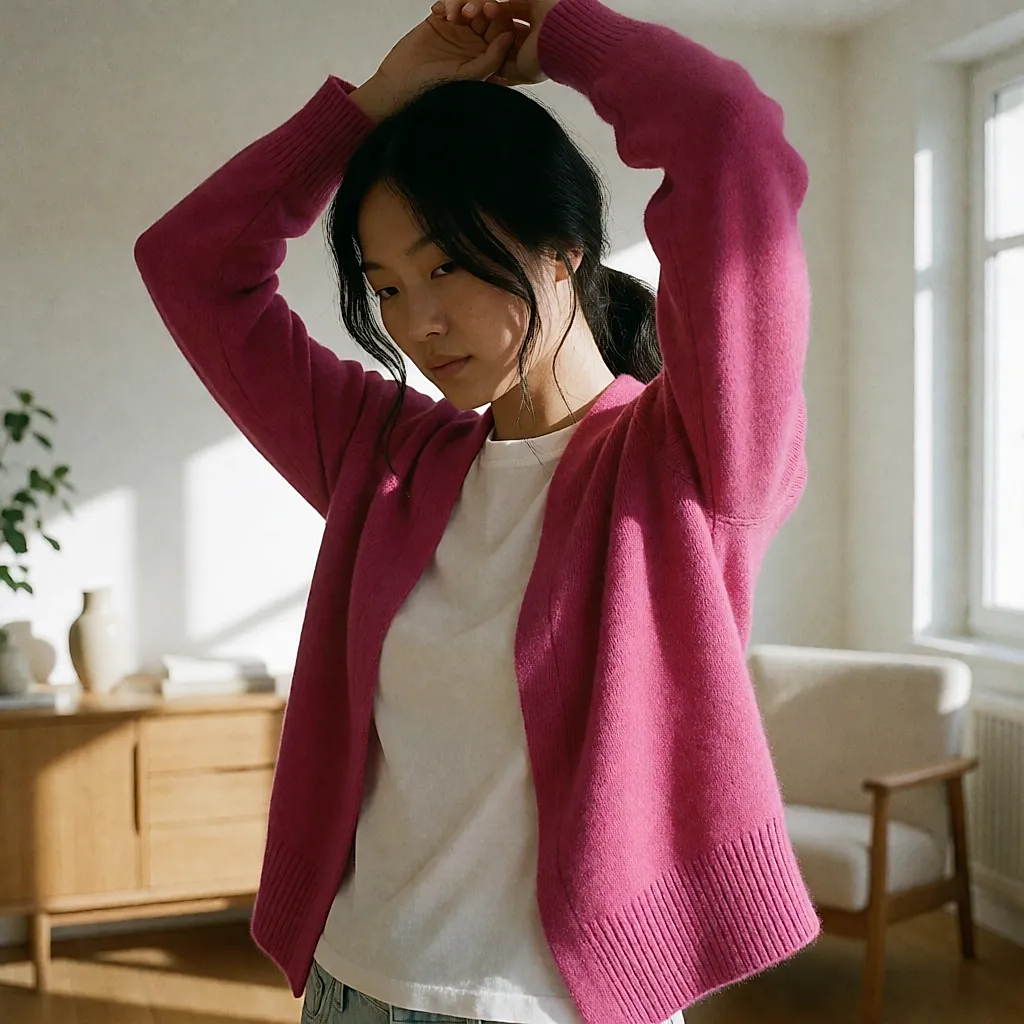
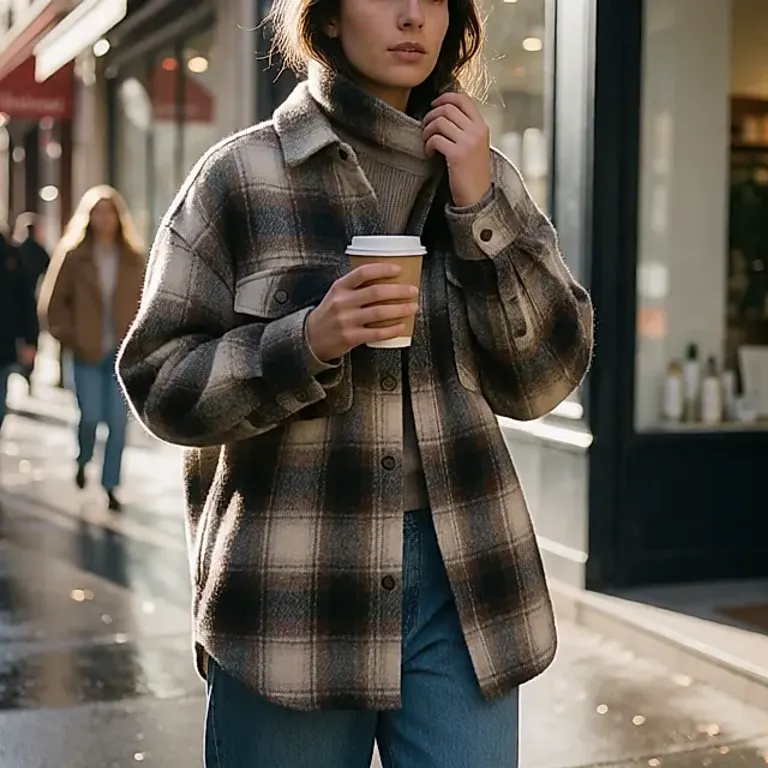
Length matters as much as elasticity. A cropped jacket that stops above the waist can work perfectly well with a soft hem, worn open over high-waisted jeans. A longer jacket, on the other hand, benefits from falling clearly below the hip: the hem is less likely to catch at the widest point. If you're after a very fitted silhouette to define the waist, though, a soft hem will give you a straighter line. That isn't a fault — it's a choice to own.
The fabric matters as much as the cut
The fabric isn't everything, but it carries a lot of weight. A knitted jacket isn't a woven jacket: it moves, it relaxes, it recovers its shape. Go for natural, hard-wearing fibres — merino or recycled wool, organic cotton, alpaca depending on the season. A slightly denser knit usually drapes more cleanly than a very light one, which shows strain quickly. Check the label: look at the proportion of synthetic fibres and at the care instructions. And if the jacket is lined, make sure the lining doesn't pull when you do up the buttons.
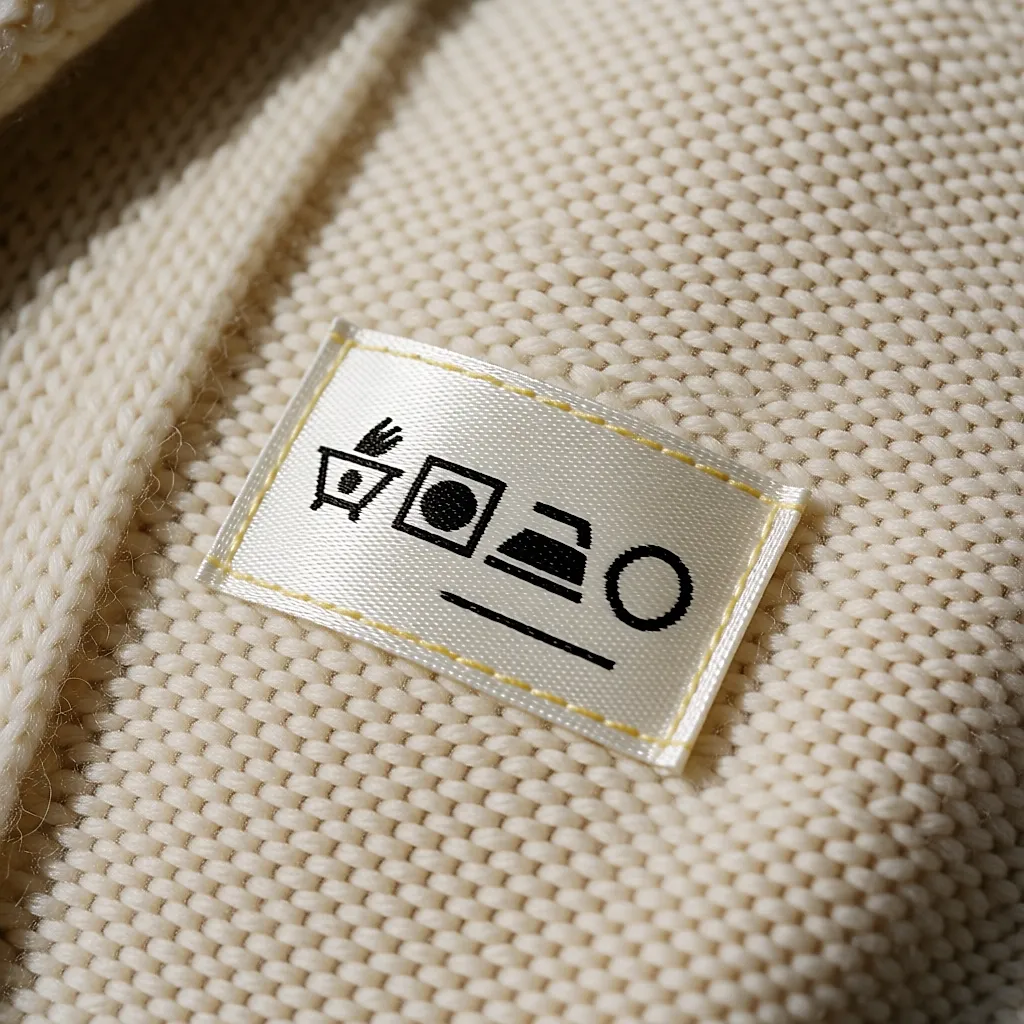
The type of ribbing changes how it feels, too. A wide hem tends to spread the pressure better than a fine, very tight edge. A folded finish with a soft seam helps avoid the bracelet effect. And don't overlook care: a knit washed at a very high temperature, or hung up wet, can lose its elasticity. Dry it flat, and keep your handling gentle.
The trick that saves you: in the changing room, keep the jacket on for five minutes before deciding. Sit down, raise your arms, walk about. If the hem rides up and you have to reset it more than once, put it back on the rail. A jacket you're forever tugging at is rarely the right one, even if the colour is perfect.
What to pay
On price, the guide is simple. As a rough guide, reckon on around £60 to £150 for a knitted jacket from a mainstream high-street label, and £150 to £300 for a more considered wool piece. What pushes the price up? The fibre, the density of the knit, the finish on the hem and where you buy it. Second-hand, good knits turn up for around £25 to £80, but check the hem and the shoulders before you commit.
There's no need to aim at the top of the range to find a good buy. In charity shops or online, a natural knit at a low price can do the job perfectly well, provided you've checked the returns policy in case the hem doesn't suit. Around £100 to £150, you can reasonably look for merino or organic cotton with a wide, soft hem. Beyond that, you're mostly paying for a denser knit, neater finishing and a piece built to last. Better a slightly cheaper jacket you keep for three years than a perfect one on the hanger that ends up at the back of the wardrobe.
The right knitted jacket is the one you throw on without thinking: it stays put when you walk, doesn't ride up when you sit, and lets you breathe. Before you commit, one reflex: pull gently on the hem, then let go. If it comes back without gripping, you've probably found a good one.

Comments
Your opinion matters: rate the article, react and reply to comments.
Comments are moderated; AI-assisted comments are flagged. Text emoticons (8-), :-), <3…) are automatically shown as images.