
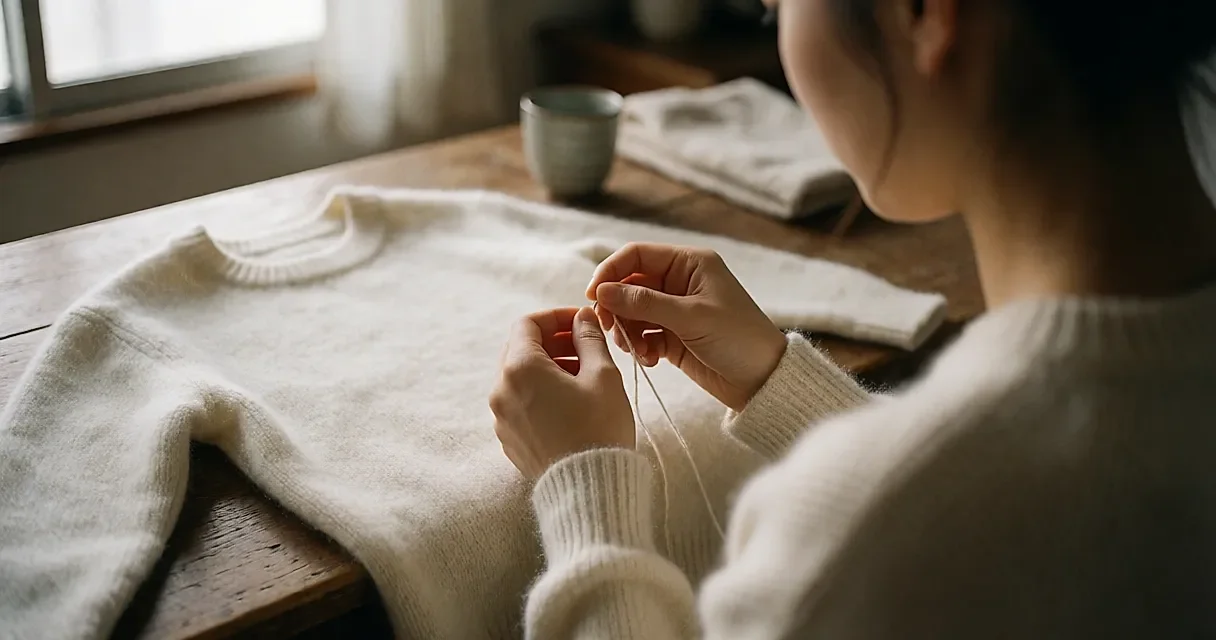
A moth hole no bigger than a pinhead, and a thread you do not buy from the haberdashery but pull from the jumper’s inside hem. The needle picks up the knit stitch by stitch, following the grain of the fabric and using the original fibre. A little later, you are hunting for the snag with your eyes — and it is the one thing that escapes you.
That is the whole point of kaketsugi, the Japanese invisible mending technique long practised by tailors in Japan. Once confined to workrooms, it is now offered in Europe as a per-item service, sometimes by post. Good news for moth-nibbled cashmere, provided you know what you are asking for.
Reweaving with the garment’s own fibre
Forget the patch and the 'invisible' thread sold on a reel. Here, a few fibres are taken from somewhere no one looks: a hem, an inside seam, a lining, a turn-up. Then the weave is rebuilt by needle, strand by strand, respecting the direction of the yarn and the texture — tight for tweed, supple for knitwear. The original fibre is the secret of a colour that matches and a drape that stays put.
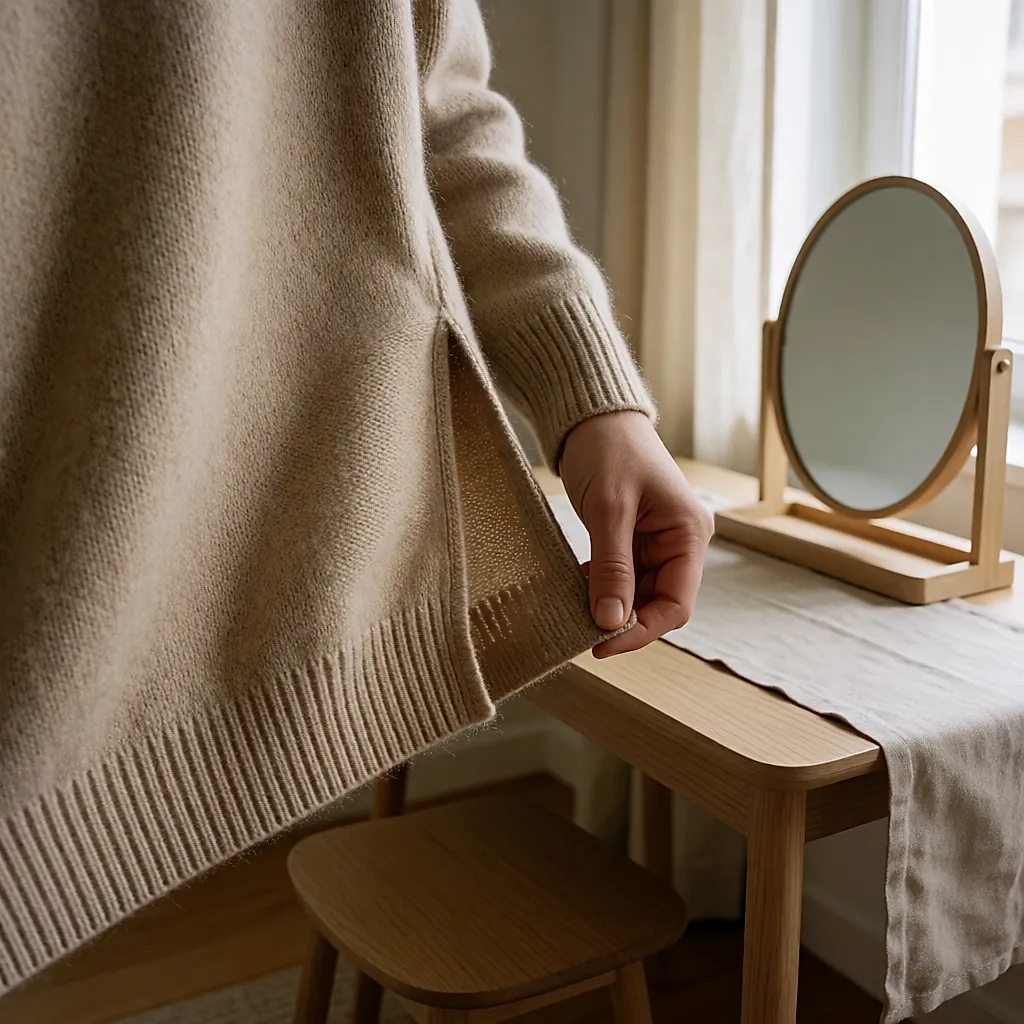
The work takes hours and a trained hand, which explains the price and why not every workroom offers it. Note the difference in intention from sashiko, the Japanese visible mending that highlights the scar with contrasting stitches. One owns the damage, the other erases it. Both have style; they simply answer different wishes. And when you think about it, how many jumpers have gone in the bin for a tiny hole?
What it can save and what it cannot
Best clients: wool, cashmere, tweed, wool coating, thick knits, suits and coats you love enough to refuse to replace. A clean snag, a cigarette burn, a moth hole on a sleeve: this is its territory. On a dark, matte knit it comes into its own — the repair really does vanish. On a tight pattern, the match has to be exact, because the fibre lifted from the hem will not follow the design.
It cannot perform wonders on a knit moth-eaten across 10cm, nor on fabric whose weave is fraying around the hole: the repair may hold, but the surrounding fabric will give way. Performance and coated fabrics are not its strong point, and with a knit that is very high in elastane, check the composition before you get your hopes up. Finally, if the item costs less than the repair, it is worth admitting: a visible darn at a local alterations shop often costs less and will do the job very well.
How to commission it without getting it wrong
In the UK, the service can be hard to find: some alteration tailors, specialist repair workrooms and a handful of online services that work by post offer it. The phrase to ask for is invisible mending, adding 'kaketsugi-style' if you can — otherwise you will be offered a standard darn, which is perfectly good but different. Ask for photos of previous work, a written quote and a firm turnaround time. The trick is finding the right pair of hands.
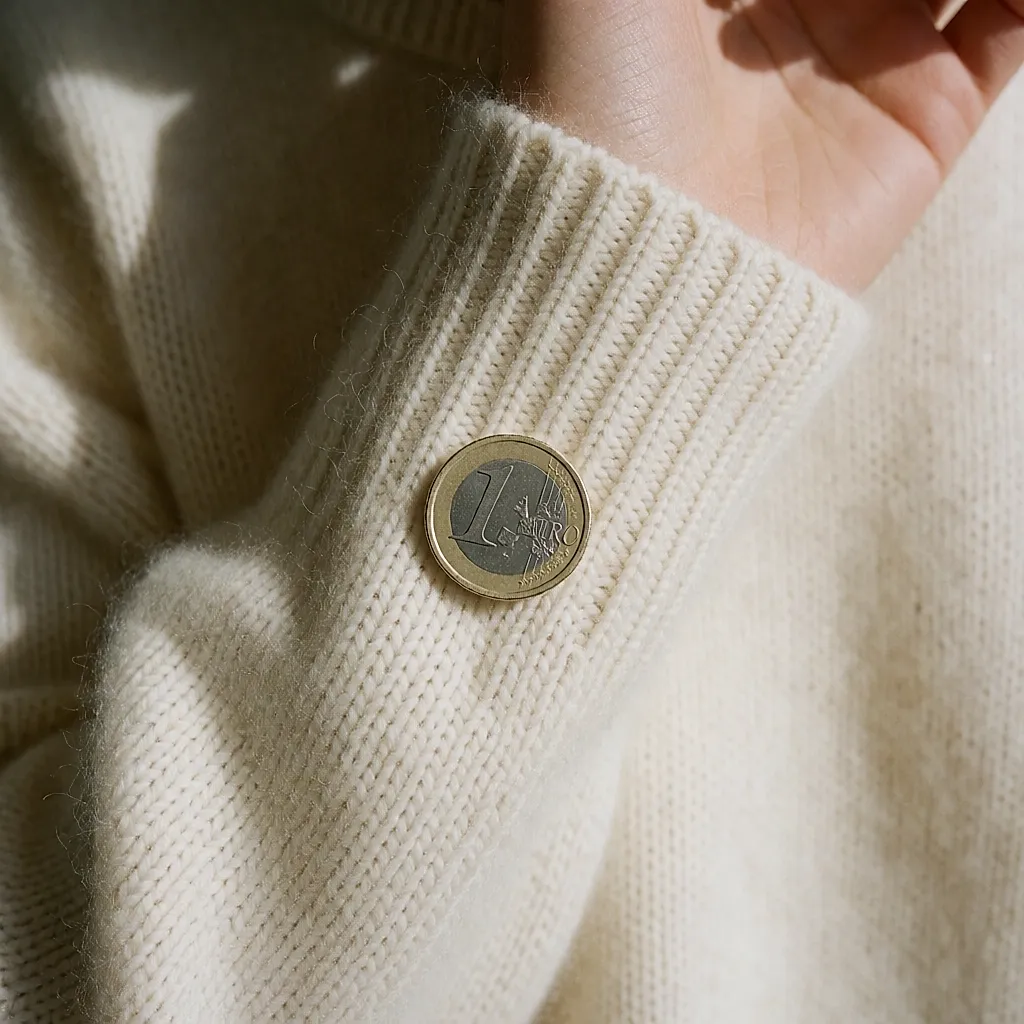
Before you send it, photograph the snag with a coin beside it for scale, and flag any quirks: a stretched knit, a hole at a seam edge (sometimes simple to repair), an area that has already been mended. Ask about washing, too: some pieces must be sent clean, others not, and it is better to ask than to wash by reflex.
Four questions to ask before you pay
- Do you take the fibre from the garment itself?
- What is the turnaround time, and what happens if I am not happy with the result?
- Is the repair guaranteed, and for how long?
- Is the quote fixed, or can it rise once you uncover the damage?
What it costs
As a guide, expect around £35 to £80 for a small snag on knitwear, and £100 to £220 for a larger area or a tailored piece. The price rises with the size of the area, the fineness of the material, the workroom’s reputation and urgency; it falls if you are willing to wait. Add £5 to £12 for return postage if you use a postal repair service.
Compare that with a new cashmere jumper, often £150 to £300: invisible mending becomes good value as soon as you really like the piece. In France, for instance, some retailers and partner repairers run textile repair schemes; the amount depends on the type of repair, so ask before approving the quote.
What remains is a question of heart more than arithmetic: has this jumper kept you company enough to deserve an hour of needlework? If so, hand it over without hesitation. If the hole is huge and the piece cheap, give it a more modest second life: pyjamas, gardening, Sunday naps.



Comments
Your opinion matters: rate the article, react and reply to comments.
Comments are moderated; AI-assisted comments are flagged. Text emoticons (8-), :-), <3…) are automatically shown as images.