
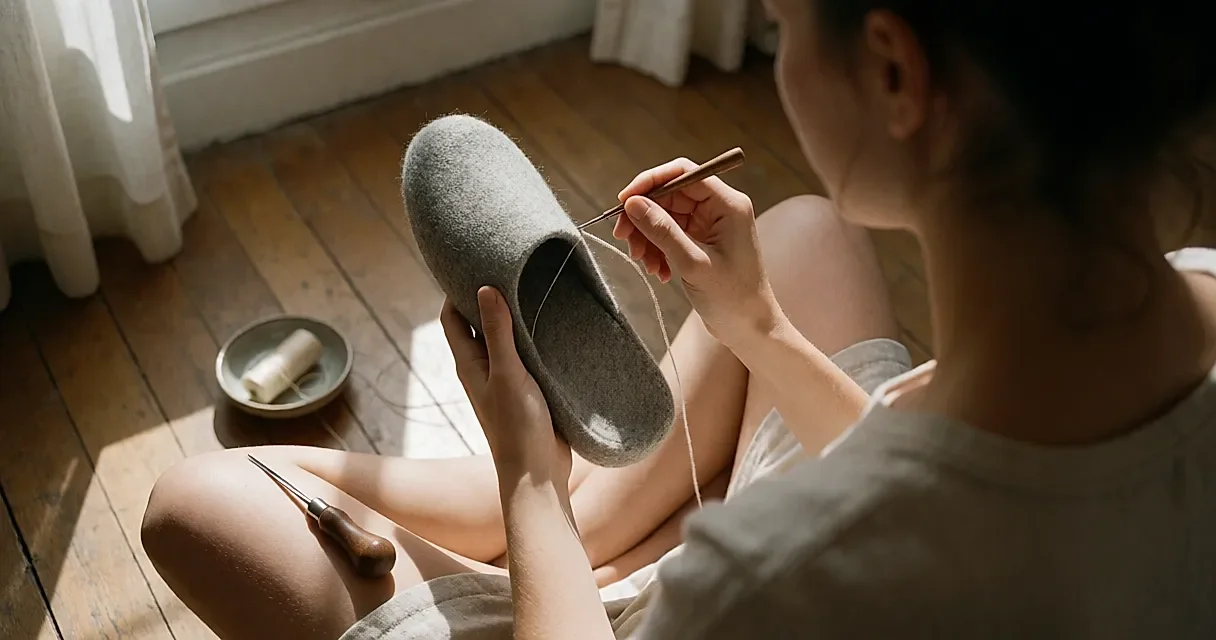
A felted wool slipper almost never dies of its wool: it dies of its sole. The upper softens, takes the shape of your foot and gets more comfortable winter after winter. So why buy a new pair every two years when the part that wears out is sometimes the part that can be replaced?
What wears out isn't what keeps you warm
In a winter slipper, felted wool does the heavy lifting: dense felt traps air and keeps the foot warm without needing to be especially thick. A slightly flattened toe, a lining that has taken the shape of your heel — none of it is a disaster; it is the material bedding in. It is easy to throw a pair out for that alone, when that is not where the countdown started.
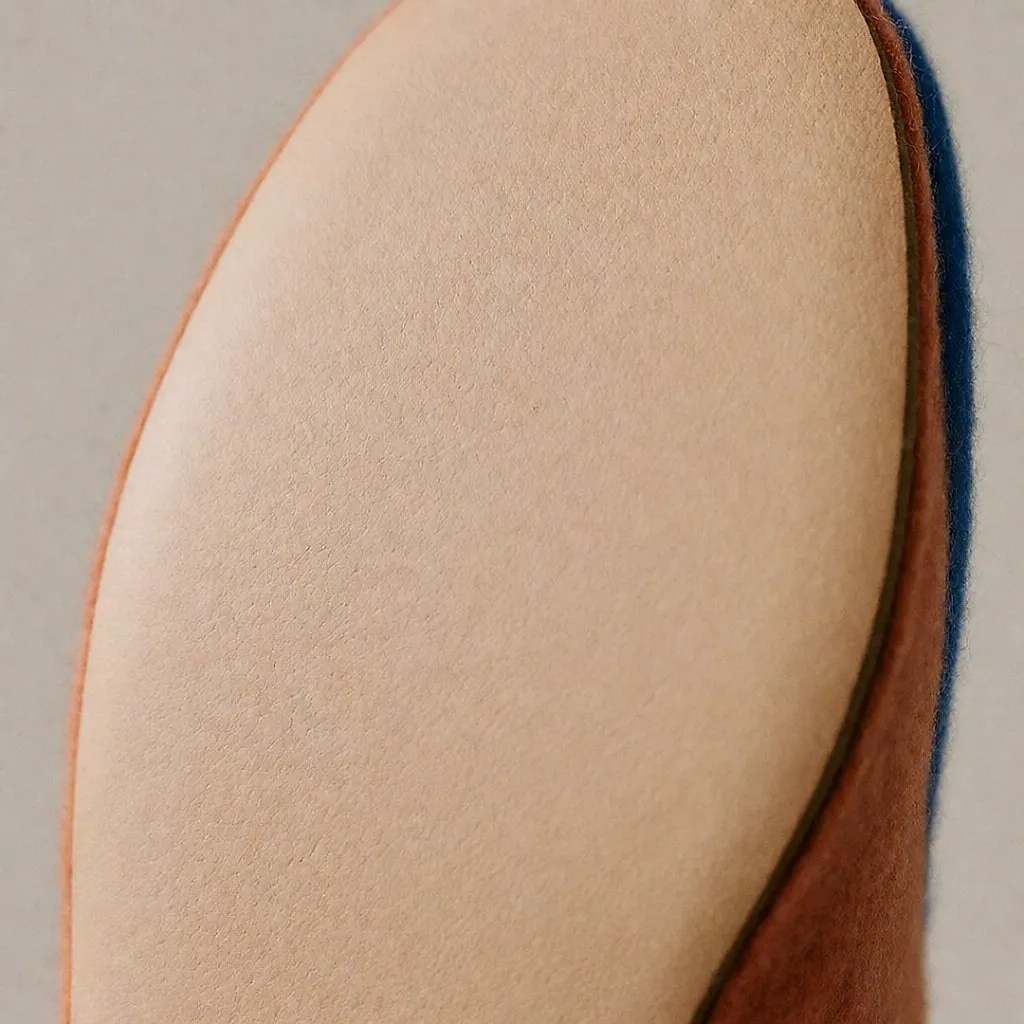
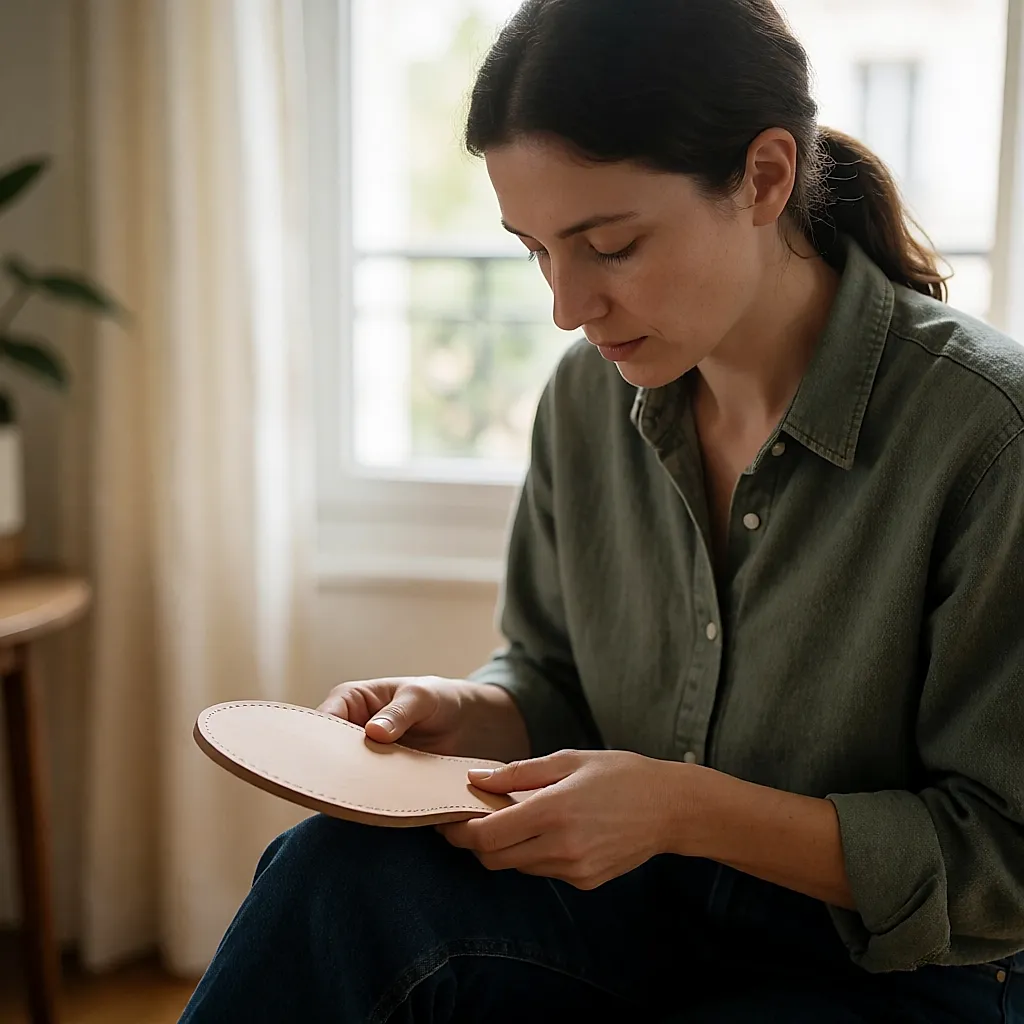
What gives way is underneath. The heel first, crushed by being used as a step up to the sofa; then the outer edge, then the front, where the foot pushes. A leather sole that has done one more winter is not a dead sole: it is a wear part, not a life sentence.
The nuance matters: on a felted slipper, everything depends on one thing — whether the sole is attached, or moulded with the upper as a single piece.
The trap of one-piece moulded felt
The case to watch for is the slipper moulded as one piece: sole and upper are a single unit. It is flexible and comfortable, but unrepairable by construction once the underside gives way. A felt upper, by contrast, can be cleaned without water and kept away from the washing machine; it is the sole that decides what happens next.
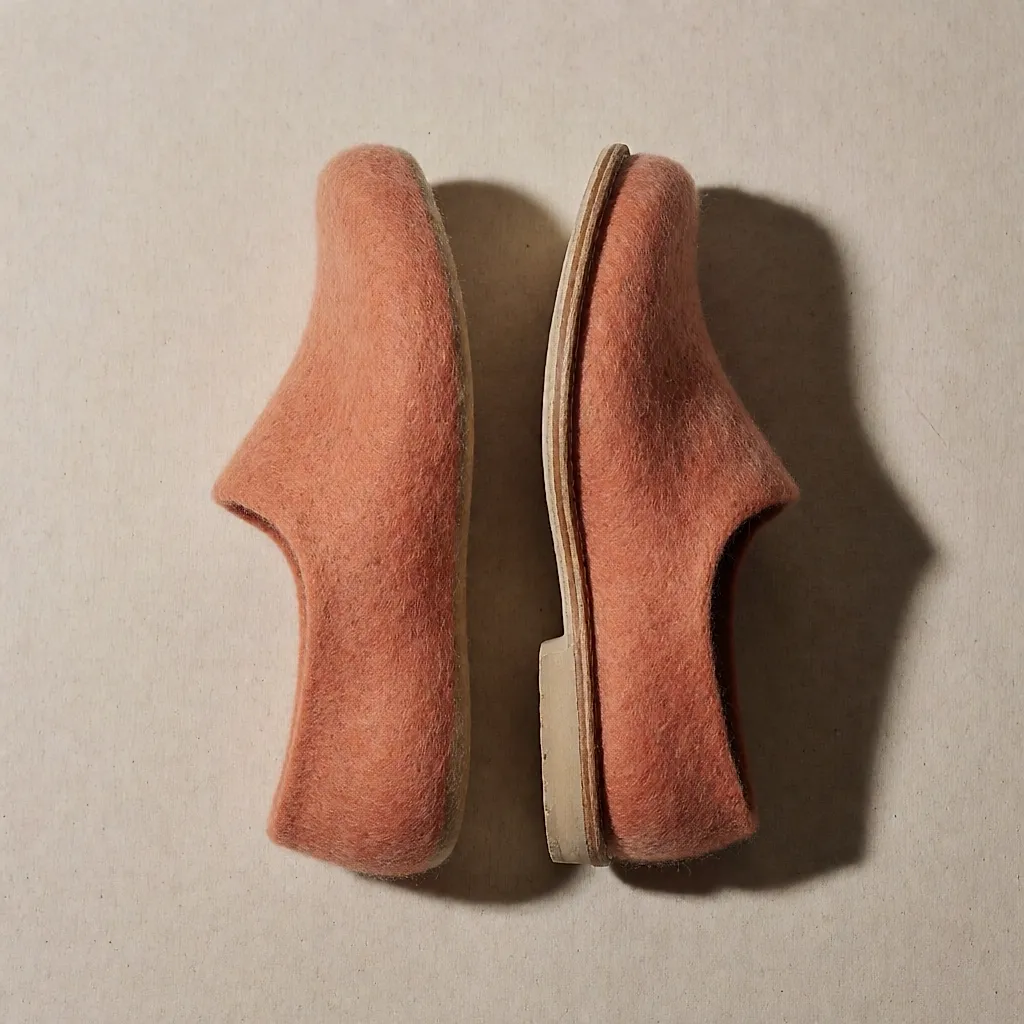
So ask the seller, as casually as you like: 'Can the sole be replaced?' A seller who hesitates has already answered. And if you are buying online, look for a mention of an attached sole or a resoling service: that tells you more than the composition alone.
Who it won't suit
Let's be honest: if you want the lightest possible slipper, the one you forget you are wearing, an attached leather sole is not the thinnest on the market. And if you regularly pop out for a loaf down a gravel path, a leather sole will not take kindly to gravel; in that case, a rubber sole — attached rather than moulded, ideally — is the more sensible choice.
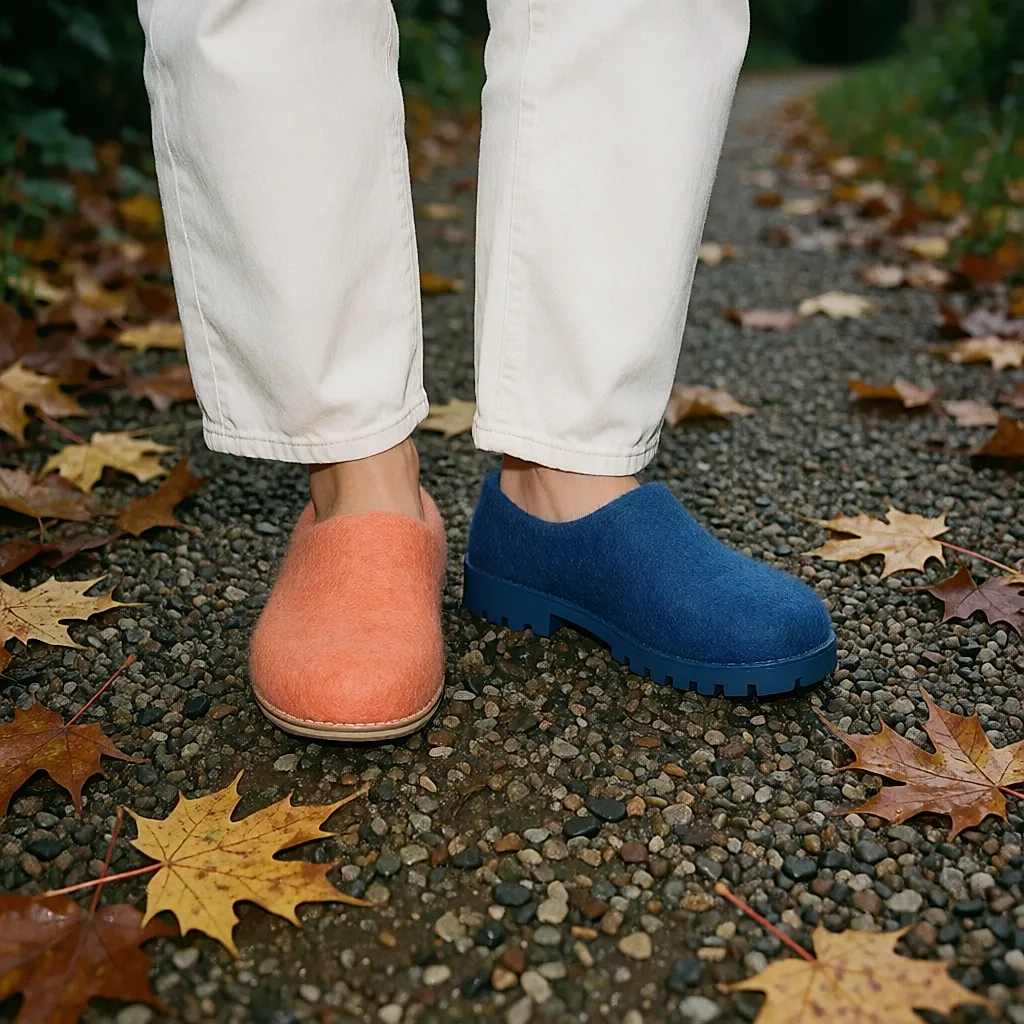
If your current pair is already a one-piece moulded slipper with a sole that has worn through, it is not a tragedy: it is simply the end of a cycle. You just buy more cleverly next time, don't you?
Budget
On price, a felted wool slipper with a leather sole often sits somewhere between £40 and £140, depending on the density of the felt, how it is made and where it comes from. A resole at a local cobbler costs around £25 to £45 — the price varies with the city, the complexity of the sole and the leather chosen. A protective sole guard fitted to a new sole costs £15 to £25, and it is often the best investment of the lot. Between a £40 pair you replace as soon as the sole wears through and a £140 pair you have resoled, the calculation is not just about the price at the till: it is about how many winters you get out of them.
Where? The independent cobbler remains the safe bet, especially if you ask for a quote before handing over the pair. Some slipper brands say they offer a resoling or repair service: ask before you buy, because it can change the decision.
Three small habits that delay the day they need replacing: air your slippers in the open rather than leaving them against the radiator; brush the felt dry, in the direction of the nap, and keep it away from the washing machine; and have a protective sole guard fitted as soon as the sole is new or freshly repaired.
The right reflex
Next time an attached sole gives way, take the pair out of the bin and head to the cobbler with the price of a new pair in mind. You will come away with a slipper that already carries your footprint — and the very pleasant feeling of having had the last word on the sales calendar.
Comments
Your opinion matters: rate the article, react and reply to comments.
Comments are moderated; AI-assisted comments are flagged. Text emoticons (8-), :-), <3…) are automatically shown as images.