
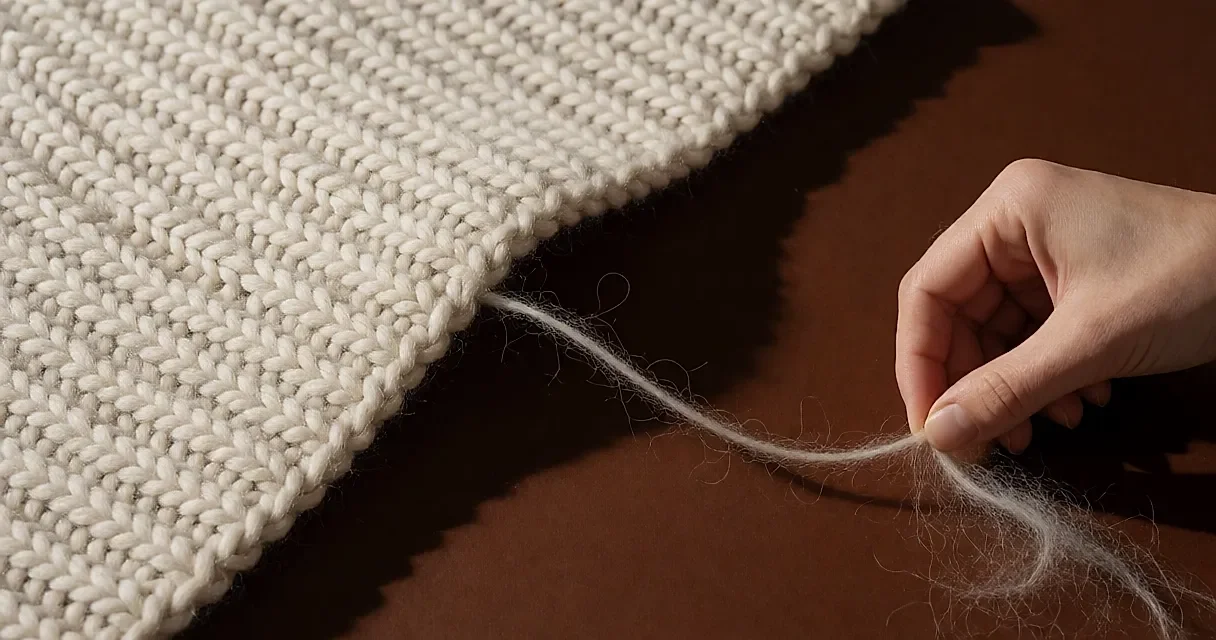
Two cashmere jumpers, same colour, same drape — and a price gap that makes you stop and think. The answer isn't in the window: it comes from the Mongolian steppe, from the fibre itself, long before the knitting and the label. In other words, the value of a cashmere jumper is decided upstream, in the down.
Which makes you want to turn over every label before you get your card out. Between down combed from a goat in early summer and the knit you pull on in November there is a very long chain — and a few handy shortcuts.
What the label almost never tells you
Three criteria come up again and again, and they say more than any brand name: fineness, length, provenance. Fineness is measured in microns, and the lower the number, the softer and lighter the fibre. A less fine knit isn't a fault, just a different job. Length matters too: long fibre limits pilling and helps the knit hold its shape. As for provenance, it tells you about climate, altitude, and the way the animals are combed rather than sheared.
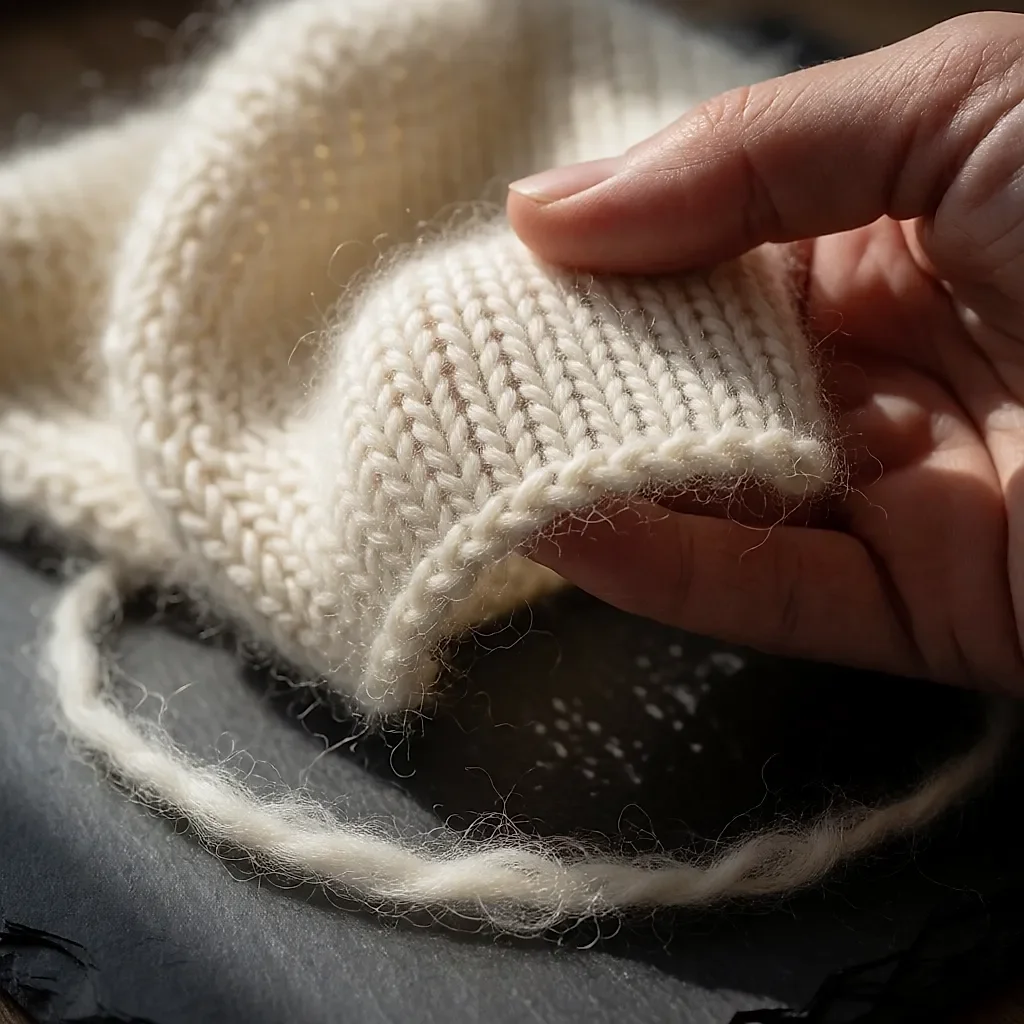
One reality check, with no guaranteed figures attached: the amount of down collected from a single goat is limited, and it often takes the down of several animals to make one jumper. Mongolia is a producer of raw cashmere, which surprises nobody once you've seen the thermometer in January. So when a 100% cashmere jumper is priced at £45, something somewhere is being cut — and it is never magic.
The blend question nobody checks
"Cashmere" on a label doesn't tell you everything. Plenty of knits also contain wool, silk, sometimes polyamide to hold the ribbing. That's no crime: a little silk brings lustre, a little wool gives body to a very fine knit. But you should know it: a share of synthetic can change how warm, how hard-wearing and how repairable a jumper is, depending on the composition and the quality of the knit. It also explains a good part of the price gaps.
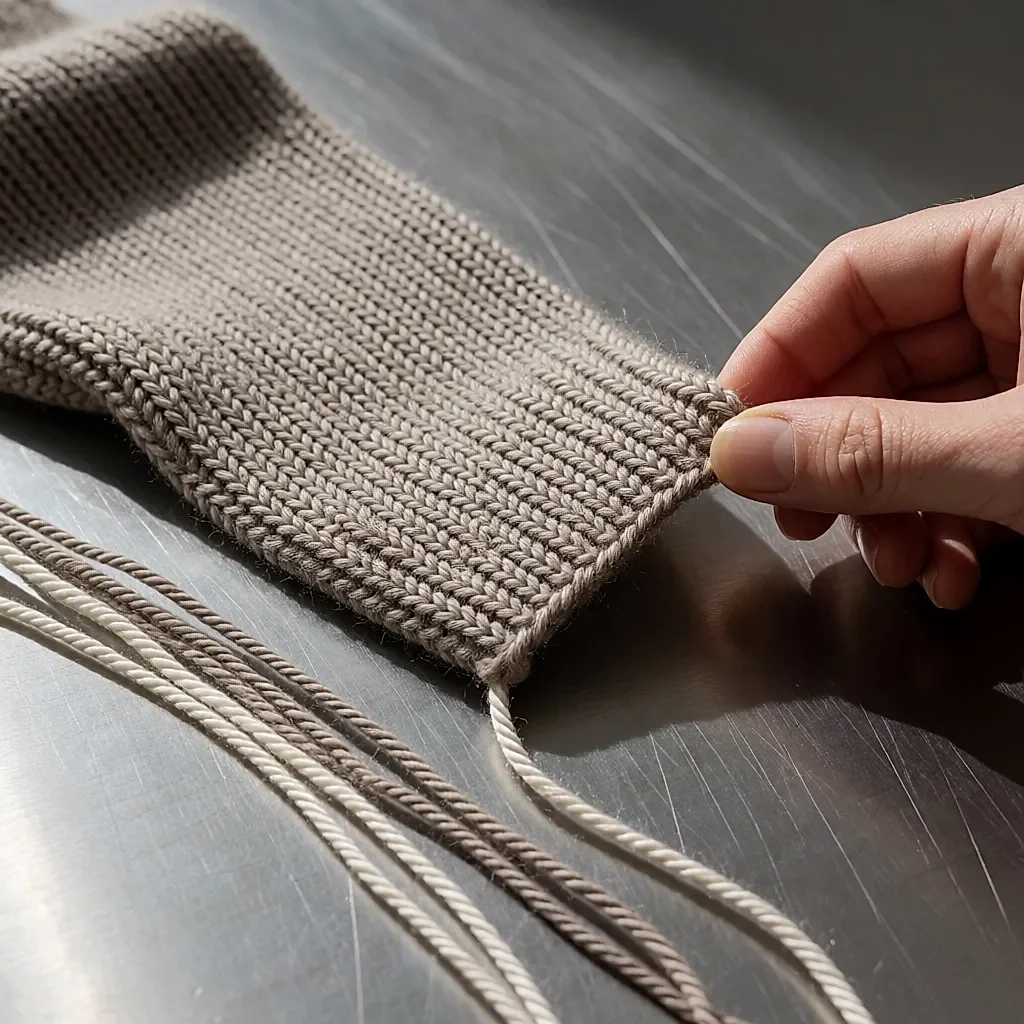
Second blind spot: traceability. Look for the details on the product page — it isn't a promise of softness to the touch, but it is a serious signal about how the brand goes about things. Is a £900 jumper automatically better than a £150 one? Not necessarily — assuming the price pays for the fibre and not just the logo.
A few minutes in store before you pay
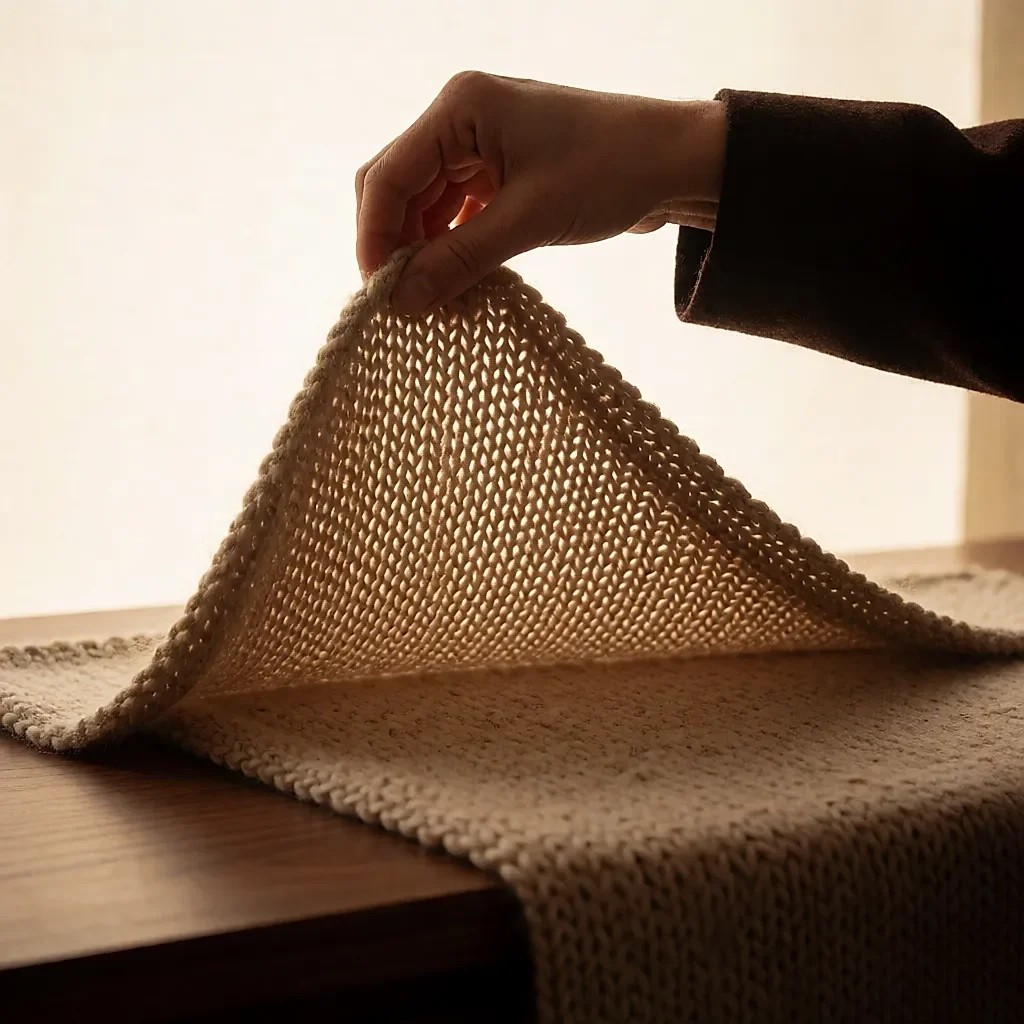
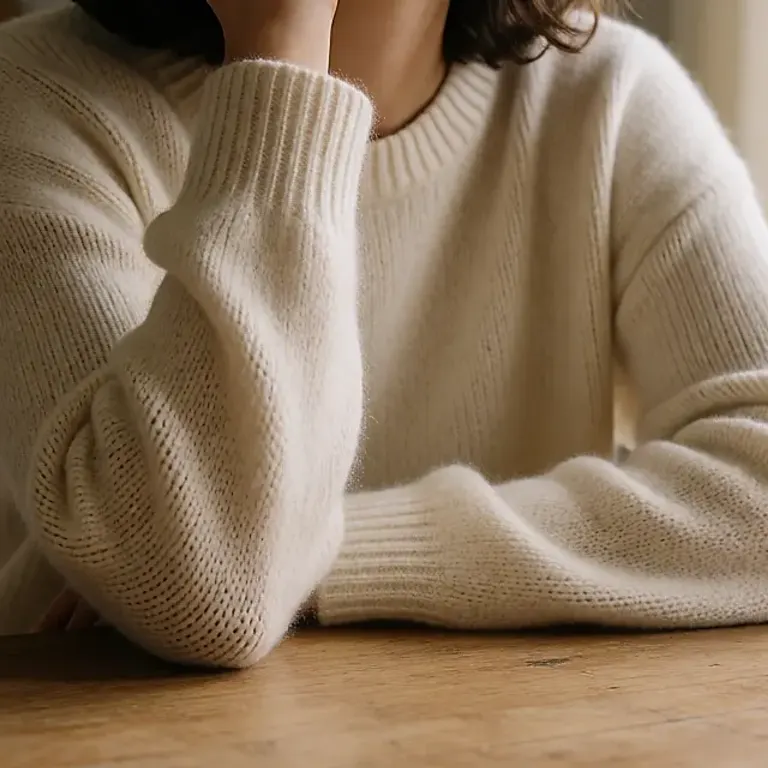
Knitwear reads by hand. Dense cashmere feels firm in the hand, not fluffy like a decorative throw; hold the knit up to the light: if you can see daylight through it, it's too loose. Pinch the fabric and let go: the longer the fibre, the faster the knit springs back. And tug gently at an edge — if tufts come away in handfuls, the piece already has one foot in the drawer of regret.
On care, cashmere hates two things: hangers and hot water. Wash cold, by hand or on a wool cycle, squeeze without wringing, dry flat and store folded. A bristle comb or a soft brush lifts pilling, and a jumper that's looked after will easily last several winters — which is where the initial price really starts to divide. Wear it with raw denim and loafers and it does the work of a statement piece without ever raising its voice.
Before you buy, turn the label over and look for three things: the exact percentage of cashmere, the country where the fibre comes from, and whether there is a farming standard behind it. If none of the three is there, you're buying a colour and a drape, not a fibre.
Budget
In the UK, expect to pay roughly £100 to £200 for an entry-level 100% cashmere, often a fine knit in short fibres, and £250 to £500 for a denser, better-finished knit from brands that spell out where their fibre comes from; beyond £700 you are paying for extreme fineness, the make and the name. Prices move with the city, the fibre length quoted and the level of finishing. For a jumper that's already broken in, budget £40 to £130 in good condition at charity shops or on resale platforms — provided you check the label and the state of the elbows.


Comments
Your opinion matters: rate the article, react and reply to comments.
Comments are moderated; AI-assisted comments are flagged. Text emoticons (8-), :-), <3…) are automatically shown as images.