
Two wool coats can have nothing in common but the word "wool" on the label. One keeps you warm at three millimetres thick and drapes like a Sunday hoodie; the other weighs as much as a picnic blanket and refuses to give at the shoulder. In November, though, we ask exactly the same of both: warmth without a thick lining, enough resistance for a bit of drizzle, and enough give to run for the bus without ending up looking like a marshmallow.
Three families share the rail — boiled wool, woven wool and wool felt — and they behave in very different ways. The giveaway? You can feel the difference with your fingertips, without reading the label or ringing your mum for a second opinion.
Three wools, three ways of behaving
Boiled wool starts as a knitted fabric that is then felted: the stitches close up, the surface compacts, and the cloth gains that dense, fleecy body you clock at a glance. Because it is dense, it often does without a lining — the edges can even stay raw-cut, with no hem at all. The result is a coat that feels like an oversized jacket, hangs straight without breaking at the shoulder, and folds into a bag without complaint.
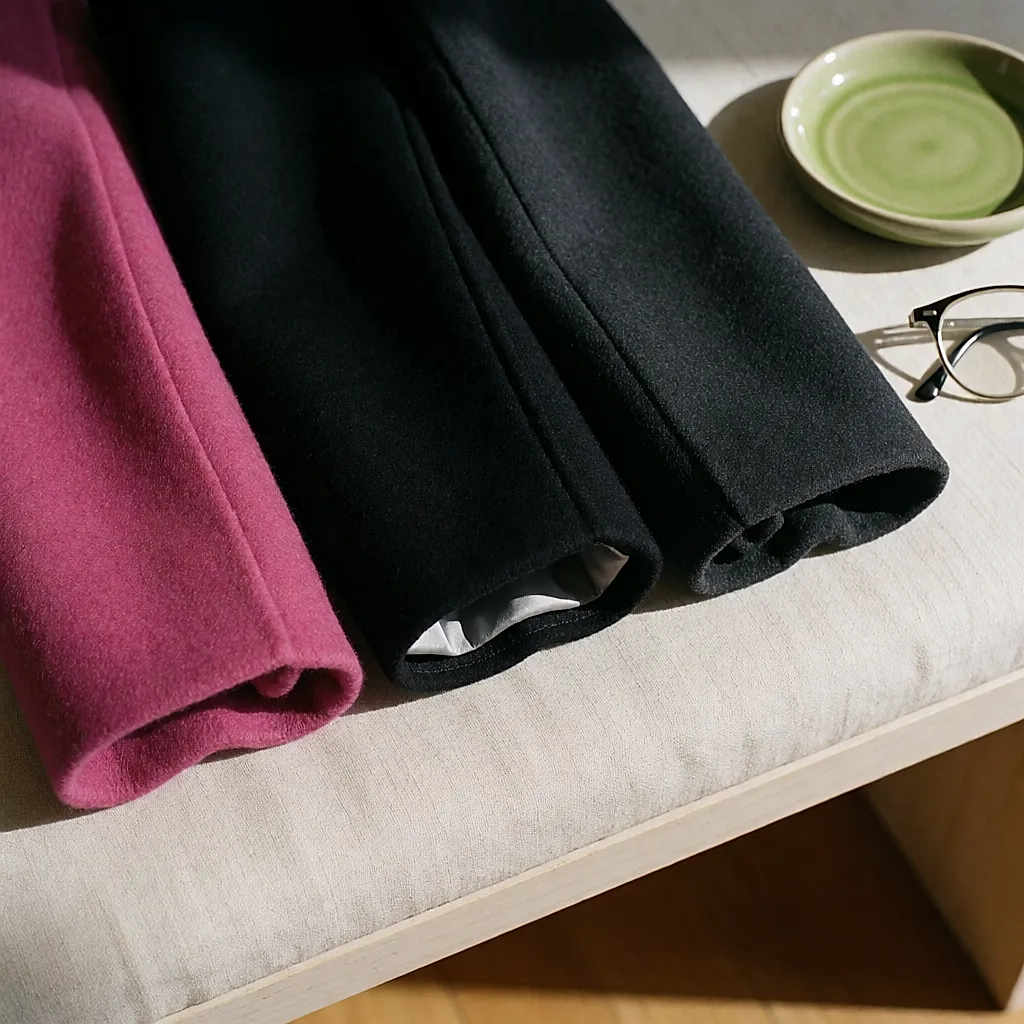
Woven wool is a cloth that is woven and then milled: the material of proper town coats, the kind that holds a crease, a line and a crisp lapel. More structured, often lined, sometimes lightly canvassed at the shoulder, it gives you a grown-up silhouette — no small thing on a Monday morning. In return it weighs more and stands stiffer. If you want a coat you forget you are wearing, this is not it.
Wool felt, finally, is a non-woven: matted fibres, neither knit nor weave. Hence the generous thickness, the very soft matte surface and edges that do not fray — tempting. But it lacks elasticity, and at the shoulder it can feel like a solid block. Great for a short, straight cut; trickier as soon as you want movement.
What boiled wool does better, and what it won't do
Boiled wool wins on warmth-to-bulk. A densely felted wool traps air without needing three centimetres of wadding, which is exactly what you want from a coat you wear open, pushed back off the shoulders, slung over an office chair. Add a collar that stands up and deep pockets, and you have the transitional piece that earns its keep until February.

In fine rain, the density of the felting works in its favour: drops often bead on the surface instead of soaking straight into the cloth. A ten-minute downpour is another matter, though, and a wool coat is not a substitute for an umbrella. On the silhouette front, know what you are buying: boiled wool rounds the shoulder. If you want sharp tailoring and an immaculate lapel, go back to the woven wool.
And care? Brush it, air it, blot any marks with a damp cloth, keep it away from the washing machine. Keep an eye on bag-strap friction under the arm — that is often the first place the surface shows wear.
The fingertip test
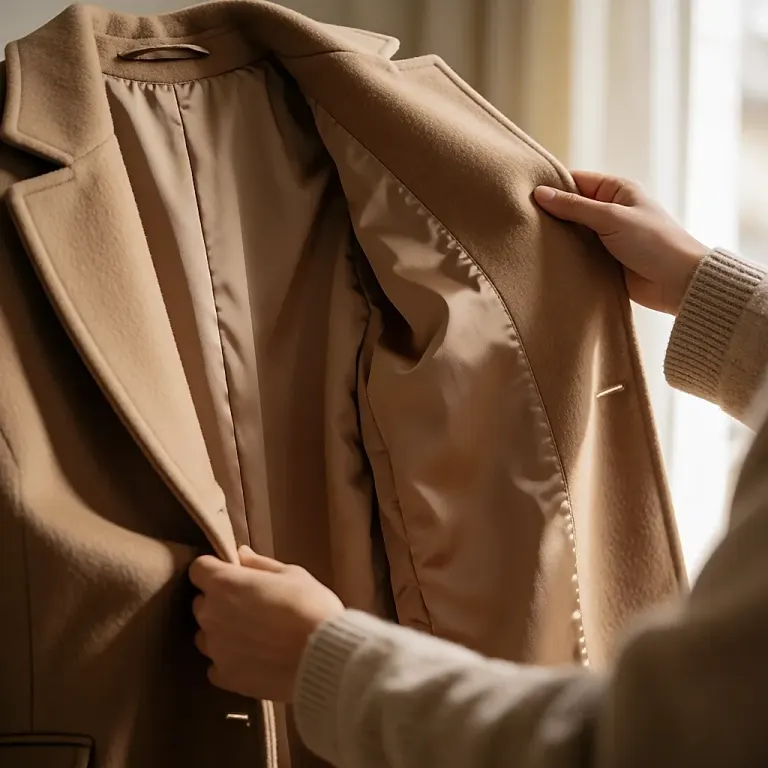
In the shop, start by pinching a fold between thumb and forefinger, then let go. Boiled wool springs back into place; woven wool holds the crease for a second before it fades; felt is thick but firm, almost cardboardy. Then turn the sleeve inside out: a full lining down to the cuff usually betrays a structured woven wool, whereas boiled wool often makes do with sleeve lining, or none at all.
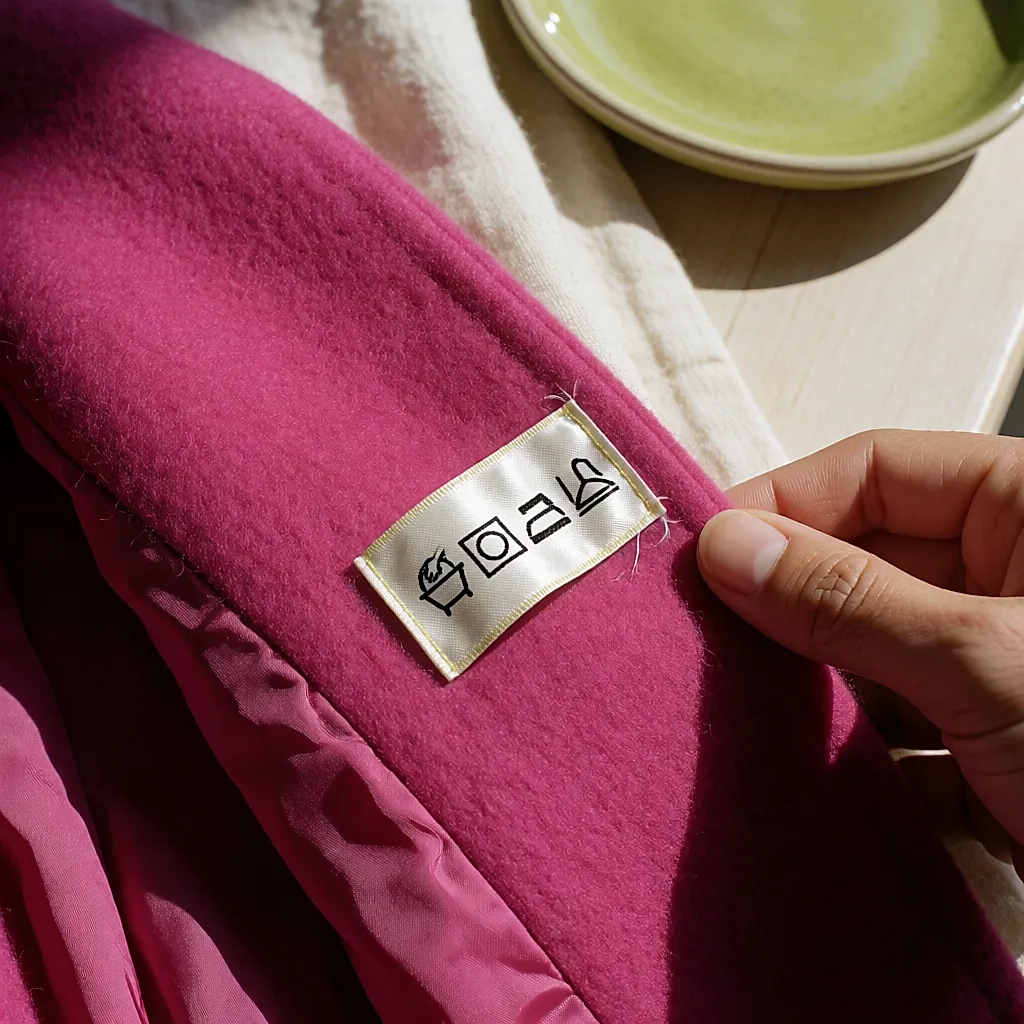
The quick check before you pay
- Pinch it: springs back = felted knit; holds the mark = woven wool; resists = felt.
- Look at the edge: a clean, unstitched raw edge is a good sign on boiled wool.
- Read the composition: in practice, a high proportion of synthetic fibres can change how the coat holds its shape and how it breathes.
One last reflex: weight. A heavy coat on the hanger is not necessarily warmer; it may just be heavier. Lift it at arm's length, then try it on sitting down — sitting is when you find out whether the shoulder follows you or fights you.
What to expect to pay
Budget roughly £90 to £250 for a properly dense boiled wool coat on the high street, and more from labels working European wool with a considered cut. Woven wool sits more often between £130 and £400, depending on the lining and the shoulder work; wool felt generally between £70 and £200. Prices move with the proportion of real wool, where the fibre comes from, the lining and where the coat is made — which is why it pays to compare like with like.
And the smart buy? Second-hand is still the best haul: £15 to £60 in charity shops or on resale apps, as long as you run the quick check above. A well-brushed second-hand boiled wool coat can last for years; it is one of the more forgiving materials when it comes to wear, provided you have a seam repaired before it starts to unravel.
If you want compact, flexible warmth, go for boiled wool. If you want a structured look, woven wool. If you like sculpted volume and short cuts, felt. And in every case, try the coat on with the jumper you actually wear in November — not the silk shirt from try-on day. That is where, in three seconds in front of the mirror, you will know whether the coat deserves its place in your wardrobe — or goes back in the returns box.

Comments
Your opinion matters: rate the article, react and reply to comments.
Comments are moderated; AI-assisted comments are flagged. Text emoticons (8-), :-), <3…) are automatically shown as images.