
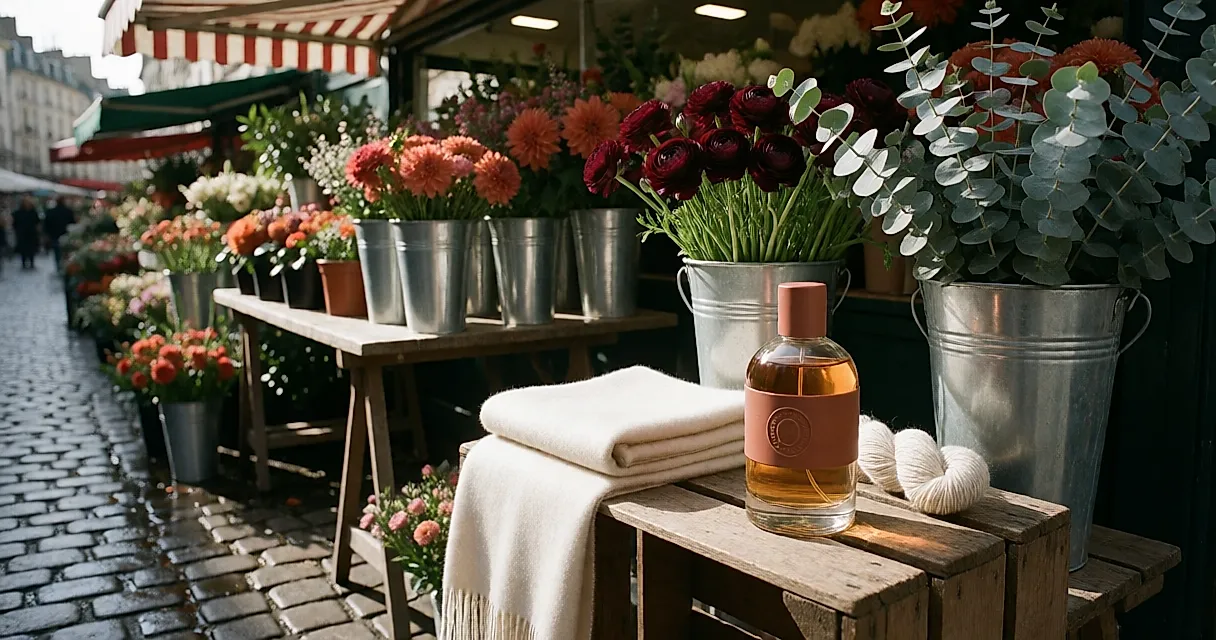
A perfume doesn't actually smell of wool. It smells of the idea we have of it: the warmth of a jumper, the softness of a roll-neck against the neck, that cosy just-washed feeling. So how on earth do you put cashmere in a bottle? With powder, dry woods — and a good deal of psychology.
What it means when a perfume smells of wool
A perfumer doesn't distil a sheep: they stack up facets. On one side, powder, iris, heliotropin with its sweet-almond smell, and certain musks that settle on skin like a veil. On the other, dryness: cedar, sandalwood, vetiver, coumarin — that hay note that smells more of attic than meadow. Add a woody base and a touch of white musk, and the nose files the whole thing under 'warm material' without even thinking about it. The famous cashmeran, a synthetic molecule with musky, woody and powdery facets, owes its name to cashmere: it isn't a fibre you can spin into a jumper, but the word hits the mark.
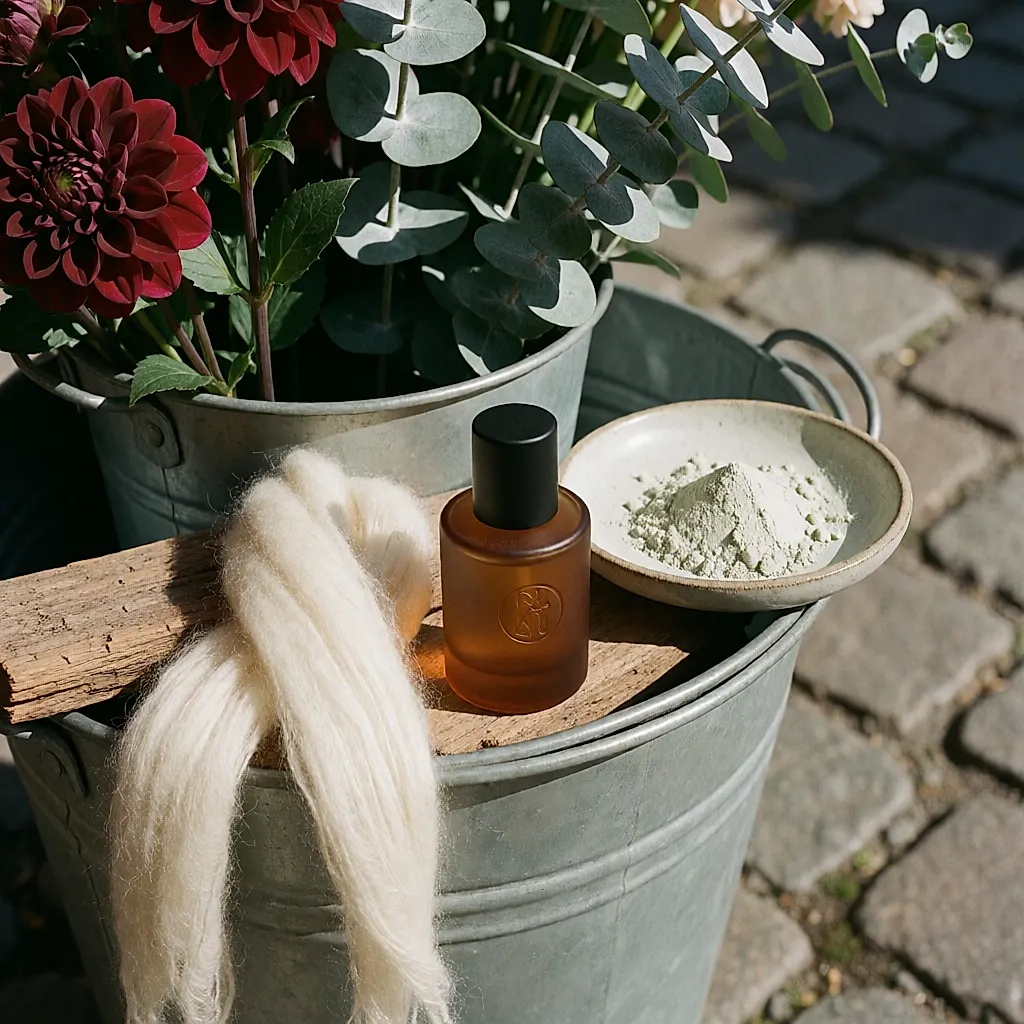
There's also a misunderstanding to clear up. The 'fresh linen straight from the cupboard' effect comes from aldehydes and soapy notes: it's crisp, bright, a little scratchy. Wool is more muted. It asks for softness and shade. That's why a 'cashmere' perfume wraps you up rather than freshening you — and why, on some skins, it can tip into granny's soap. No drama, just a misunderstanding of temperature.
The paper strip tells one story, your skin tells another
On a paper strip, the powder takes over. The card doesn't warm up, doesn't sweat, doesn't hold on to anything: it unrolls the notes in order, neatly, like a score without an orchestra. Hence that feeling of a well-behaved perfume, then, an hour later, a flat one. What you're smelling there is the skeleton. Useful for comparing two bottles with each other, misleading when it comes to guessing what you'll actually wear.

On skin, the same juice changes sides. The warmth of your wrist wakes up the musks, sebum rounds off the edges, the powder melts into the woodiness. A note that's lovely on paper can turn into wet cardboard on you — a too-dry woody note can do exactly that. A perfume should be judged in real life, not standing upright in an over-lit shop.
How to judge a perfume on skin without getting it wrong
The method sounds basic, but it makes all the difference. Turn up without any perfume from the morning and without a heavily scented cream on your arms. In practice, one light spritz on the inside of the forearm is often enough: two perfumes layered on top of each other make a third that nobody asked for. Don't rub. Let it dry for a few moments, then step out of the fragrance department. Twenty to thirty minutes later — a handy marker, though everyone's pace is different — smell it again from about 10 cm away, without putting your nose right against it.

What really settles it is the evening. The base — what's left after several hours — decides whether the bottle earns its place on your shelf. One simple test: smell the jumper you wore over the perfume. If you still like the trail it leaves, you're onto something. Wool holds on to scent — that's its nature, and also why you should be careful: spray the inside of a hem first before scenting your favourite roll-neck; alcohol can mark some fibres.

Budget
Prices vary with concentration, brand positioning, bottle size and retailer: in France, count on roughly €50–120 for a mainstream eau de parfum, and €150–300 for many niche houses. A discovery set of small samples usually costs about €20–50, and that's still the best way in — because it lets you judge over several days at home, with no commitment. You'll find them at beauty retailers, on brands' own websites and sometimes from specialist online retailers; in supermarkets, the range is often limited to bestsellers, which is no bad thing for your wallet.
Three things to do before you reach for your card. One: ask for a sample; it's a good way to test a perfume over several days. Two: one wrist in the morning, the other the next day — never two scents on the same skin on the same day. Three: keep the bottle out of the light, not on a windowsill.
What to remember
Wool in a bottle is a translation, not an extraction: powder for softness, dryness for fibre, musk for warmth. Once you know that, you read tester strips differently — and you stop choosing a winter perfume in three minutes flat, standing in a shop aisle. Give yourself an afternoon, let your skin do its thing, and keep the bottle that still feels like you after several hours, not in the first few seconds.

Comments
Your opinion matters: rate the article, react and reply to comments.
Comments are moderated; AI-assisted comments are flagged. Text emoticons (8-), :-), <3…) are automatically shown as images.