
Picture a city-centre window in November: no display stands, just a notice taped to the glass and a mobile number for deliveries. Two streets away, a tiny space has just opened, with a chair to sit on and someone who asks what you already wear. The same afternoon, in the same city, perfume is playing out on two scales: the cathedral and the box room.
Luxury prefers cathedrals
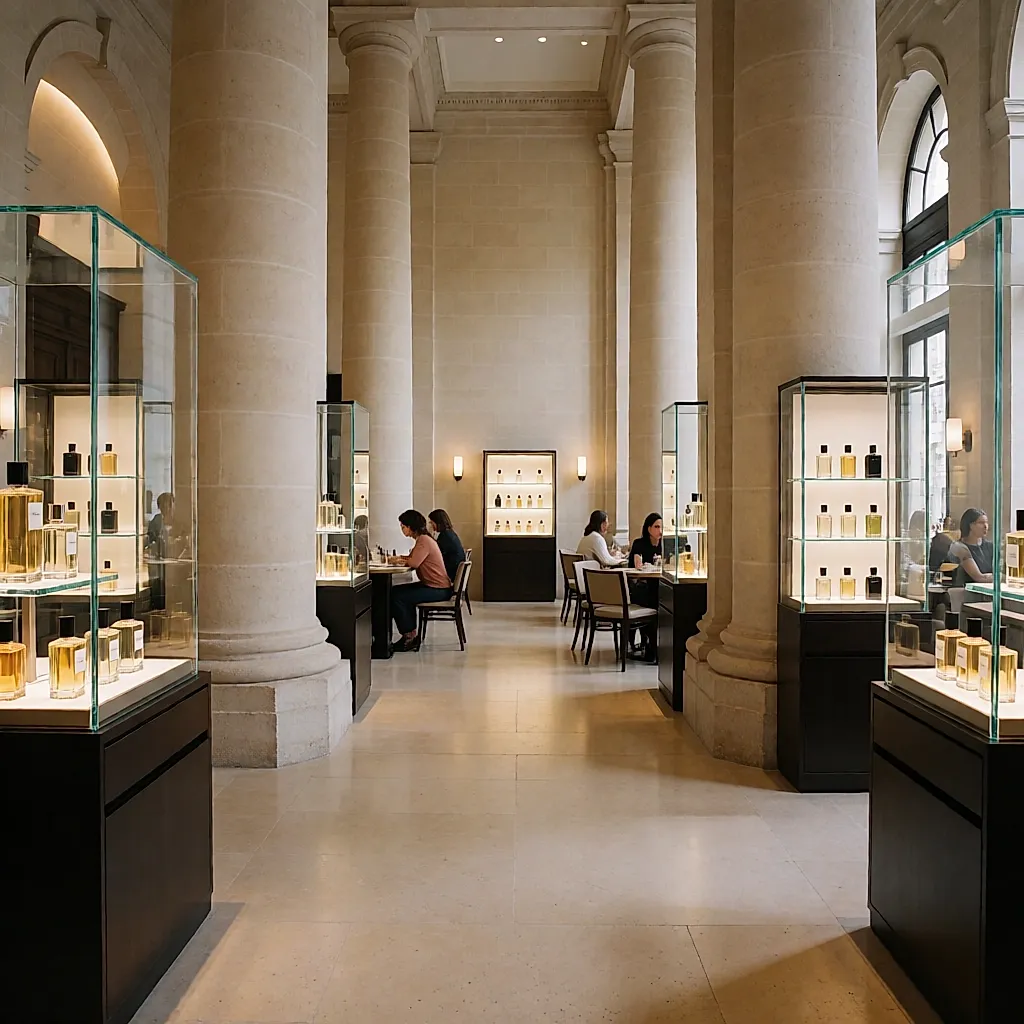
The logic of the big groups needs no manual: fewer addresses, larger ones, planted on streets designed to make you dream. Many shops are no longer simply points of sale but stages — pale stone, considered lighting, an engraving station, sometimes a café at the back. You go in for the experience as much as for the bottle, and quite right too. Except that in a city where only one address remains, 3pm on a Saturday feels like a rush-hour Tube carriage: you squeeze in, give up, and leave with something you hadn't come for.
The movement isn't confined to perfume: luxury more broadly has been tightening its network in many cities, preferring a few flagships to a scattering of small stores. I won't give you a table of closures — announcements move faster than foundation in July, and no public count says what's still open in Manchester or Leeds. The effect on customers is easy enough to see: fewer doors, so fewer chances to smell something by accident, and every visit starts to feel like an exam.
Meanwhile, the box-room approach
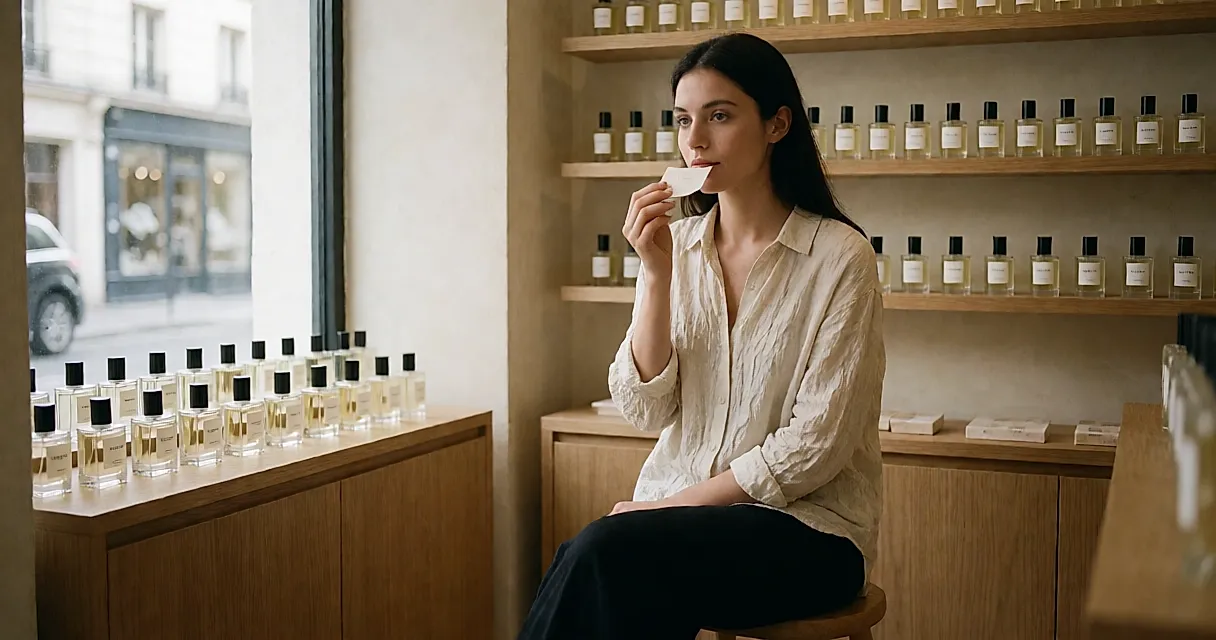
In London, meanwhile, many independents are betting on the opposite. Little space, a wall of bottles arranged by scent family rather than brand, houses you don't see everywhere, and a single adviser who doesn't look rushed. Their argument comes down to one word: time. You sit down, start again, leave with three samples and no purchase — yes, that's allowed!
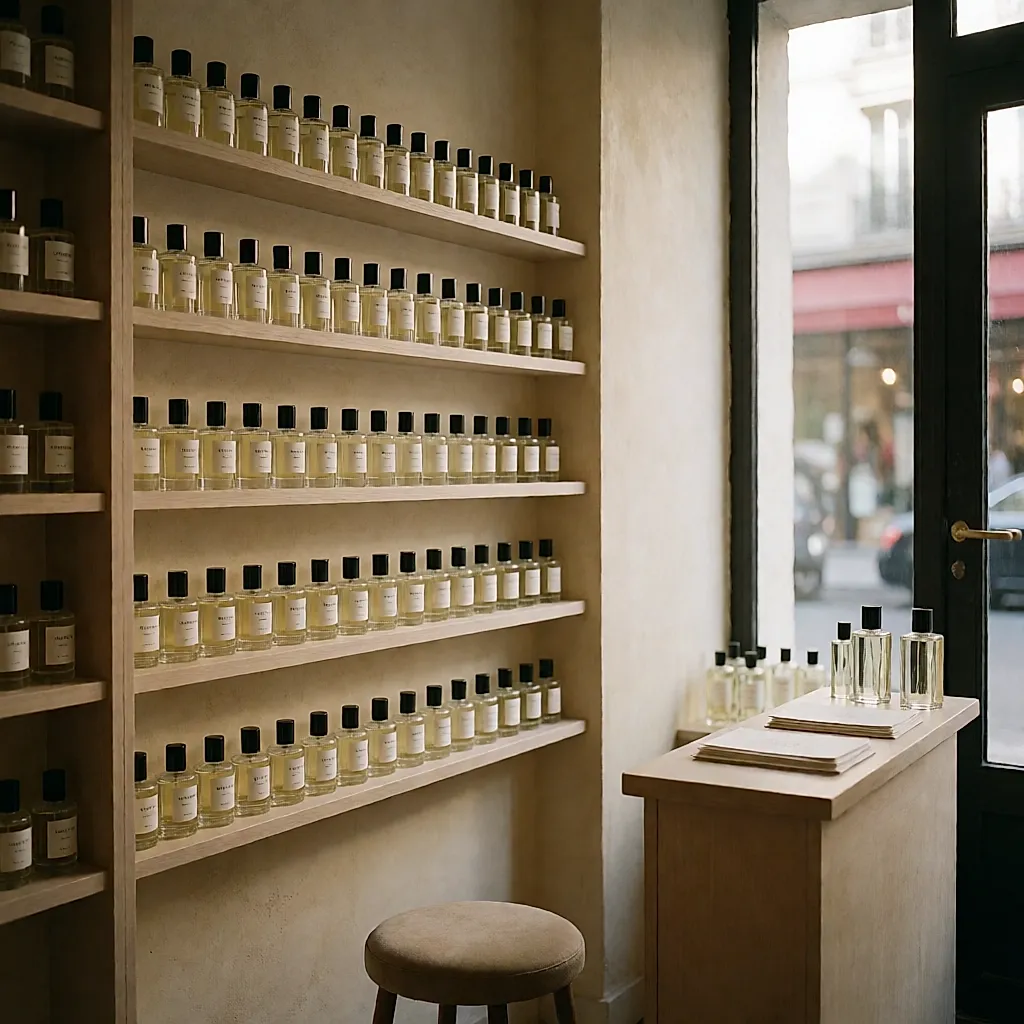
I don't have a crystal ball about whether these shops will survive: the model is fragile, London rents take no prisoners, and a small shop lives on loyalty more than footfall. But the idea is worth pausing on. A perfume is either decided in fifteen minutes in a busy aisle or over three visits, with skin that changes its mind in between. The second version costs less in the long run — and leaves better memories.
The blotter lies, skin negotiates
The blotter isn't doing anything wrong: it doesn't warm up, sweat, or live through your Sunday evening. On skin, in the crook of your elbow, you'll know within twenty minutes whether it feels like you and whether the base holds after you leave the shop. Our rule of thumb: three scents maximum per visit, four if your nose is trained. Beyond that, scents tend to blur together and you'll end up buying the sales assistant's perfume, which wasn't the plan.
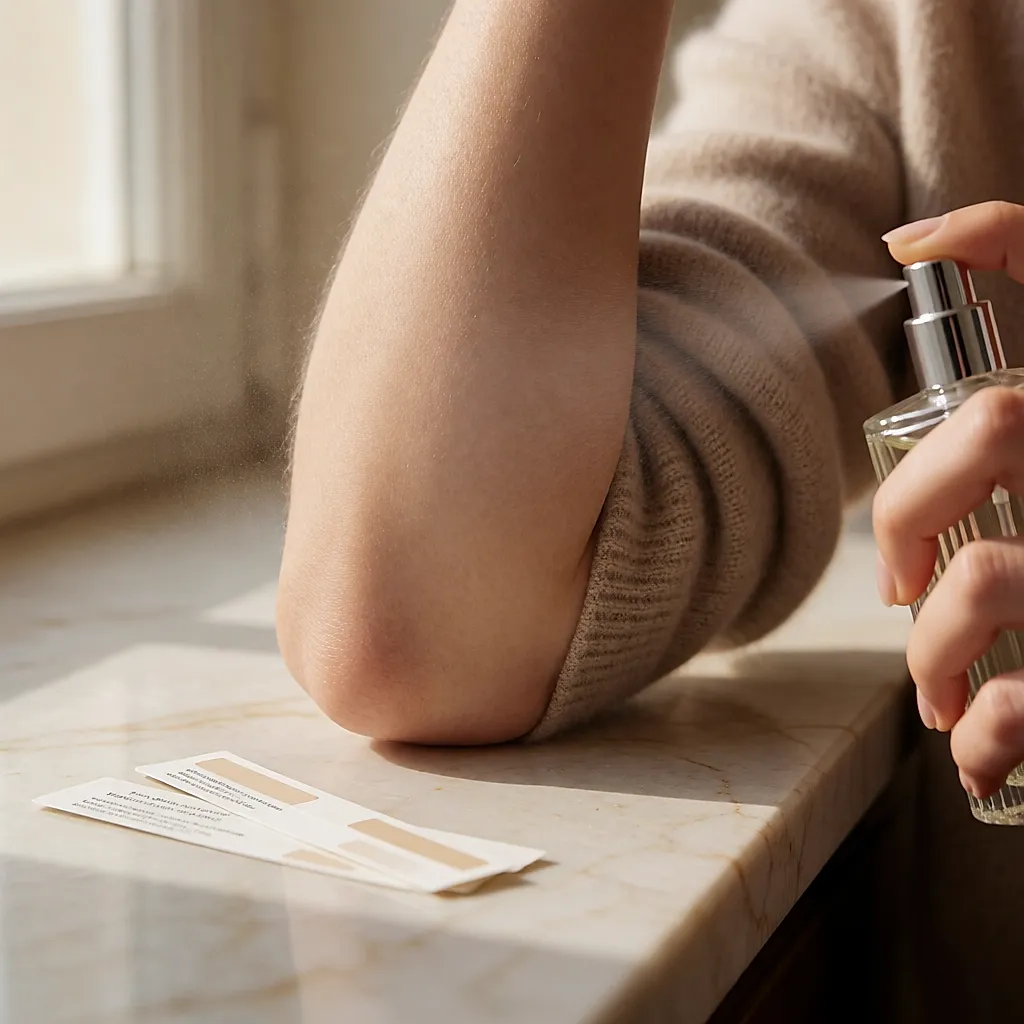
Ask for a sample, plainly, without beating around the bush. Many houses can prepare them; independents are often happy to. Then note everything on your phone: the date, the name, your mood that day. In six months, 'that woody one on Tuesday' will mean nothing. And ask yourself: how many bottles have you bought after a single spray, in a noisy place, on a sale day?
Where to sniff without being collared
In an independent, you go to compare houses with different budgets and moods; the advice is often more talkative, sometimes more biased too — you have to listen and sift. In a brand boutique, the advantage flips: the whole world of one house, its variations, refills, engraving. To cover more ground, a department store is still practical, provided you go on a weekday at opening time or in the final hour: never Saturday afternoon, unless you like scented queues.
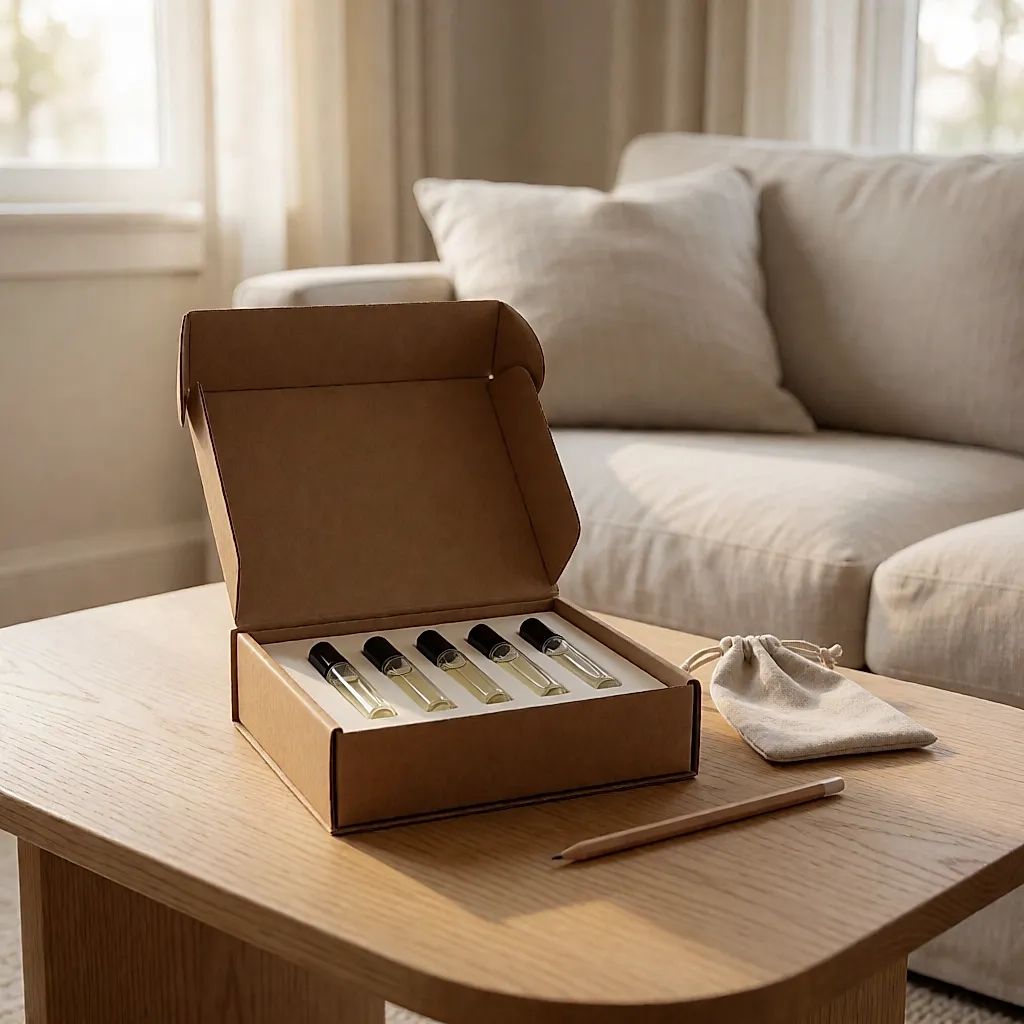
Online, look for sample sets and discovery formats: it's often the cheapest way to smell five things without leaving your sofa. A confession: I don't have a reliable ranking of the best places in the UK, and I'm suspicious of those who publish one without having spent any money at the till. So say it out loud as you go in: 'I'm just here to smell; I may well leave empty-handed.' It defuses more situations than a long speech.
Budget
Let's talk budget, with the caveat that prices vary with city, house and size. As a rough UK guide, expect about £2 to £5 for a single sample when it isn't free, £20 to £60 for a discovery set, and £60 to £130 for a standard bottle of eau de parfum; niche or exclusive collections run higher. Refills, when a house offers them, can cost less than a new bottle — a question worth asking; it won't be volunteered at the counter.
And above all: the sample is the best investment. A modest spend on discovery is better than a full bottle that ends up as a room spray for the hallway. You'll find these formats in independent perfume shops, chains, brand boutiques and on houses' official websites.
The test that costs nothing: spray on skin before you go out, walk for twenty minutes, then breathe in at your wrist without burying your nose in it. If you forget the perfume, that's a good sign. If you're looking for it every ten minutes, come back the next day — and beware love at first sniff, often the most expensive kind.
The real question wasn't 'where to buy' but 'where to try'. Luxury is betting on grand spectacle; small shops are betting on your time. Between the two, there's a place for you: one where you can say 'not that one' without anyone taking it personally. So if a window near you gets covered with a white notice, it isn't the end of perfume. It might be the chance to go in somewhere else, sit down for five minutes and smell for free.

Comments
Your opinion matters: rate the article, react and reply to comments.
Comments are moderated; AI-assisted comments are flagged. Text emoticons (8-), :-), <3…) are automatically shown as images.