
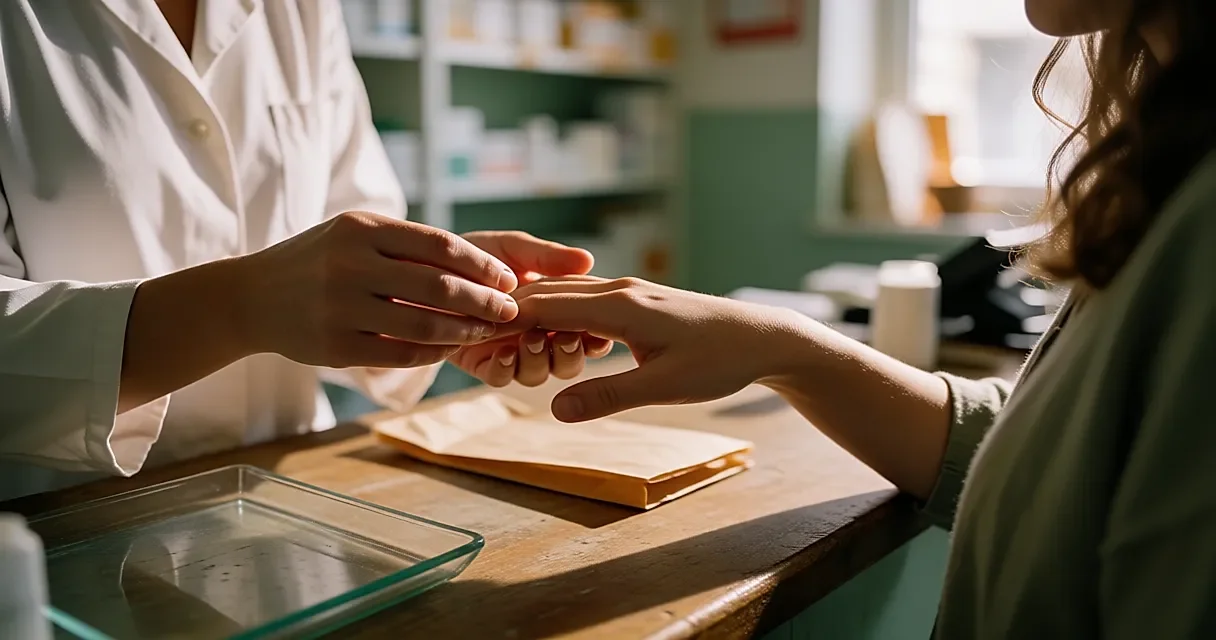
Two jars side by side on the shelf. The same word, "hydrating", in big letters on both boxes. The same hero ingredients in the same bold type. And sometimes £25 between them. On the product page there is simply no way to tell them apart. In real life, one ends up at the back of a drawer and the other gets repurchased in February. What separates them isn't printed on the label: it's the thing you have to ask out loud, to someone who has watched those jars come back.
The label sells, the counter tells
A moisturiser label is an exercise in seduction. An ingredient pushed on the front of the box may be doing nothing more than marketing duty.
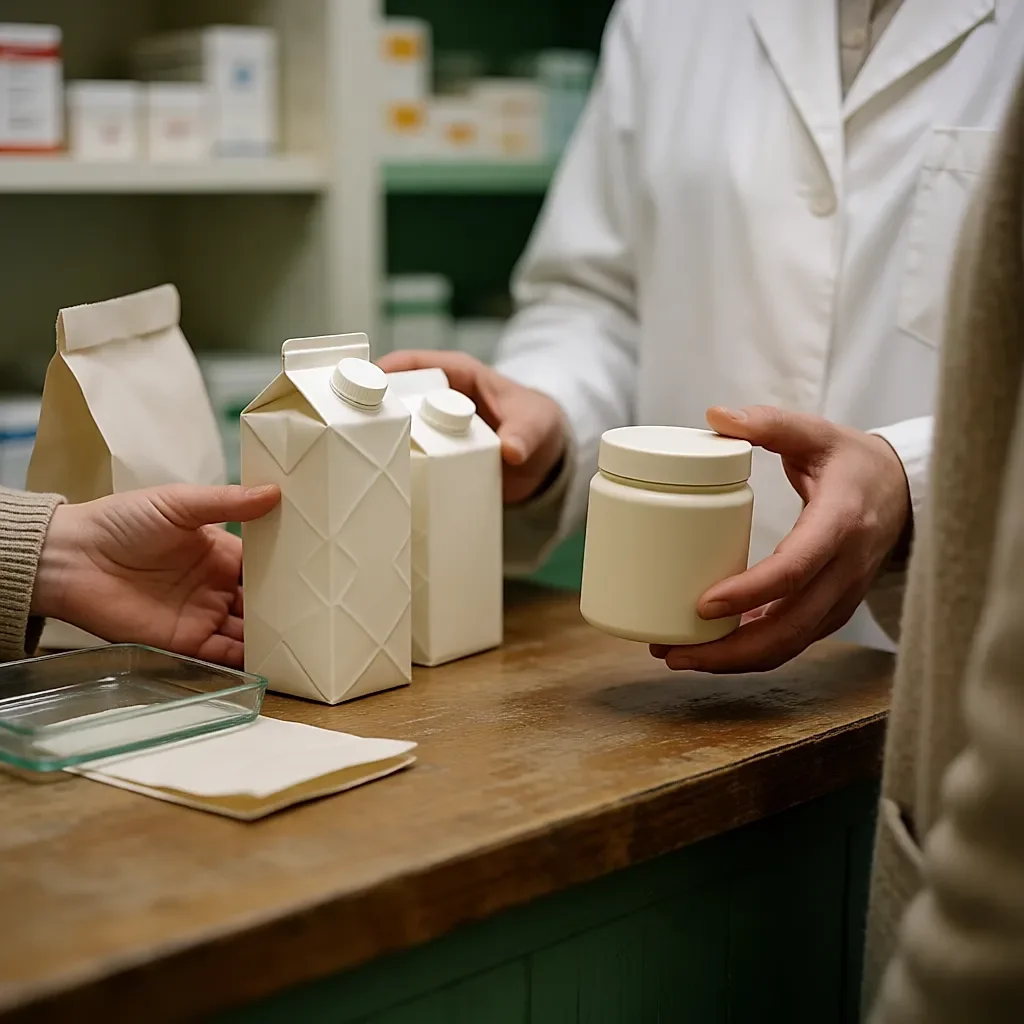
Where you buy changes everything. In a pharmacy or a health-and-beauty retailer, the staff are usually trained and used to hearing how a product behaved once it got home. At a department-store beauty counter, the advice is often good but shaped by the brands on that floor — a bias worth knowing about rather than a fault. In a supermarket, expert advice is rarer. The method works best wherever someone has already heard "it makes my face itch" a hundred times.
How much active is actually in it? The question that makes people squirm a little
It's the question that makes people squirm a little, and the most useful one you can ask. Two creams built around the same headline ingredient can be dosed very differently — a few per cent in one, far less in the other — and the price doesn't necessarily follow. If the person in front of you knows the percentage, you're in luck. If the answer is "it's our signature formula", you've learned something anyway.
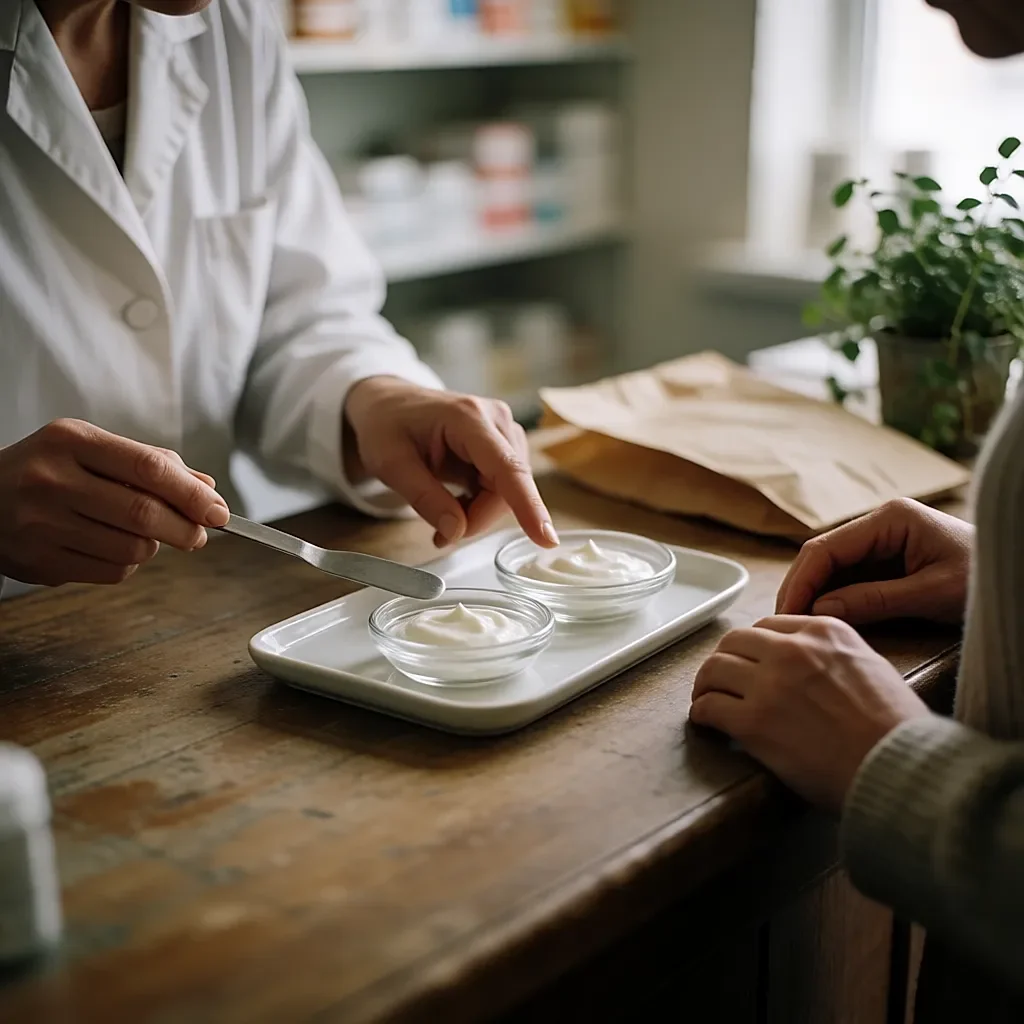
Follow up with what sits around the star ingredient: alcohol? fragrance? essential oils? If your skin tightens or flushes easily, those are the details that can make the difference, not the name on the jar. Then ask the question that sums everything up: "what's the difference between this one and the one next to it, in one sentence?" A clear answer in a single sentence is a good sign. A catalogue of superlatives, much less so.
How the texture holds up by 4pm
A cream is judged in use, not when you first open the jar. Ask which of the two is richer and which is lighter, and which season each was designed for. In November, central heating changes the equation: what glides on pleasantly at 8am can feel tight by 4pm, and the reverse is true in July.
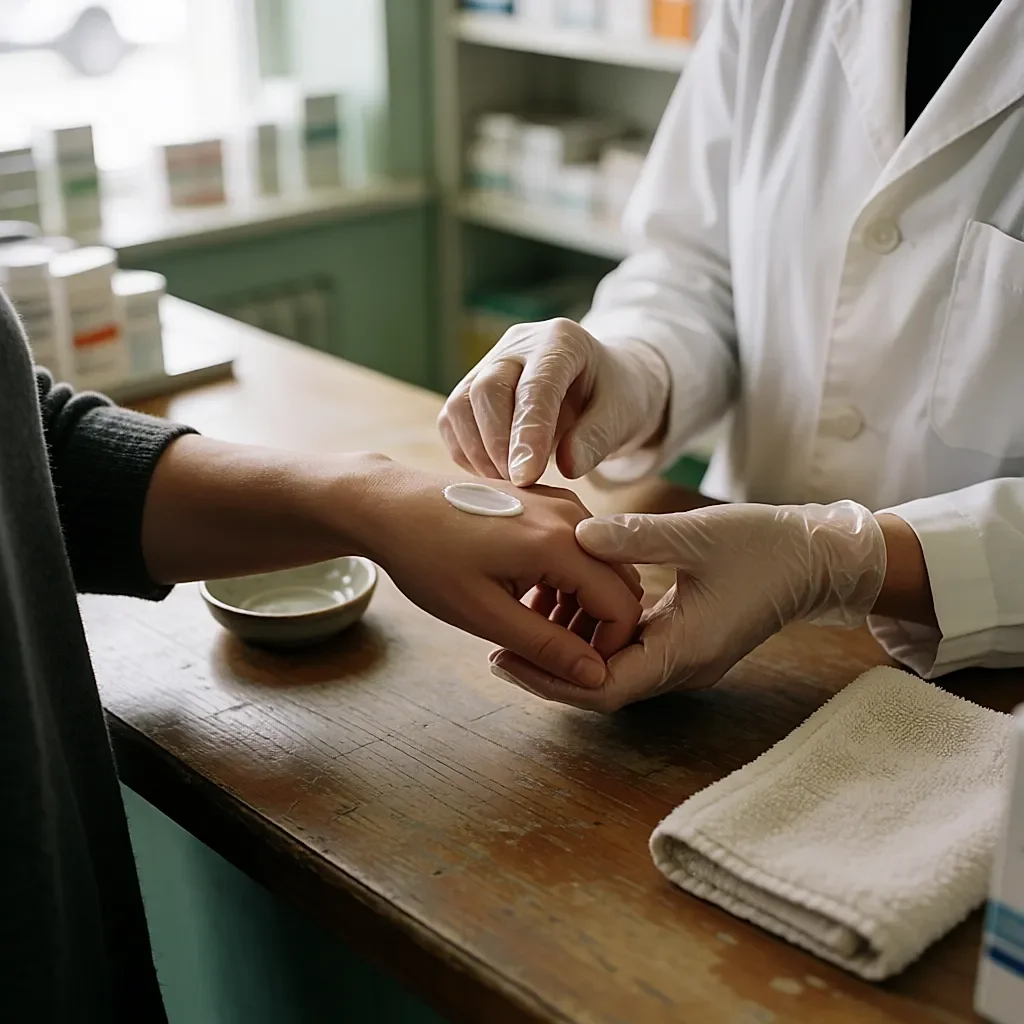
Ask to try a pea-sized amount on the back of your hand before you say yes. If it drags, if it pills, if the fragrance follows you around, it's a no — and you've just saved yourself the price of the jar. A supplementary question: is there a smaller size? If the formula intrigues you, start with the mini.
Samples, testers and returns
Not every retailer will take back an opened jar. Ask before you pay: is there a sample available? a travel size? what are the return conditions, and where are they displayed? This is what can separate two otherwise identical creams — the one you can try at no risk and the one you buy blind.
While the jar is in your hands, look for the little open-jar symbol followed by 6M or 12M: that's the period after opening, and it has nothing to do with the date printed on the box. Ask whether a refill exists for that size, too. Not every brand offers one, and the ones that do don't always shout about it as loudly as their hero serum.
The counter script. Ask in this order: "What concentration is the main active?", "Which of these two is richer for winter?", "Can I have a sample, and what are your return conditions?" If the answers come back without hesitation, you've found the right person to ask — and probably the right cream.
Budget
Expect to pay roughly £10 to £25 for a straightforward moisturiser in a pharmacy or health-and-beauty retailer, £25 to £55 for a targeted treatment — a serum, a measured active, a more elaborate texture — and £50 to £120 in a department-store beauty hall, depending on the brand. In health-food shops, facial skincare usually sits around £12 to £30. When a sample is offered, it's free: that's what it's for, and it saves you paying for a jar you'll only half use.
Certifications govern certain things about what's in the jar — where the ingredients come from, how much is organic, the processes used — not how well it will work on your skin. A certified product isn't therefore "better for you" as a matter of principle; it's simply more tightly defined in what it contains. Where a refill exists, it's usually cheaper than a new jar, though the difference varies a lot — ask the price.
The real deciding factor isn't the product page: it's the answer you get across the counter, and then what your skin says after a few applications. So next time, before you reach for your card, ask the first question — the others follow on their own.
Food supplements do not replace a varied, balanced diet and a healthy lifestyle.

Comments
Your opinion matters: rate the article, react and reply to comments.
Comments are moderated; AI-assisted comments are flagged. Text emoticons (8-), :-), <3…) are automatically shown as images.