
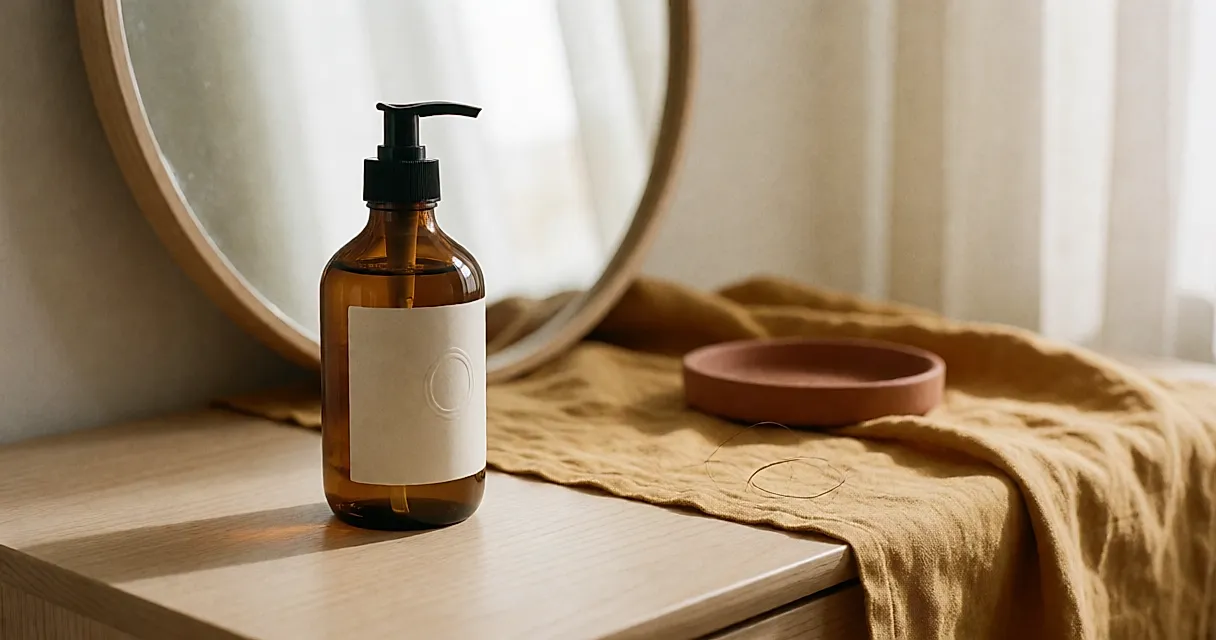
'Silicone-free' doesn't mean 'free of everything'. The label shouts the absence in big letters, when the real question sits somewhere else entirely: what is providing the film instead? Hair can do perfectly well without silicones. It does far less well with nothing at all.
Silicones aren't the villain of the story
Let's be fair: silicones aren't the baddies they're sometimes made out to be, and a formula that contains them is not a mistake. They're rather good at their job — smoothing the surface, making hair easier to comb, delivering that glassy shine you clock straight away. It's that same film that, in a rich formula, can end up weighing hair down and leaving it feeling clean but slightly coated.
The trouble is how their absence has been sold to us. 'Silicone-free' has become a selling point in its own right, with no mention of what takes over. Yet a silicone-free formula is still a formula with a film: something has to catch the light and let the brush glide through.
Three replacements you'll actually spot on the list
First family: plant oils — coconut, jojoba, argan, camellia. They leave a lipid film, nourish the fibre and smell lovely. Their limit comes down to one word: weight. On fine hair, a generous dose of oil clings. And an old or badly stored oil can oxidise and turn rancid, depending on what it is.
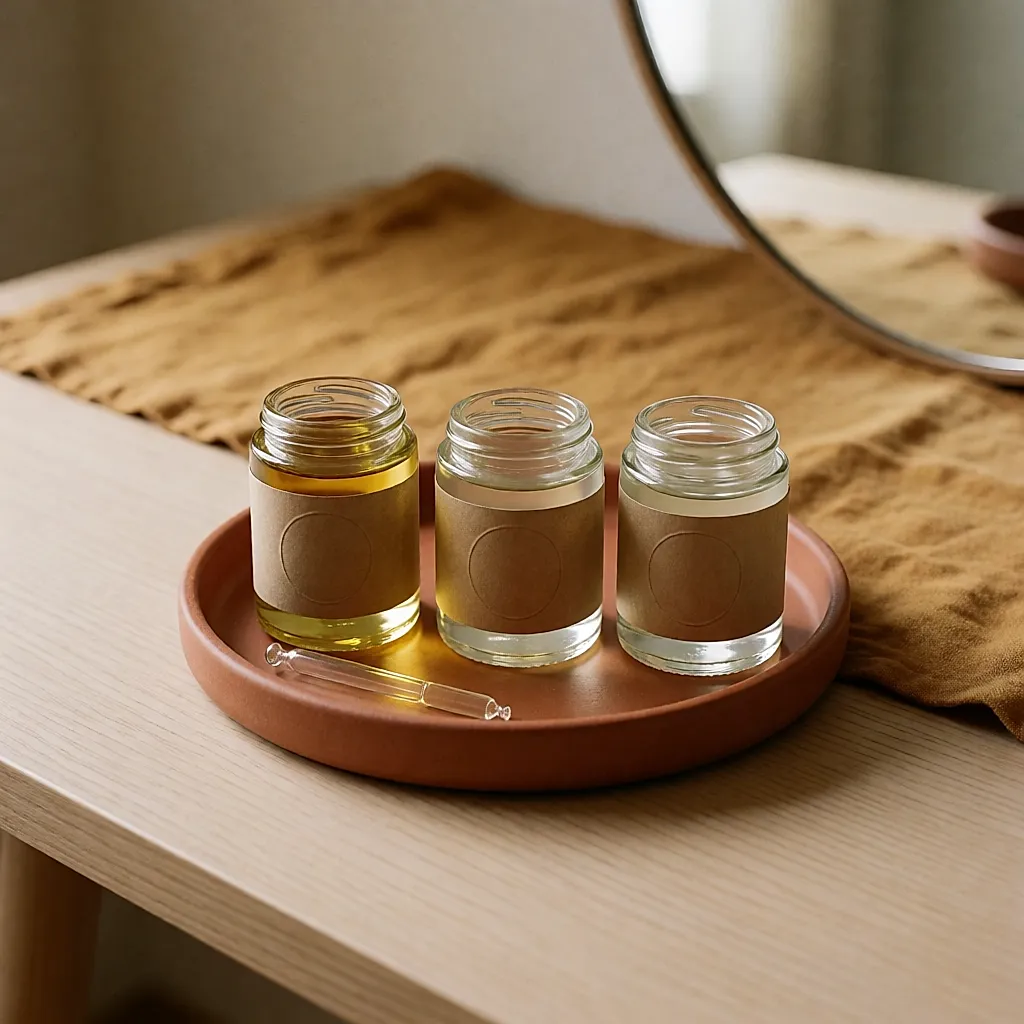
Second family: polymers (polyquaternium, gums, modified starch, hydrolysed proteins). A discreet film, a smoothing effect, decent hold through the day. Badly dosed, though, a polymer can leave hair feeling like cardboard or leave a film that squeaks under your fingers. It isn't better than silicone, it's different: drier to the touch, and more dependent on how you apply it.
Third family: bio-based esters and waxes, halfway between the two. They glide without greasing, and often rinse out faster — which means you end up reapplying more often.
What it's actually like
In terms of feel, expect an adjustment period. Hair with no silicone film feels rougher when wet, and it asks for more patience at the detangling stage. Some people find it 'more real'; others find it dry. Both are right: it comes down to what you're used to.
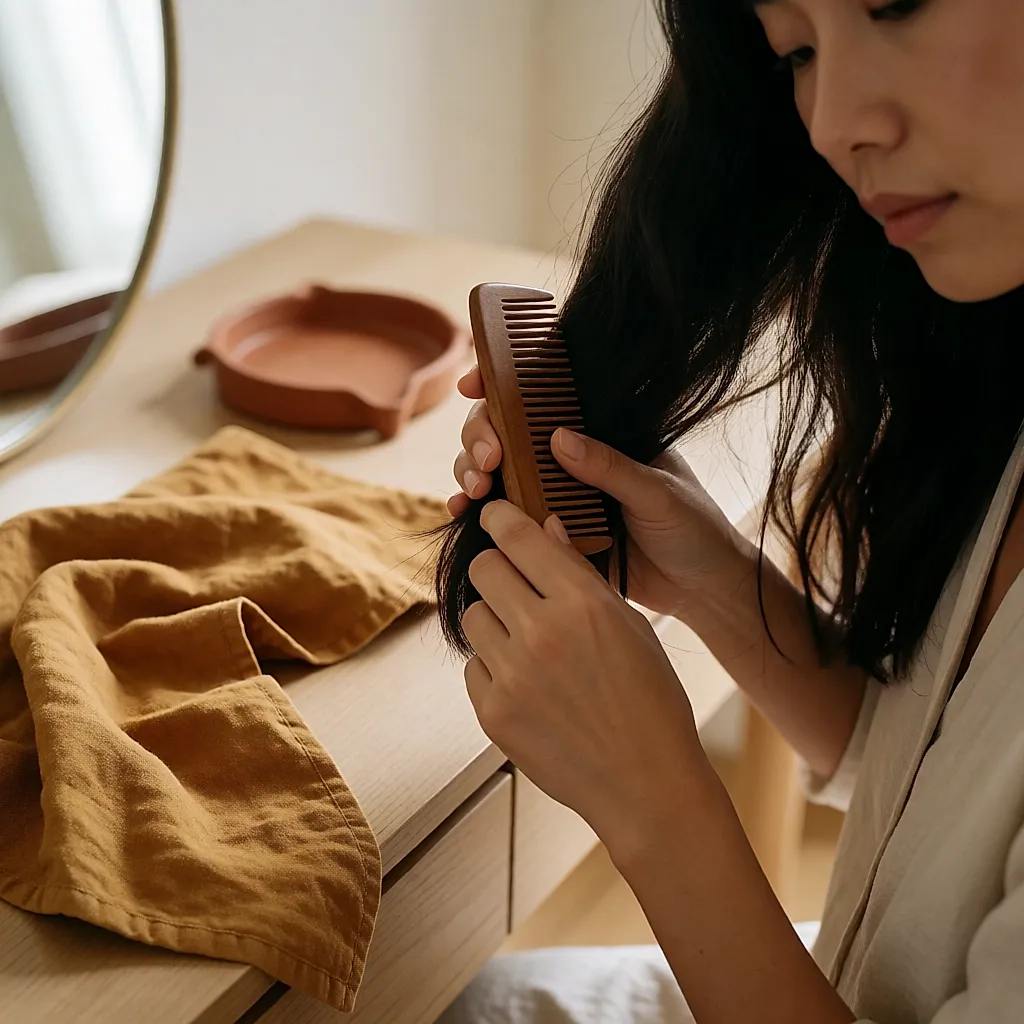
Application has to change too. Oil goes on the ends and the last third of the hair, never on the roots — otherwise you get greasy roots and parched mid-lengths. A polymer, on the other hand, spreads better on towel-dried hair and distributes evenly with a comb.
Then there's build-up, the real issue. Silicone is often accused of piling up wash after wash, and that's true of some rich formulas, which call for a more clarifying shampoo every so often. But oils and polymers aren't exempt: a rancid oil weighs hair down, and a badly rinsed polymer leaves a veil. The right reflex is to rinse for longer, not to switch sides.
Three questions to ask of an INCI list (required on cosmetics sold in the UK: as a rule, ingredients are listed in descending order of concentration, and anything under 1% can appear in any order):
- What comes first after water? A fatty alcohol makes sense; a gum means a drier texture.
- Does an oil appear in the first five ingredients, or only at the end? At the end, it may be there for the label rather than the effect.
- Does the formula smell strongly? A heavy fragrance often masks the absence of a film without replacing it.
The technique that goes with it
On towel-dried hair, not dripping: a pea-sized amount for fine hair, two for thicker hair. Warm it between your palms, smooth from ear level down to the ends, and leave it for a moment so the product can spread before you comb. That pause is what separates an evenly distributed treatment from a blob sitting on one strand.

And shampoo is still shampoo. A silicone-free formula doesn't let you off washing your scalp properly: the roots get cleaned, the lengths get protected. Two zones, two treatments.

What it costs
Silicone-free products come at every price, and the gap usually tells you something about the formula. On the high street, expect to pay somewhere around £6 to £15 for a conditioner or a mist: at that price the film is usually held by a simple polymer, with no real oil in the mix. At a beauty retailer, roughly £18 to £35, with more generous plant oils and a clearer list. In a salon, £25 to £50 depending on the size — plus a stylist who'll tell you whether the formula will work on your hair, which is often worth the extra. Prices are indicative and vary by retailer.
The real trap isn't the price, it's the bottle: often flexible plastic, rarely refillable. A solid bar or a glass jar isn't automatically more virtuous, but it's easier to use right to the end.
The verdict
After a few washes, it isn't the disappearance of silicone you notice — it's the technique you've learned to use. Oil in the right place, a longer rinse, patience with the comb. Hair doesn't shine the same way any more: less of a glare, and for longer.
If you take one thing away, make it this: on a 'silicone-free' label, the phrase that matters isn't the one that's missing. It's the one taking its place.



Comments
Your opinion matters: rate the article, react and reply to comments.
Comments are moderated; AI-assisted comments are flagged. Text emoticons (8-), :-), <3…) are automatically shown as images.