
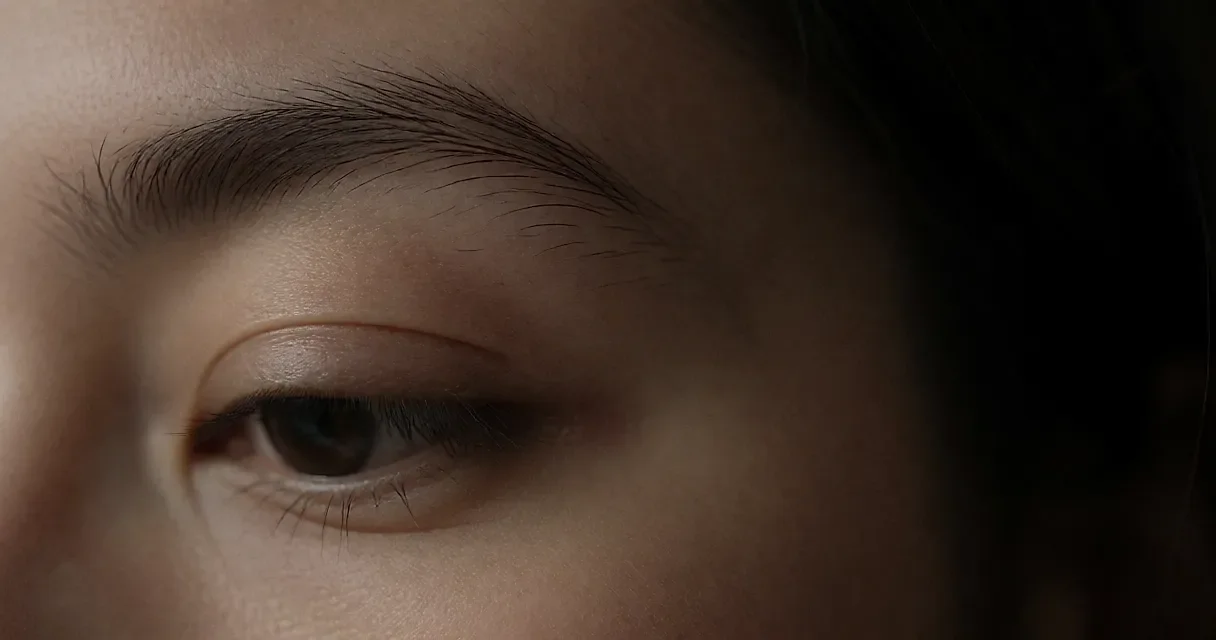
An eye cream comes in 15 ml, sometimes 10. The eyelid it's meant to smooth plays out over a few millimetres of skin, muscle and fat. Those millimetres don't negotiate with a fingertip of cream — and that's mostly good news, because it changes the question.
Because the real question isn't "which product?" but "what am I actually looking at?". A tube, a finger, thirty seconds in the morning: you still need to know what you're asking of it.
What an eye cream actually does
Start with what it does well, because it does do things. A decent eye cream hydrates, soothes and smooths what we call dehydration lines: the fine mesh that shows up under the eye when skin is short of water, when the air is dry, when you've slept four hours and had three coffees. An ordinary Tuesday, in other words. These lines show most in raking light, soften once the skin is plumped up, and come back. That's their nature: they're reversible, so cosmetic.
The technique matters as much as the formula. A grain-of-rice-sized amount is plenty; dab it from the inner corner outwards and tap with your ring finger, without pulling. No friction, no energetic massage: that skin has nothing to gain from being roughed up. The texture — cooling gel, balm, rich cream — is mostly about comfort: a gel wins on rushed mornings and on skin that won't tolerate much, a richer cream reassures skin that feels tight. And if the cream doubles as a base for concealer, your makeup often sits better for it.
Where I can't help you is the number of weeks. I'm not an ophthalmologist, and no effect can be measured with the naked eye.
Where the tube stops dead
The groove running from the inner corner down to the cheek, the lid that droops, the bag that won't deflate: different territory. A cosmetic works on the surface, on hydration and comfort. It doesn't lift a muscle, doesn't re-stick tissue that has slackened, doesn't remove a pad of fat. You can layer serum, cream and overnight mask: that's three new elastic bands on a fitted sheet that's lost its stretch. The fabric still doesn't ping back.
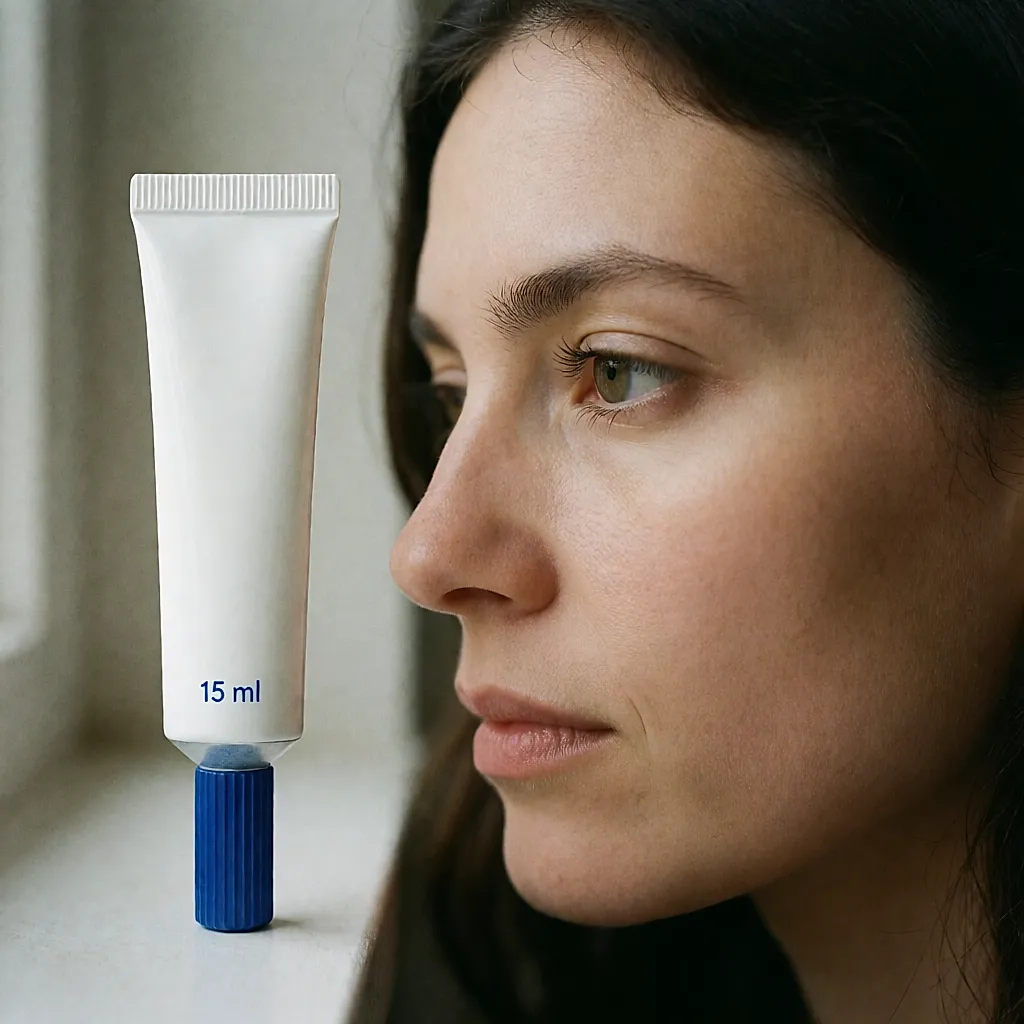
Not all bags are alike, either. Morning puffiness that fades during the day is more about fluid retention — salt, tiredness, a short night. Cold, a gentle sweep from the inner corner outwards, sleeping on your back: all of that can make waking up more comfortable. A bag you've always had, yours and your mother's before you, is often fat, and there neither a chilled spoon nor a roll-on makes much difference.
The check that saves you a pointless purchase
Before comparing formulas, look at the structure. A simple pointer, not a diagnosis: in front of the mirror, raise one eyebrow. If the eye opens properly, part of that heaviness is coming from the brow and forehead — so from somewhere other than a 15 ml tube.

And if the lid drops on one side only, suddenly, or comes with double vision or pain, you don't go looking for a cream: you see a doctor. A lid that droops on one side is not a cosmetics story.
Three questions before you pay
- Line or groove? Pinch the skin under the eye very lightly: if the crease disappears, you're in hydration territory; if it stays hollow, cream will only soften its edges.
- One product at a time: change three products in the same month and you'll never know which one did anything.
- The format: 15 ml lasts a long time. Check the period-after-opening date, and go for a refill or a glass bottle where the brand offers one.
What you'll pay
An eye cream runs from £10 to £30 in pharmacies and on the high street, £25 to £60 in department store beauty halls, and upwards of £60 from premium skincare brands. The standard size is around 15 ml, several months of use: spread across a daily tap-tap, the gap narrows. What really moves the price? Brand, a lot; where you shop, a bit; refills, sometimes.
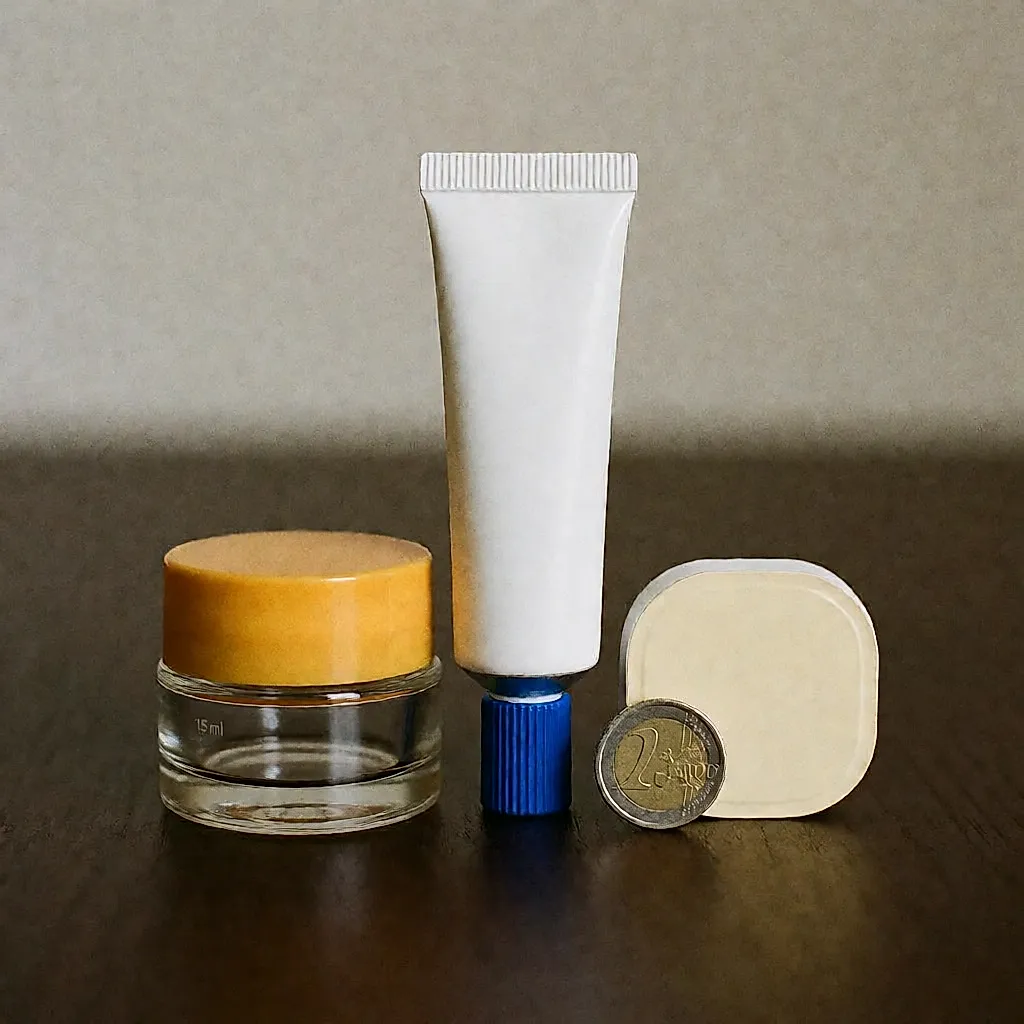
Our house rule: short ingredient lists, naturally derived actives, glass packaging, a refill if the brand does one. If the best product for your skin happens to be a conventional one, that's not a disaster — just be aware that the packaging is often where the compromise sits. And keep the other end of the scale in mind: an operation runs into thousands of pounds. Not every procedure answers to the same indication, and the line between them isn't just about cost.
At the other end, surgery isn't an eraser
A blepharoplasty removes excess skin, sometimes fat. It doesn't redraw a hollow under the eye, doesn't change the quality of the skin or the colour of dark circles, and obviously doesn't stop ageing: time carries on, more discreetly. Results aren't permanent, and a second procedure can be discussed years down the line. Like any operation, it has its recovery and its risks, set out in consultation — that's a decision you make with a surgeon, not with an article.

Put another way, the "other end" solution answers a precise indication, not a vague longing for a more open gaze. Asking for it for the wrong reasons means paying a lot for a disappointment in nice packaging.
The step that's left
So what to do with your fifty pounds? Buy the cream whose texture you actually like, the one you'll enjoy tapping in for thirty seconds — enjoyment counts, it's the only thing I'm certain of. And keep your standards for everything else: look at your face once a month, in daylight, without leaning three centimetres from the mirror like you're checking a builder's quote.

Five minutes: one round of tapping and one honest reckoning — what water can smooth, what's decided elsewhere. The rest, hand over to time, a well-lit mirror, and a professional when the question deserves better than a pot of cream.



Comments
Your opinion matters: rate the article, react and reply to comments.
Comments are moderated; AI-assisted comments are flagged. Text emoticons (8-), :-), <3…) are automatically shown as images.