
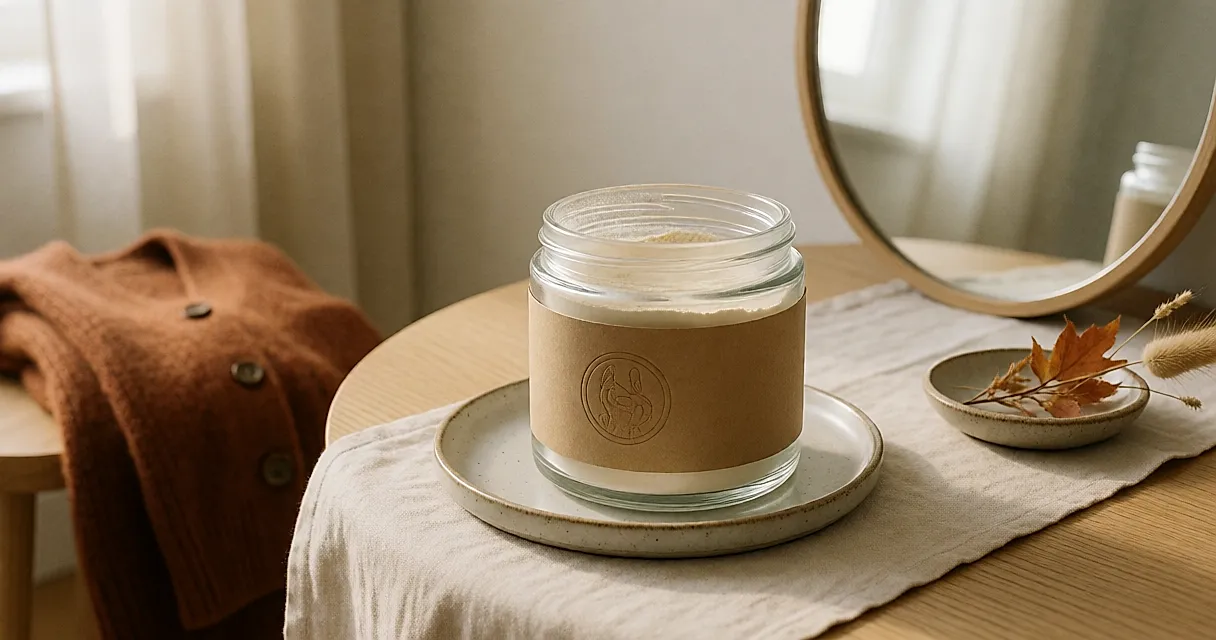
A classic serum arrives already mixed; an anhydrous powder comes with instructions. Both promise a concentrated active — and they ask two very different things of your time, your mirror and your bank balance. One you pour without thinking. The other wants thirty seconds and a bit of method.
Why take the water out
An anhydrous formula means no water at all: no water, no floral water, no "aqua" at the top of the ingredient list. What water brings is comfort — slip, a bottle you can pump, a hit of freshness. What it brings with it is everything else: a preservative system to stop microbes moving in, airtight packaging, weight in the suitcase, and an opening date to watch closely.
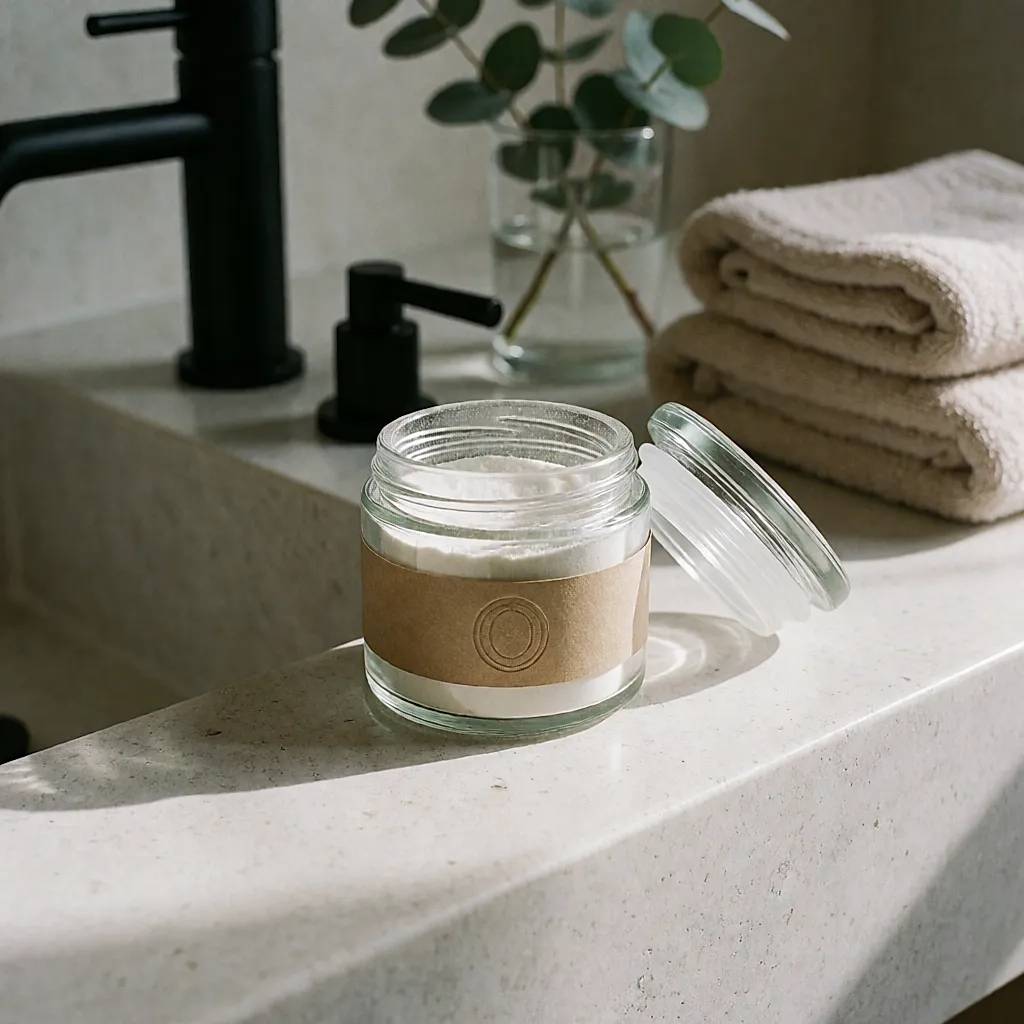
Once the water is gone, what's left is the active, sometimes sitting on a mineral carrier. On the preservation front, an anhydrous powder is generally less exposed to microbial contamination — but it still needs keeping dry, away from light and according to the product's own instructions; it is no more immune to oxygen, light and heat than anything else. The downside sits in exactly the same place: one wet finger in the jar and you've handed your powder a culture medium.
Concentration follows the same logic. Chemists sell vitamin C powder; specialist beauty retailers sell niacinamide or hyaluronic acid. These aren't finished formulas but bare actives: a pinch is not a neutral thing, and that's precisely what makes the difference.
What changes in the wash bag
A 20 g glass jar weighs next to nothing, doesn't leak and shrugs off the crush of a weekend bag. The paper sachet, lighter still, slips into a jacket pocket. No lid popping open in transit, no serum spilled down the lining of your bag — a classic we'd all happily skip.
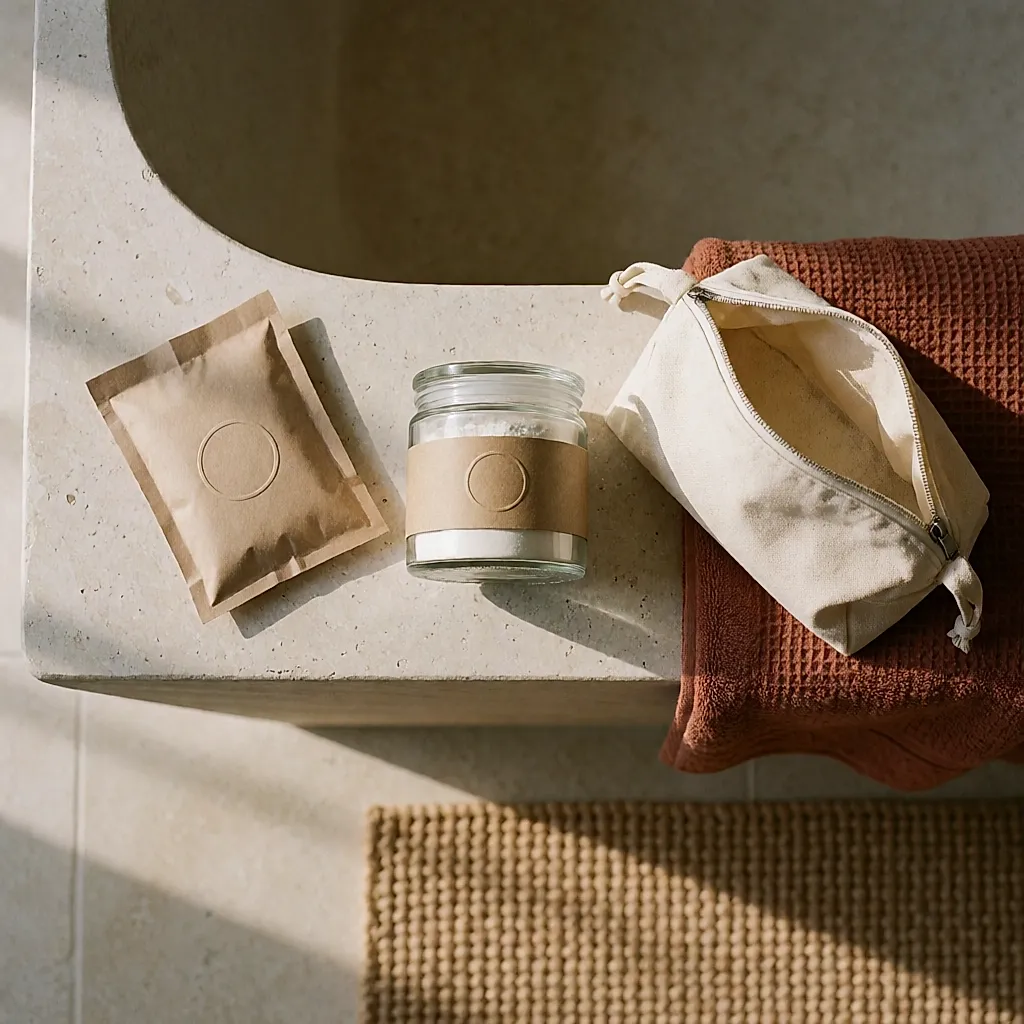
And shelf life? It depends on the product, the packaging and how hygienically you use it: check the leaflet or the PAO symbol printed on the jar. Kept away from damp and light, the powder waits patiently. The one non-negotiable is closing the jar with dry fingers.
What you lose: the texture, and any pretence of an exact dose
Let's be clear: powder doesn't glide. Blended in the palm with your day cream, it takes some of the slip out of it and can leave a bit of grit if you work it too hard. Not unpleasant — but not silky either. And the measuring spoon in the box isn't a decorative extra: it's there to be counted out.
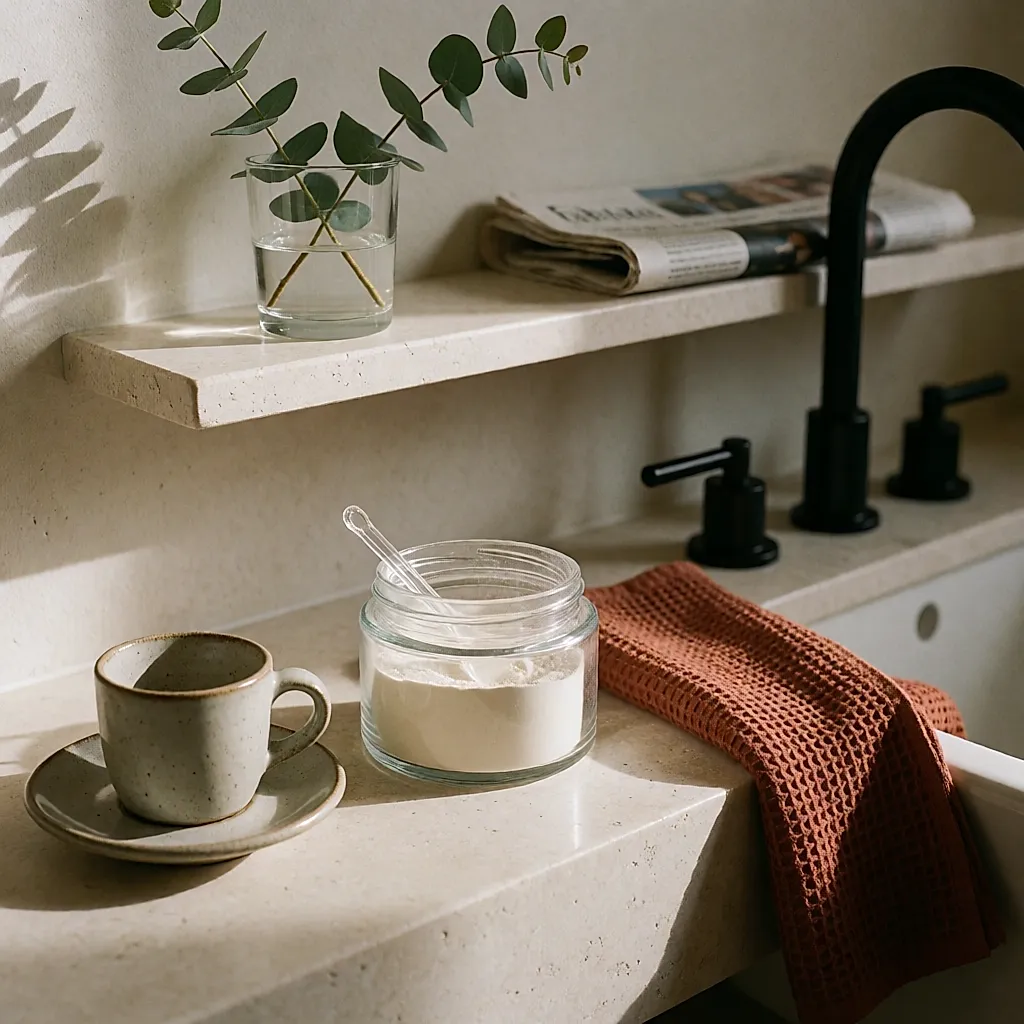
Because the real cost of the format is the faff. You dose by eye, mix by hand and start again every day. Better to make up your dose at the moment of application than on Sunday for the whole week: a home mix isn't a finished product, and nobody can tell you how long it stays stable once diluted. Reactive skin? Start with a tiny amount on a small patch, and if it stings or burns, stop and have a word with a pharmacist or your GP.
The rushed-morning method: a small dose in the palm, your day cream on top, two seconds of mixing, apply straight away. Jar closed immediately, fingers wiped — powder likes neither water nor fingers that linger.
The sum nobody does
A bottle and a jar can't be compared on the price tag alone. What counts is the price per gram of active — and above all comparing like with like. To make it clearer, here's a purely arithmetic example, with invented prices: a 30 ml serum at £24, labelled 10% active, contains roughly 3 g of active, so about £8 per gram. Against that, 20 g of powder at £16 works out at £0.80 per gram of powder — and therefore of active, if the powder is pure rather than an active diluted on a carrier. The gap looks stark, but it says nothing about efficacy, the quality of the formulas or the dose you actually use.
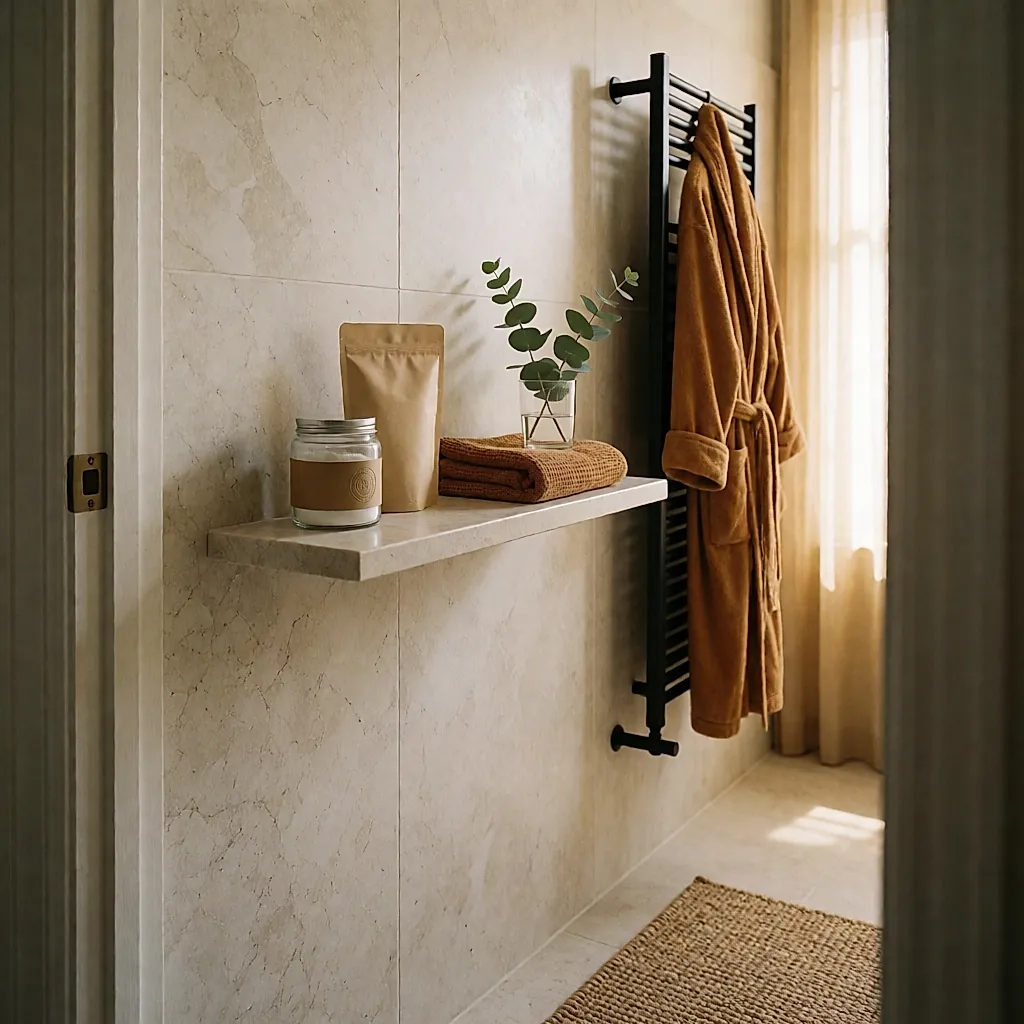
Caveats duly noted: in the bottle you're also paying for the formula, the texture, the stability testing and a lab's work. In the jar you're paying for the active and supplying the labour yourself. Is it worth it? Yes if your routine runs itself — much less so if you already know you'll give up by the third morning. Packaging counts too: glass can be recycled and reused, while the paper sachet, lighter to ship, isn't recycled everywhere if it's lined inside. A refill, where one exists, saves buying a whole new jar — worth checking brand by brand.
In the end, anhydrous powder is neither a gimmick nor a religion. It's a trade-off: a little time and method in exchange for concentration, lightness and a price per gram that's easier to work out. And the one move left when you've only got five minutes? A pinch in the palm, and put the lid back on.

Comments
Your opinion matters: rate the article, react and reply to comments.
Comments are moderated; AI-assisted comments are flagged. Text emoticons (8-), :-), <3…) are automatically shown as images.