
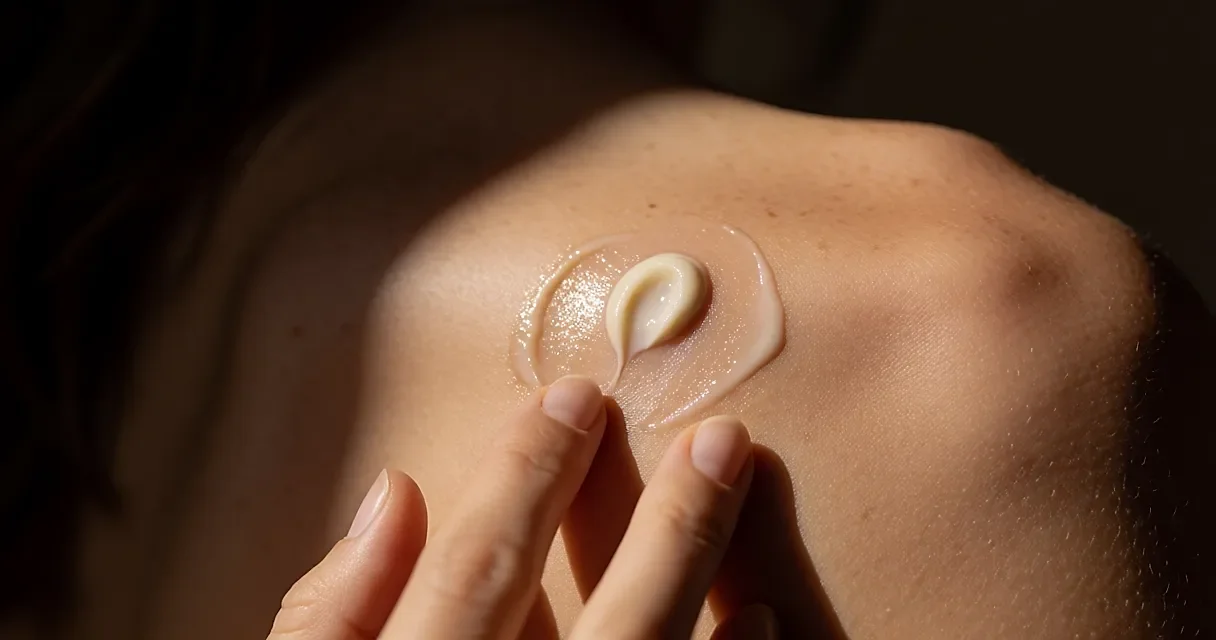
An ordinary body lotion is often mostly water, plus a whole cast of emulsifiers whose job is to hold that water in place. A waterless balm tells a different story: it stacks up rich ingredients—butters, oils, waxes—and stops there. Two products, two approaches, and a very different application at the end of it.
A rich concentrate, not a supercharged body lotion
This is the first confusion to clear up. An anhydrous body balm—meaning waterless—is not a richer lotion; it is a different family of formula. Without water, it does not need the same emulsifier scaffolding or the same preservative system as an emulsion. Instead you get a paste that melts on contact with the skin and leaves a film. For some people that is a pleasure; for others it feels occlusive.
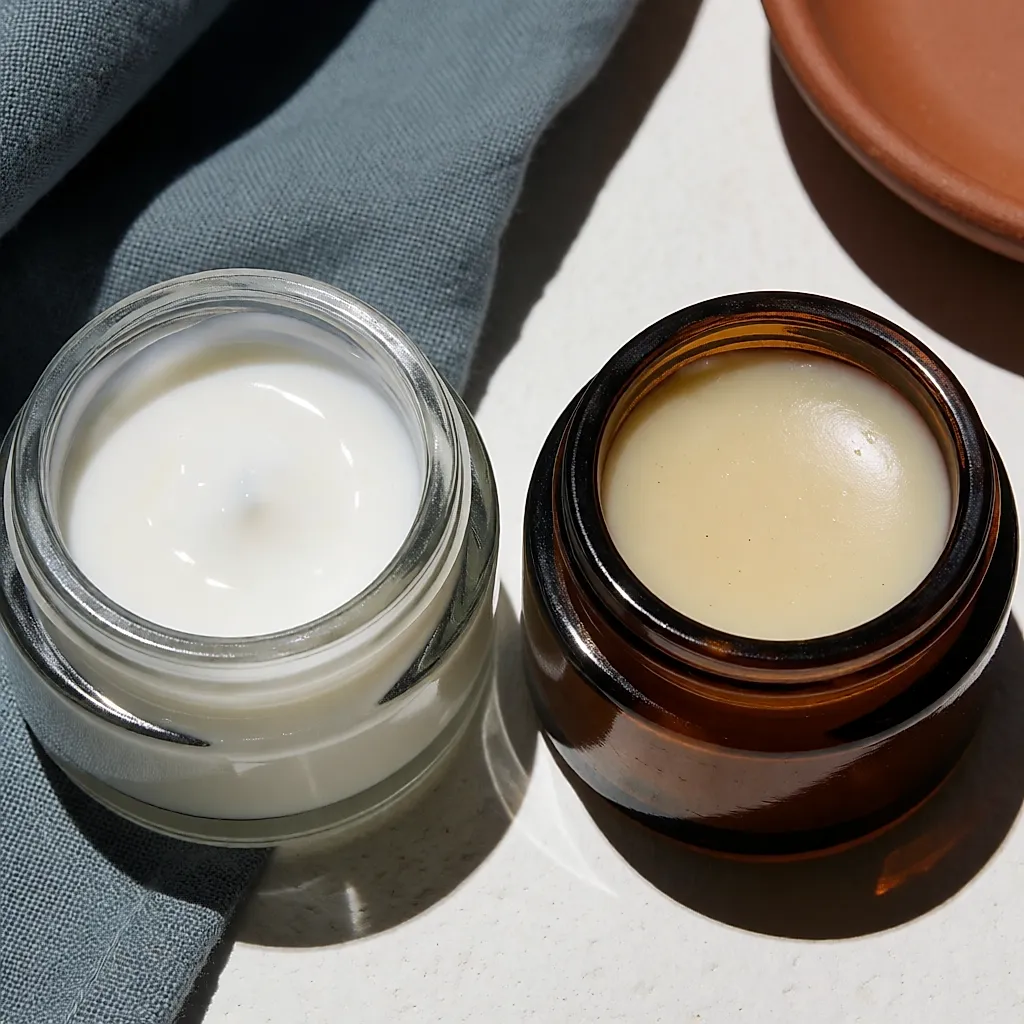
Which is why it helps to know what you are after. If you love a lotion that vanishes in 20 seconds without leaving a trace, a balm will throw you. If your legs seem to soak up everything and nothing stays put, it may be exactly what you need. And no, there is no good-versus-bad camp here: just two textures, two uses.
What the first ingredient tells you
On a label, ingredients are generally listed in descending order of concentration, especially among the main ones; those below 1% may appear in a different order. The first name sets the tone. If you read aqua or water at the top, you are looking at an emulsion that contains water, even if the pot calls itself a balm. If the first name is shea butter (butyrospermum parkii), olive oil (olea europaea), beeswax (cera alba) or candelilla wax, a rich first ingredient points to a formula with plenty of oils and butters; to be sure it is waterless, check that aqua/water does not appear anywhere in the list.
Careful: 'waterless' is not a protected label; it is a description, and you need to check the list. An organic certification such as Cosmos tells you about the proportion of organic ingredients and a processing standard; it says nothing about efficacy or how the product feels. And a balm very rich in coconut oil or cocoa butter can feel greasier than another: that is a matter of taste, not quality.
The technique: warm it before you spread it
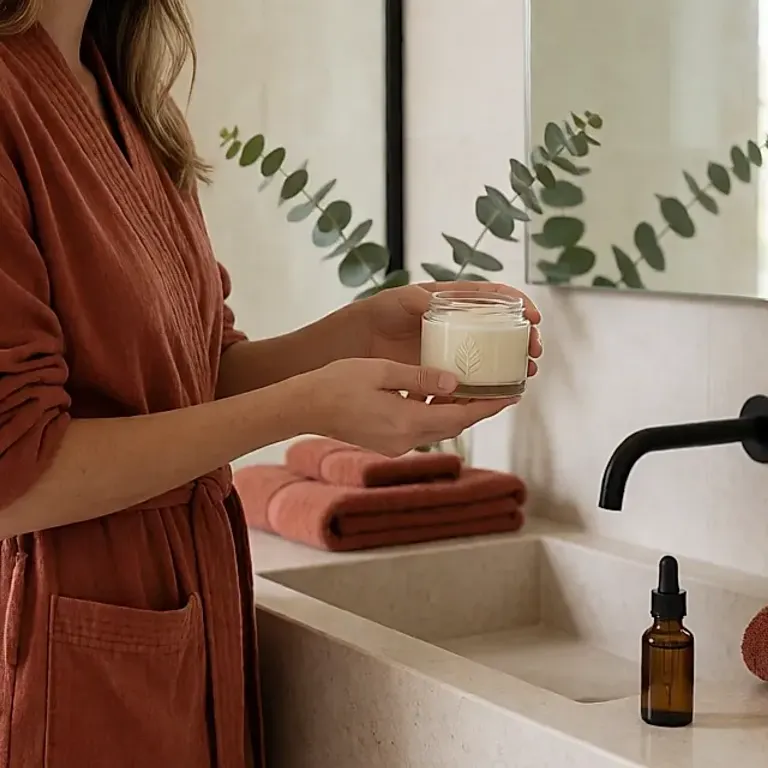
The most useful step happens in your palms. Take a hazelnut-sized amount—not a spoonful, not a walnut—and roll it between your hands for a few seconds until it melts: it turns translucent and then spreads far more easily. Putting cold paste straight on to the skin is a guarantee of dragging, overloading one area and ending up with trousers that stick.

Second habit: apply to slightly damp skin after a shower, while the skin is still supple. On legs and arms exposed to central heating, one hazelnut-sized amount per area is often enough; add more if needed rather than applying the lot at once and waiting for it to absorb before getting dressed. I do not have a reliable figure for how many applications you will get from a pot—it depends so much on the area you cover and how generous you are.
Count uses, not grams
A pot of balm looks expensive next to a supermarket litre of lotion. That overlooks how little you use: where a lotion goes on in generous hazelnut-sized amounts, balm is dosed in traces. To compare, work out the price per use—the number of times you will open the pot—rather than the price per kilo.
Prices vary by retailer, but as a rough guide, expect around £10–£25 for 100–200g in a pharmacy or health-and-beauty retailer, £12–£30 in a specialist organic shop, and £5–£12 in a supermarket for entry-level formulas. A solid stick or bar usually sits between £7 and £18. The differences come from the concentration of butters and the cost of the oils: at that price, read the ingredient list before the promise on the pot.
The pot, once it is empty
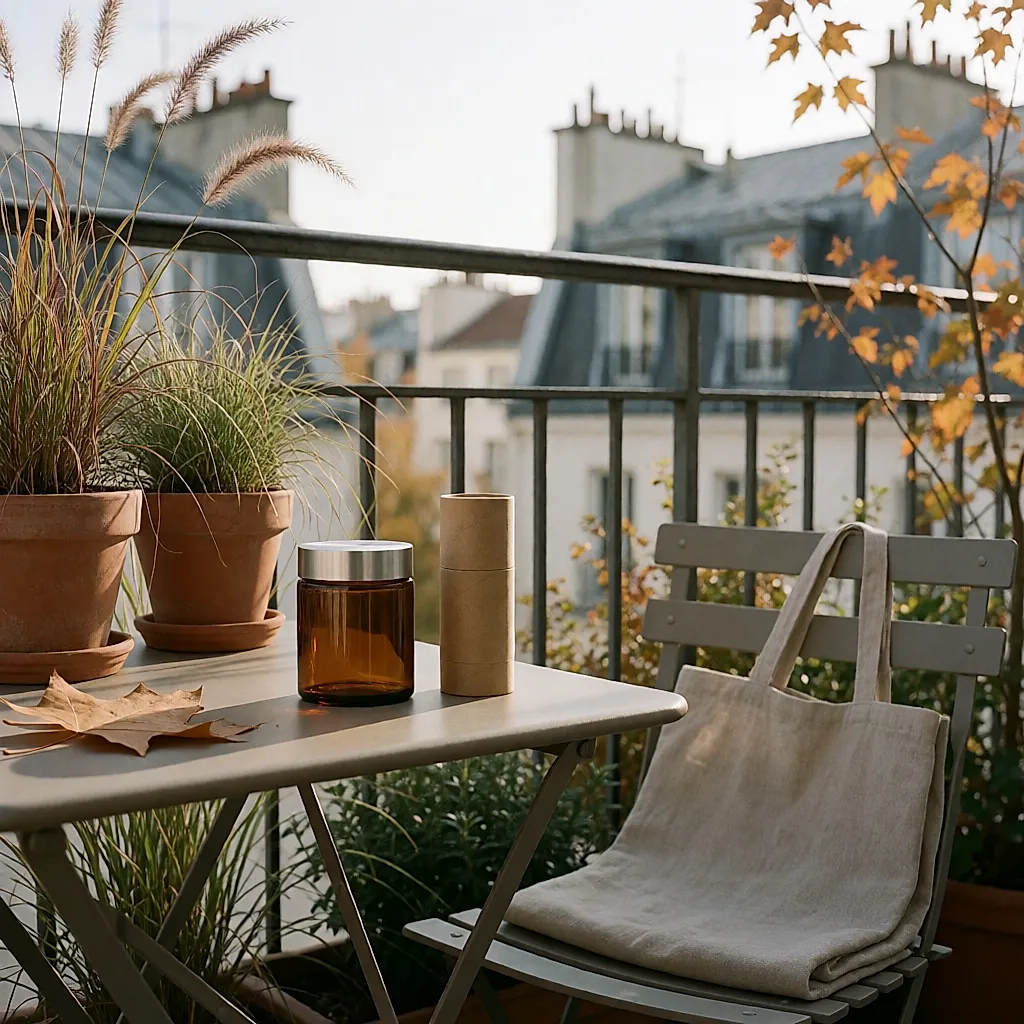
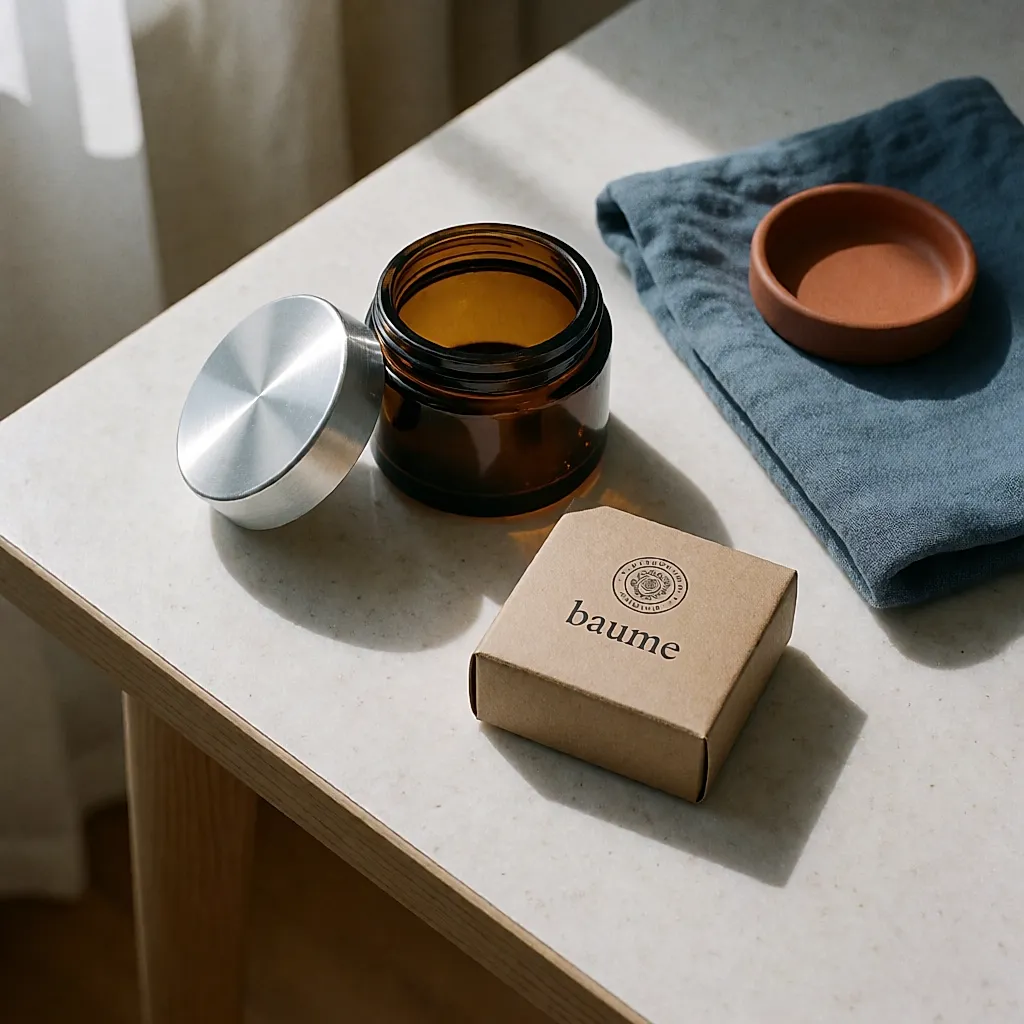
When it comes to disposal, balm has a structural advantage: it does not need a complex plastic pump bottle. A glass jar or a refill are the clearest options—provided glass is collected where you live and a refill genuinely exists for the brand. A glass jar with an aluminium lid is easier to sort than a multilayer flexible tube, but nothing here is magic.
Solid formats wrapped in cardboard tick the minimum-waste box—just check that the formula delivers on texture, because some bars are firmer than others. And a 'waterless' balm is not automatically low-impact: it all depends on where the oils and butter come from. The strongest environmental argument remains the one we always forget: a pot that lasts six months and is scraped clean to the rim saves buying three bottles out of boredom.
The hazelnut test: if your balm needs hard rubbing to spread, it is too cold—warm it for a moment longer between your palms. If your sheets stick the next morning, you used twice as much as you needed. Use less and you will see the difference in how long the pot lasts.
Ultimately, a waterless balm asks only one thing: that you give it time to melt. A hazelnut-sized amount, two palms, and that feeling of skin wrapped up in comfort until evening—a ritual that takes moments and asks for neither a shelf full of products nor another bottle.
Comments
Your opinion matters: rate the article, react and reply to comments.
Comments are moderated; AI-assisted comments are flagged. Text emoticons (8-), :-), <3…) are automatically shown as images.