

A mascara that comes off with warm water changes the end of the day. No more cotton pad scrubbing, no more irritated eyelids — and while the formula isn't everything, the way you remove it is. In November, with central heating drying out the air and lashes that snag, this detail matters more than you'd think.
What 'film-forming' actually means
A traditional mascara puts pigment into an emulsion that clings to the lash. A film-forming mascara does something different: it wraps each lash in a polymer film that dries into a kind of microscopic tube. When you remove it, warm water softens that film, which then slides off in little clumps — slightly surprising in the sink, but without friction.
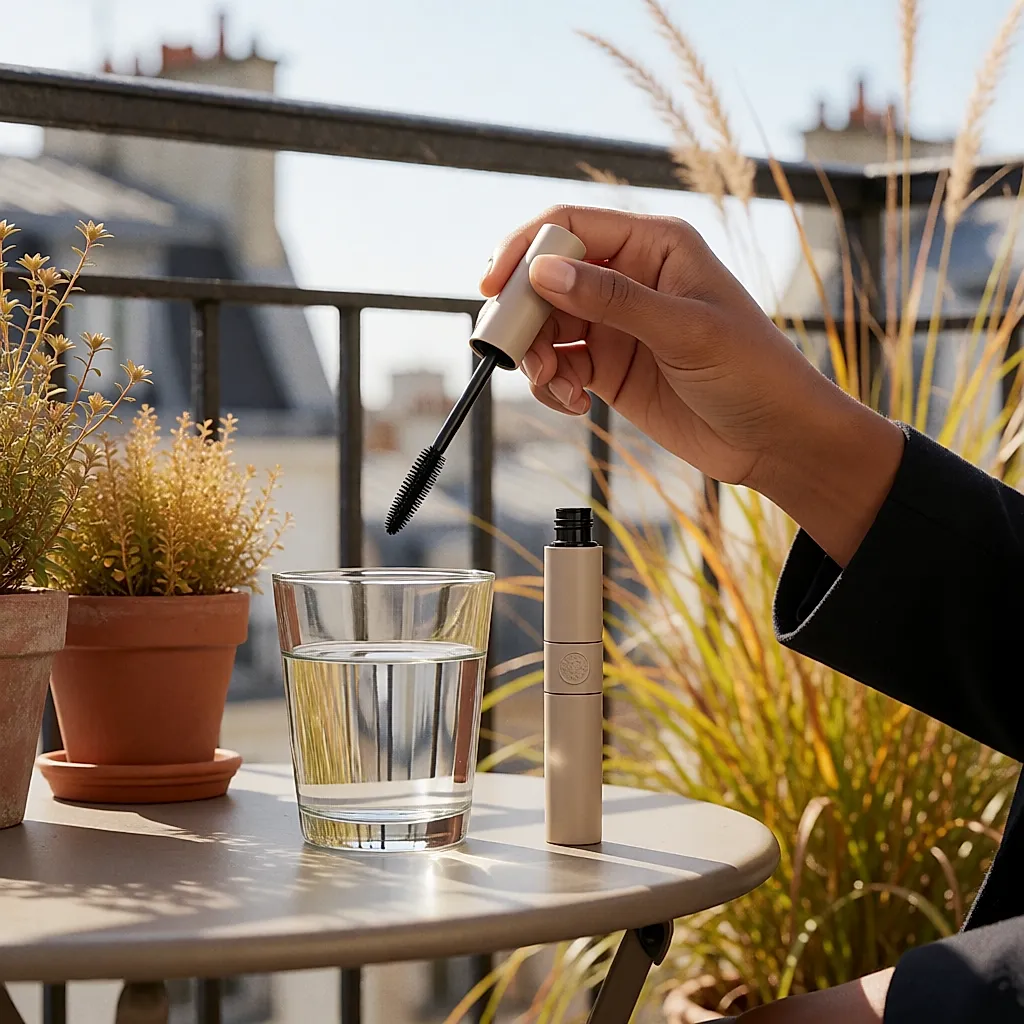
The difference from waterproof is obvious by the evening. Waterproof mascara, as the name suggests, is designed to resist water: you need a two-phase or oily remover, and often a bit of persistence on the lashes. But it isn't the product that aggravates the eyelid; it's the repeated rubbing. On an eye that's already dry and irritated by November's central heating, that daily friction takes more of a toll than you might think.
Spotting one on the shelf
Look for the words on the packaging: 'film', 'removes with warm water', sometimes a stated temperature or the idea of little tubes around the lashes. Conversely, if the box says 'waterproof', warm water won't be enough, even if the product is otherwise very well made. Wear time depends on the formula and the condition of your lashes — not on the promise in large type.
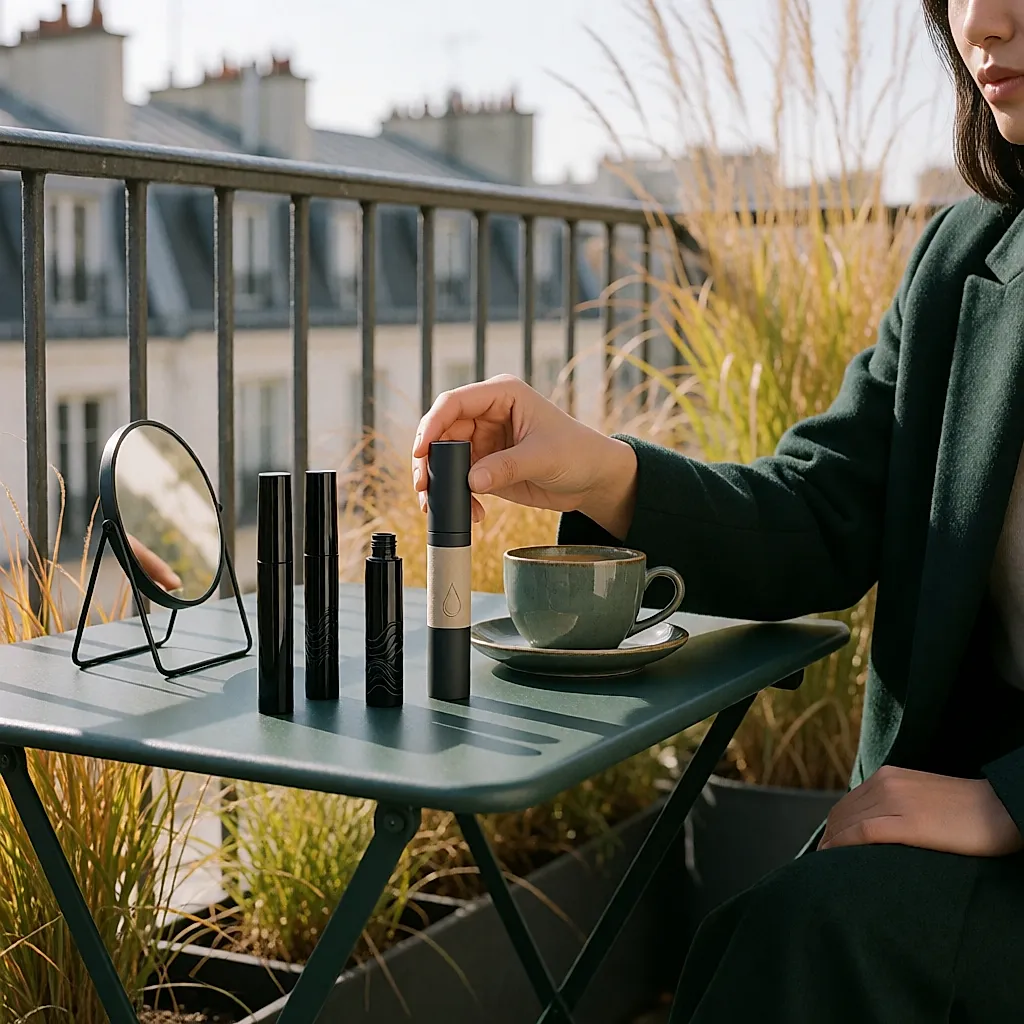
In store you can't test anything, and I've never found a foolproof way to guess a texture through a blister pack. So how do you choose? By reading the back, by accepting that you may need to change your remover the day you change your mascara, and by remembering that the principle is in the formula, not in the brand name.
The evening routine, without the drama
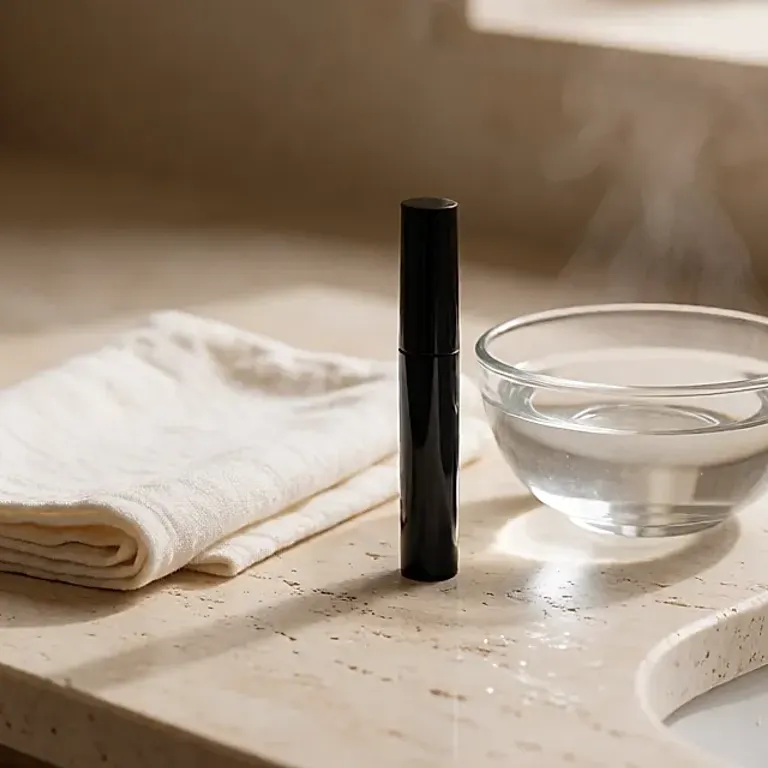
Soak a cotton pad or your fingers in warm water — warm, not hot. Press, close your eyes and leave it for a few moments: long enough for the film to soften, for example. Then slide downwards, gently, without rubbing. The mascara comes off in little pieces — a bit disconcerting the first time, deeply satisfying after that.
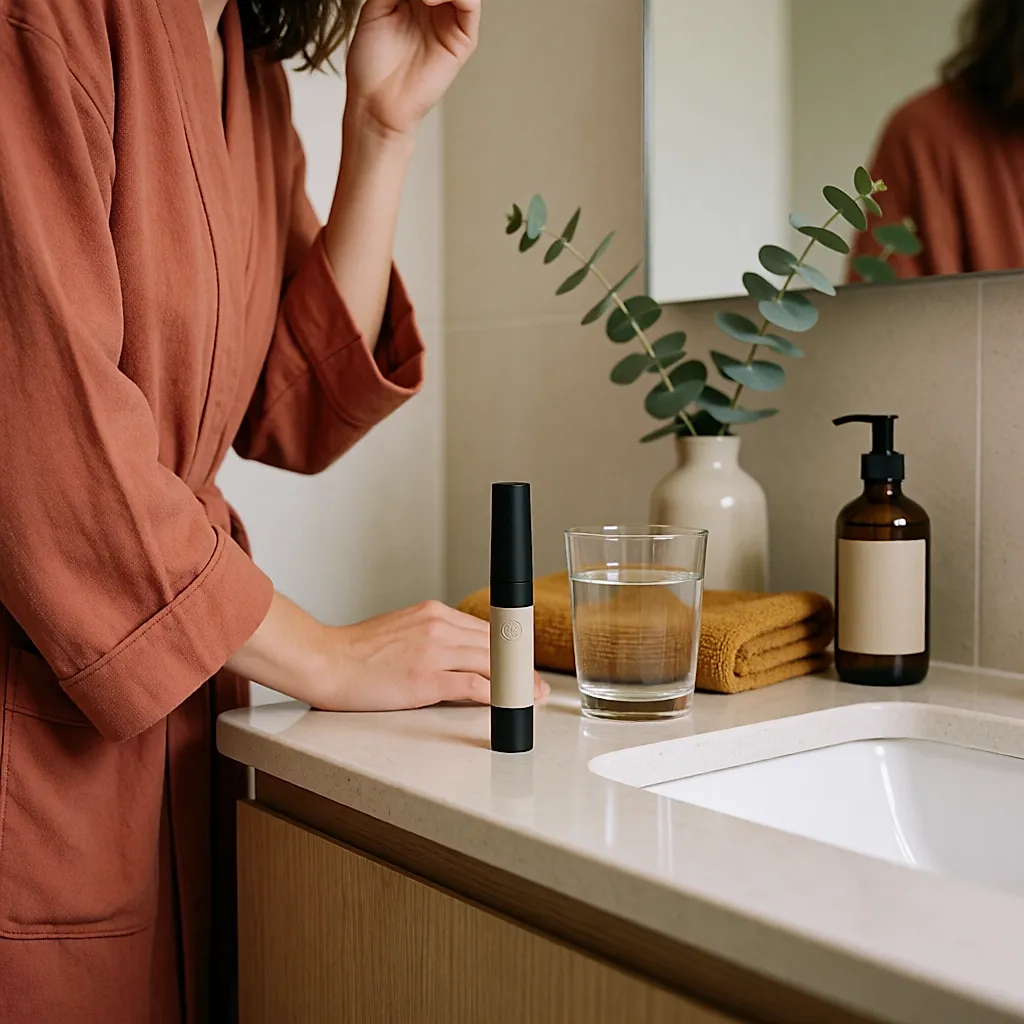
What takes effort isn't the action, it's accepting that you mustn't rub. Is it worth saving 20 seconds if it leaves three lashes on a cotton pad? On tired evenings, that question is a real one. And if you've layered several coats, a primer or a waterproof mascara, warm water won't be enough: use a gentle oil instead, without pulling at the skin.
The rushed-evening reflex — keep a small bottle of warm water by the sink, press, leave it while you get into your pyjamas, then rinse. Three steps, no scratchy cotton, and lashes that stay on your eyelids.
Dry eyes: what actually changes
Removing mascara without rubbing removes one source of mechanical irritation — it is not a treatment. A film-forming mascara does not treat dry eye, and no one here is going to promise you otherwise. If your eyes sting every day, burn or stay red after you take your make-up off, it's no longer a mascara question: speak to a healthcare professional, such as a GP or optician, who can see what's really going on.
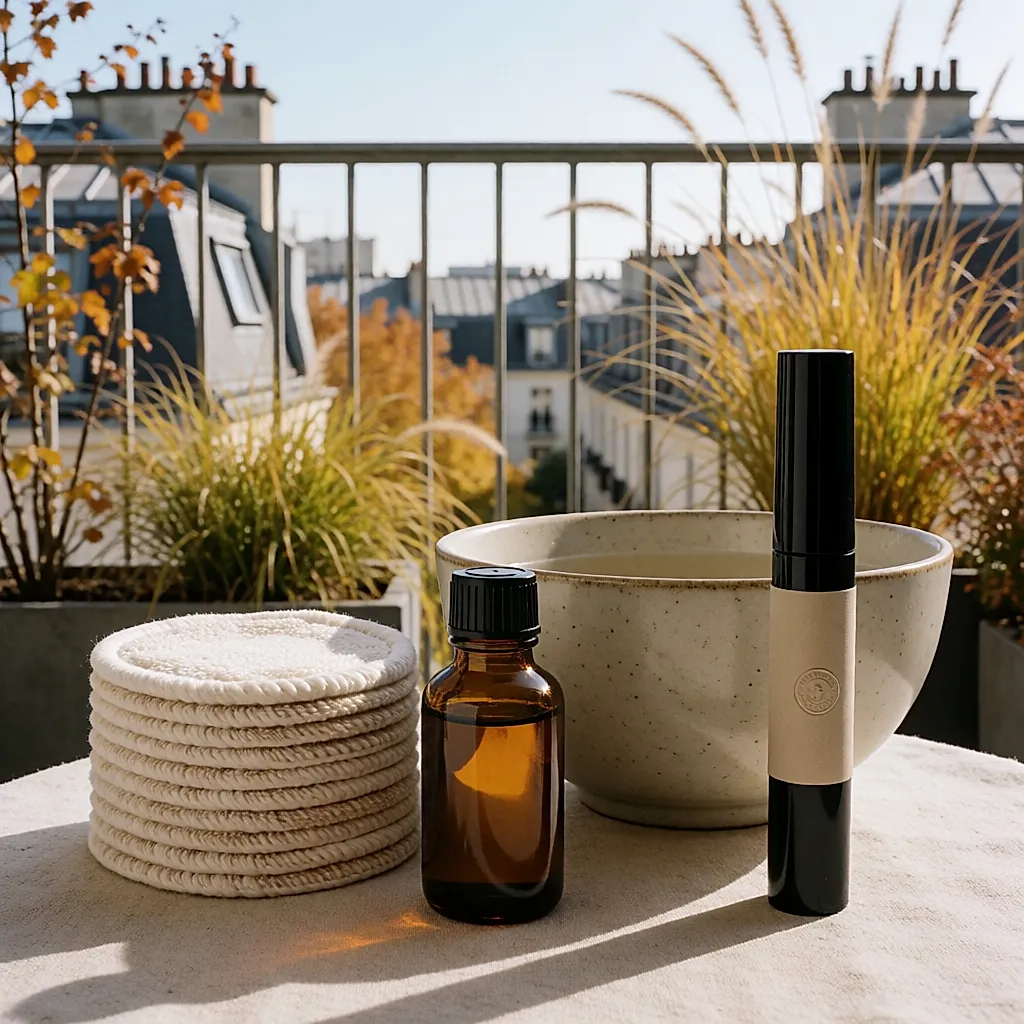
Keep everything gentle. No scratchy cotton, no product that tugs, and a clean container — don't dip the same corner of a cotton pad back into the bottle twice. Reusable cotton pads work well for this warm-water removal, as long as you wash them often. And if a product leaves your skin feeling tight, note its name and leave it alone: the skin under the eye is thin, and it doesn't need you to press harder.
What it costs
Expect to pay around £8 to £15 for a film-forming mascara from a supermarket or online, £15 to £30 in a beauty retailer or pharmacy, and more than £30 for more complex formulas. Prices vary by retailer, city and size, but the method doesn't change with the label.
For the extras, a gentle cleansing oil costs around £8 to £25, and a set of reusable cotton pads around £10 to £20. Refillable mascaras do exist, but they are still rare: check that the refill actually matches your mascara, not just the brand's story. Otherwise, think about what you'll really finish — a mascara left open too long dries up, and a half-used bottle does you no favours.
At night, when all you want to do is turn off the light, remember one thing: warm water and a few moments of patience are better than a cotton pad rubbed in a hurry. It's the routine that stays with you when you've only got five minutes — and the one that, in February, still shows in the mirror.

Comments
Your opinion matters: rate the article, react and reply to comments.
Comments are moderated; AI-assisted comments are flagged. Text emoticons (8-), :-), <3…) are automatically shown as images.