

How a refillable mascara works
A refillable mascara is a case — metal, glass, bamboo, sometimes recycled material — with a cartridge that slots inside. Three moves and you're done: unscrew the brush cap, lift out the empty cartridge, click in the new one and screw it back on. Thirty seconds, no degree required.
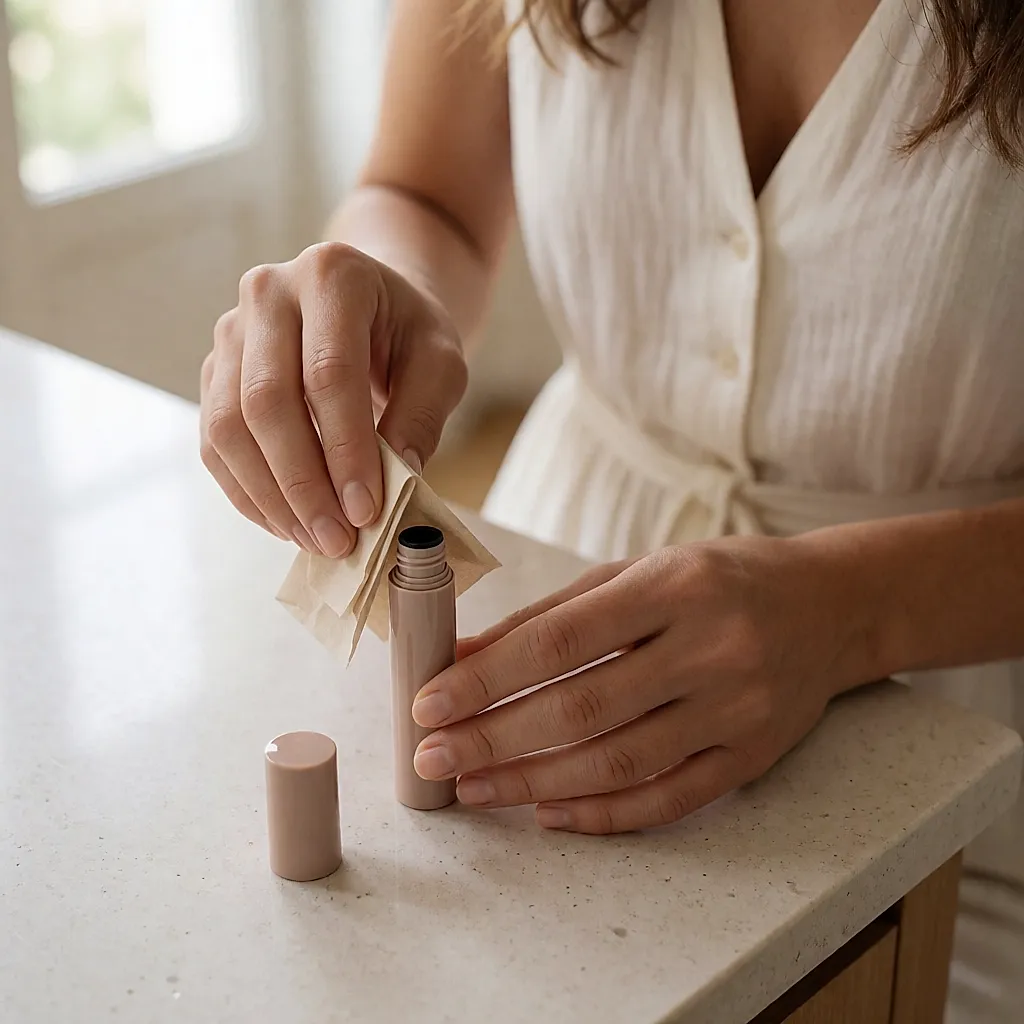
One detail worth checking before you fall for a case, though: there is no universal cartridge. Every refill is made for its case, sometimes for one version only. The real question isn't 'do you like the case?' but 'will this brand still sell the cartridge in two years?' Look for a stated availability period, and for a refill whose price doesn't keep climbing year after year.
Looking after it is simple: wipe the opening with a tissue, never put water into the mechanism, and never pour a drop of oil into the cartridge to 'revive' it. Mascara doesn't rehydrate — it gets replaced. Its shelf life is on the case, in the little open pot symbol with a number: the period after opening, often 3 to 6 months depending on the formula. That date matters more than the manufacture date.
What to look for in the formula
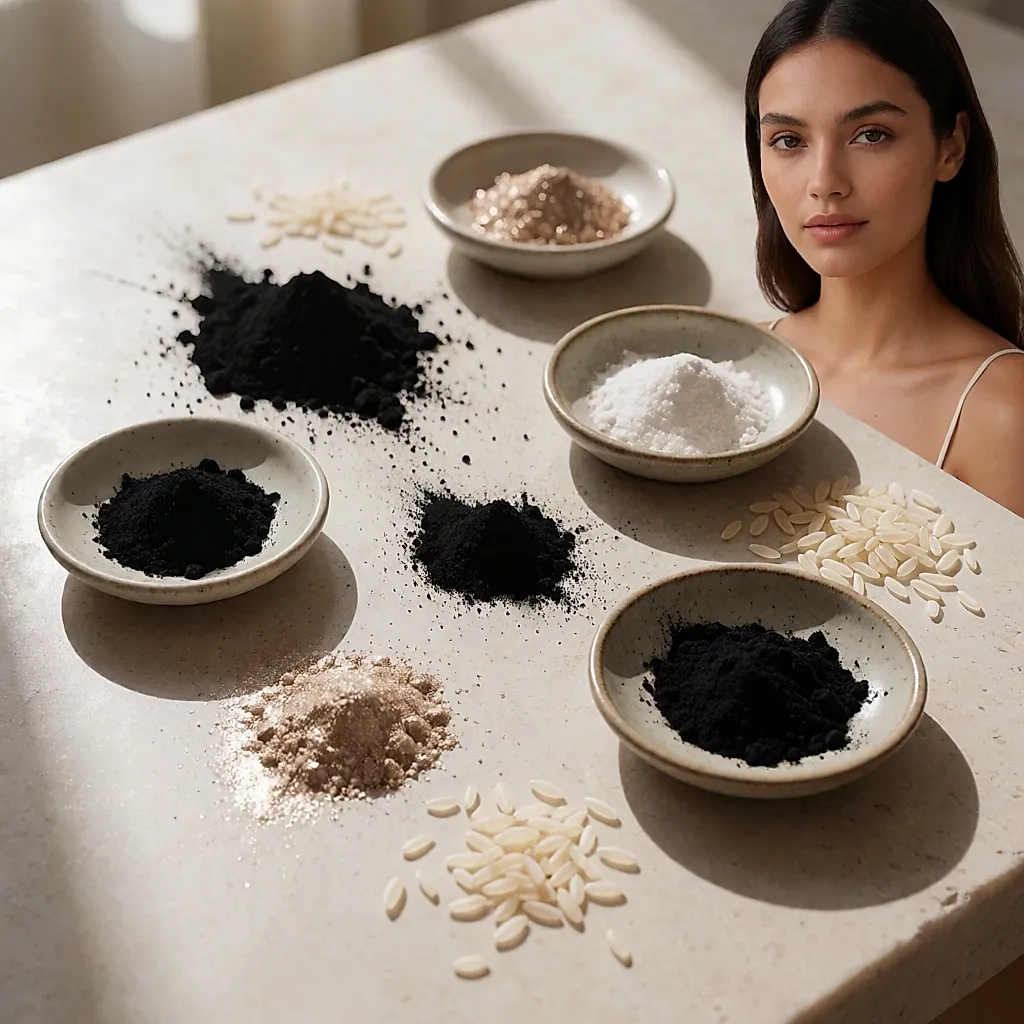
A mascara is water, waxes and pigments. The waxes — carnauba, rice, sunflower, beeswax — create the texture; iron oxides and mica give the colour. Water, though, attracts everything you don't want into a tube you open every morning, so every formula, even the most natural ones, needs a preservative system. A 'preservative-free' claim should make you raise an eyebrow, not reach for your card.
Organic labels — COSMOS Organic, Cosmébio, Ecocert — guarantee a proportion of natural or organic ingredients, a manufacturing charter and restricted ingredients. They don't promise wear time or that a mascara won't smudge under your eyes: that depends on the formula and your eyelids. An organic cartridge doesn't hold better than another one; it behaves differently.
And if your eyes sting or go red? Don't push through. Change formula, and if the irritation persists, speak to a pharmacist or GP rather than hunting for the right product blind.
Where refillable mascara falls down
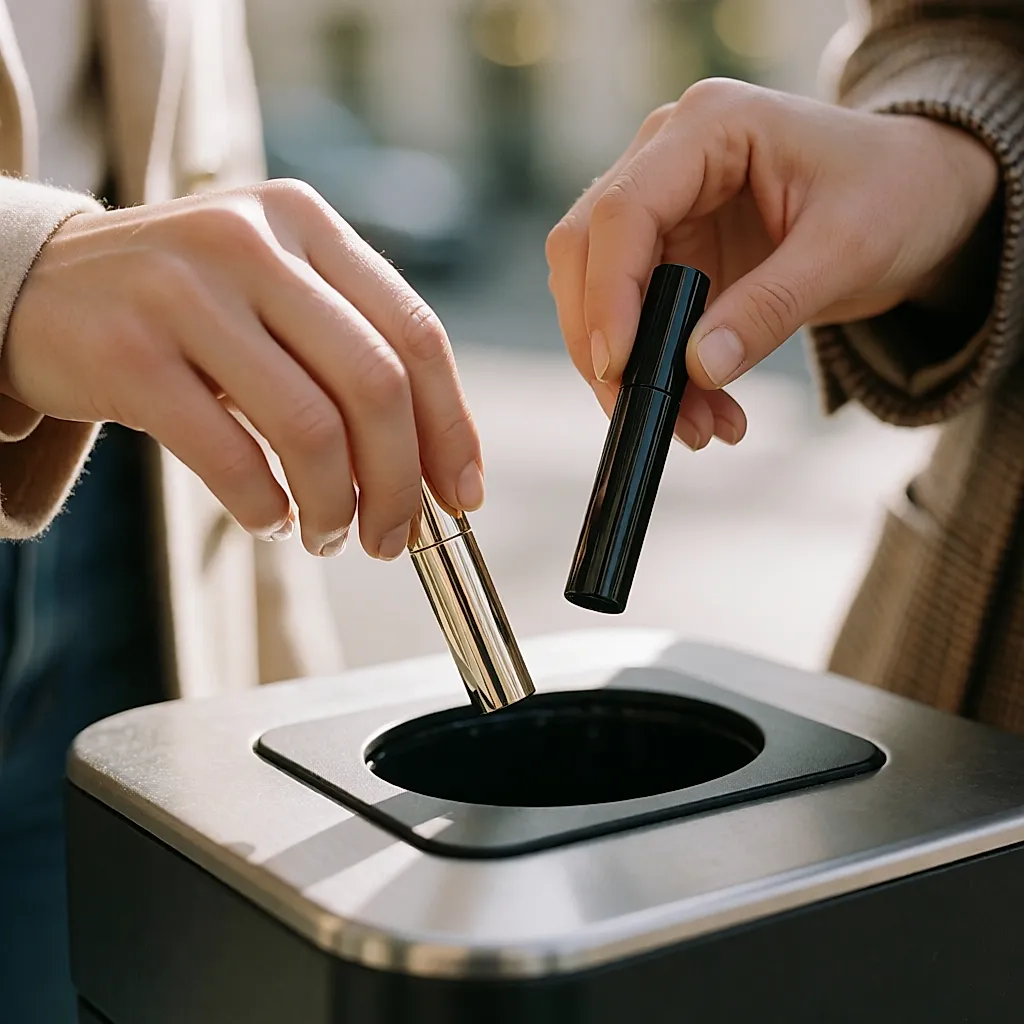
This is where the format shows its limits. Some brands take back used cartridges in store or by post; others have no plan at all. Before you buy, ask at the till: what happens to the empty cartridge? Depending on the answer, the loop is closed — or only half open.
And the choice is still thin. Refillable lipsticks are everywhere; refillable mascaras, much less so. Department stores, online brands and health-food shops don't offer the same range, and a case you spot online may be impossible to find elsewhere. So you're not choosing freely yet — you're choosing between what you want and what exists.
A useful reminder, too: the cartridge is not zero waste. It still contains a tube, a brush and plastic. The saving is in the case, usually the heaviest part of the pair.
Budget
Let's add it up. A standard mascara costs about £8–15 in the supermarket, £20–40 in a department store or beauty retailer, and £20–30 for a natural formula. Replaced every three to four months, that's around £40–60 a year — more if you like premium brands.
With refillable mascara, the case is often £25–60 depending on the material, and the cartridge alone £15–25. A typical first year: about £40 for the case plus three cartridges, so £90–100. After that, you're back to around £50–70 a year.
In other words, refillable mascara costs a little more than disposable, and the gap only closes after several cycles. The argument isn't financial: it's the case you keep, the metal that isn't melted down, and the pleasure of an object made to last. It isn't a saving — it's a choice.
Three habits that save a mascara Don't pump the brush in the cartridge: you're pushing air, and therefore bacteria, into it — twist it instead. Screw the cap back until it clicks, every time, even on Monday morning. And don't use a tube past its period after opening: a mascara that has spent the summer in a beach bag does you no favours.
Then there's the bigger decision. If your favourite mascara doesn't come as a refill yet, keep it without guilt: the best move is often to finish what you started. And if you do fall for a case, choose it once, properly — one case you love for three years beats three cases that bore you. Your lashes won't notice the difference.
Sources
- Cosmébio — Charter and labels for organic cosmetics, consulted 10 October 2026.
- Ecocert — Cosmetics certification, consulted 10 October 2026.


Comments
Your opinion matters: rate the article, react and reply to comments.
Comments are moderated; AI-assisted comments are flagged. Text emoticons (8-), :-), <3…) are automatically shown as images.