

Two tubes on the same shelf, the same word in large type on the front, and a few pounds between them. One cream contains 10% urea, the other 30%. Same active ingredient, two very different jobs. One moisturises, the other goes after hard skin, and getting them the wrong way round can be sore. So which one ends up in your basket?
Urea does two different jobs
Urea is a compound the skin makes naturally, and one of the key components of the skin's natural moisturising factor (NMF). At low levels, it acts like a sponge: it attracts and holds water in the upper layers. It is a humectant – the same role as syrup stopping a cake from drying out, if that image helps.
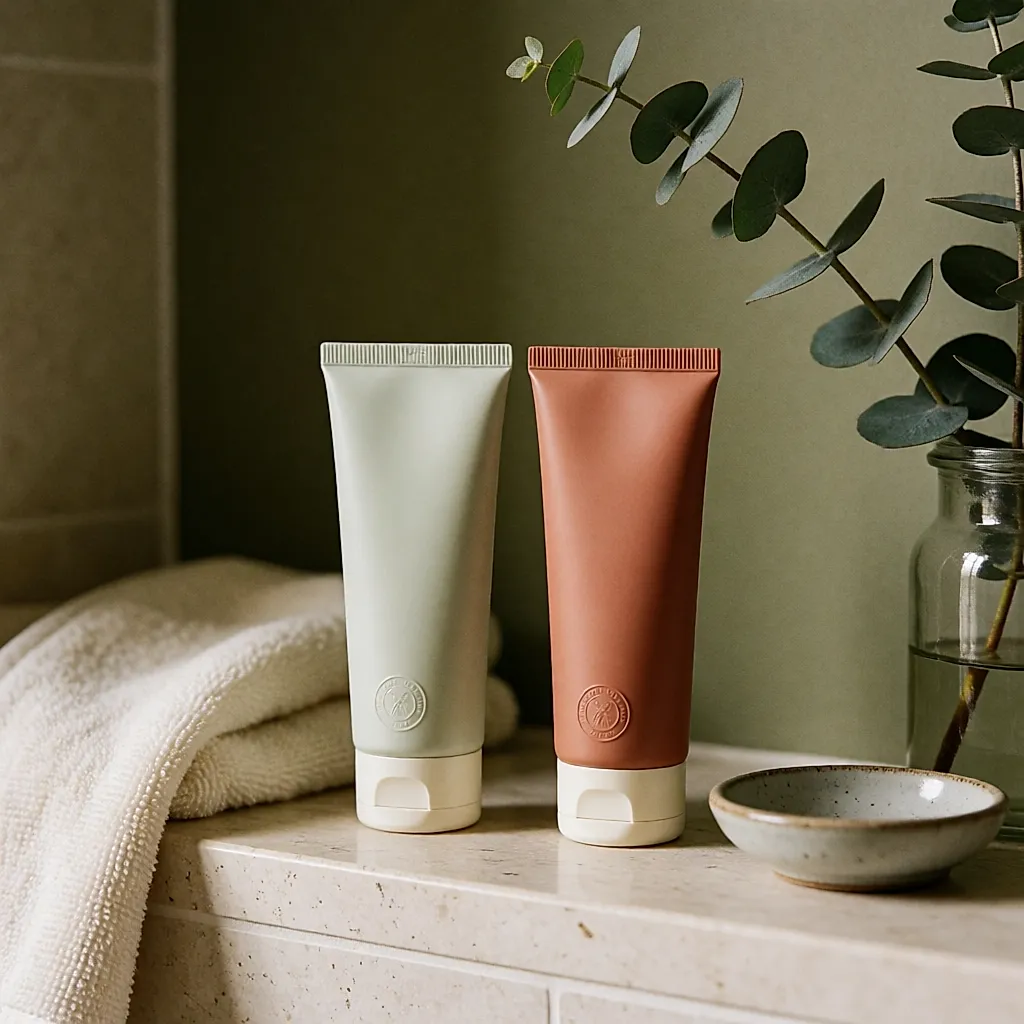
Past a certain threshold, the same molecule changes role. It breaks down the bonds between dead cells on the surface and helps thickened skin shed: that is the keratolytic effect. The cut-off is not rigid – it depends on the formula – but in shop-bought tubes, the percentage printed in large type is a good guide to which camp you are in.
To put it simply: at 10%, you moisturise dry skin. At 30%, you treat thick skin. It is not the same texture, the same rhythm or the same foot.
At 10%, the everyday tube
A November evening, tights, boots, and your heel snagging your tights as you take them off. That is 10% territory: dry, tight, slightly rough skin that feels uncomfortable after a shower. Its texture is more fluid, it sinks in quickly, and you can spread it over the whole foot without ending up stuck to the tiles.

It is also the maintenance option. In practice, a sensible approach is to apply a pea-sized amount per foot in the evening, two or three times a week, or every day when the cold really sets in. There is nothing to stop you from using it preventively, before hard skin takes hold and your heel starts demanding heavy-duty measures.
Let’s be clear from the start: no tube will give you a magic timeline. Softness returns depending on your skin, the season and how often you apply it – and a promise measured in days rarely holds up for long.
At 30%, it is a targeted treatment
This is a different register. Cracked heels, callus under the ball of your foot, that band of hard skin that snags your sock: 30% is made for this, and for this alone. Apply it to thick areas, not the whole foot, and never between the toes, where skin gets damp and macerated.
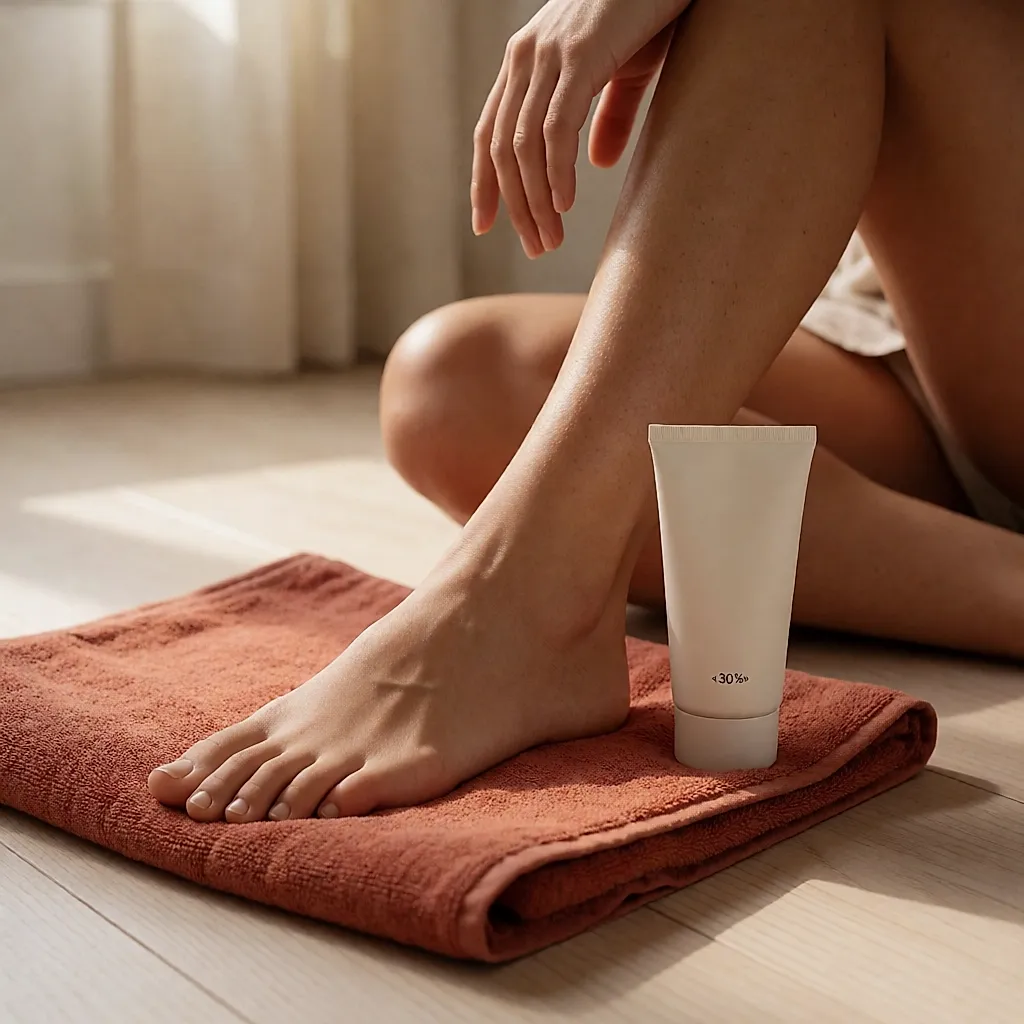
Second rule, non-negotiable: no 30% on broken skin. An open fissure, redness or fragile skin means leaving the tube shut – tingling is not a sign that it is working. In practice, it is usually best reserved for a few evenings a week, until the hard skin softens, rather than applied every day out of habit.
And if you have diabetes, are pregnant, or the fissure is bleeding, do not go it alone: speak to a healthcare professional before reaching for the high percentage.
How you apply it matters
The percentage is not everything; the technique counts just as much. After a shower, on warm, thoroughly dried skin – especially between the toes – a pea-sized amount per foot is enough. Massage from the heel up towards the ankle, spend a little extra time on rough patches, then pull on a cotton sock and let it work overnight.

The two strengths also fit into different kinds of evening. The 10% cream slips easily into an ordinary night routine, alongside a face cream that takes three minutes to sink in. The 30% is better scheduled for an evening when you will not be walking barefoot on tiles. And there is no point layering the two: pick one camp for the night.
The percentage is printed on the front of the tube; the INCI list does not always give you the exact dose. Be wary of packaging that says 'very dry feet' but gives no concentration, and check where urea appears in the formula. In short, read the front of the tube rather than the name of the range!
What it costs
As a rough guide, expect to pay in the region of £5–£15 for a 10% tube in a supermarket, pharmacy or online, and £8–£25 for a 30%. Let’s be honest: it is often the size and the range that push the price up, not the percentage itself. A big tube shared at home often works out cheaper per gram than a small branded format.
On the formula front, 10% creams with shea butter or plant oil are easy to find in organic versions – a label such as Cosmos Organic certifies organic content and manufacturing standards, not efficacy. For 30%, the conventional version is often the easiest to find: a compromise to accept without beating yourself up. The truly eco-minded move, anyway, is not to buy both when one will do.
So, 10 or 30? The percentage, not the packaging, is what counts: 10% lives with you, 30% helps out now and then. And if you have only five minutes tonight, keep it to a pea-sized amount, a cotton sock and the promise to do nothing more. That is already plenty for a November heel.


Comments
Your opinion matters: rate the article, react and reply to comments.
Comments are moderated; AI-assisted comments are flagged. Text emoticons (8-), :-), <3…) are automatically shown as images.