

A rich cream and a urea cream can make the same promise on the tube and do quite different jobs. One wraps the hand in a protective film; the other goes after whatever makes skin feel rough and tight when you bend your fingers. It isn't about how luxurious the texture feels — it's about what the formula is for.
Texture tells you almost nothing
Most of us choose hand cream by touch, standing in the aisle: unscrew the cap, squeeze a pea-sized amount onto the back of your hand, decide. Creamy? Sticky? Scented? That three-second test says plenty about how pleasant a cream is to use, and almost nothing about what your hands actually need. A thick texture can be an excellent protective cream… and a poor answer to hands that feel tight.
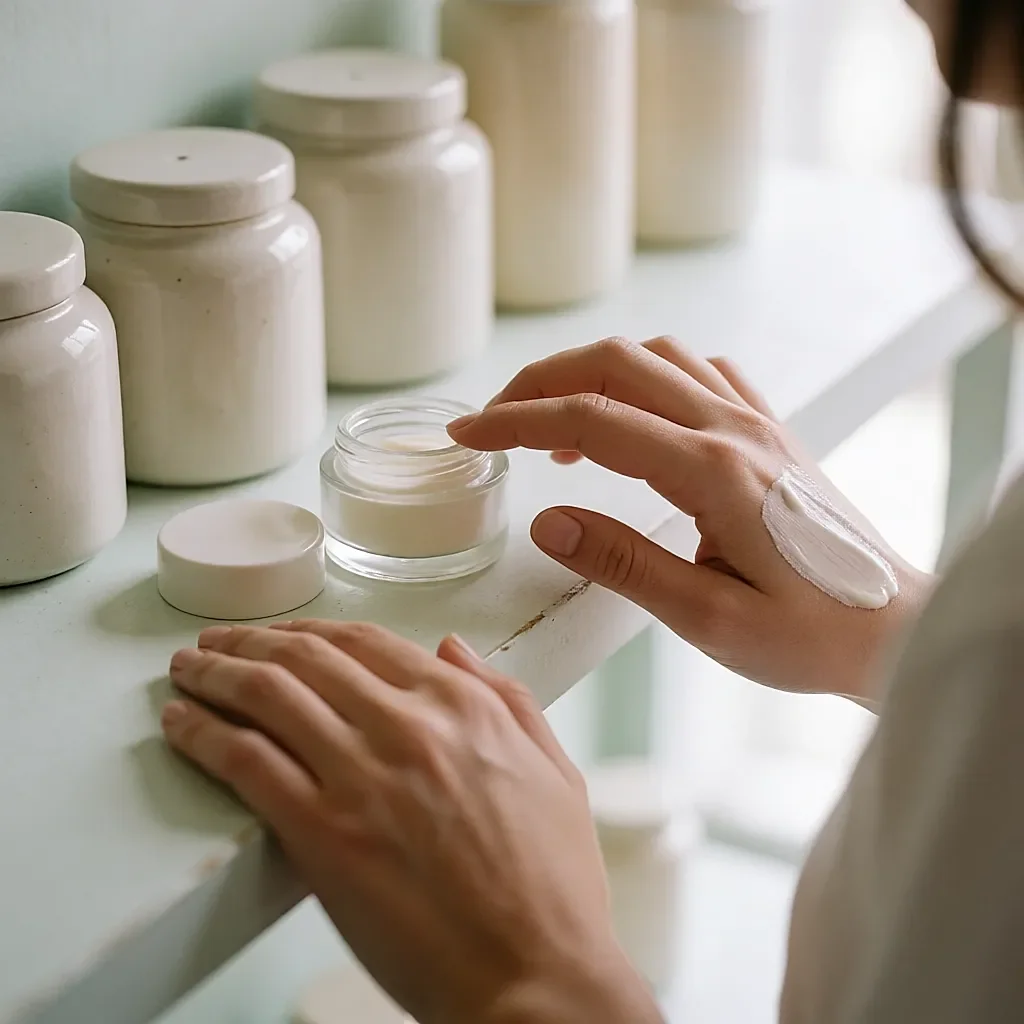
Because chapped hands aren't simply dry hands. With repeated washing, cold weather and household cleaning products, the stratum corneum thickens and cracks: skin turns rough and tight, sometimes white across the knuckles. At that point, layering on grease is like polishing a door that doesn't close properly. You protect the surface without touching what's actually causing the problem.
What urea actually does
Urea occurs naturally in skin, and cosmetics have used it for a long time for two things: holding on to water, and softening skin that has thickened. For the detail on percentages — a guide to reading labels rather than a prescription, and more isn't automatically better — see our piece on 10% and 30% urea foot cream.
Second thing to know: on cracked skin, a high-dose urea formula can sting. It may be uncomfortable, even irritating, and if the skin is broken ask a pharmacist. And if your hands are cracked to the point of bleeding, painful or red for several days, stop improvising in the aisle and show them to a GP or a dermatologist: at that stage it's no longer a cosmetics question.
The one step worth getting right
Here's the tip worth more than plenty of pricier tubes: apply to hands that are still damp. Take them out of the water, barely pat them with the towel, and put the cream on straight away rather than letting them dry completely. The water stays trapped under the active and skin makes far better use of it than on a hand that's already dry. It's the kind of detail that costs nothing and changes what an ordinary cream can do.

Then be generous where it counts: the backs of your hands, around the nails, the skin between your fingers. Massage for a few moments and let the rest sink in. The real question isn't "which cream?" but "am I putting more on after every wash?" A cream applied too rarely to hands that are washed often won't be enough: the benchmark is to reapply regularly, especially after each wash, as soon as skin starts to feel tight.
The express evening ritual: a pea-sized amount on damp hands, working it into the rough patches, then a pair of cotton gloves overnight. Ten seconds of prep, and skin feels softer by morning. Thin cotton gloves are plenty — no need for laboratory kit.
When a rich cream is enough, and is the right choice
This isn't about banishing grease. If your hands are simply dry and fine, exposed to paper, cold or a steering wheel, a cream rich in shea butter or wax does the job well: it protects and limits water loss, which is exactly what's being asked of it. Reactive skin benefits too, especially from fragrance-free formulas.
Urea comes into its own when skin is thickened and rough, with early calluses or cracks starting to settle in. In other words: grease for a hand that needs a coat, urea for a hand that needs what has hardened to be softened.
What to spend
On price, there's no need to head for the top of the shelf to begin with. Expect roughly £3 to £6 for a basic 50ml tube from a supermarket or high-street chemist, £6 to £12 for a urea formula from a pharmacy or health-and-beauty retailer, and more like £12 to £25 for natural and organic brands from a specialist shop. "Extra rich" formats and elaborate packaging climb above that, with no guarantee of better results.
On packaging, keep your eyes open: an aluminium tube or a glass jar can sometimes be recycled more easily than a plastic tube, depending on your local waste collection, and some brands offer refills — check their website, as not all of them do. The simplest move is usually the one you already know: finish a tube before opening the next one.
If you take one thing away: the technique matters as much as the formula. A urea cream applied to damp hands, regularly, especially after every wash, will do more for your hands than a luxurious pot left forgotten in a drawer. And that's five minutes in a day that hasn't got enough of them.



Comments
Your opinion matters: rate the article, react and reply to comments.
Comments are moderated; AI-assisted comments are flagged. Text emoticons (8-), :-), <3…) are automatically shown as images.