
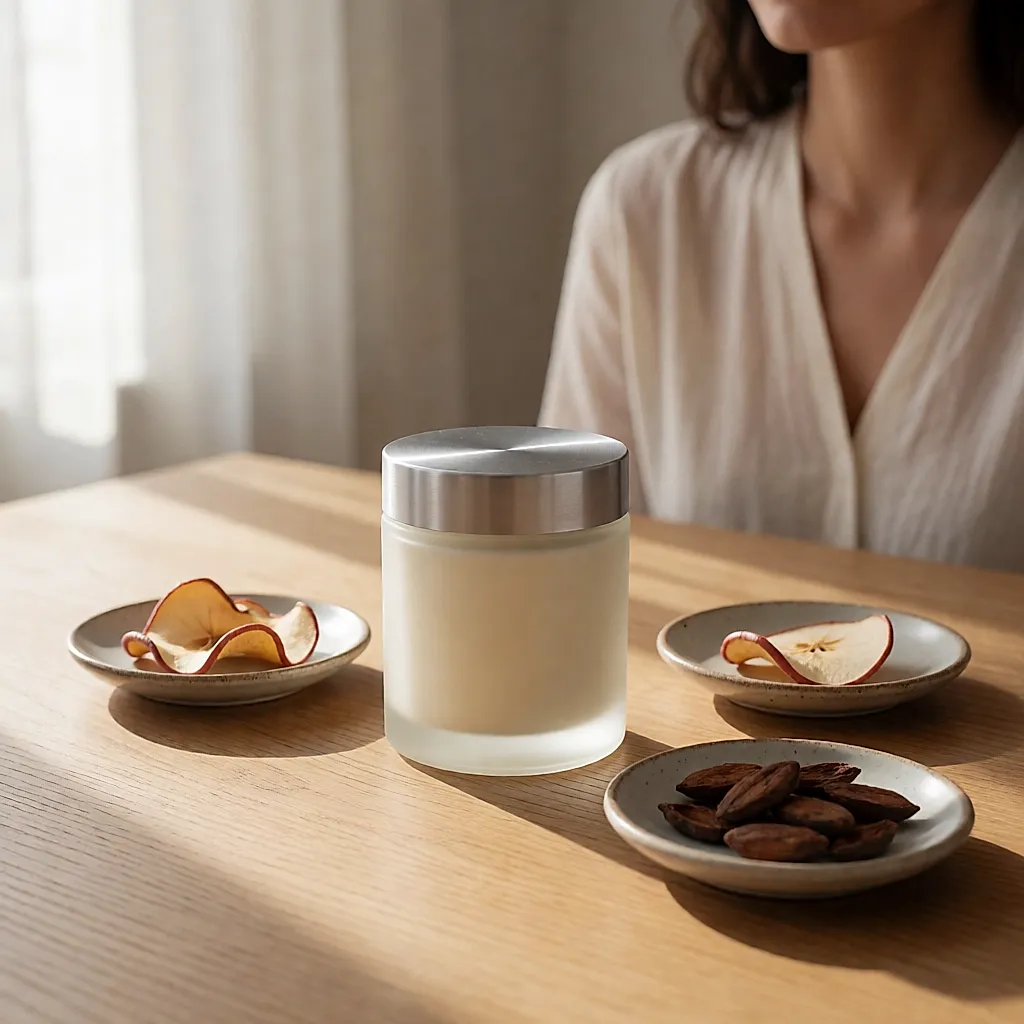
You've seen the labels: 'grape marc extract', 'apple seed', 'cocoa husk'. Behind those slightly rough-edged words sits a very simple idea: stop throwing away what the food industry leaves behind. And this time the trend doesn't reek of a marketing stunt. Well — almost.
What a co-product actually is
The word to hold on to is co-product: the material left over once the useful part has been extracted — the juice, the wine, the chocolate, the beer. It wasn't made for cosmetics. It already existed, often in industrial quantities, and it used to end up on the compost heap. Upcycling means finding it a second role instead of farming another field.
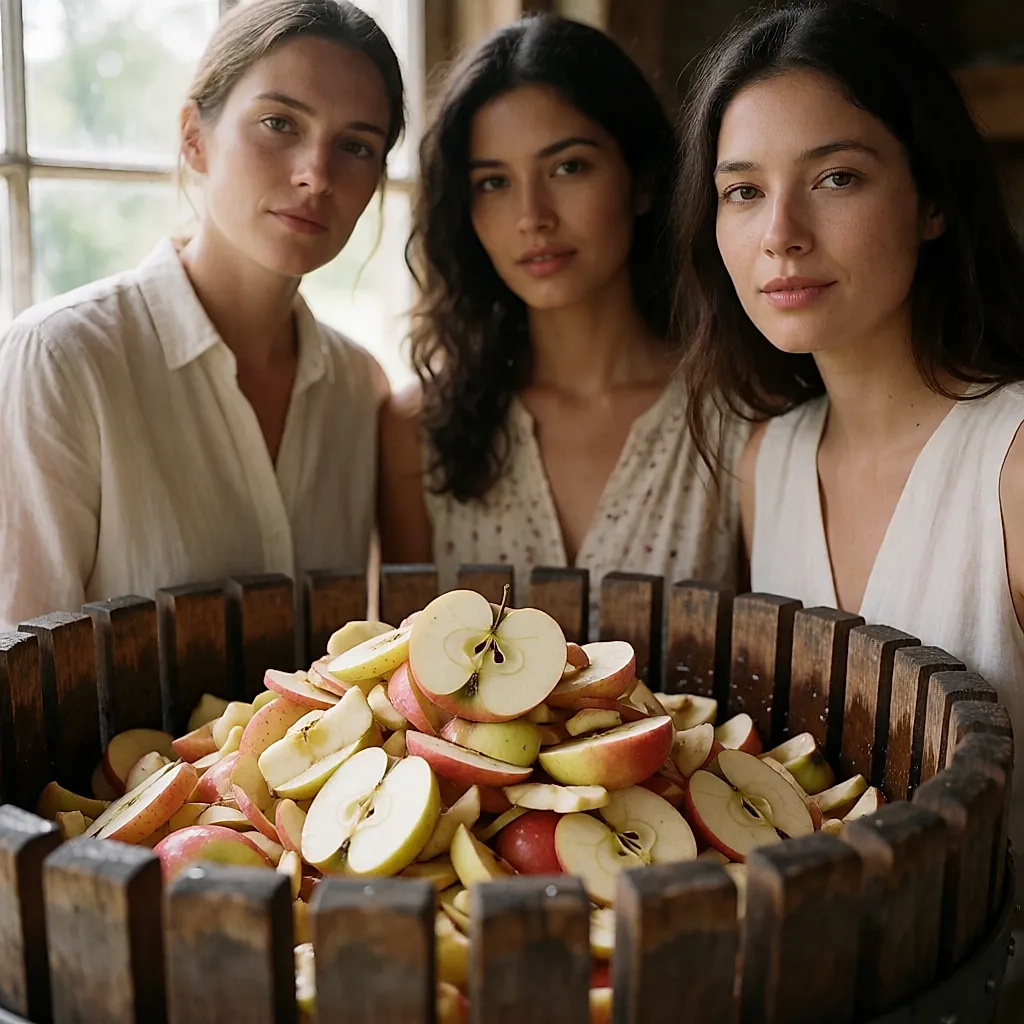
In practice? The marc that comes out of the press after the grape harvest, the apple skins and seeds left behind once the juice is squeezed, the cocoa husks left after roasting, the spent grain lining the bottom of a brewery tank. Caudalie works in particular with the polyphenols in grape marc; Kadalys makes use of banana co-products. Nothing magic in the jar — just a raw material that no longer goes in the bin. Which, you'd have to admit, is already an improvement.
The name, the percentage, where it comes from
First move: find the exact name of the active. 'Grape marc extract' tells a very different story from a catch-all 'botanical' printed on a gift box. Then the percentage: an active dosed at 5% and one at 0.1% are not playing in the same league. Brands that take their copy seriously state it; those that settle for a 'patented natural complex' deserve a follow-up question.

And where does it come from? Traceability — the name of the winemaker, the brewer, the co-operative, the region where it was collected — isn't a gimmick: it turns a nice story into a supply chain you can actually check. That isn't proof of efficacy, it's proof of rigour. An important distinction, and it holds for the whole shelf.
The packaging counts as much as the formula
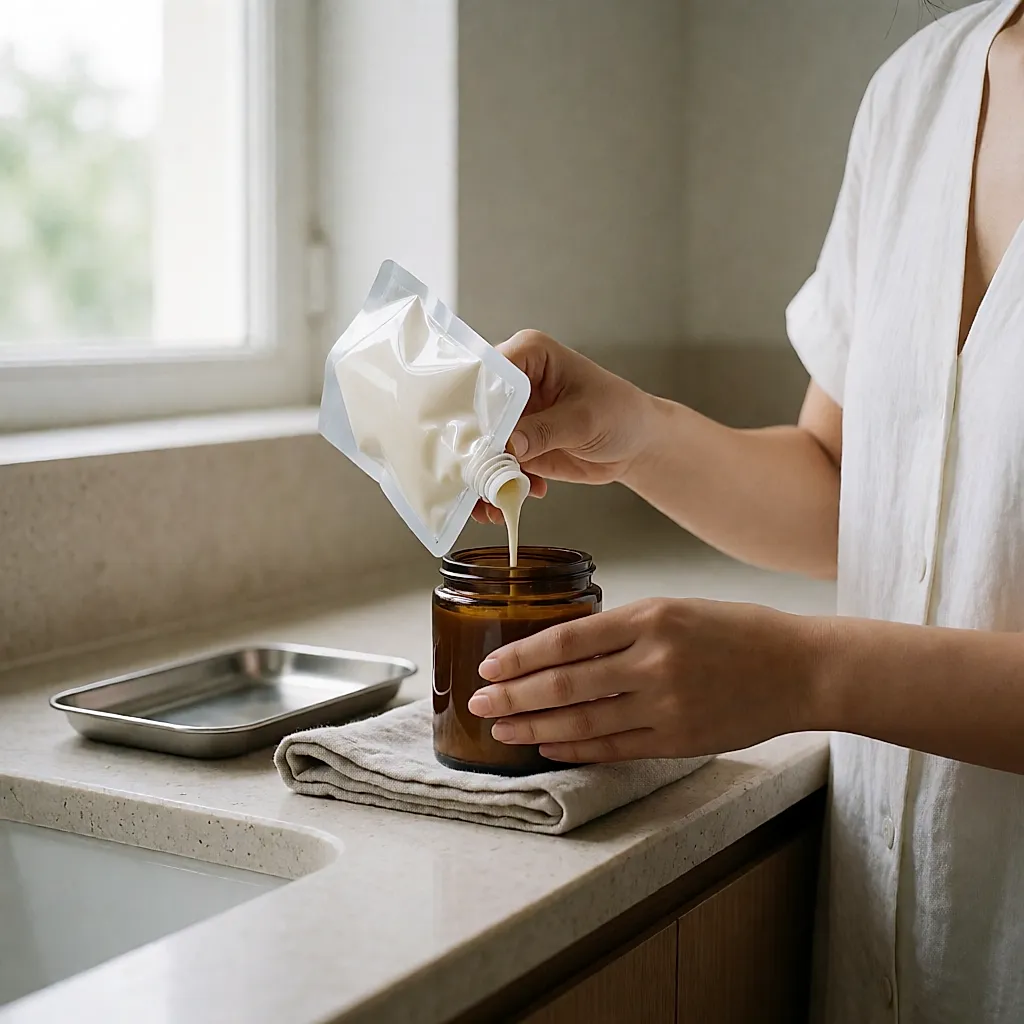
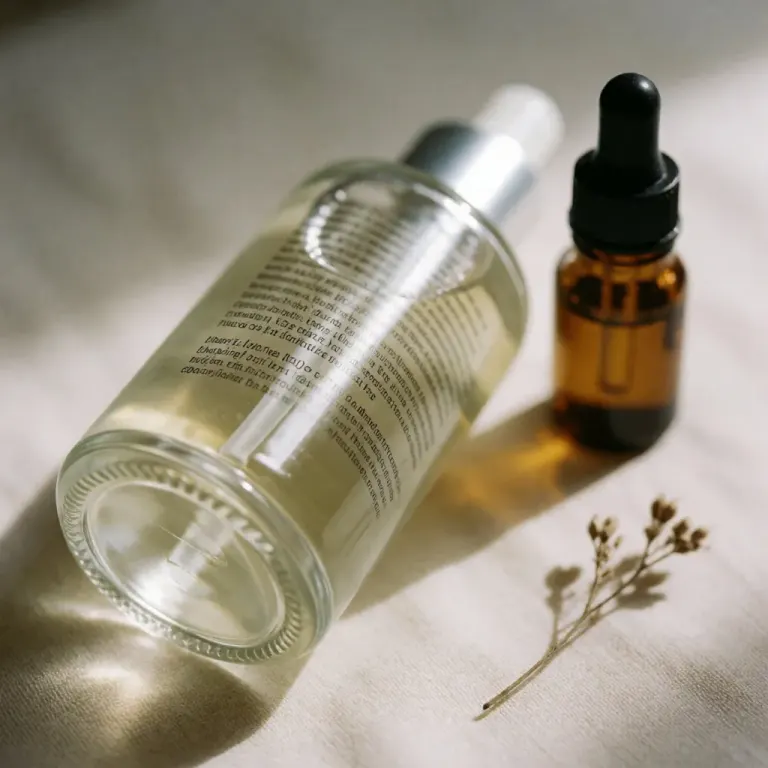
An upcycled active poured into a brand-new plastic jar with every purchase is good intentions only half done. Glass, refills, cardboard tubes: the container is part of the calculation — and where a refill exists, it usually costs less than the full jar. The kind of detail that changes the bill over two years without asking anything of the formula.
Look at the length of the INCI list too. Not for the beauty of the gesture, but because an active buried among thirty others is sometimes there purely for decoration. A bit like the friendly neighbour you nod to in the corridor and never actually speak to.
Three questions before you hit checkout: what is the exact name of the upcycled active? At what percentage? And where does it come from? If the answer comes down to 'a patented botanical extract', put the jar back without a shred of guilt.
Budget
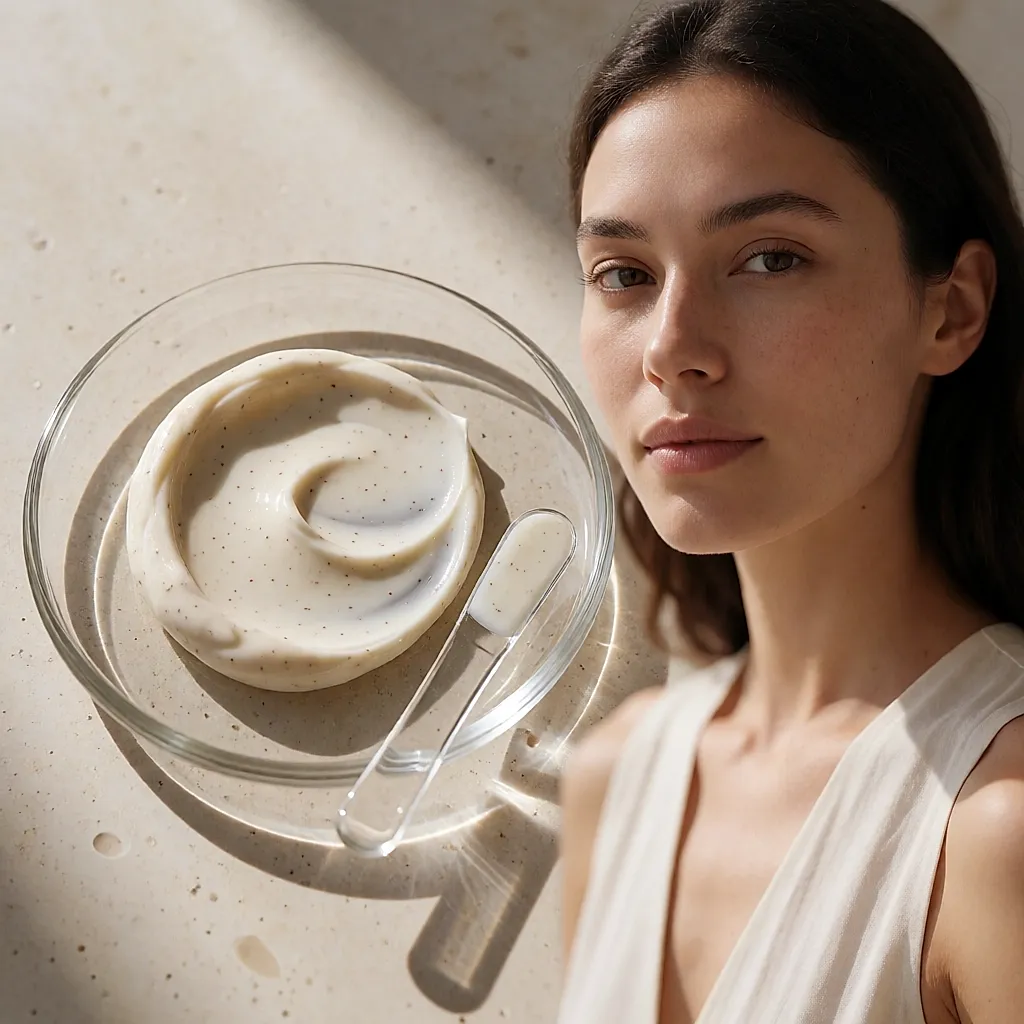
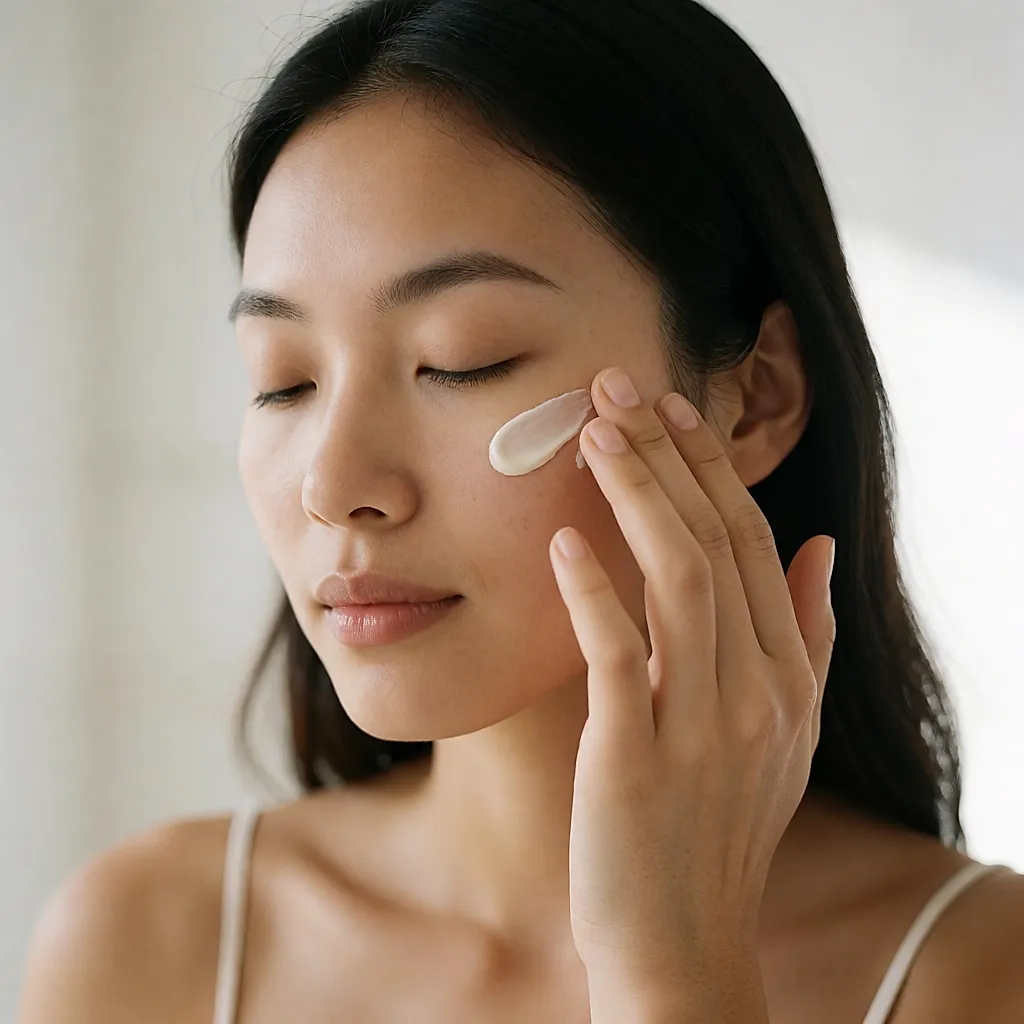
No collector's price tag here: serums and creams built around upcycled actives usually land between £18 and £40, depending on concentration, size and brand. The lower end (£18–25) tends to be day creams and younger brands; the higher end, concentrated serums and gift sets — thick glass costs money too, and it shows.
Where to track them down? Online on independent brands' own sites and from a handful of specialist stockists, in health-food shops, at natural beauty retailers. Before you get attached to a particular bottle, check whether a refill is planned: the small detail that lightens both your budget and your bathroom cupboard.
Upcycled doesn't mean biodegradable
Watch out for the shortcut. Upcycling is about where a raw material came from, not where it ends up. An active derived from grape skin can quite happily finish its life in a formula packed with silicones and filters, some of which are poorly or not at all biodegradable. And there's no single regulatory framework for 'upcycled', but private certifications do exist; each brand can have its own definition.
One last point, and not the smallest: nothing guarantees efficacy. A recovered active is still an active — well formulated, it works; badly dosed, it's decoration. That criterion, though, is easy enough to check: stated percentage, position in the INCI list, measured claims. If a brand promises you transformed skin in seven days, close the page quietly.
At heart, upcycled is an entry criterion, not a qualification. It tells you where the material came from, sometimes who rescued it, and it heads off a very real amount of waste — which is not nothing. The rest plays out elsewhere: in the texture you enjoy, the ingredient list you actually like reading, and the bottle you'll be happy to refill twice rather than replace.
Sources
- Caudalie — official brand website, consulted in October 2026.
- Kadalys — official brand website, consulted in October 2026.

Comments
Your opinion matters: rate the article, react and reply to comments.
Comments are moderated; AI-assisted comments are flagged. Text emoticons (8-), :-), <3…) are automatically shown as images.