
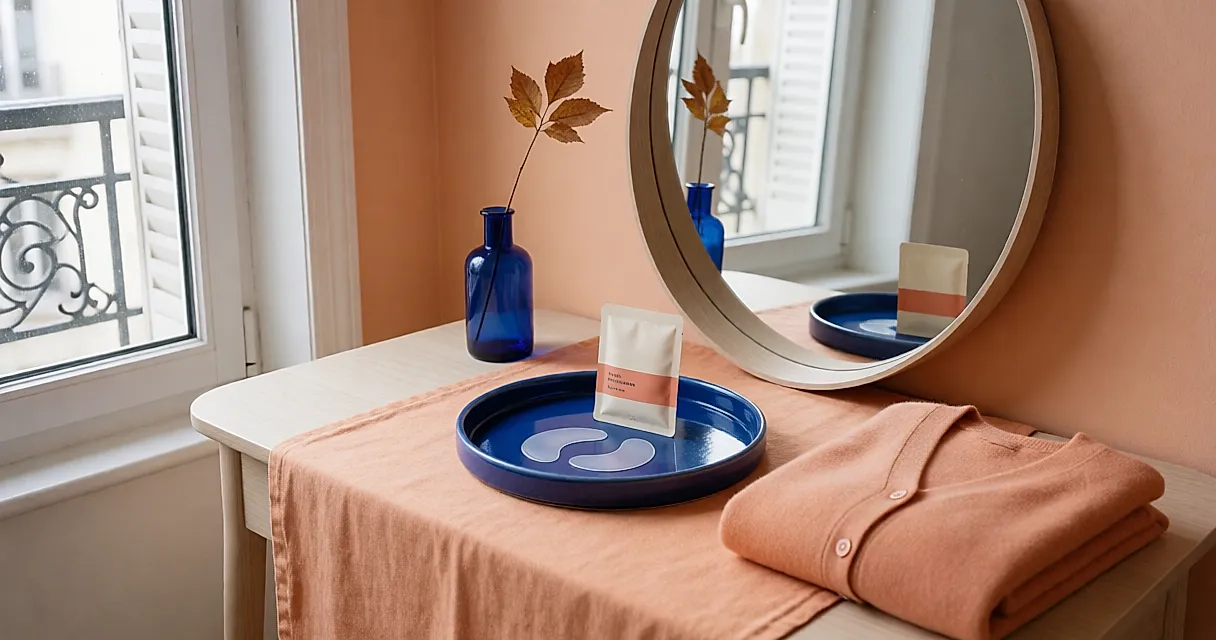
Stick a hydrogel patch under each eye and the conversation can change: people may stop asking whether you're tired and start asking what it is. That's the shift: under-eye skincare is no longer hidden under foundation; it's worn. Bare skin, visible patch, worn with intent — provided you know what you're putting on and how long to leave it.
Why under-eye patches are leaving the bathroom
For many, the under-eye patch was once an evening ritual, a matter of the fridge and a closed door. Now you may spot them on the Tube, at the office, in the coffee queue. With the bare-faced look now a style in its own right, the patch no longer has to disappear: it becomes a detail to show off, almost an accessory. So is it a skincare accessory or a little flag for owning your tiredness? A bit of both, and all the better for it.

What's changing isn't just where we wear it, but the way we talk about it. Many of us are no longer trying to hide a short night under foundation; many of us are happy to show that we're looking after ourselves now, rather than waiting until evening. The visible patch is not a cure-all; it's a signal. And like any signal, it's better if it's clear: a patch that lifts at the cheek or pulls under the eye tells a different story.
What's really going on under the patch
Let's be honest: a patch won't replace a night's sleep. What it does is keep the under-eye area in contact with a cool, moist gel, which can leave skin feeling more supple and comfortable. The skin there is thin, so flat contact matters more than the promise on the packaging. On clean, dry skin, the patch tends to stay put; on oily skin or skin covered in a rich cream, it may slide and not do its job.
Timing matters too. Follow the time stated in the instructions. Leave it longer and the gel can dry, the patch may pull, and you'll be tempted to tug it off — don't. The coolness can feel soothing when you're tired, but it isn't a treatment for established pigmentation or persistent puffiness. If redness persists, or the area swells or hurts, stop using it and ask a pharmacist or GP for advice.
Disposable hydrogel, reusable silicone and solid formats compared
Disposable hydrogel has a clear advantage: it's ready to apply, cooling and practical when you're travelling. Its downside comes in two words: single use. Check the ingredients — water, glycerin, hydrating actives — and the packaging, which is often bulkier than the patch itself. If there is a label, check what it actually covers: the formula, the packaging, or both.
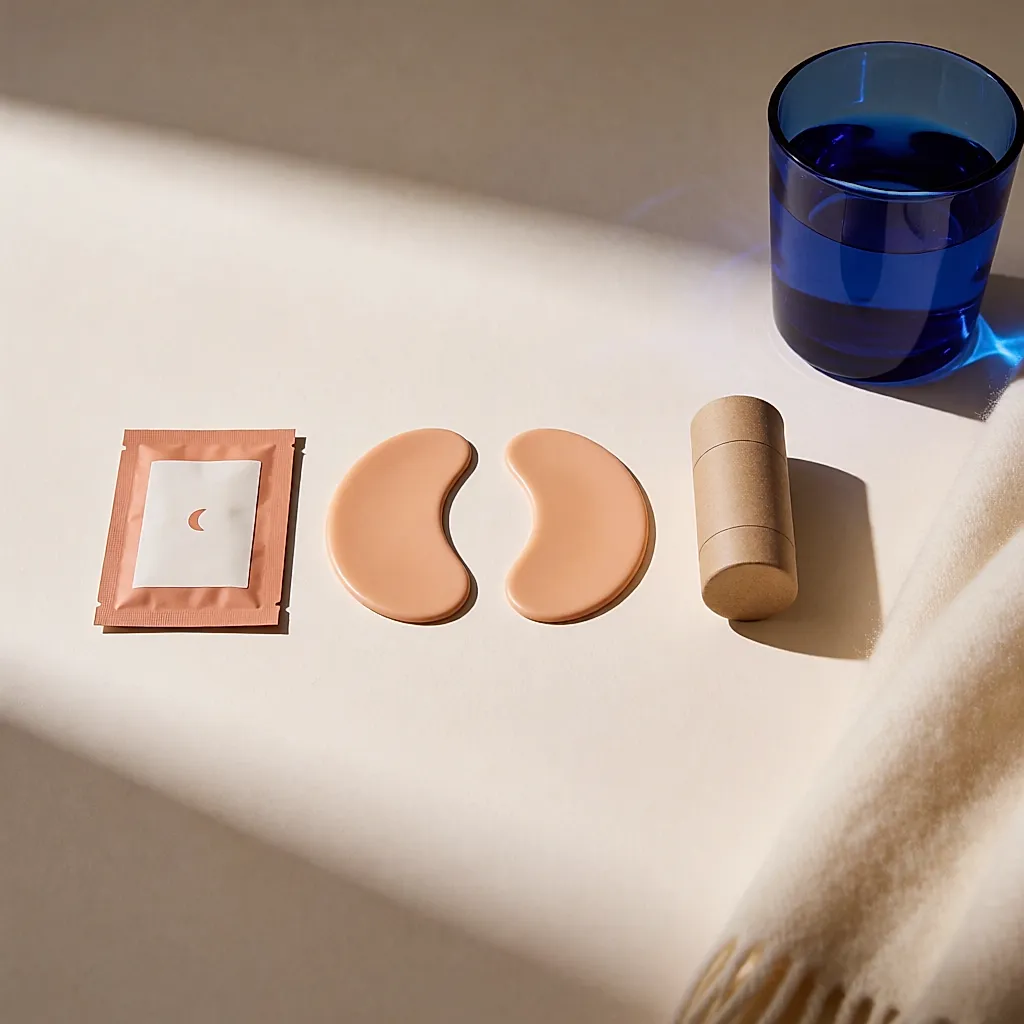
Reusable silicone calls for a different rhythm: you keep the patch, add another thin layer of serum or moisturiser, wash it in lukewarm water with a mild soap, and dry it. Less waste, more handling. Solid formats, when you find them, aren't applied like hydrogel: read the instructions, because the method is different. There is no one-size-fits-all recommendation for solid formats; if you want to try one, start with a small area.
How to layer serum and patches sensibly
The order is simple: clean skin, a thin layer of hydrating serum, a few seconds to let it sink in, then the patch. You don't need three actives. If you layer retinol, AHA/BHA, a strong vitamin C and a patch, the under-eye area may feel hot or irritated. If your skin is sensitive, it's also worth avoiding known irritants: denatured alcohol high on the list, fragrance and essential oils. If it stings, remove it straight away.

A patch after make-up? It's possible if the format allows it, but flat contact is poorer over foundation. For the bare-faced look, apply it to clean skin, remove it, pat in the remaining serum, then add a little concealer where you need it. The patch doesn't need to be perfect: it just needs to stay put.
Budget
As a rough guide, disposable hydrogel patches tend to cost around £1–£4 a pair, £10–£30 for a box depending on how many pairs it contains, and £8–£25 for a reusable silicone pair. If you don't already have a hydrating serum, allow £15–£40 for a simple bottle. Solid formats are rarer and mostly sold online or in specialist beauty shops; check the price per unit.
Where to buy? Pharmacies and health and beauty retailers for the classic formulas, department stores and supermarkets for gift sets, and brand websites for reusables. The real cost isn't the patch: it's the serum you keep topping up. Use what you already have; a simple moisturiser can do the job.
The routine to follow: clean skin, a thin layer of serum, the patch pressed flat, and leave it on for the time stated in the instructions. Remove it without pulling, pat in any excess. If it feels hot or stings, take it off straight away — a patch shouldn't have to be earned.
Under-eye patches won't erase the aftermath of a late night, and they're not meant to. They do one small, visible thing: they signal that you've chosen to look after yourself without hiding. Keep the routine simple, the serum light and the patch flat. The rest is good humour — and no hydrogel can sell you that.


Comments
Your opinion matters: rate the article, react and reply to comments.
Comments are moderated; AI-assisted comments are flagged. Text emoticons (8-), :-), <3…) are automatically shown as images.