
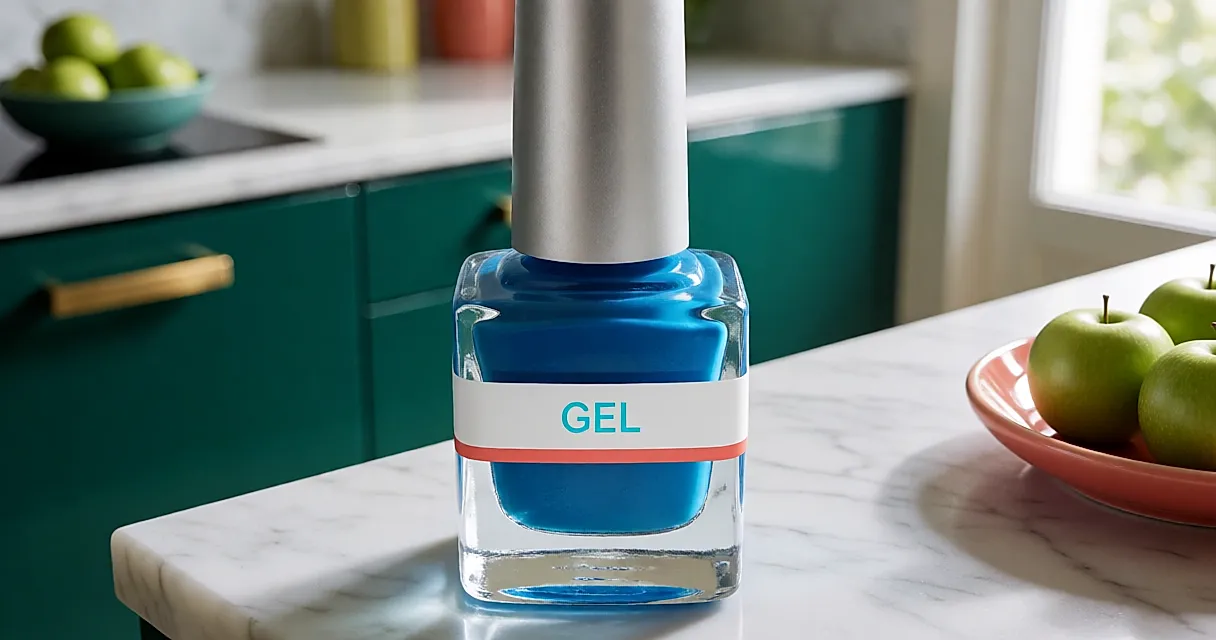
An opaque polish is like pulling the curtains shut. A jelly polish is more like a pane of glass: light travels through it, the tip of the nail stays visible, and the colour seems to float rather than sit on top. On Hailey Bieber, this bright translucent blue does exactly that. The overall effect stays light, almost wet, and never looks like a solid block of colour. The catch is that anything which hides nothing also forgives nothing.
Under that blue, you can see the surface of the nail: fine ridges, a flaking edge, the tight patch that appears during the heating season. A covering polish gives you a fresh set of scenery. A jelly gives you a window, and a window has to be clean. That is why the order of play is not the one you might expect: care first, colour second — never the other way round.
What a sheer finish exposes
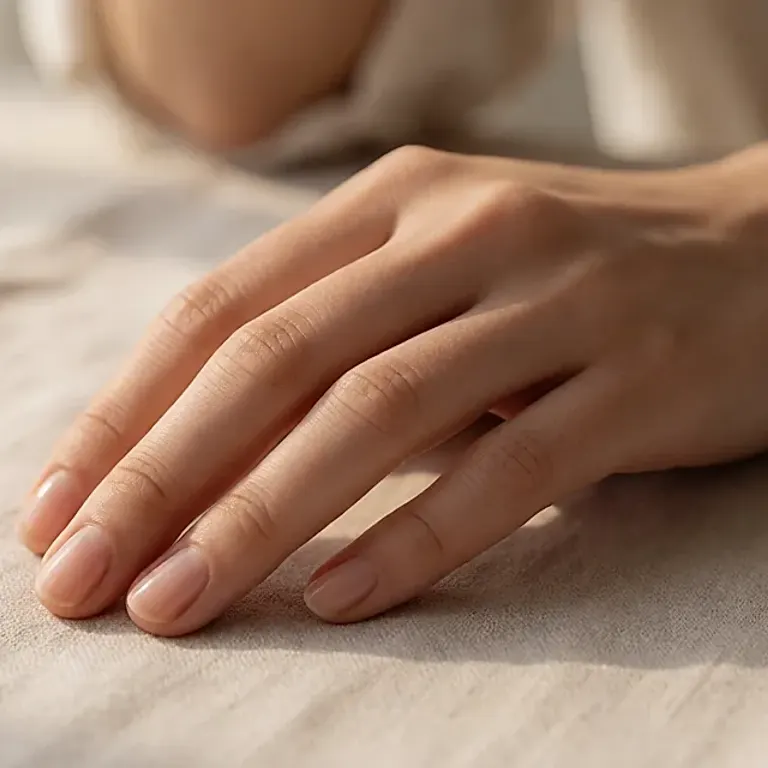
Two nails, same blue, same light: one supple and satin-smooth reflects the colour like a mint sweet; the other dry and ridged turns it dull, almost powdery. It isn't about the shade; it's about the surface. And no, oil applied the night before is unlikely to undo a few weeks of neglect. In practice, you may need several evenings in a row before you see a difference.
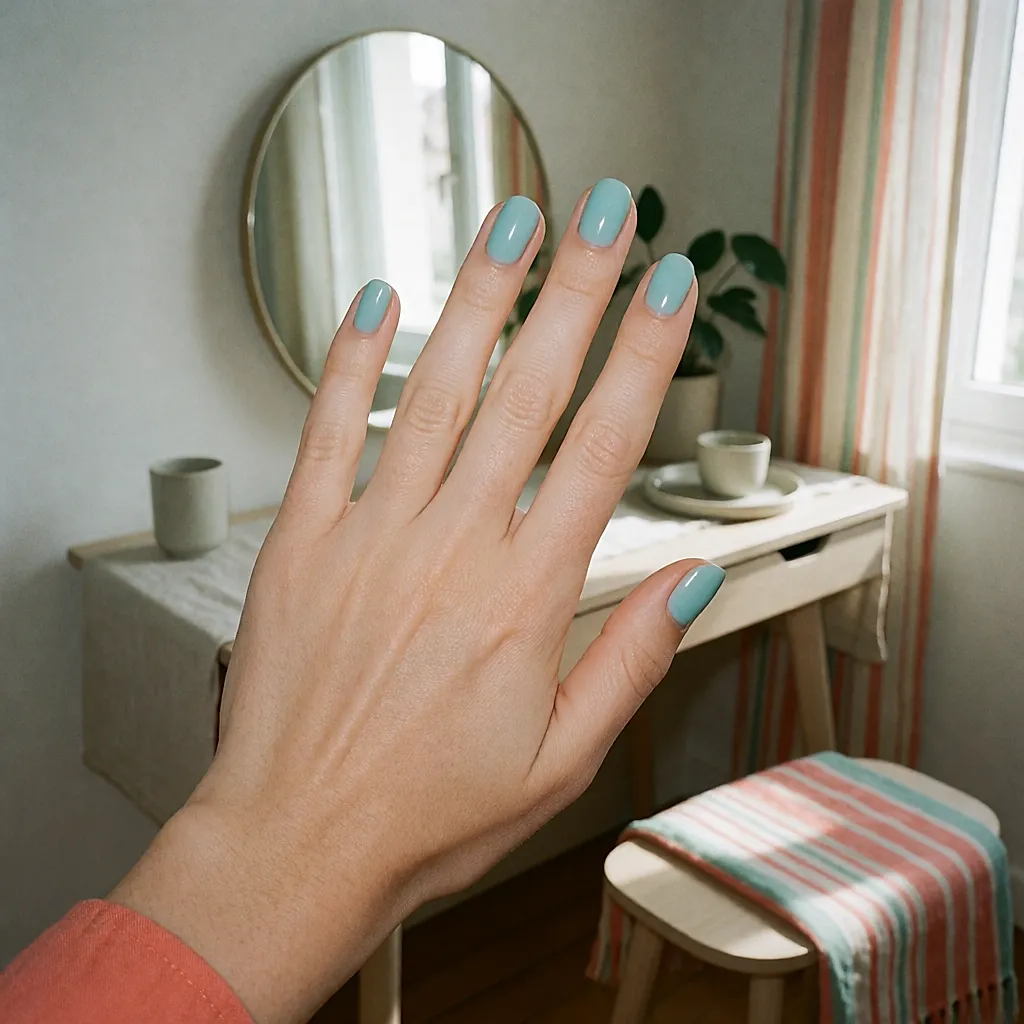
Then the step that matters takes two minutes: a drop of oil on each nail, cuticle included, massaged in up to the first knuckle. You can finish with hand cream, even if your fingers end up a little greasy and your keyboard a little resentful.
If the ridges bother you, a gentle buff with a fine-grit block can soften them. Treat it like a stroke, not a sanding job: file too much and the nail thins, which can make it look even more ridged. The file's little irony.
Start with a base coat
With a translucent finish, base coat isn't just a comfort step: it smooths the surface and gives a very thin colour something to grip. If your nails are marked, use a smoothing base coat; if they're in good condition, a regular nourishing base will do.
The real trap is drying time. Leave two to three minutes before you go in with the blue — often longer than you think. Apply jelly over a base that is still wet and you are asking for bubbles and micro-pits. They vanish under an opaque polish; under a sheer one they are glaring.
One coat. Only one.
Three brush strokes: one down the centre, one on each side, working from the base to the tip. A thin coat. Don't go back over what you have just applied to 'even it out' — that is how you create thick patches and streaks. Missed a corner? Let it dry and correct it afterwards. Not in the same second.
Drying is the real price of a jelly finish: around ten to fifteen minutes without touching anything while the coat levels and sets. Avoid cold water, the washing-up and the bottom of your bag straight afterwards. Fresh polish remembers everything it brushes against.
And resist a second coat. Two layers of blue don't add depth; they add plastic. If you want shine, reach for a clear top coat, not more pigment.
Finding the right blue
Not all blues are equal when it comes to transparency. Look for ones that actually say 'translucent' on the bottle rather than pastel blues, which often turn opaque as soon as they go on. The test is simple: a drop on white paper and ten minutes of patience should tell you what you are dealing with.
I haven't yet seen this exact blue in person, so I can't promise how it will wear. What happens under it, though, is the same for every polish in this family. After that, the shade is chosen like the colour of the sky: a clear, bright blue works well on a short nail, while a greyer blue is more forgiving on pale hands in November. It is the only part of the process where you are allowed to get it wrong.
Budget
As a rough guide, a translucent-finish polish costs around €6 to €15 in supermarkets, chemists or online; a salon gel manicure or gel overlay usually comes in around €30 to €60, depending on the city, the salon and the length of your nails. The salon option lasts longer but gives a denser finish than the jelly effect we're after here, so check the current price before you book or buy.
On the eco front, nail polish remains a poor student: bottles are rarely refillable, caps are often plastic, and the solvents are hard to replace — which is precisely why organic certifications are thin on the ground. The best habit isn't to buy better; it's to finish what you have before opening a second bottle.
The white-paper test. Put a drop of polish on a sheet of paper and leave it for ten minutes. If the blue stays pale and lets the paper show through, you have a jelly. If it turns full and covering, it is an opaque in disguise — pretty, but it won't show anything of your nail.
If you only have five minutes tonight, keep the oil and skip the colour: a bare, nourished nail will look better than blue sitting on a surface that feels tight. Translucent blue, meanwhile, has to be earned — two evenings of care, a base coat, one thin coat, and fifteen minutes with your hands still. It's a small ask, and the opposite of piling on layer after layer.


Comments
Your opinion matters: rate the article, react and reply to comments.
Comments are moderated; AI-assisted comments are flagged. Text emoticons (8-), :-), <3…) are automatically shown as images.