

'The signature treatment is two hours.' The line lands on the phone, and there you are already bargaining with yourself: two hours is a whole Tuesday. Two hours of what, exactly? At the other end of the line, no one has yet told you what they are going to do, or in what order. And yet that is exactly where the difference lies between a proper treatment and a nice name in a brochure.
A name tells you nothing, a protocol tells you everything
In a thalassotherapy centre, the signature treatment is the shop window: the one they put front and centre, offer as a gift voucher, the one you mention to a friend who asks, 'What should I book?' Except every venue builds its own however it likes. Here it might be algae and a heated wrap; there, a massage under a warm-water jet and a hydrotherapy bath. Same name, unrelated contents — and that's normal: the word is generic.

Industry distinctions — judging panels, spa awards — have at least one merit: they often push venues to describe their protocol in writing. It isn't a diploma in quality, more a stocktake. And a stocktake can be read before you pay.
What a protocol actually commits to
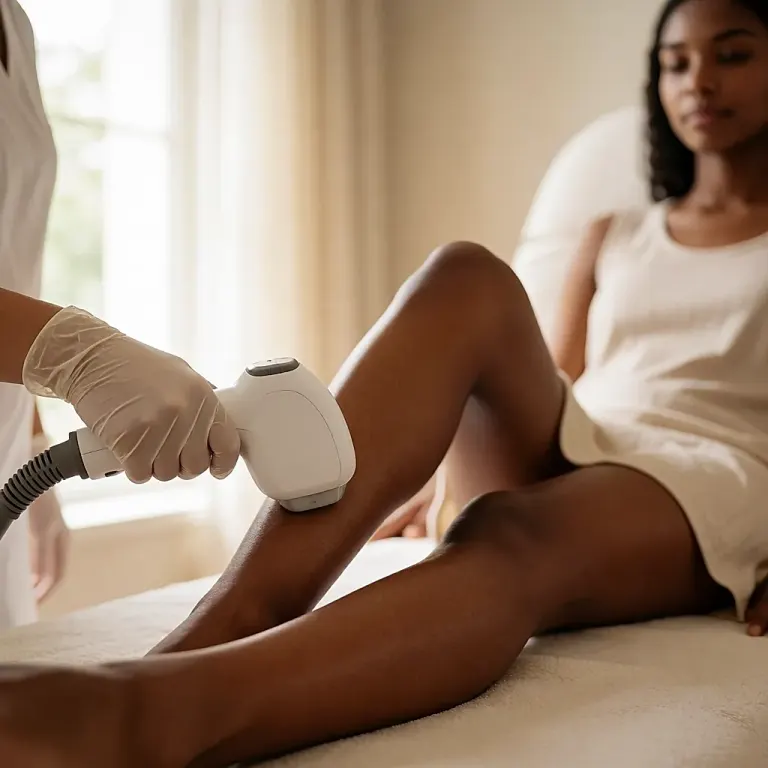
Three things, concretely. First, the hands-on sequence: who touches you, for how long, and in what order. An algae wrap means brush application, a resting period, a warm shower, sometimes a jet. A massage means hands, and trained hands. It is not the same job or the same sensation — just the same word on the treatment menu.

Then the marine products. Algae, mud, salt, seawater: behind the 'marine' label sit very different textures and very variable origins. Some venues work with algae harvested a few kilometres away and processed locally; others use standardised powders. Neither approach is dishonest in itself, but if the composition matters to you, ask: the exact origin is rarely printed on the treatment sheet.
Finally, the treatment room and the time spent on each area. A back treatment that dispatches the legs in three minutes is nothing like a protocol that divides the hour between back, neck, legs and feet. It is often the detail that separates a proper session from a pleasant moment you leave without quite knowing what happened.
The advertised duration tells you almost nothing
A one-hour treatment does not mean an hour of treatment. You have to count the welcome, the questionnaire, the changing room, the shower, getting dressed, sometimes tea. In practice — and this is a practical marker, not an industry rule — a good chunk of the advertised time can be swallowed by getting ready. Translation: how long are hands actually on you? That is often the figure that matters most.

The reverse exists too, thankfully. Sometimes a venue advertises 45 minutes of hands-on work in the treatment room, not counting getting dressed. Which is why it is worth asking when you book rather than reconstructing the film in the car. Your internal stopwatch will thank you.
Three questions to ask on the phone
The first: 'How much hands-on time is there, excluding set-up and shower?' You'll see, the answer is often more honest than the brochure. The second: 'What are the steps of the protocol, in order?' If the person recites them without hesitating, that's a good sign.

The third concerns the product and the therapist. Which algae, what origin, and is the treatment the same whichever therapist is on duty that day? A written protocol should be transferable: that is what distinguishes a venue that trains its team from one that improvises depending on who is on shift.
Budget
These are rough UK guide prices, based on publicly advertised rates at thalassotherapy centres, hotel spas and city day spas, excluding promotions and packages; they are not an exhaustive survey. Budget around £80–150 for a standalone treatment at a thalassotherapy centre or hotel spa, more like £50–100 at a city day spa. The range moves with the city, season, how smart the venue is and whether the treatment is absorbed into a larger package.
Three-day spa breaks often sit between £300 and £600 depending on accommodation, and duo treatments or gift vouchers change the picture. Our advice: book direct with the venue and ask for a written breakdown of the protocol by email. A signature treatment that refuses to describe itself is a bit like a restaurant menu with no dishes on it.
Three lines to check on the treatment sheet — the hands-on time (not the total duration), the steps named in order, the origin of the marine product. If two of those three pieces of information are missing, it is better to ask before you confirm the booking.
A signature treatment, at heart, is not a name: it is a sequence of steps someone can describe to you before you even set foot in the treatment room. Next time, compare two venues on paper — hands-on time, products, steps — and the choice will become obvious. The one move that remains when you have only five minutes? Ask, plain and simple.


Comments
Your opinion matters: rate the article, react and reply to comments.
Comments are moderated; AI-assisted comments are flagged. Text emoticons (8-), :-), <3…) are automatically shown as images.