
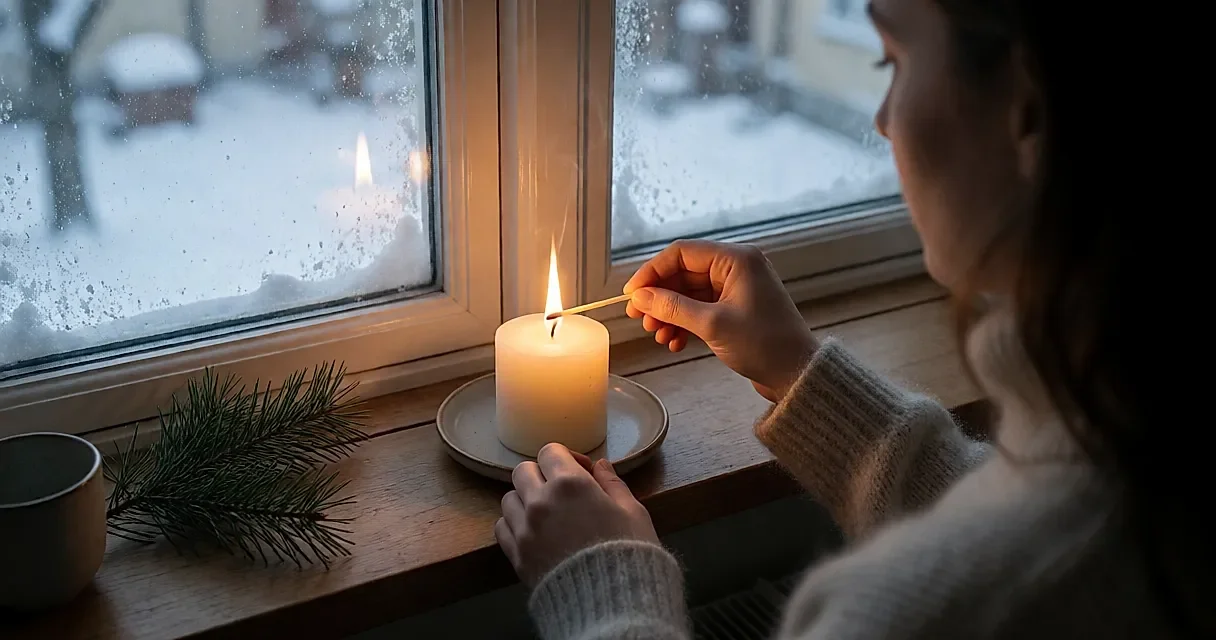
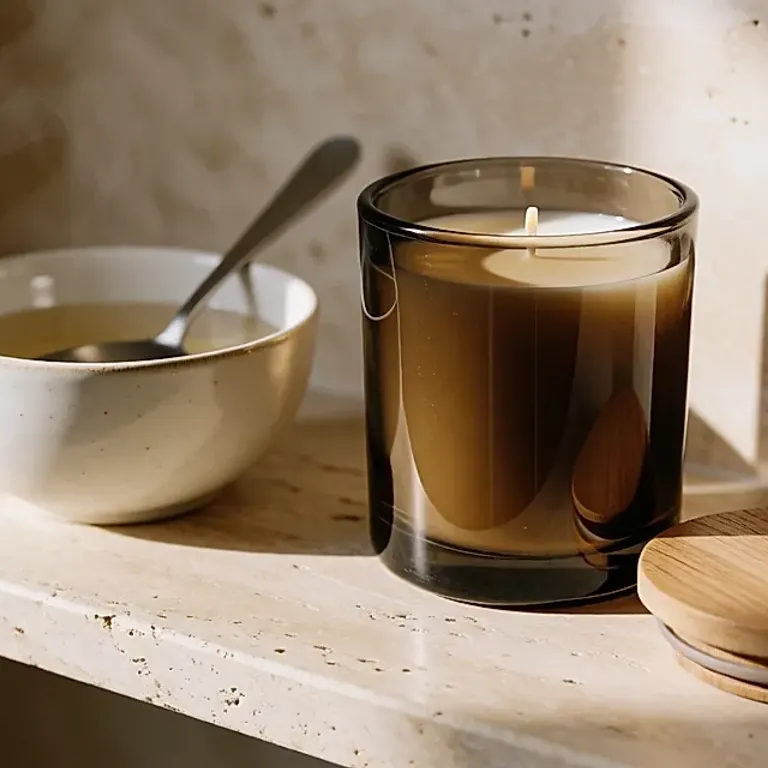
Sunday night, 9pm, the third Advent candle has already burned down by half and the flat smells of clove. You have no ticket to Stockholm, no thick wool jumper, and yet a 200g glass jar has moved a piece of Sweden in between your walls. Maybe that is where the scent of the season changed character. We are no longer choosing "festive spirit"; we are choosing a precise winter, with its low light and its gestures.
In December, Sweden smells of hyacinth and resin
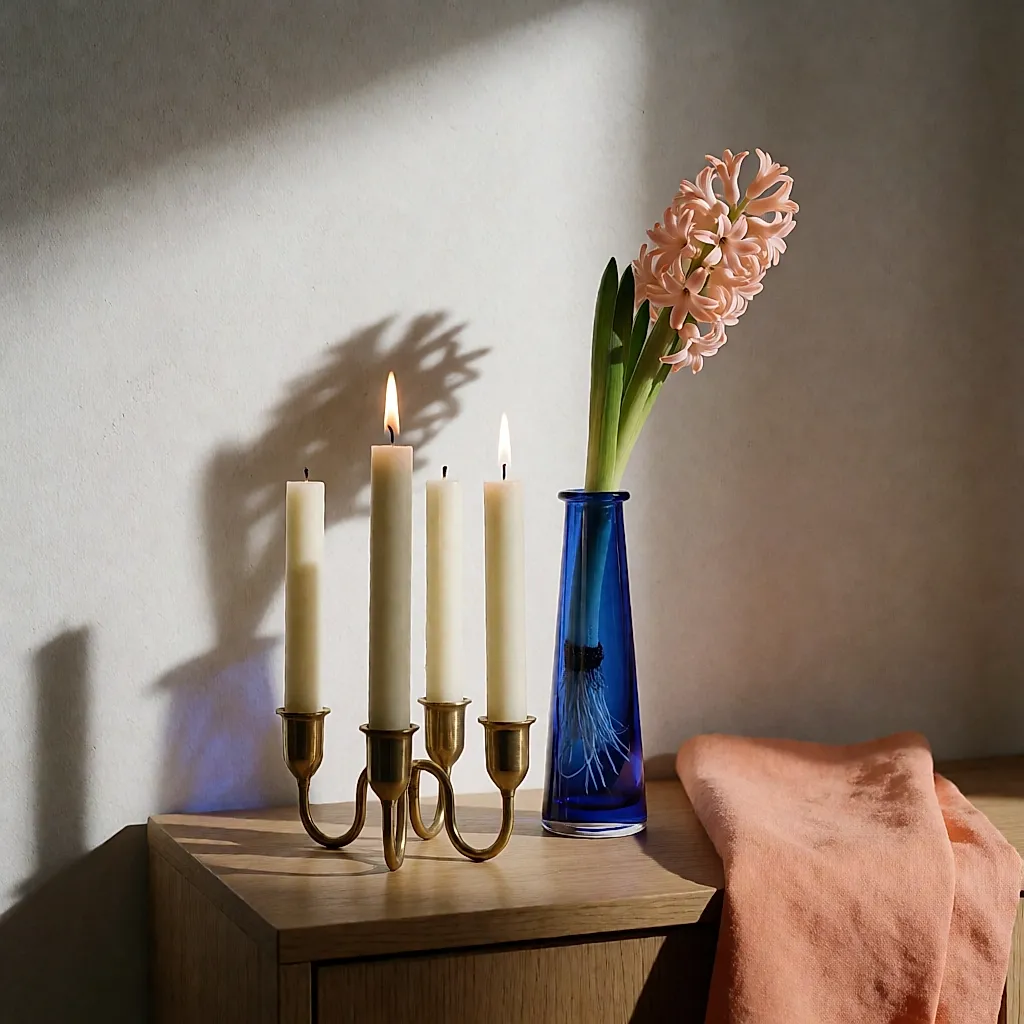
There, winter is not a decoration: it is a long, dark season, and people get through it with light and ritual. Hence the electric stars in the windows, the four-branched Advent candelabra — one candle lit each Sunday — and the forced hyacinths in narrow vases, whose scent sometimes fills an entire stairwell. On 13 December, for St Lucia's Day, saffron buns come out by the tray and candlelit crowns process through the streets singing. Add glögg, the mulled wine spiced with cinnamon, cardamom and bitter orange, with almonds and raisins, and you have the olfactory soundtrack of a whole month. A welcome change from vanilla, you have to admit.
This is not a gourmand palette. Pine and resin dominate, alongside sap, birch bark, moss, lingonberry and sometimes a note of tarry wood. The spices are dry, almost bitter; the sugar stays in the background. A Swedish winter smells of the outdoors you have just come in from rather than the cake you have just taken out of the oven. On British shelves, December tends to smell of orange and vanilla — delicious, but is it the same winter?
The story now does the selling
For a few seasons now, brands have stopped selling just a scent: they sell a date, a place, a gesture. A candle called "13 December", or one that describes a cabin heated by a wood burner, tells of a tradition rooted somewhere, with its climate and its vocabulary. When it comes to choosing, that story has become more telling than the promise of "Christmas spirit", which no longer says very much.
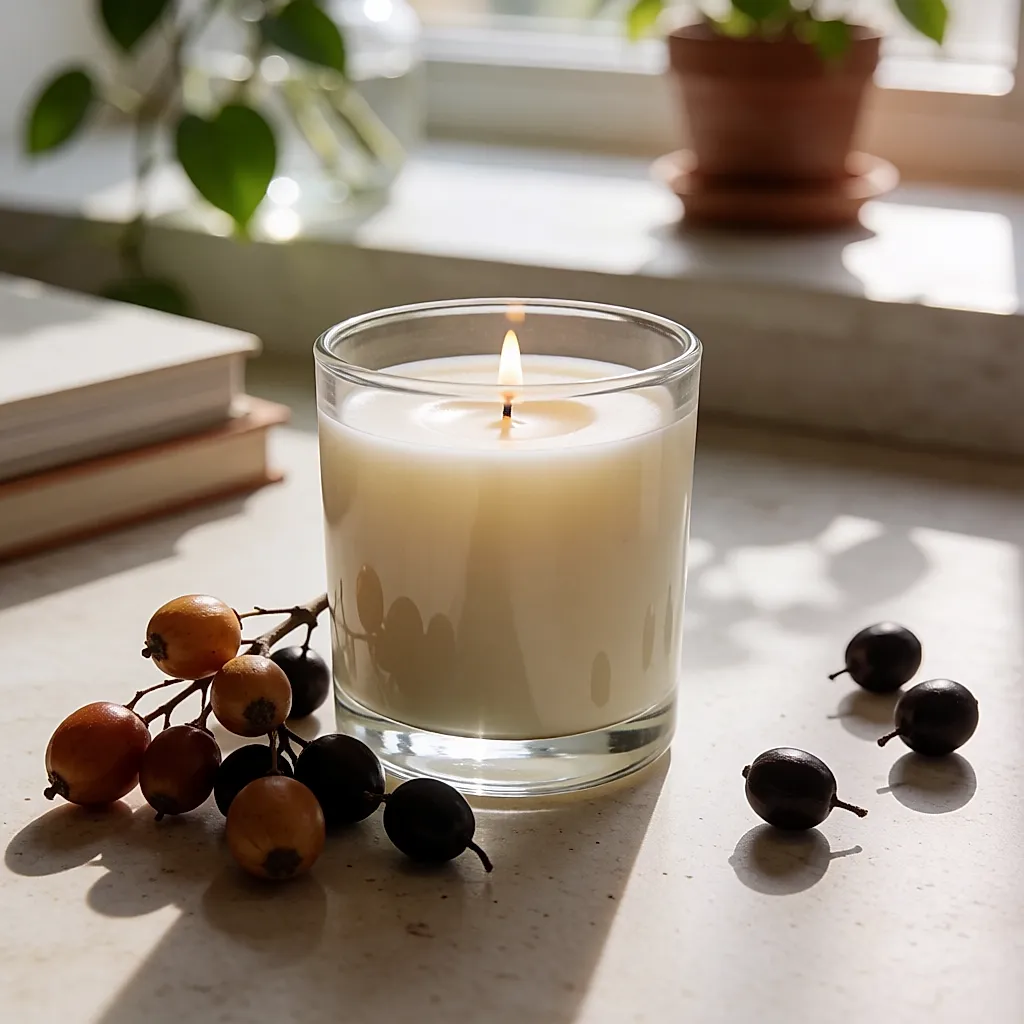
Careful, though: a story can also be packaging. The test is simple. Read the notes listed and ask yourself whether they add up. If the tale is all forest and snow and the list boils down to vanilla, caramel and white musk, the story is a label. If you are given a date, a gesture and notes that match, you have a genuine reason to choose it — better than the shape of the jar.
And let's be honest: we have not smelled the entire Swedish output — and it would be hard to claim otherwise. A candle is still a candle; it will not light a room on its own and it does not replace a walk. But it sets a mood quickly, which on a Tuesday in November is already something.
How you burn it matters as much as the scent
A good candle badly lit smells of soot, not forest. Trim the wick before every burn, and the first time let the wax melt all the way to the edge, to avoid the tunnel that wastes half the jar. Your nose adapts: the scent is still there, it is you who can no longer smell it.
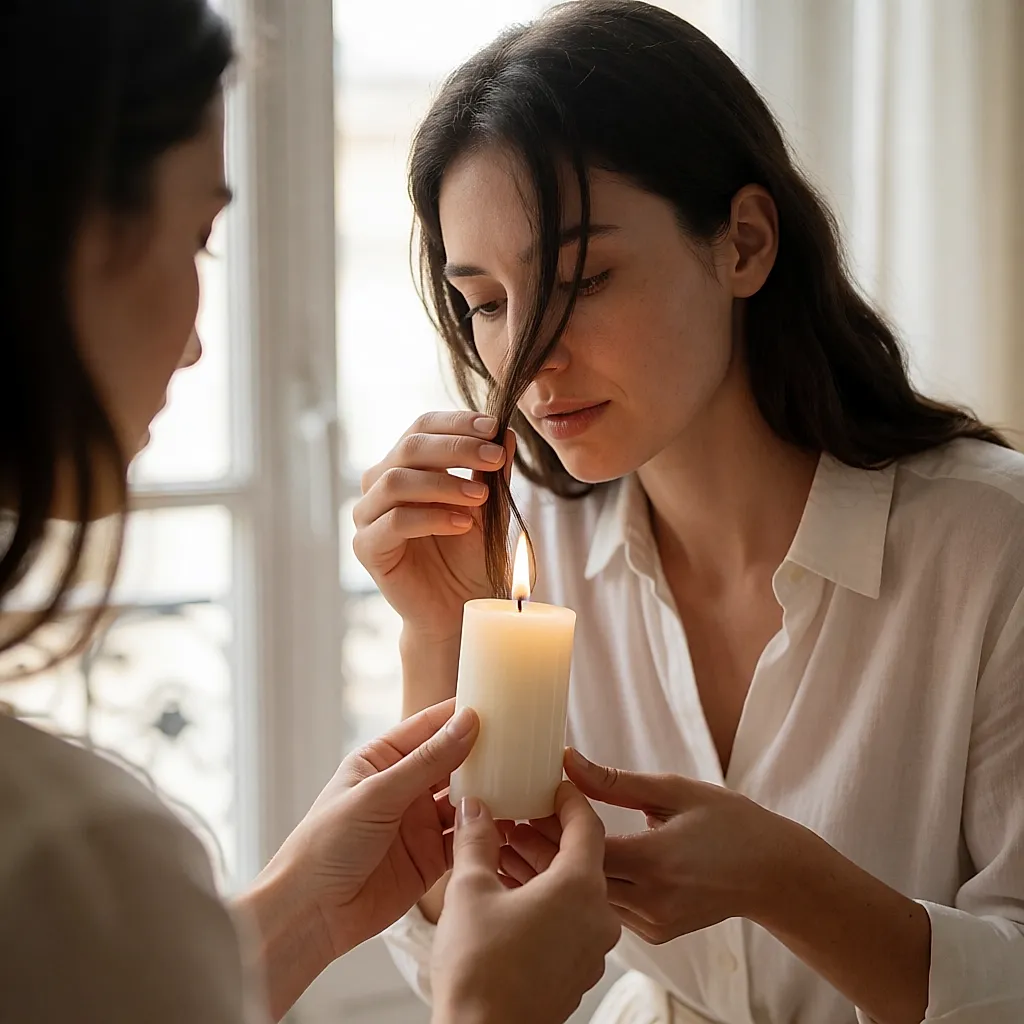
As for placement, copy the Swedes: by a window, where the flame can be seen from outside as you come home in the evening. Still unsure where to put it? Try the hallway: it is where you pass most often without ever sitting down. And put it out with a snuffer rather than blowing: cold smoke settles into the room.
Three habits for a candle that lasts: wick trimmed before every burn, first burn all the way to the rim of the glass and, as a simple practical guide from the desk, no more than four hours at a stretch. Keep it away from a radiator — wax melted without a flame is just a jar gathering dust.

Budget
For 180 to 200g of wax, expect £15 to £35 in perfume shops, concept stores or online, and rather £50 to £80 from Swedish fragrance houses such as L:a Bruket or Byredo, though availability and pricing vary by retailer here.
Look at the price per gram rather than the label, and where possible choose a vegetable wax (soy, rapeseed) and a cotton wick: not an absolute guarantee, but a simpler choice to stand behind. Where to buy: perfume shops and concept stores, Scandinavian delis, brands' own websites.
Time to light the fourth
At bottom, what is changing in the scent of the season looks like what is changing in our wardrobes: fewer promises, more detail. A winter with a real location, with its low light, its saffron and its resin, beats an anonymous snowflake. And if you hate hyacinth? No pretty story will save you: your nose remains the only judge.
What is left, then, is the idea of a scent with a place attached: the low light, the saffron, the resin.

Comments
Your opinion matters: rate the article, react and reply to comments.
Comments are moderated; AI-assisted comments are flagged. Text emoticons (8-), :-), <3…) are automatically shown as images.