
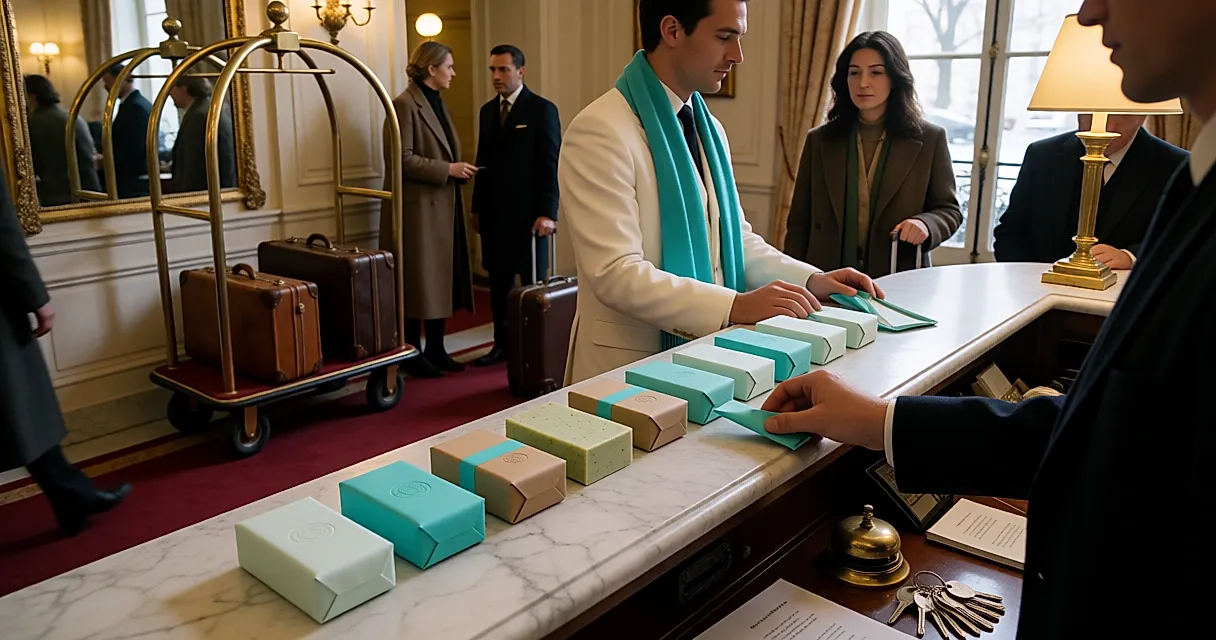
Two bars of soap at the same price, the same size, the same neat label — and yet one leaves your skin supple while the other leaves it tight. What separates them comes down to one word, printed small on the paper they're wrapped in: superfatted. The catch is remembering to look for it, when most of us pick a soap for its scent, its brand or the colour of its packaging.
Superfatted: the word the label murmurs
On a bar of toilet soap, the word 'superfatted' signals a formula that contains added fat alongside its cleansing base. That is precisely the difference between the bar that leaves skin supple and the one that leaves that unpleasant tight feeling under a jumper two minutes after a shower. Nothing dramatic is going on: the formula is simply designed to cleanse without carrying everything off with it.
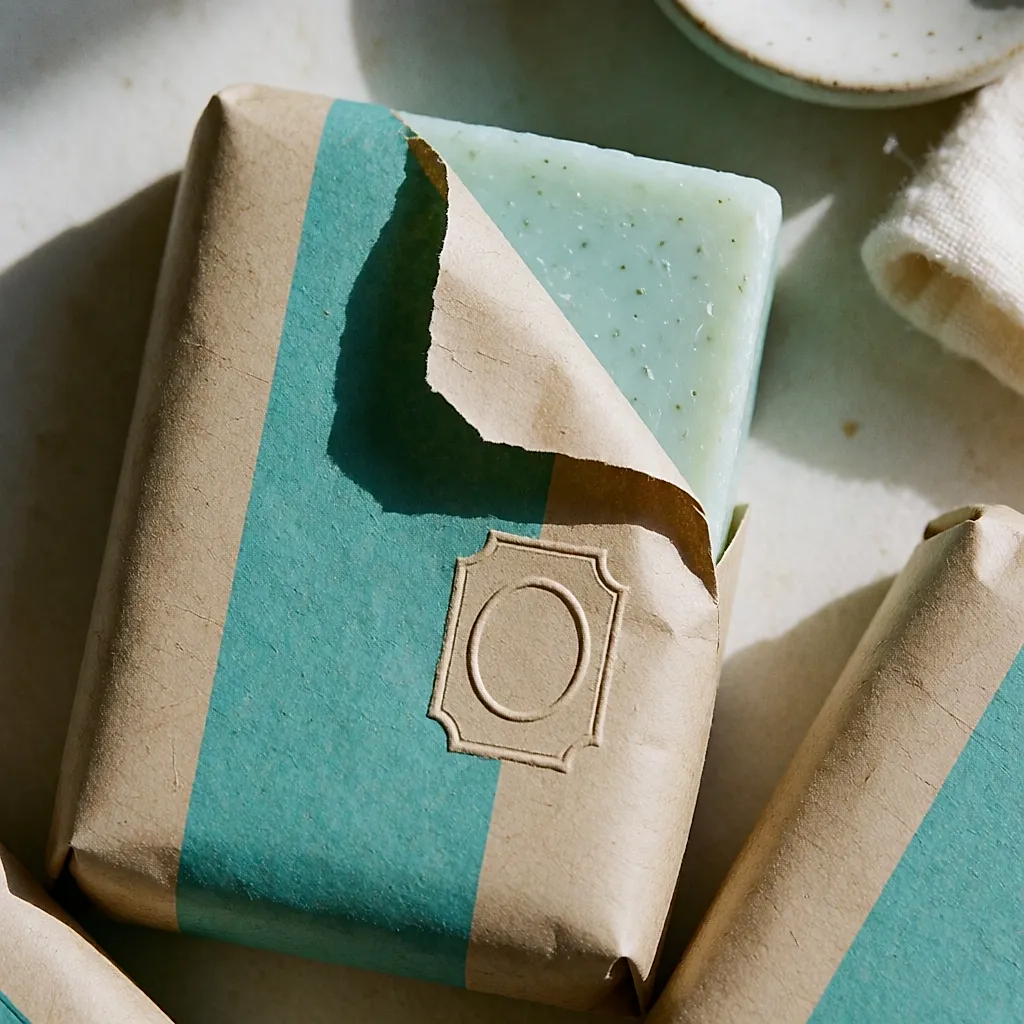
The percentage itself varies from one bar to the next and isn't always stated on the wrapper — so there's no point hunting for one magic figure. The word also appears on soap-free bars, those cleansing bars built on other washing agents, for skin that can't tolerate traditional soap. I haven't worked my way along every shelf to bring you a league table: what I will say is that it's the first thing I check, before the brand name.
The technique matters as much as the word
A superfatted soap left sitting in a puddle loses a good deal of its point. The technique takes four steps and thirty seconds: wet the bar, rub it between your palms to get the lather going, spread that over your body, then rinse briefly. A modest lather is more than enough — the mountain of foam you get from a bottle has never been a measure of cleanliness, just a marketing line.

Then comes the bit everyone ignores: the bar on a soap dish that drains, with no water pooling underneath. A soap that sits in water softens, slumps, wears down twice as fast and leaves that white paste at the bottom of the shower — the stuff you find barefoot on a Monday morning. A ridged holder, a wire rack, a wooden dish: anything that lets air through and water run off. Air-drying is what keeps the bar firm right down to the last sliver.
The bottle has its merits, so let's not demonise it
Shower gel in a bottle has one advantage soap will never have: it asks nothing of you. One press and you're done — precious when the bathroom is busy and everyone is already late. It also spares you a direct encounter with cold tap water in November, and for anyone whose hands don't cope well with the cold, that's not a small thing. Not to mention that it doesn't slide out of soapy hands and end up behind the bath, in that unreachable corner where three hair bobbles are sleeping.
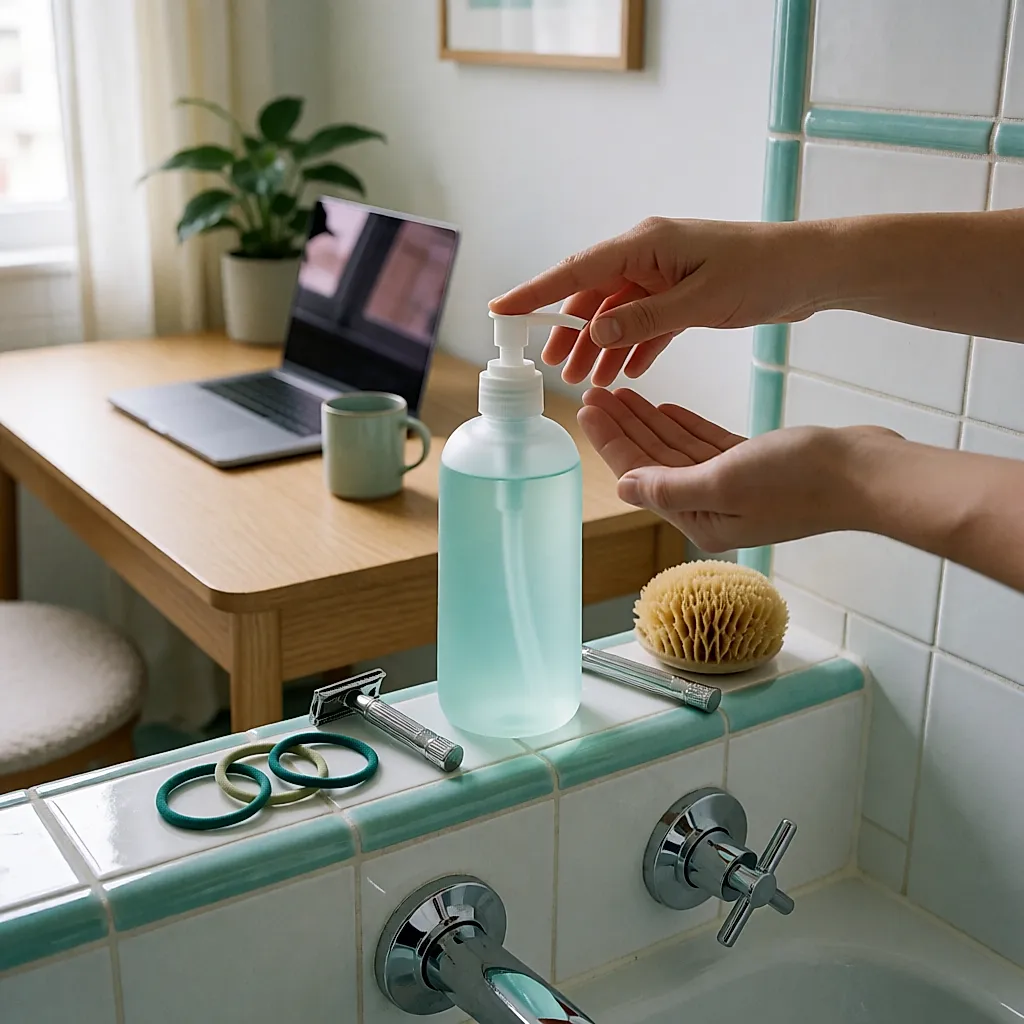
On the soap side, the case holds up: no plastic bottle to throw out every month, a bar often wrapped in plain paper or card (not always — some are still shrink-wrapped, so check before you congratulate the brand), the option of buying loose, and often a longer life than a bottle. I'm not promising you'll wash better, either: you wash, and that's it. It's simply the 'superfatted' criterion we keep in mind, because that's the one that makes the difference when you step out of the shower.
Budget: a few pounds, not a ruin
Expect to pay roughly £1 to £3 for a 100 g bar in a supermarket, £3 to £6 in a chemist or health-and-beauty retailer, and often £2 to £5 per 100 g loose or in a health-food shop. Price tells you very little about how well a formula holds up: a £2 bar with the superfatted wording will do the job perfectly well for a daily shower. If your skin reacts easily, though, look for 'fragrance-free' on the bar as well — a heavily scented superfatted soap is still a scented soap.
Where to get one? Anywhere: supermarket, chemist, market, refill shop, wholefood co-op. Buy a single bar the first time and see how it ages in your shower: if it ends up a soft disc after ten days, the problem isn't the soap, it's the dish. That costs next to nothing, and it's the difference between a bar that lasts and one that doesn't.
The soap-dish habit: choose one with ridges or a wire rack, not a smooth dish where water collects. Take the bar out of the shower spray between uses, and let it dry in the air rather than shutting it away in a closed box. A well-drained bar lasts longer — and nobody wants to scoop a whitish sponge out of the bath.
There's one move left, just one, when you're standing at the shelf: pick up the bar, turn it over, read the small print. If the word superfatted is there, you can put the shower gel back this time. The rest — the lather, the scent, the brand paying for the best spot on the shelf — is decoration. And in a bathroom we like decoration well enough; we'd just rather it wasn't the only argument.

Comments
Your opinion matters: rate the article, react and reply to comments.
Comments are moderated; AI-assisted comments are flagged. Text emoticons (8-), :-), <3…) are automatically shown as images.