
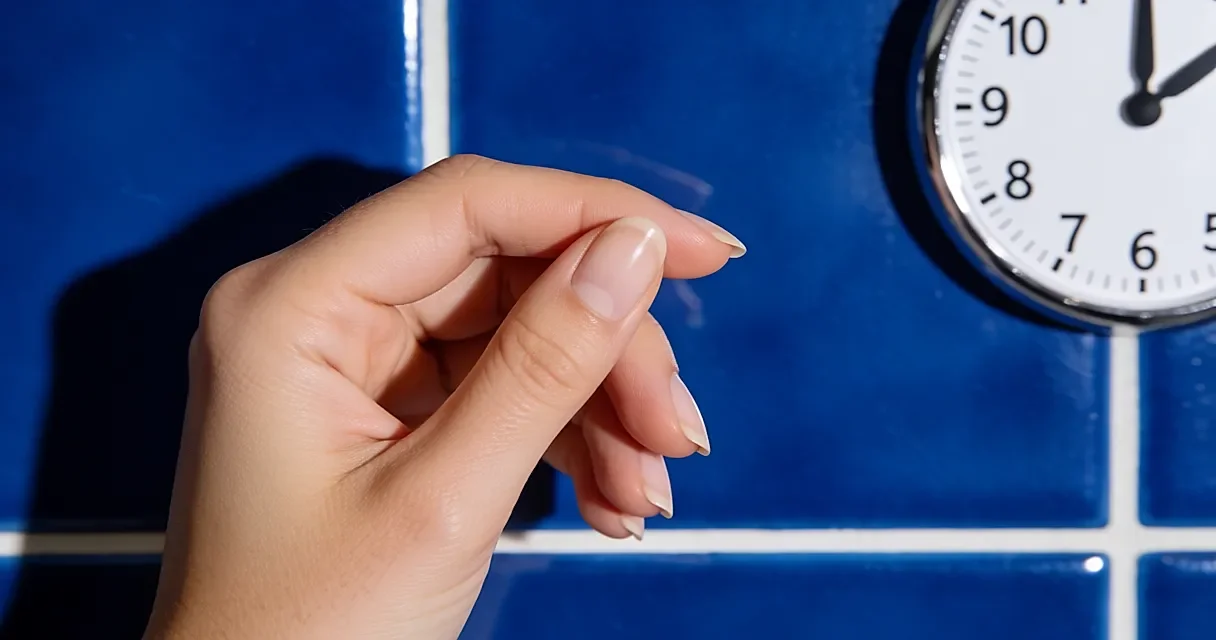
A box of soft nail capsules fits in a coat pocket: a set of already domed, already polished nails, often with a sheet of adhesive tabs to peel off one by one. No lamp, no bottle, no hand held up waiting for polish to dry. A few seconds of pressure on each finger, and you have a neat manicure; with adhesive tabs, you can take it off the next day if it no longer feels like you.
That is the promise. In Japan and South Korea, they are a familiar drugstore buy, picked up as casually as a packet of chewing gum. In the UK, you can find them in supermarkets, pharmacies and specialist websites, often without knowing what to look for. Because under the word 'capsule' sit very different objects.
Soft capsules are not false nails
A soft capsule is a thin resin shell, pre-formed and pre-polished, that hugs the nail without adding much length. Under your finger it bends slightly; once on, it does not sound hollow like a rigid tip. It is neither acrylic nor a salon extension: the idea is not to last three weeks, but to look neat for a few days, then come off.
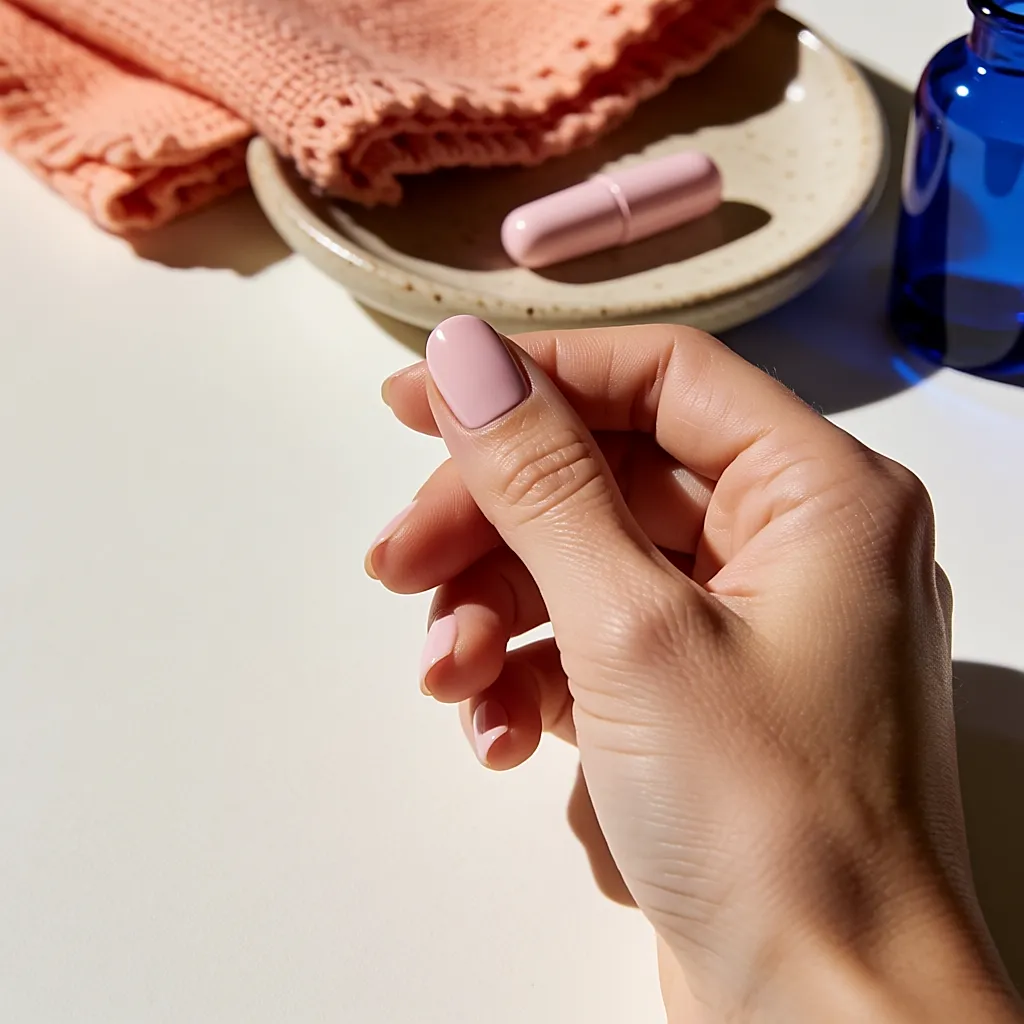
Two families share the shelf. The adhesive tab kind: you stick it on, press, and remove with warm water - the accessory version, reversible, for an evening or a weekend. The glue kind: stronger, it can last longer than an adhesive tab, from several days to a few weeks depending on the case, but removal calls for real patience. KISS imPRESS boxes, for example, sit in the press-on family; check the pack to see whether the adhesive is pre-applied, supplied as tabs, or comes as glue, as ranges vary. There is also a cousin that often gets confused with them: the semi-cured gel strip, which is applied under a UV/LED lamp and filed. Pretty, but it is a different process.
Choosing the right box and size
The first criterion is not colour or design, it is the number of sizes. A box with a good range of widths gives you a better chance of matching a wide, rounded nail; on a small, flat nail, the wrong curve can still leave a gap at the corners - and that is where lifting often starts. Count the widths offered and look at the curvature in the product images: a very domed capsule on a flat nail is more likely to lift sooner. No single guide can cover every box on the shelf, so treat this as a checklist, not a ranking.
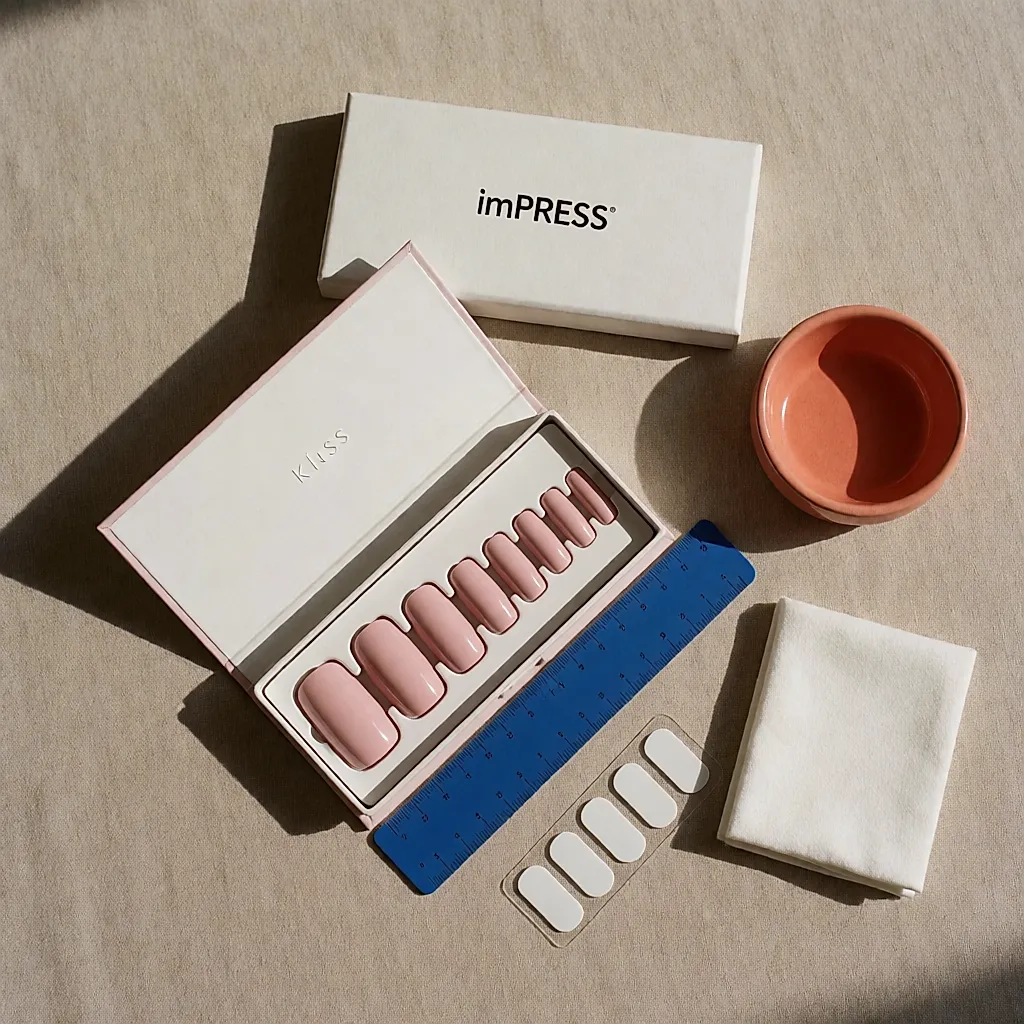
Finish counts too. Pre-polished matte or satin capsules spare you both filing and brush marks; glossy ones show micro-scratches more. And if the brand sells replacement tabs separately, you can replace the tabs without buying a whole new box for three lost nails. That is one of the few genuinely eco-friendly levers in a product that, let's be honest, is still moulded plastic.
On labelling: in the UK, cosmetic products must carry an INCI ingredient list, and the label must be in English. Some resin or gel products may contain acrylates, which are known allergens; check the ingredients and ask a pharmacist for advice if you have a history of allergy.
The most important step comes down to one word
Degrease. A clean, dry nail with no cream or oil gives the tab the best chance; a nail moisturised the night before can make everything slide. Push back the cuticles with a stick, wipe with a cotton pad soaked in alcohol, and let it dry for a moment. Then choose a capsule that matches the width of your nail from edge to edge, without biting into the skin.
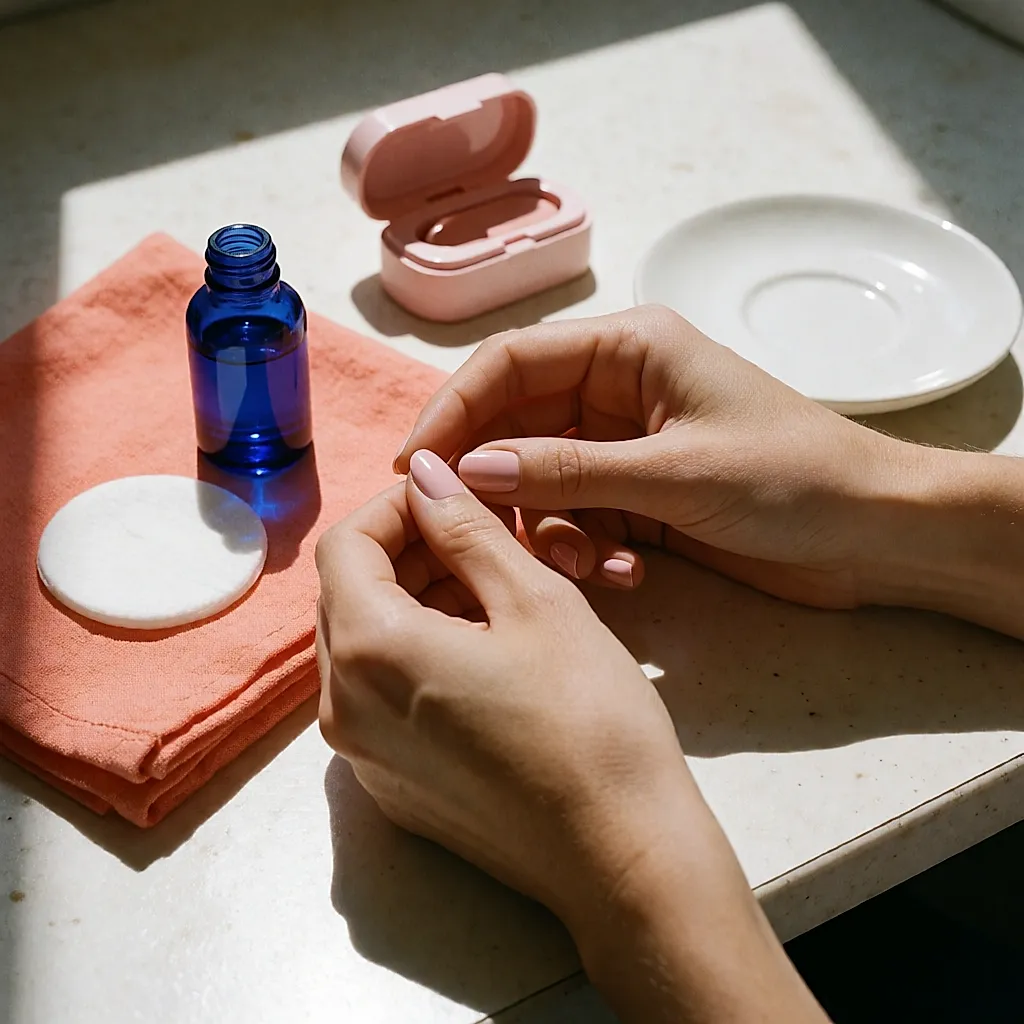
Press from the free edge towards the cuticle for a few seconds, then keep your hands dry at first. Oil? On the cuticles, never under the capsule. That little muffled click as it adheres is a good sign; if the capsule moves when you press the side, it is likely to lift.
Removing without pulling
Warm water and soap: soak until the tab lifts, then add a little oil and slide a boxwood stick along the side. It often ends up almost coming away by itself. Never remove it dry, and never pull upwards - a nail forced off can damage the nail surface and weaken it. And if it resists? Soak your hands again.
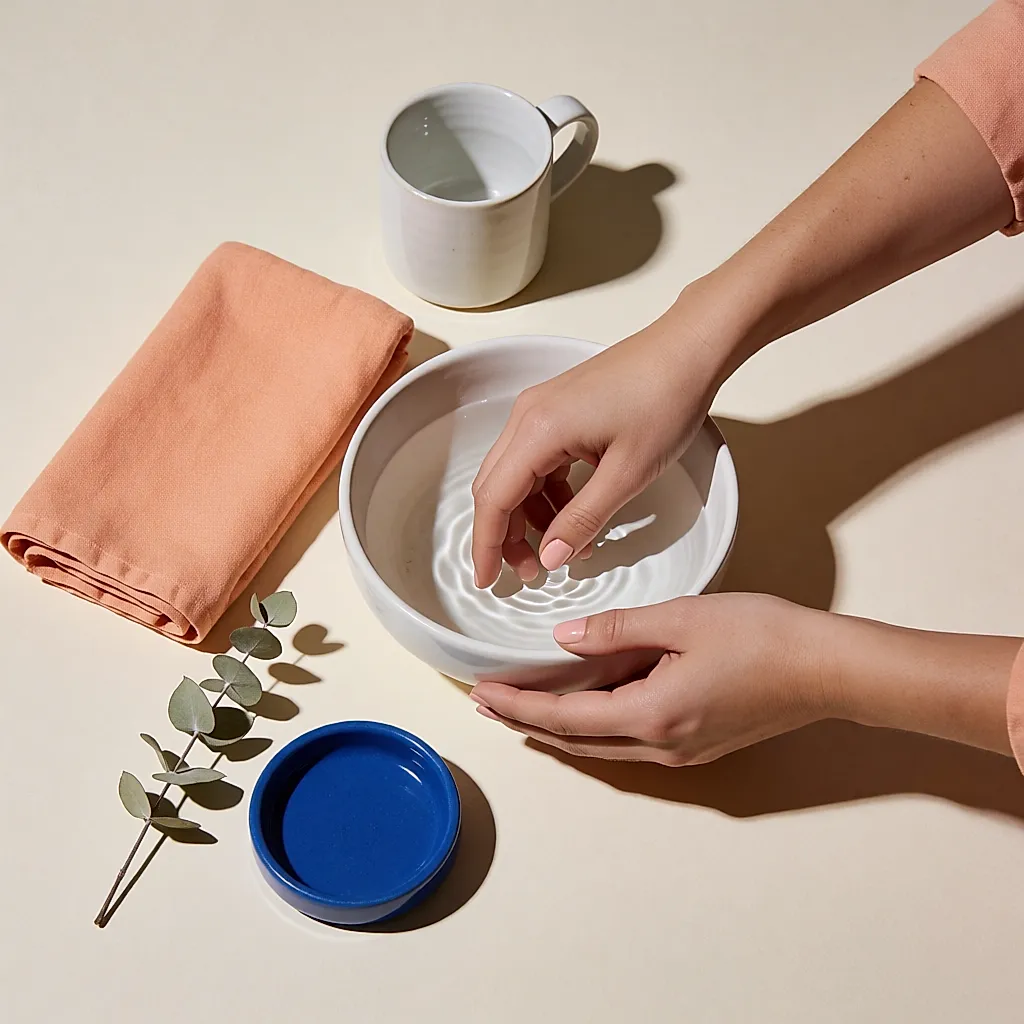
With glue, it takes longer: use the right remover, be patient, and resist the urge to scrape. Then leave them bare overnight, apply oil, and see how they look. A nail that turns green or stays painful can happen when moisture sits under a capsule applied too close to the skin: remove everything, and show the nail to a pharmacist or GP if it persists.
Budget
In the UK, expect to pay roughly £10–£25 for a box from a supermarket, pharmacy or online retailer, and £5–£12 for a pack of replacement tabs; prices rise with designs, finishes and the number of sizes. By comparison, a gel manicure in a salon often costs £40–£70 depending on the city and length, with removal extra.
The calculation that matters is not the price of the box but the cost per application. Reused with fresh tabs, it can work out cheaper than a maintenance manicure. And time? Often a quarter of an hour the first time, then a few minutes once you know your size.
Before you pay, check three things: the number of sizes offered, the curve visible on the box, and whether you can buy the tabs separately. If the brand only sells complete kits, you'll pay for that every time.
The luxury here is not having celebrity nails: it is being able to change your mind on a Tuesday night, with no appointment and no solvent smell. Keep a box of adhesive tabs in a drawer, a boxwood stick in your wash bag, and the freedom to take everything off in a bowl of warm water. That's all we ask!
Comments
Your opinion matters: rate the article, react and reply to comments.
Comments are moderated; AI-assisted comments are flagged. Text emoticons (8-), :-), <3…) are automatically shown as images.