
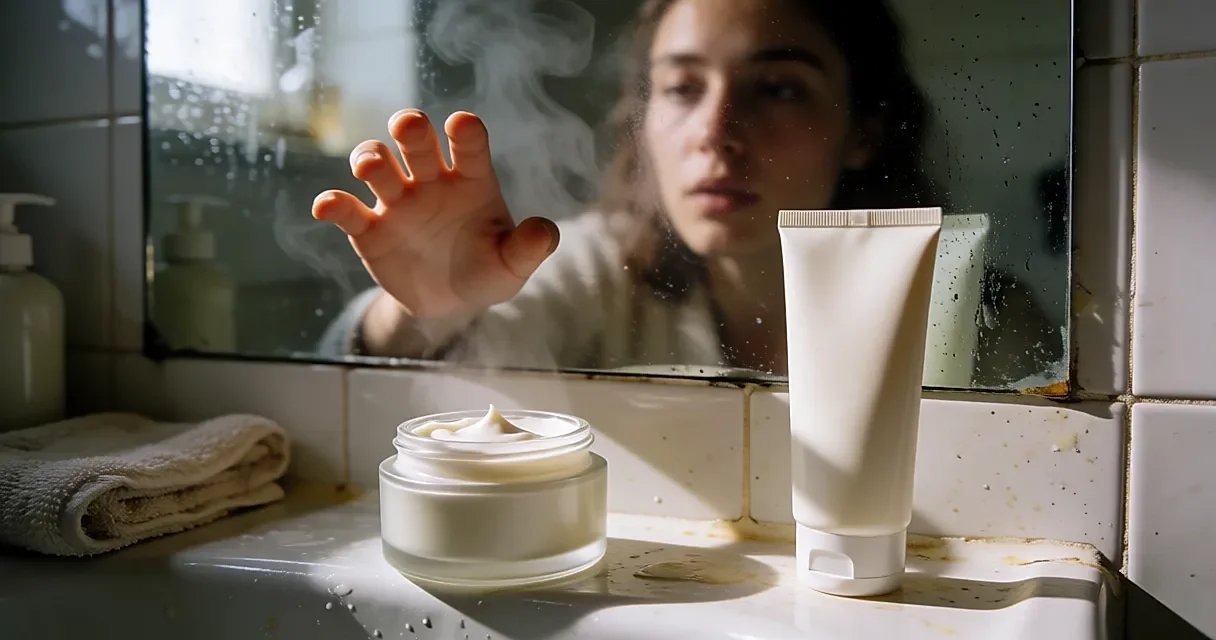
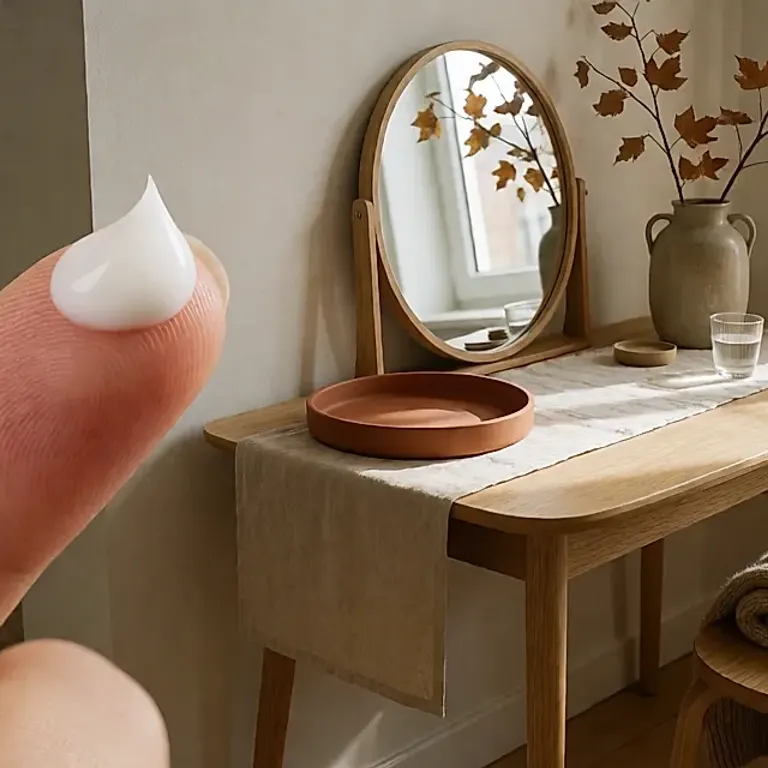
It's 10.47pm. Your skin feels tight, you've only got one hand free — the other is holding your phone — and the jar opens with a quarter turn. In goes a finger, scooping out roughly twice what you needed, and that's that. That small gesture, repeated every day, has a say in what your skincare ends up becoming.
Air, the guest that never leaves
A jar is a wide-open mouth onto the world. Every time you unscrew it, the formula meets air, bathroom light, shower steam. The most fragile actives — vitamin C, certain retinol derivatives — don't much care for it: they oxidise, and the product changes before it has properly done its job. Some signs are worth watching: a colour that darkens, a smell that turns, a texture that separates at the surface. None of these is infallible proof of degradation: such changes often have other causes and don't always mean a loss of efficacy or safety.
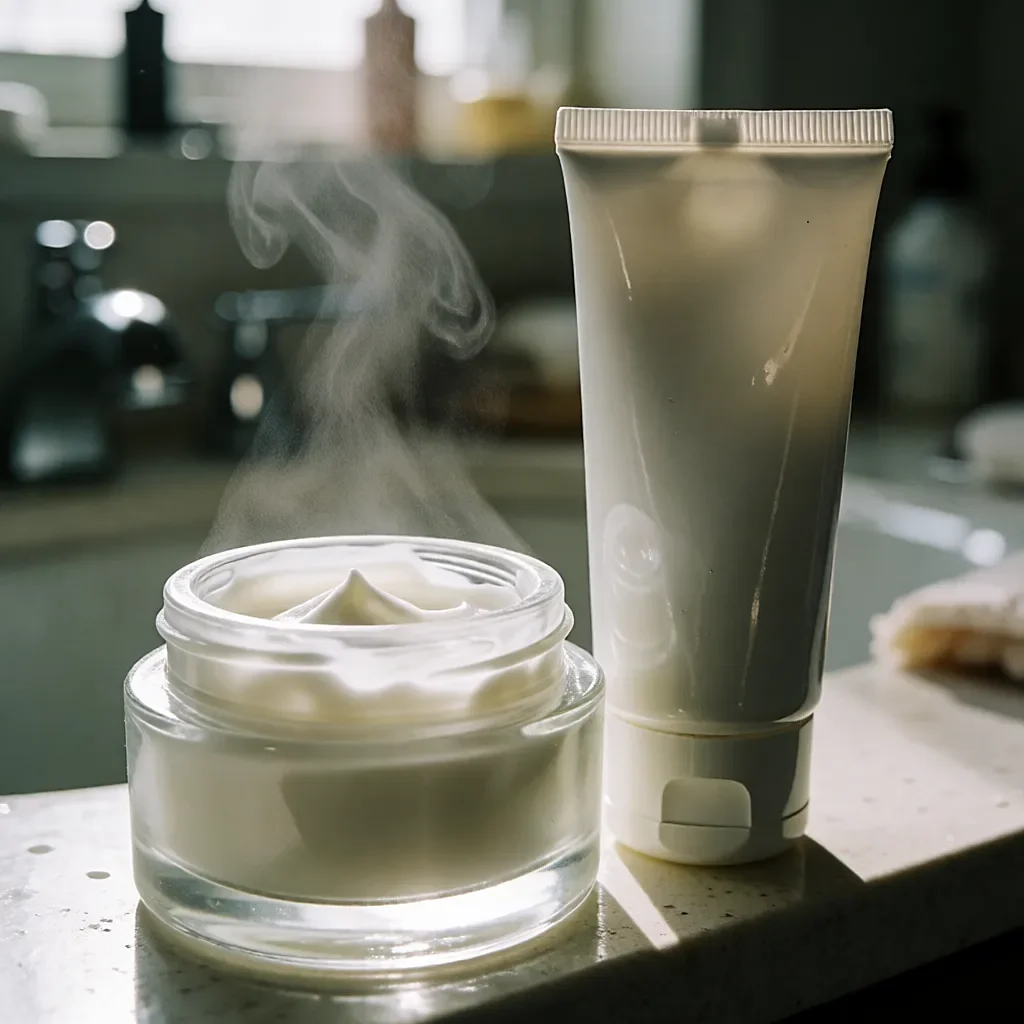
That said, don't go throwing out every jar tonight. An anhydrous formula — balm, oil, butter — mainly limits microbial growth, but its lipids can oxidise on contact with air too. A product used soon after opening limits its exposure to air. The problem isn't the jar as such: it's the jar you plunge into twice a day, month after month.
What about your fingers?
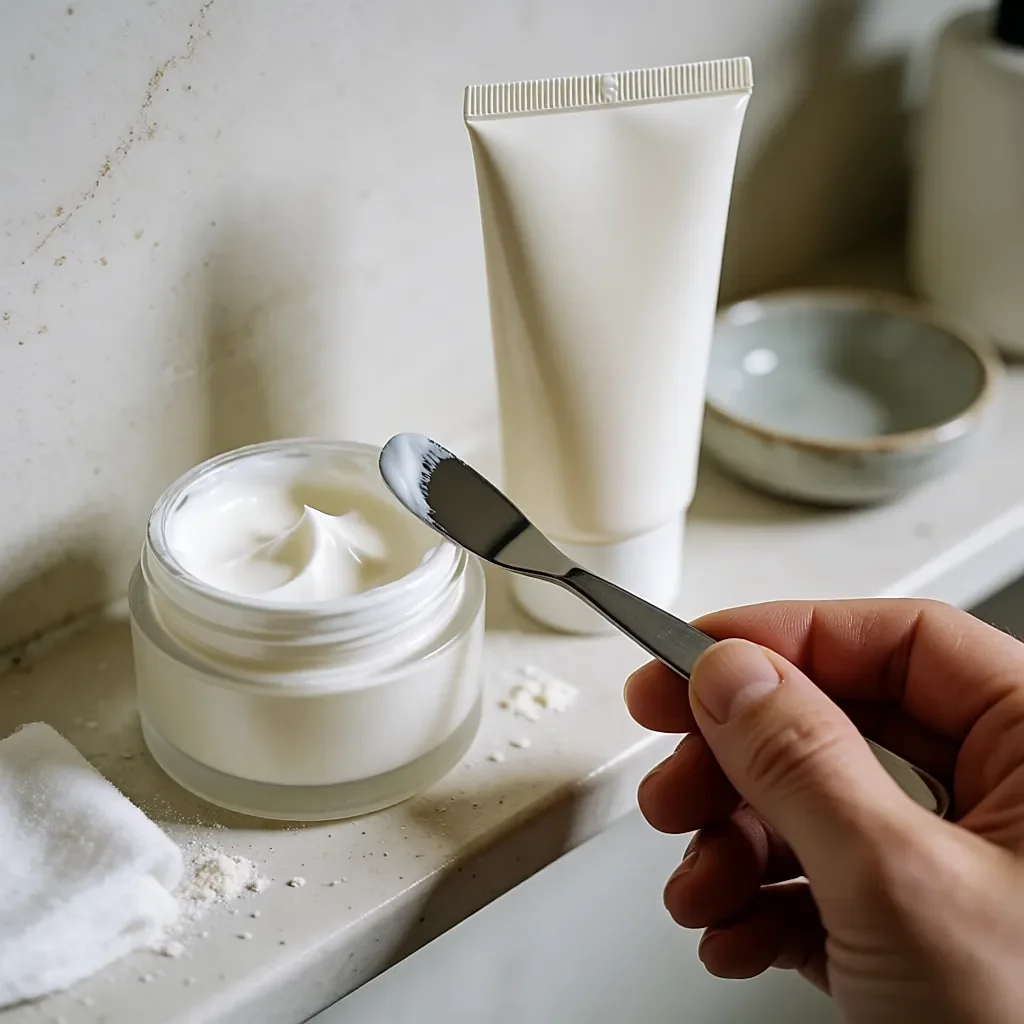
No hygiene lecture here: the issue is rhythm. If your cream does morning and evening duty, you open the container about 60 times a month — and every dip of a finger brings in a bit of whatever your skin didn't ask for. Clean hands and a spatula change the picture, provided you accept the little choreography: wash, dry, scoop, wipe the spatula, close. Twice a day, every day — that's where good intentions wear thin.
Then there's a question I can't answer for you: do you share your jar? A family product sitting on a shared bathroom shelf and used by three pairs of hands is no longer the same hygiene proposition. In that case the tube and the pump win, no argument.
Tubes, pumps and jars are three personalities, not three categories
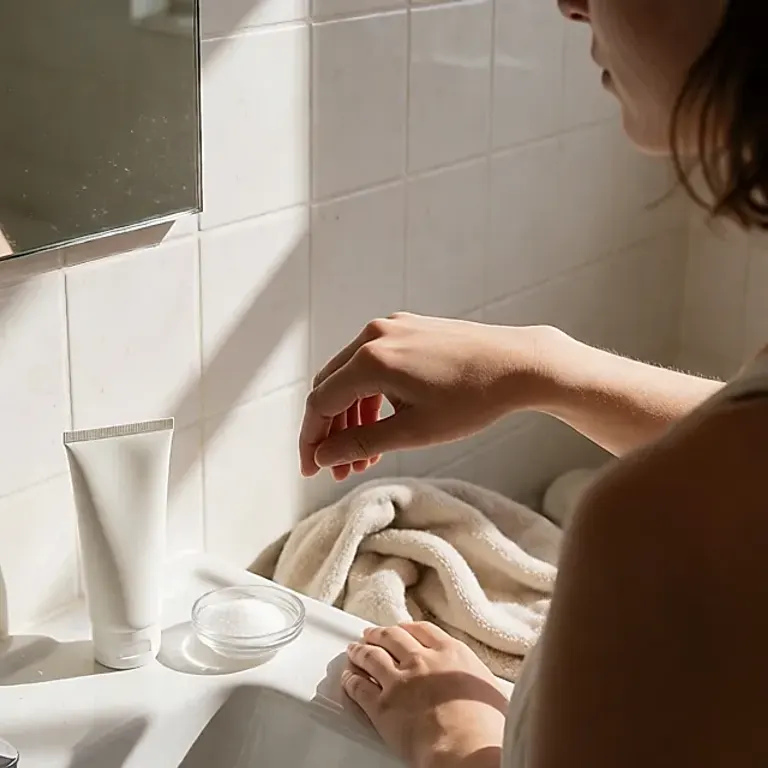
The tube is the good pupil: sealed, resealable, light in a suitcase, perfect for something you carry around. Its drawback is prosaic — you can't see how much is left, and sooner or later everyone cuts it open to get at the last of it. In truth, that's often when you discover there was another week's worth in there.
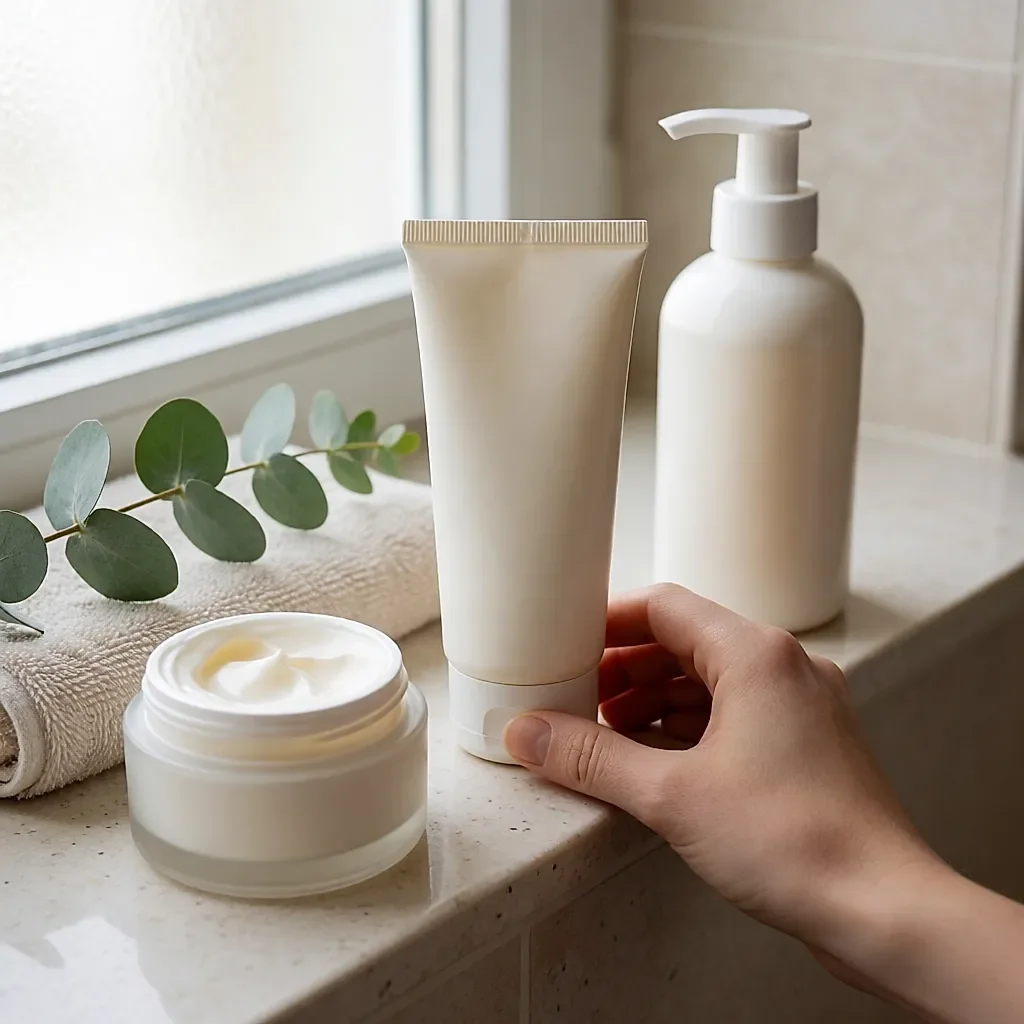
The airless pump plays in a different league: a piston moves up as you pump, air never gets into the bottle, and the formula stays protected down to the last drop. It's a format built to limit contact with air, often a good match for fragile actives. The trade-offs: an extra mechanism, a higher price, a material that's often harder to recycle, and a last portion you can't reach with a finger.
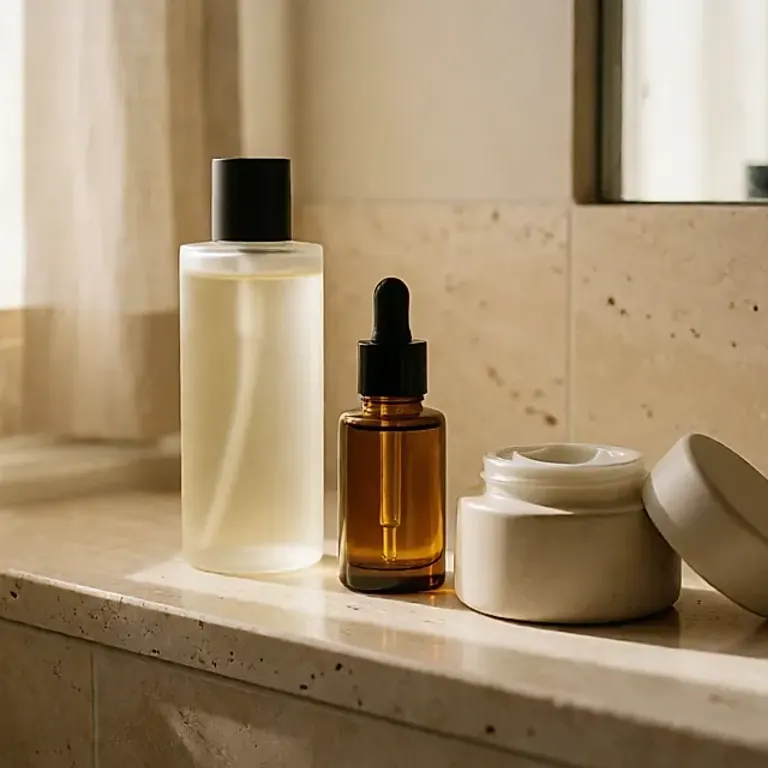
And the jar? It keeps one privilege the others don't have: you can see the texture, touch it, judge it. You can tell whether a cream is rich, whether it melts. It's also the easiest to recycle when it's made of glass. So it all depends on what you put inside and how often you open it.
Why a refill is only half a good idea
On paper, the refill is the right move: a case you keep, markedly less material with each repurchase, often a little cheaper than the full-size. Except that some refills come in a container you have to open yourself: you save the plastic or the glass, but you're back to the same air exposure from the first time you open it. The environmental case improves; the preservation one doesn't.
Add a practical detail: a refill only makes sense if you keep the original bottle and the brand keeps the line going long enough for a second purchase to exist. Before you commit, check that the refillable format is properly established rather than a fleeting launch. And keep the universal reflex in mind: the little open-jar symbol on the packaging tells you the period after opening — an important marker to respect, though not an absolute guarantee of preservation.
What you'll pay
Expect to pay in the region of £15–£40 for a cream in a glass jar, £18–£45 for a face-care tube and £28–£60 for an airless pump — the premium comes from the mechanism and the sophistication of the formula, not from anything miraculous. Refills are usually a little cheaper than the full-size.
You'll find all three formats in pharmacies and chemists, in beauty halls and department stores, in health food shops and online; among natural and certified brands (Cosmos Organic, Ecocert) you'll spot the odd glass container and refill, though not enough to call it a general trend by product line. Compare price per ml, not the price on the label: a more generous jar isn't automatically the better deal if you never finish it properly.
Three habits that make a difference whatever the container: clean, dry hands before every scoop; the jar closed straight away and stored away from light and heat; a small clean spatula if your product stays in a jar. And for a fragile active used twice a day, go for a format that closes quickly.
In the end, the right question isn't 'jar or tube?' but 'how do I actually use this product?'. A Sunday-night treatment can live happily in a pretty glass jar without coming to any harm. Something that goes on morning and night, and travels in a weekend bag, deserves a tube or a pump. Choose the container for the life you lead, not the shelf you dream of — that's already a decent start to a routine.
Comments
Your opinion matters: rate the article, react and reply to comments.
Comments are moderated; AI-assisted comments are flagged. Text emoticons (8-), :-), <3…) are automatically shown as images.