
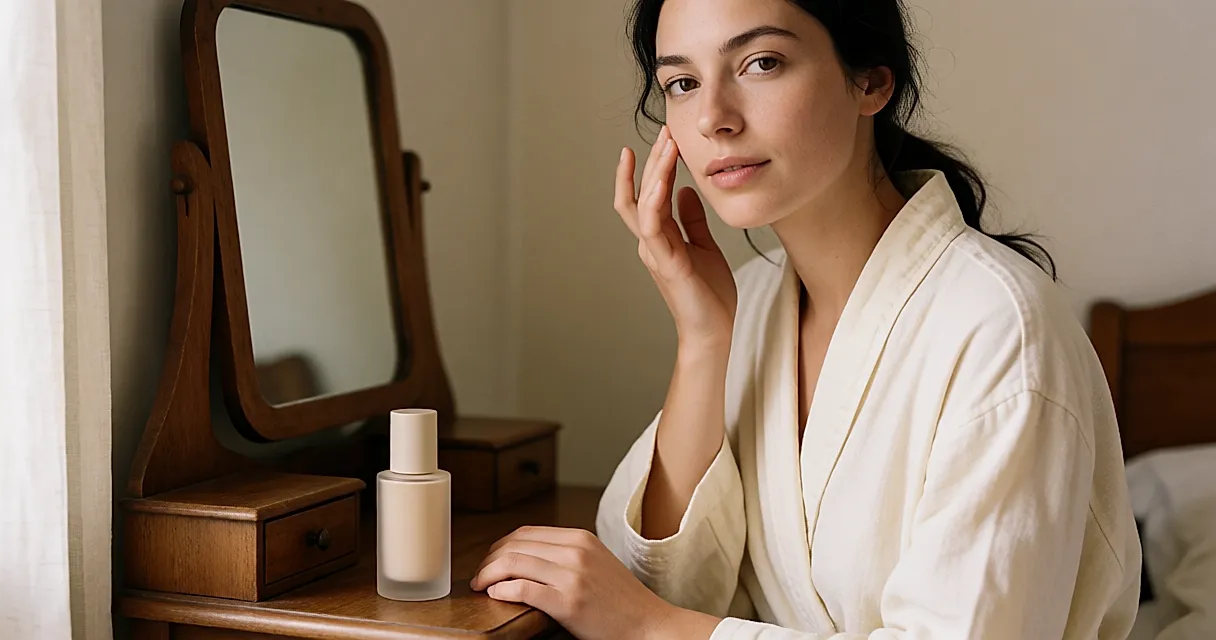
Monday, 7.42am. You slept nine minutes too long, the coffee is still too hot and the mirror wants a presentable complexion before your 9am meeting. That's exactly when the skin tint comes out of the cupboard, with its promise of hydrating, evening out the complexion and protecting it all at once. Except a hybrid doesn't replace two steps: it moves the dial. It doesn't replace targeted skincare or the evening cleanse; at best, it takes the place of a tinted moisturiser.
The compromise, not the magic wand
A skin tint, a tinted moisturiser, a tinted serum: the category changes name from brand to brand, but the logic doesn't. You gain a fluid texture, a quick step and a more natural finish than a classic foundation; you accept coverage that is often light and wear that won't last a whole dinner on skin that shines. That's not a flaw; it's the deal.

The real question isn't 'Does it work?' but 'What am I prepared to give up?' If your priority is covering stubborn redness or lasting from 8am to 11pm, a skin tint alone may leave you halfway there. For a tired complexion on a Monday morning, it can do the job perfectly well, as long as you don't ask it to do too much.
The active dose and the packaging's little white lie
Hybrids love to list actives on the label: hyaluronic acid, vitamin C, niacinamide. It isn't untrue, but it isn't the whole story. In a tinted product, the concentration and the amount you apply aren't the same as with a dedicated serum; the dose of active you actually get isn't the same as from a targeted treatment. In other words, a skin tint supports your routine; it doesn't replace it.
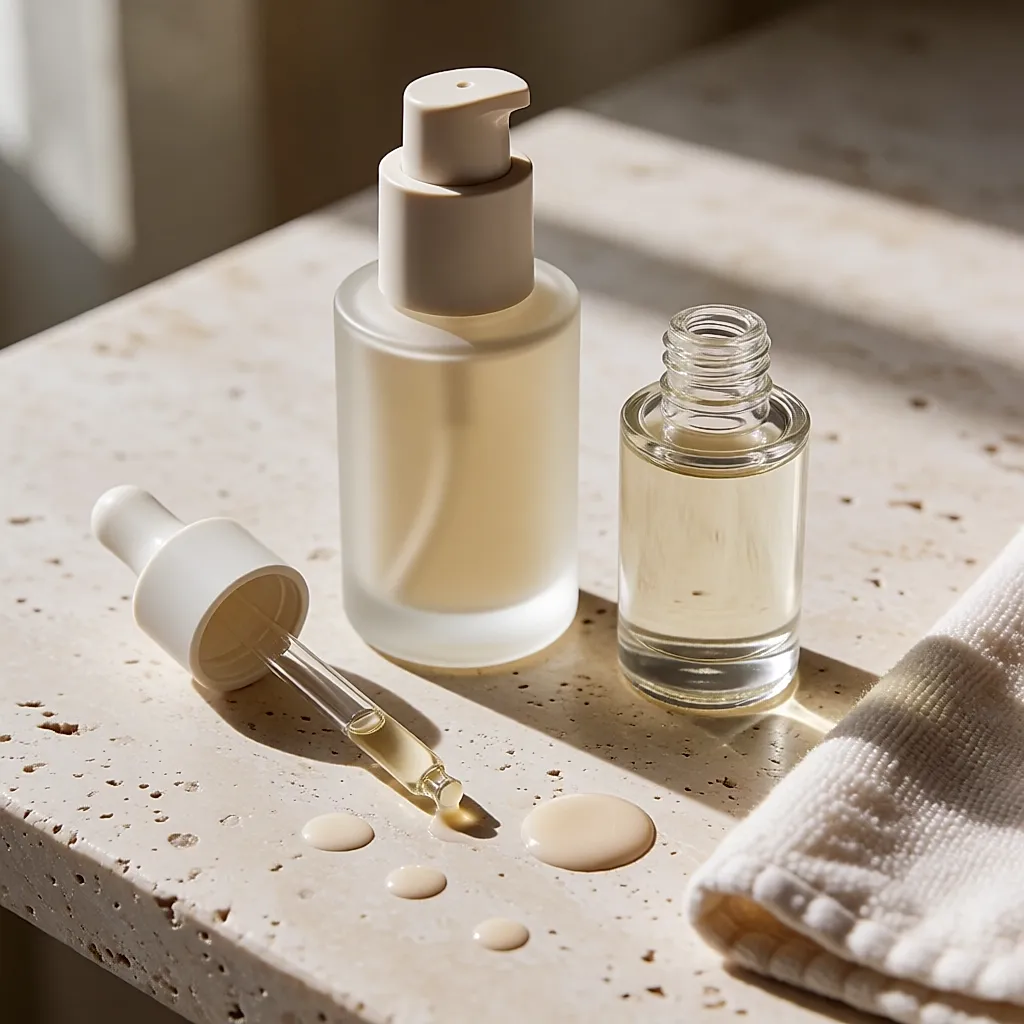
Should you avoid it, then? If your skin has no major concerns, a tinted moisturiser can be enough in the morning, especially if the texture is pleasant and you actually wear it. But if you rely on a serum to work on dark spots or uneven texture, keep it. A little clear thinking beats another layer of promises.
Where to slot it in without layering
The trap is addition. You already have a serum, a moisturiser and an SPF, then you add a skin tint 'on top' because it looks nice. The result: four layers, three textures competing and a suffocated feeling by 10am. In an existing routine, a skin tint replaces something; it doesn't get layered on top. Most often, it takes the place of a tinted moisturiser or a light foundation, sometimes the day cream if your skin doesn't need more.
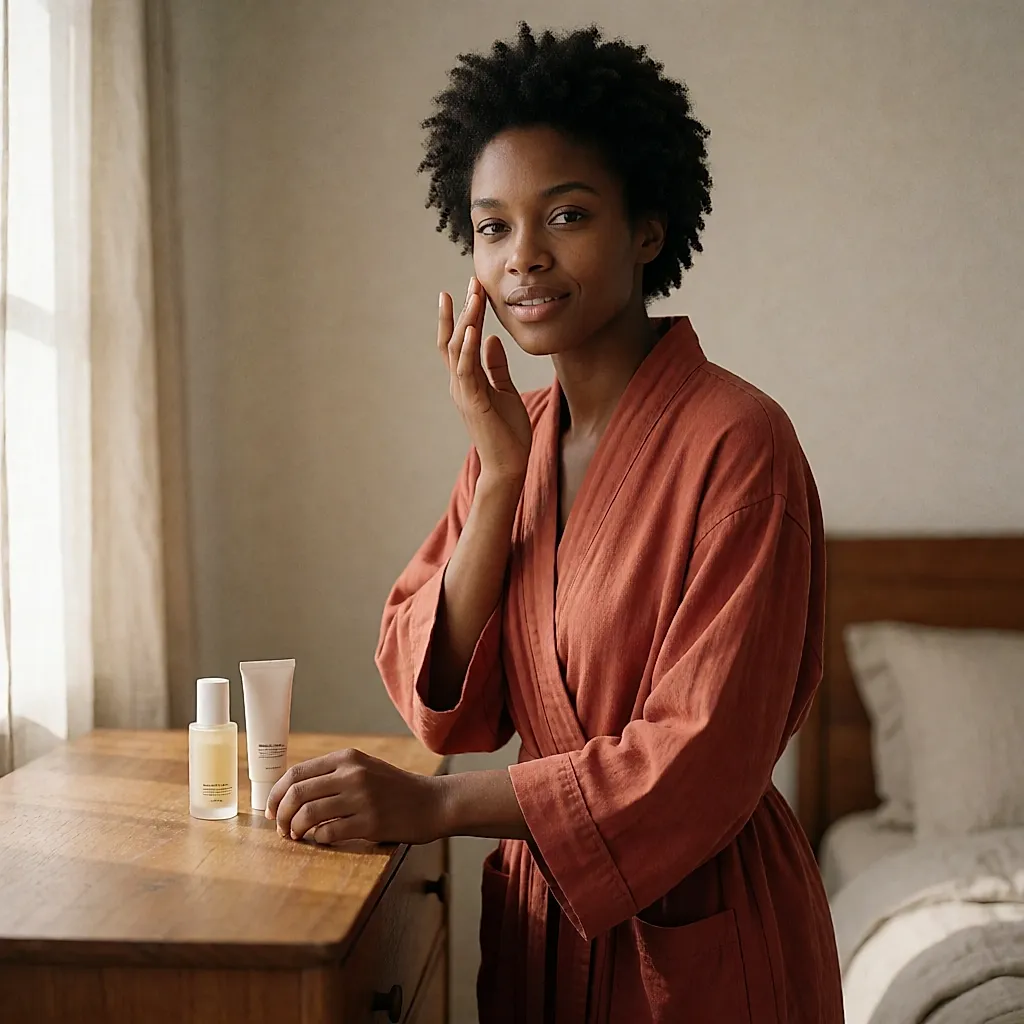
No one else can make that call for you: you have to decide where the dial lands. On dry skin, it can stand in for a light moisturiser in the morning; on combination skin, it may be enough on its own if the texture doesn't emphasise dry patches. Don't apply it over a rich cream in the hope of 'adding nourishment': you're mainly adding another layer. And keep a dedicated sunscreen if you spend time outdoors: SPF in a skin tint is a bonus, not a standalone shield, because the amount you apply for tint is rarely the same as a sunscreen dose.
Evening removal is non-negotiable
This is the step that causes trouble. A skin tint contains pigments, sometimes filters, and it doesn't magically become 'skincare' at 11pm. In the evening, it comes off like makeup. A gentle cleanse is often enough, without reaching for a full double-cleanse routine if your skin doesn't need it; the key is not to let the tinted film sleep on your face.
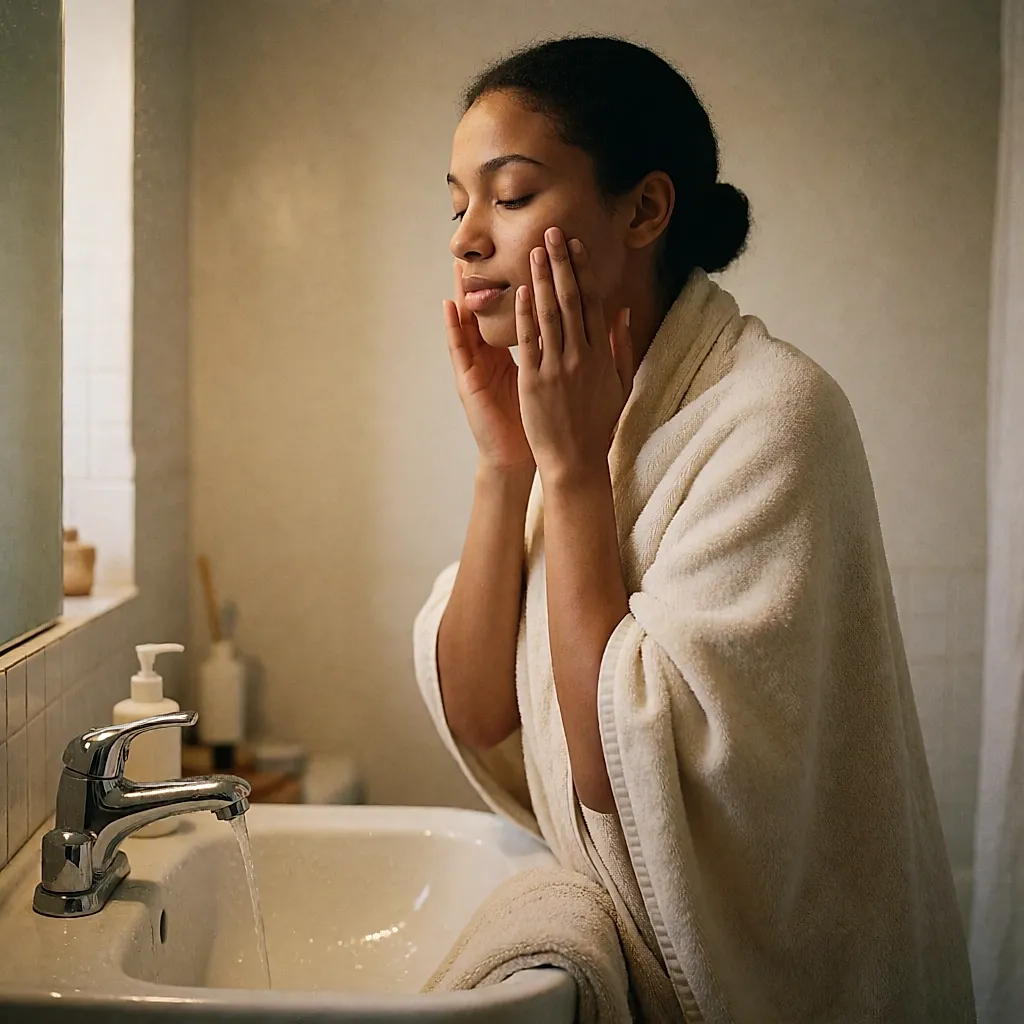
Then comes your evening skincare, the kind that makes no promises about your complexion. That's where your skin recovers, and where you can keep using targeted actives if you use them. A hybrid in the morning, a straightforward treatment in the evening: the routine stays clear. Why ask one product to play every role?
What you're really paying
Expect to pay roughly £12–£20 at a chemist or supermarket for a basic skin tint, £20–£35 at a beauty retailer or department store for a more considered formula, and £50 and up for some premium tinted treatments. Prices vary by size, location, range and whether a refill is available. You'll find them at chemists, beauty retailers, supermarkets and on brands' official websites.
On the sustainability side, a refill that is genuinely available and compatible is a real plus; check that it exists rather than trusting a packaging promise. An organic certification on a skin tint mainly guarantees a proportion of organic ingredients and a specific set of standards: it says nothing about wear time or sun protection. Choose the formula you will actually wear, not the one with the prettiest list of actives.
Before you buy, make this quick judgement call: if you absolutely need coverage, all-day wear or time outdoors, keep a dedicated product for that job. If you're simply looking to even out your complexion and save five minutes, a skin tint may be enough. The right question isn't 'Is this the best hybrid?' but 'Will I actually use it three times a week?'.
The right choice isn't the product with the most impressive promises, but the one that fits your routine on a Monday morning and a Sunday evening. Keep the step that remains when you have only five minutes: an even complexion, yes; clean, protected skin, non-negotiable.
Comments
Your opinion matters: rate the article, react and reply to comments.
Comments are moderated; AI-assisted comments are flagged. Text emoticons (8-), :-), <3…) are automatically shown as images.