
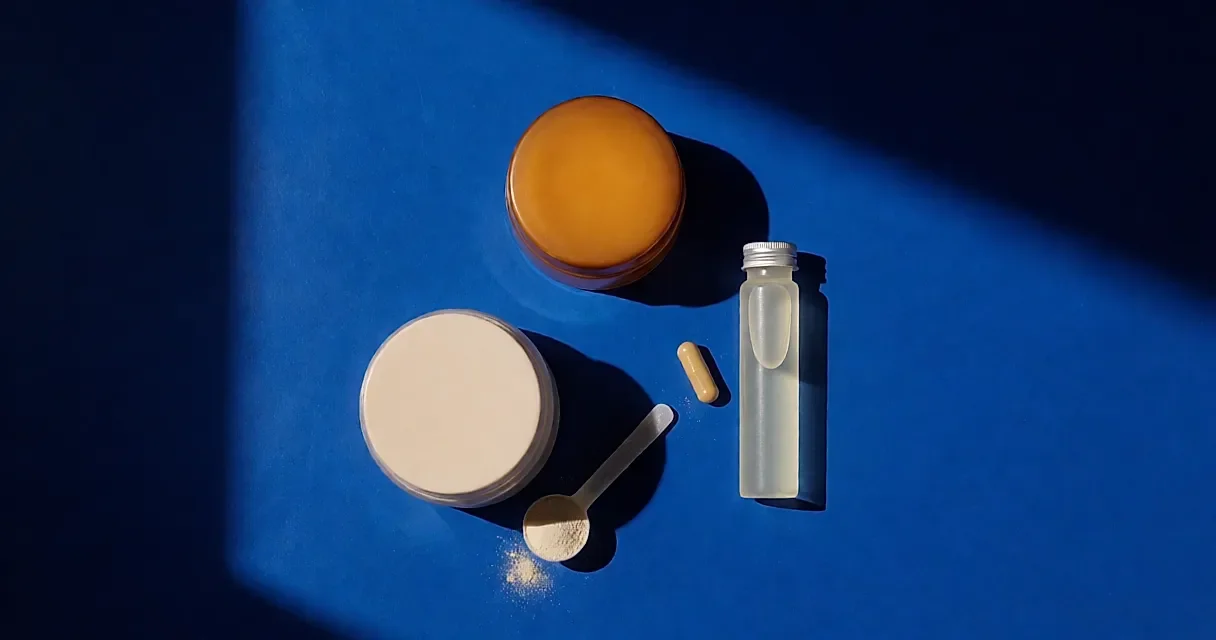
A 60-capsule tub is two months at one a day — plenty of time for it to fall asleep in a drawer. A six-pack of vials is six days at one a day: three empty bottles on the desk and one niggling question. Do you reorder, or call it a day? Between the two there's more than packaging at stake — there's the question of whether you can keep it up at all.
What the format really changes about sticking with it
Let's be honest: plenty of beauty courses fizzle out, and more often from forgetfulness than disappointment. A capsule needs a glass of water and two seconds of available brain space — both in short supply between waking up and the first coffee. A powder needs a shaker, so a wash-up, so one more good intention. A vial asks for nothing at all: open it, drink it, put it down. It sounds obvious, and that's precisely where the difference is won.
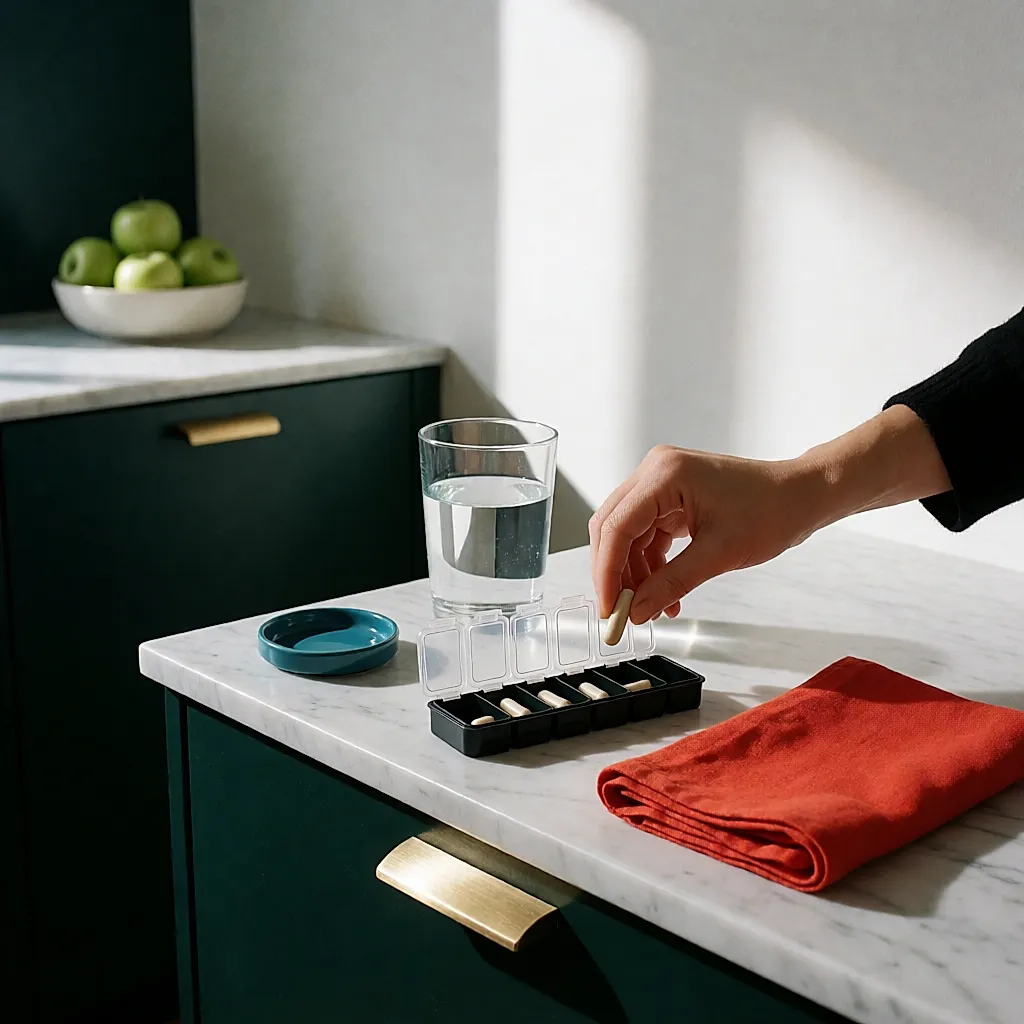
I have no in-house statistic on dropout rates to offer you: nobody really measures it, and the figures in circulation usually come from the people selling the product. Experience, though, says plenty. What you take away for the weekend, what you manage during a frantic week, is never the most thorough protocol. It's the simplest one.
Then again, the vial has a flip side: you can't measure it out, split it or adjust it. And 250 ml in a handbag has weight to it. In practice, a vial seems easier to keep up in week one; a capsule wins by month three. You know which of those sounds more like you.
What to compare, and what the front of the label doesn't tell you
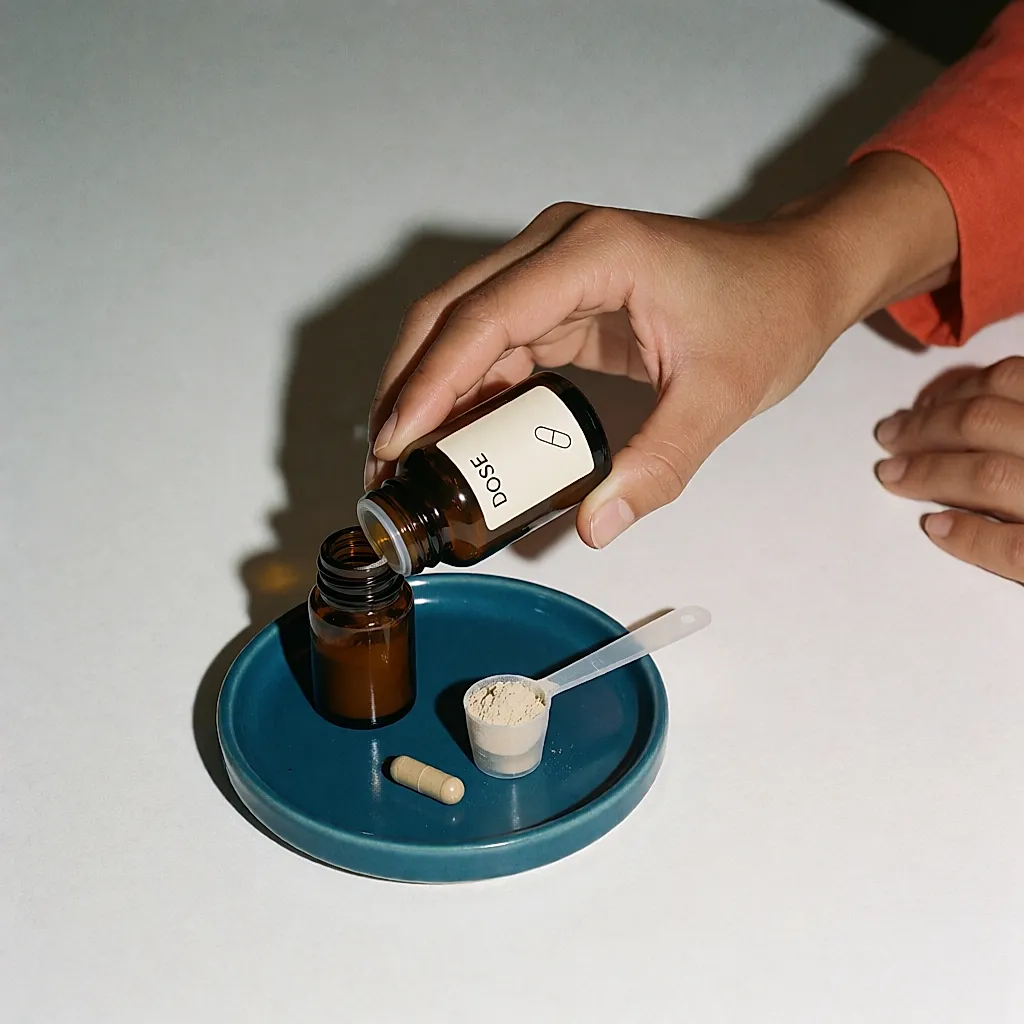
Instinct says compare price per tub. Wrong move. The only number that means anything is the dose per serving — per capsule, per scoop, per whole vial, never the total in the tub. A tub of 120 capsules to be taken three times a day does not contain twice as much as a tub of 60 taken once a day.
Second line to check: vitamins and minerals, usually given as a percentage of the reference intake. That percentage is regulated, so it can be compared from one product to another. Collagen and hyaluronic acid have no such official yardstick: the doses used in studies aren't always the ones in the bottle, and the available data don't stretch to promising a visible effect on your complexion. Be wary of the vial promising plumped-up skin in fourteen days: what it mainly promises is fourteen days.
Third line, the one most often skipped: carbohydrates. A ready-to-drink vial has to stay drinkable, and that can be paid for in sugar, concentrated juice or sweetener. Look at the 'of which sugars' figure per 100 ml, then scale it to the volume of the vial; double it if you drink two. A supplement isn't a neutral treat: it's one more glass in the day.
Capsule, powder, vial: the contest, without the table
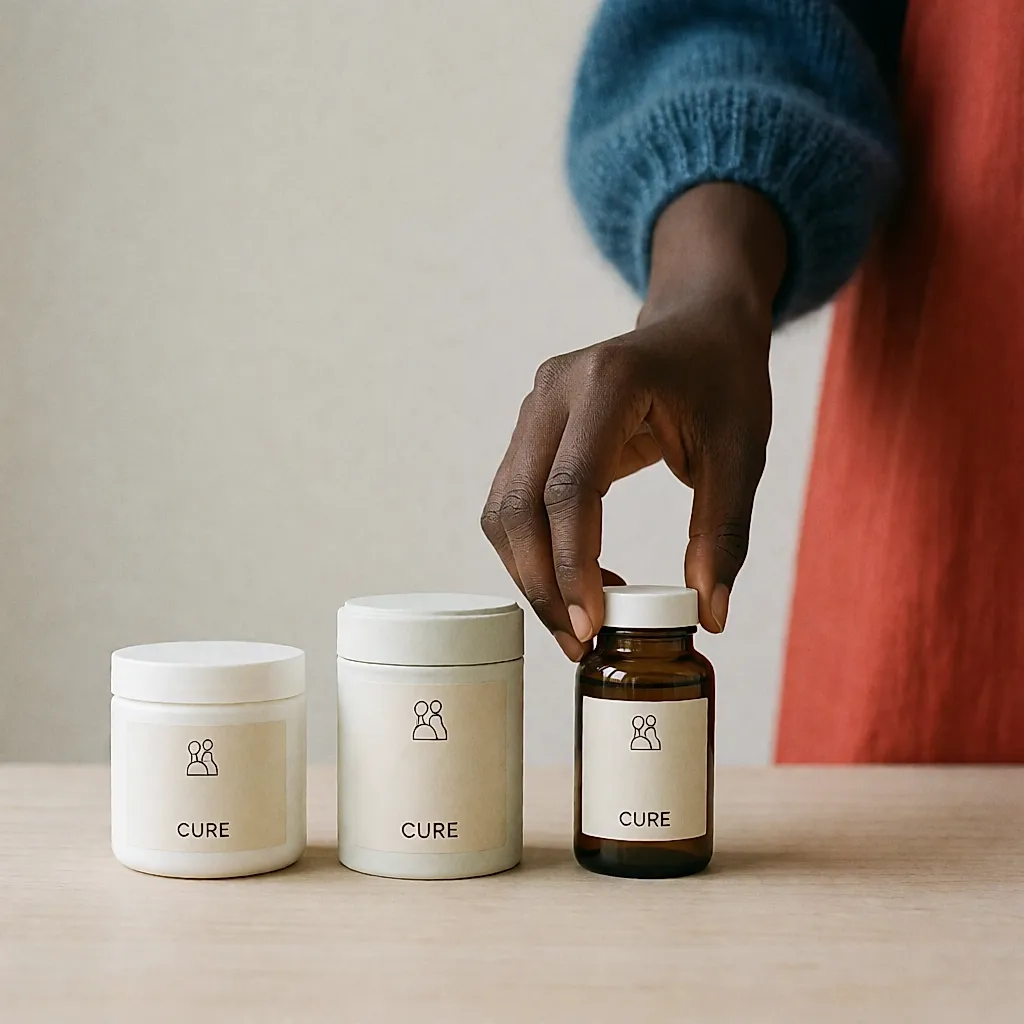
The capsule is the cupboard's reliable one: no taste, easy to dose, stable, and it travels in a make-up bag. Its weak point comes down to one word — forgetting. And one detail that counts: look at the shell. Vegetable (HPMC) or gelatine is not the same thing depending on what you're after, and it's printed small on the back.
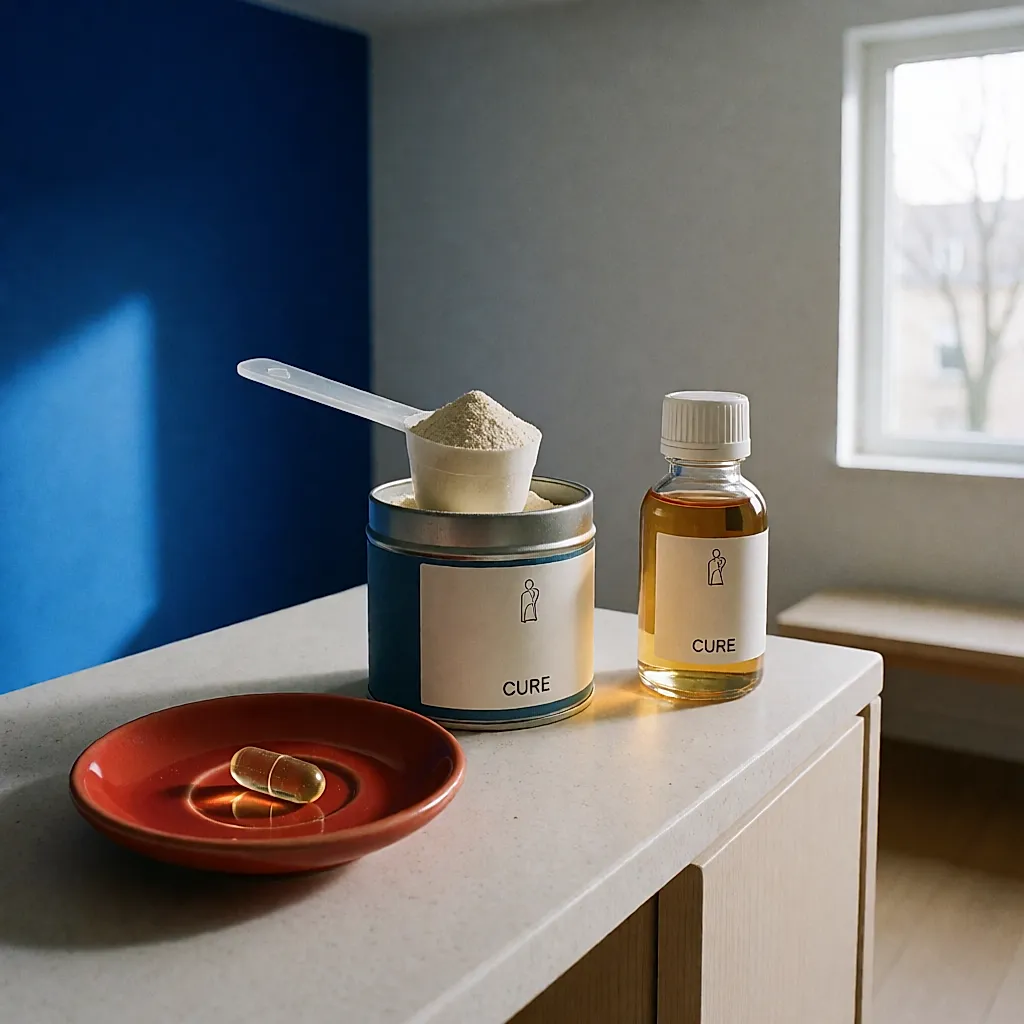
Powder to mix is usually cheaper than a ready-to-drink vial, and it lets you fine-tune the dose, down to fractions. In return you need a glass, water, sometimes a shaker to wash — and you have to accept a flavour that will never please everyone. Lumps at the bottom of the glass? We know them well. The vial, finally, is the queen of zero effort: it's also the most expensive per day of the course, the heaviest to carry and often the sweetest. Yet it has an advantage that gets underestimated: it replaces something. If you already have a juice in the morning, you aren't adding a ritual, you're swapping one. So which should you choose? None of them in the abstract — the one that survives your week.
Budget: the only sum that matters
The price on the shelf tells you nothing. The useful figure is the cost per day of the course. In practice, expect roughly £0.15 to £0.60 a day for a capsule, £0.50 to £1.50 for a powder to mix, and £1 to £3 for a ready-to-drink vial. The range widens with the active — collagen costs more than vitamin C — and with where you shop: pharmacy, supermarket or an online order.
See the trap? A six-pack of vials at £15 looks reasonable until you count six days. Over three months, the gap with a powder becomes obvious. A powder bought in a large tub and abandoned after ten days, on the other hand, stays the most expensive purchase in the cupboard. On packaging, glass recycles well and PET too, if to a lesser degree; above all, a tub of capsules is lighter to transport. Where a refill exists for the product you buy, it usually cuts the amount of packaging — but check it's actually available, because it isn't guaranteed.
Before you pay, three lines on the label: the dose per serving (not the total in the tub), the carbohydrates per 100 ml, and the real number of days the pack covers. Divide the price by that last figure and you have your cost per day. If the answer makes you raise an eyebrow, that's already an answer.
The format you keep up with is the only one worth buying
There's no best format in the abstract. There's your schedule, your bag, your tolerance for flavour and your willingness to wash a shaker at 7.40 on a Monday morning. A course half kept beats a perfect one abandoned on day three — and if you already know you won't drink a vial every morning, don't buy one because it looks nice in the fridge.
The only gesture left when you have five minutes is the one that needs no preparation, no washing up and no decision. Find it, keep it, and drop the rest without guilt. Your skin won't hold it against you — and neither will your bank balance.
Food supplements do not replace a varied, balanced diet and a healthy lifestyle.
Comments
Your opinion matters: rate the article, react and reply to comments.
Comments are moderated; AI-assisted comments are flagged. Text emoticons (8-), :-), <3…) are automatically shown as images.