
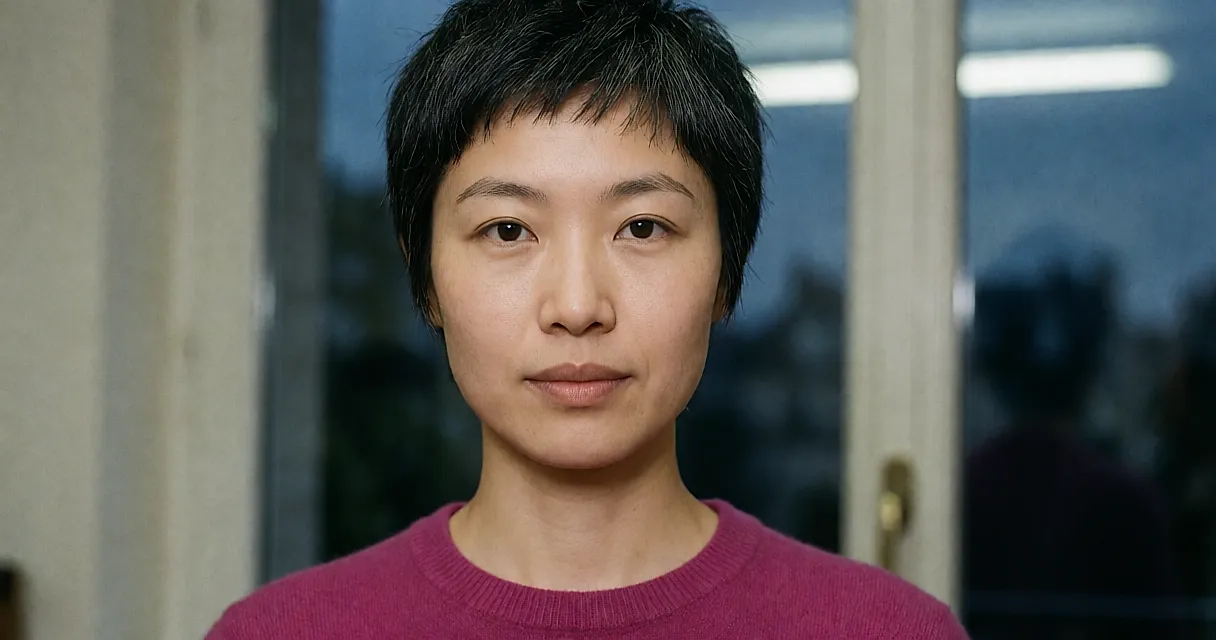
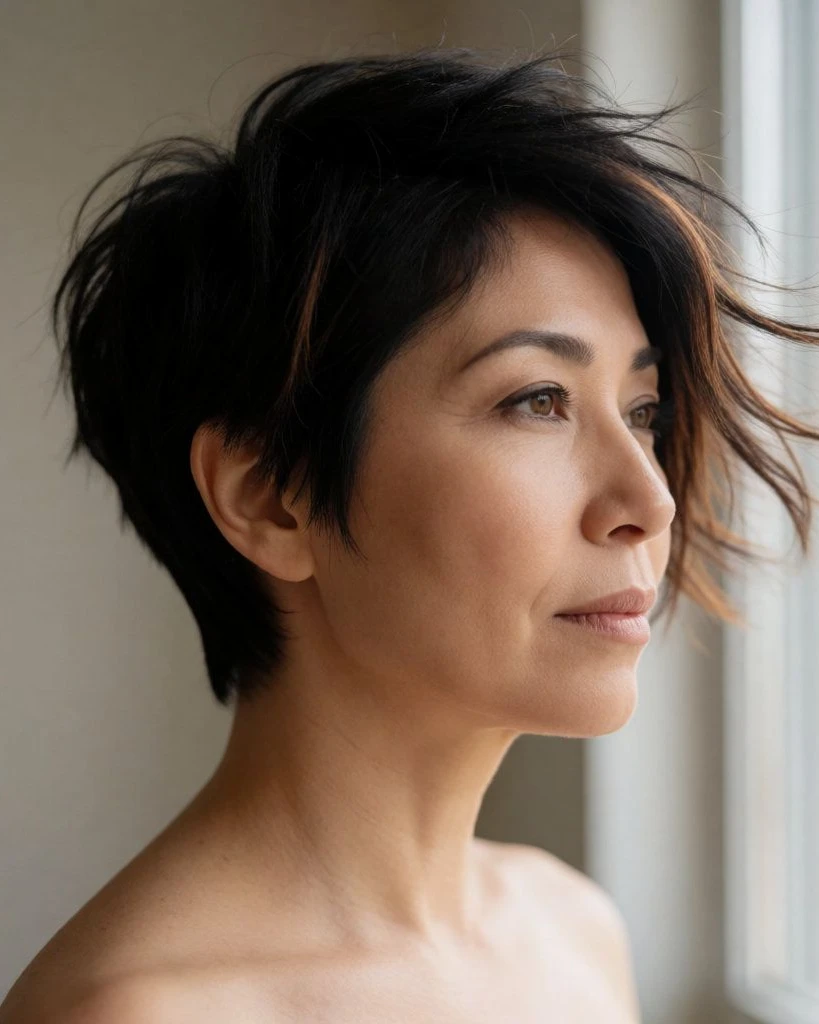
The razor that clears a nape is faster than any blow-dry. That is about the only time a very short cut actually saves you. For the rest — washing, styling, salon appointments — the effort doesn’t disappear; it moves. Rihanna’s pixie, with its clean nape, textured top and short fringe, looks like freedom; in a real week, it is mostly a question of organisation.
Washing, the shortcut that isn’t
Less hair, so less shampoo, so quicker? In theory, yes. In practice, length isn’t what makes a wash take time: rinsing, conditioning and detangling are where the minutes go. And with a short cut, hair often seems to get greasy faster — not only because there is less of it, but because there is nothing to hide it. Roots show above the ears, the nape is exposed, and there is no ponytail to carry you through day three.
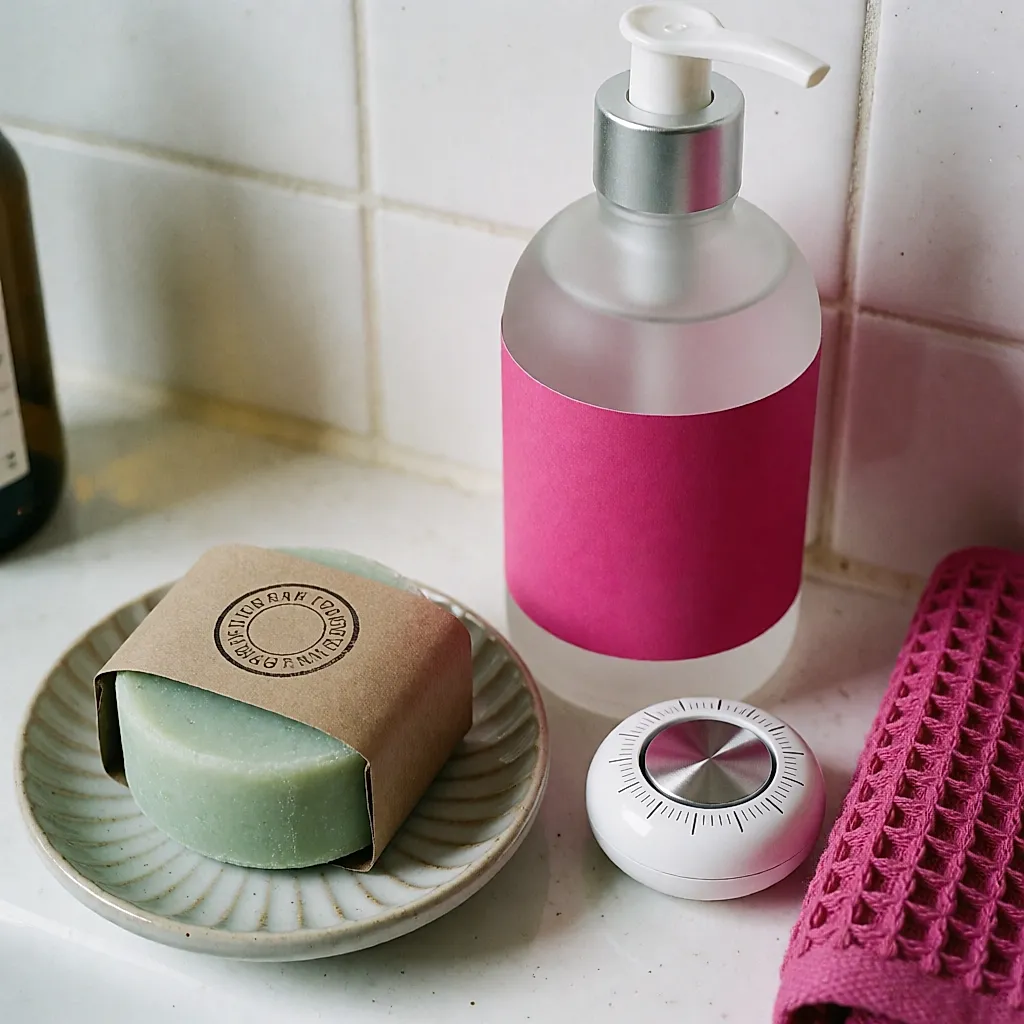
Result, in a real week: you may wash more often, though there is no universal rule. The saving per wash is real; the total spend of time is more debatable. That is why a gentle shampoo and a light conditioner make more sense than a rich treatment that weighs down an already short cut: on a pixie, one product too many and everything collapses. A shampoo bar or refill earns its place here — less water in the bottle, same routine. The useful benchmark is your own: time a real week, not an ideal one, and see where the minutes go.
Drying and brushing: the time you save is paid for elsewhere
Drying a short cut takes less time than drying a long bob. But be careful not to turn drying into a full styling session. Short hair has nowhere to hide: you wake up with a section sticking up, a cowlick at the crown, one side flattened — and no emergency bun or improvised ponytail. Finishing cannot be skipped. The real calculation is the whole morning: washing, drying, finishing.
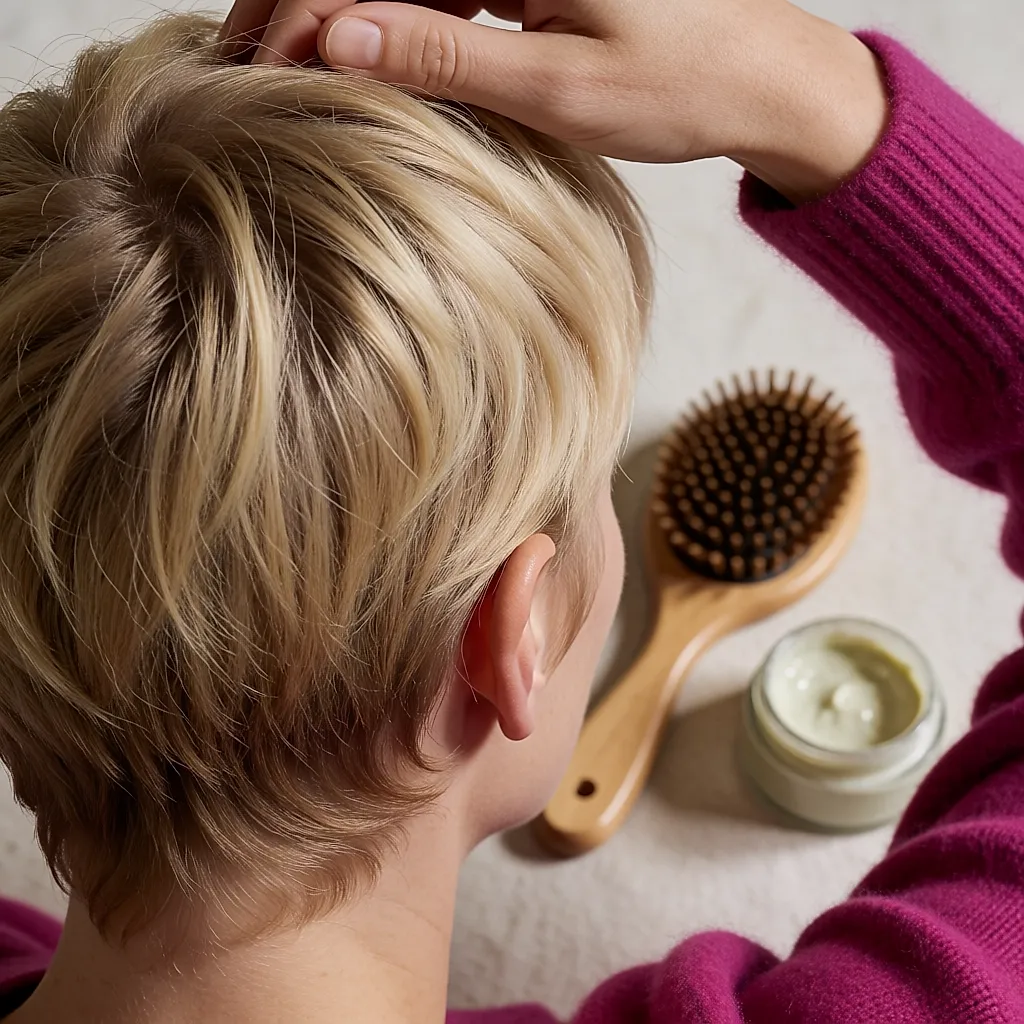
Allow a few extra minutes to lift the roots with your fingers or a round brush, and a touch of texturising product so it holds through the day. Brushing becomes less about detangling and more about shape: putting things back in place, adding volume, taming the nape. Nothing very long, but a ritual that returns every morning, weekends included.
The trim you can’t skip
This is the real expense of a very short cut: regular trims to keep the line. Nape, around the ears, the layers on top — in practice the stylist often spends less time on it than on a full cut, but you still have to go. Without trims, even the sharpest cut loses its shape and starts to look like a cap. Set the calendar by your own regrowth: note the date your nape starts to bother you, and you’ve found your true trim rhythm.
Compare that with a long bob or mid-length hair: you can leave it longer before refreshing a few centimetres. A short cut doesn’t remove appointments; it brings them closer together. If your diary already feels like a game of Tetris and every trip counts, that is the argument to weigh before you cut it all off — not afterwards.
What hair really suits a very short cut
Density at the crown and the hairline at your nape are the two things that really change how often you need a trim: a sparser area or a nape hairline that sits high makes regrowth more visible. These are the things to look at before choosing a length, because they decide how often you’ll be back in the chair.

Budget
In the UK, prices vary widely. As a rough guide, expect around £30–£70 for a short cut in a salon, depending on the city, the salon tier and the time taken. A nape and outline tidy-up often sits between £15 and £35; prices vary by city, salon tier and the salon you choose, and some barbers or unisex salons offer a similar trim in that range. One full cut every so often, a trim in between, and the yearly bill adds up fast: that is the budget to put on the table before you choose a length.
Three questions before you cut
- How many minutes of finishing am I prepared to give each morning, weekends included?
- Can I keep up with — and pay for — a regular trim schedule?
- Does my hair hold its shape without product, or will I have to learn a new technique?
A short cut doesn’t save you time: it redistributes it, a little in the morning, a lot at the salon. If a pixie is already on your mind, start with the calendar rather than the scissors. When you only have five minutes, the one move left is knowing in advance how much of those five minutes you want to give.

Comments
Your opinion matters: rate the article, react and reply to comments.
Comments are moderated; AI-assisted comments are flagged. Text emoticons (8-), :-), <3…) are automatically shown as images.