

A £90 serum can work out more expensive than a £100 one you actually finish. The answer depends on what's left at the bottom of the bottle — and on whether you'll buy the refill, or won't. Because the real price of a skincare product is the price of a dose.
The price is decided at the dose
A luxury serum is still often judged on the Latin name on the INCI list, the colour of the glass, the weight of the cap in your hand. Except the bill is read somewhere else: in the dose you genuinely use. One pump, one click, the exact amount that lands in your palm — not the stream that runs through your fingers, and not the pea-sized amount you end up spreading down your neck to make it last. That's where the price shifts: a bottle you finish costs less to use than a bottle you abandon half-full.

And this is where the bottle becomes an economic argument in its own right. A sealed dose, a valve that limits air getting back in, a dispensing system described line by line in launch press packs: brands no longer talk only about the active ingredient, they talk about the mechanism. Does that make the formula better? No. It can help you get to the last drop — and in a genuinely rushed life, that isn't a detail.
What the pump protects — and what it hides
Sunday, 11.47pm: you press the serum pump — once, twice — and nothing comes. The bottle is heavy, half full, and the evening's dose is stuck somewhere between the spring and the tube. So much for a promise of rested-looking skin, held together by a small plastic mechanism. The principle of the airless pump comes down to one image: the base of the bottle rises like the plunger of a syringe, limiting air getting in. The idea is simple: less oxidation, fewer fingers in a jar, and a formula that isn't exposed to the air every time you use it. For oil-rich formulas, it can genuinely help.
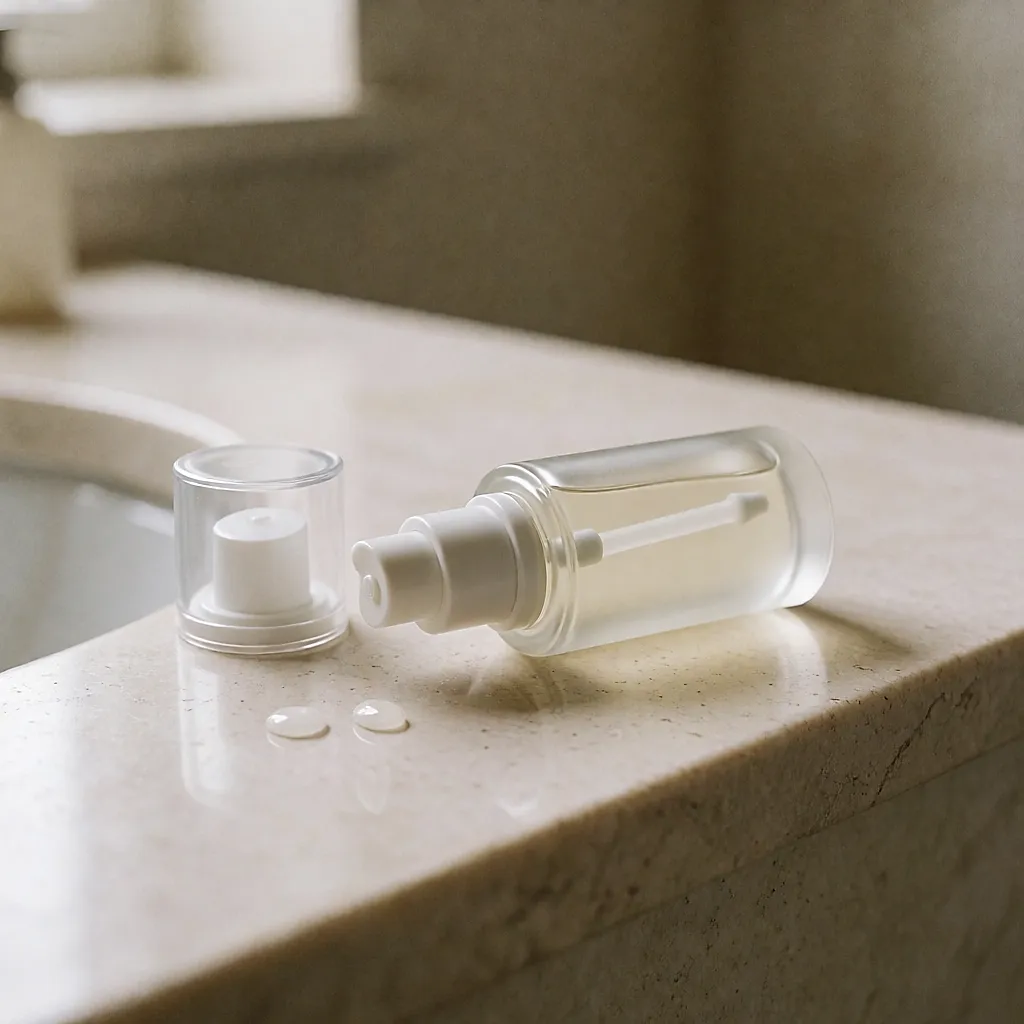
What it hides, though, is the level. Opaque glass, a lacquered body: no way of knowing whether you have three weeks or three days of skincare left. And at the end there can be that awkward moment when you shake the bottle like a cocktail shaker and hope. On the recycling side, the move isn't magic either: pump, gasket, glass and gold-toned sleeve don't always come apart easily. If the pump unscrews easily, you can separate it; if in doubt, follow your council's recycling rules.
The cap becomes part of the product story
A few years ago, the cap manufacturer was rarely part of the story. Today, skincare brands often cite them almost as co-authors: the glassmaker, the cap maker, the contract manufacturer — the workshops that design what ends up on your bathroom shelf. A cap that snaps shut magnetically, a cap with real weight to it, a satisfyingly crisp click: these have become part of the pitch, shown off at packaging trade shows and in launch press releases.
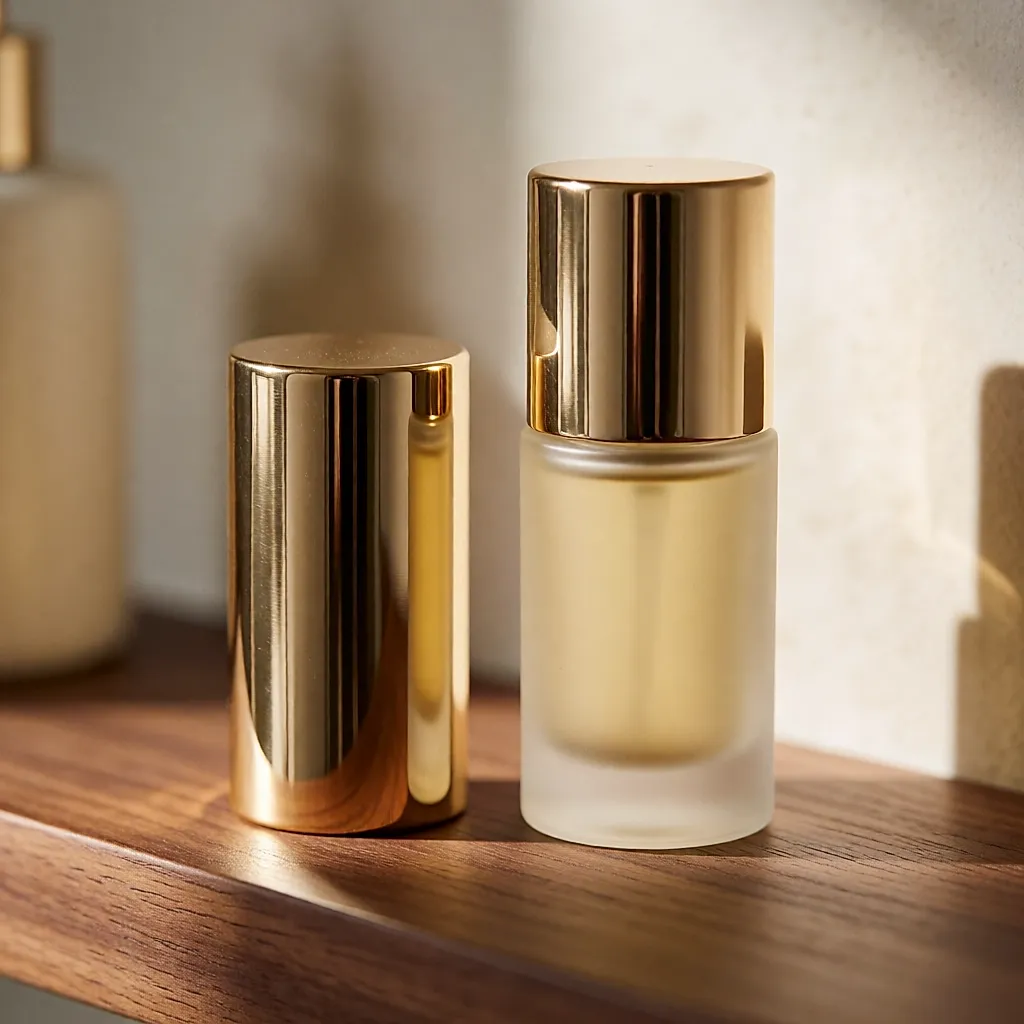
The logical next step is the refill. A nice case you keep, a capsule you buy again. On paper, it looks like a win: less glass produced, a gentler budget, an object that ages with you. In practice, ask at the till — not every refill is stocked everywhere, and some cover only part of the range. A refill you have to order online all over again does take some of the shine off the idea.
What it costs
On price, the figures vary mainly with where you buy, the size, the concentration and the brand: a pharmacy, a department-store beauty hall or an online retailer will not charge the same. The dispensing system can add its own small weight to the bill. The refill, where one exists, can be a little cheaper than the full bottle — there's no universal rule, so check when you buy.
The right question isn't the price of the bottle anyway; it's the price of a dose: a bottle you finish often works out cheaper than one you leave half-used at the back of the shelf. And the next time you're dithering in store, just ask whether the case is refillable: that's where a real saving can lie.
The quick bottle audit, at the counter: in practice, one pump is often enough, depending on the texture and the size of your face. Check whether the pump unscrews, whether the bottle is refillable, and what the cap is made of. A few seconds of attention, and you'll know what you're buying.
It sounds silly, but the serum you really love is the one you finish. So next time, before you're seduced by a promise of rested-looking skin, turn the bottle over, press the pump, listen for the click. The saving can be there, three centimetres from the formula.


Comments
Your opinion matters: rate the article, react and reply to comments.
Comments are moderated; AI-assisted comments are flagged. Text emoticons (8-), :-), <3…) are automatically shown as images.