
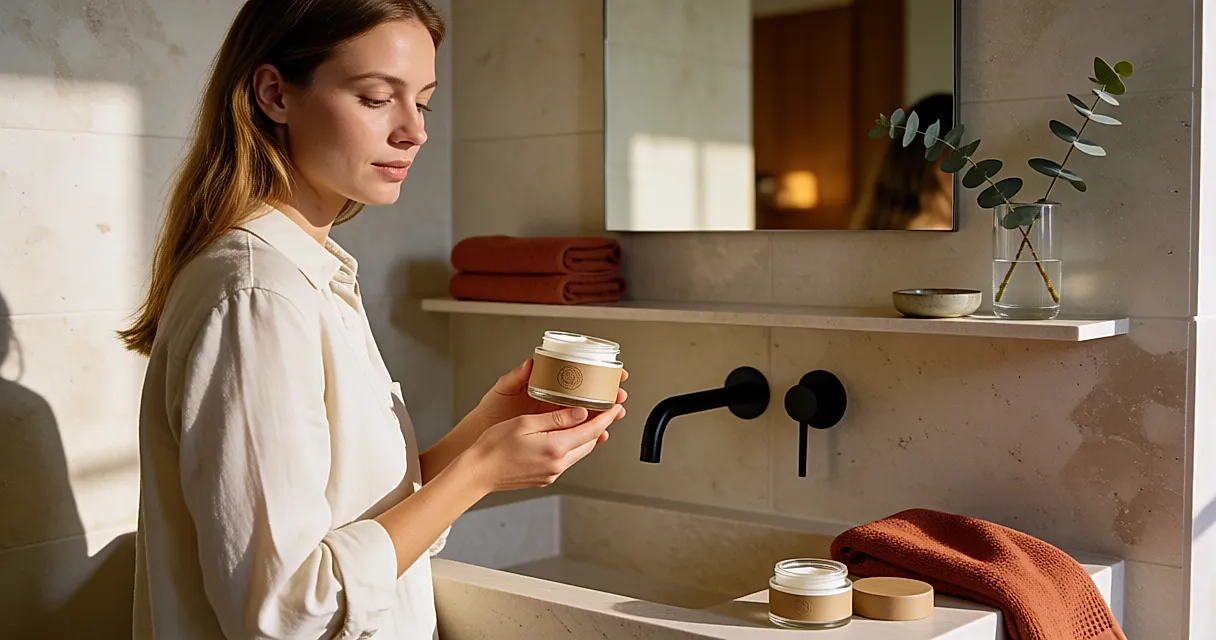
The pot is empty, the lid spins, and there you are at 11pm on the brand's website comparing two price lines that look suspiciously similar. The refill is there, sensible, a little cheaper, and a clear conscience thrown in. Except a refill isn't an eco gesture in itself: it's a subscription. And a subscription is something you check before you sign up.
The price per millilitre is the only fair judge
You can't compare one pot with another: compare the price per millilitre. Take a 50 ml face cream priced at £45—that's £0.90 per millilitre. If the refill for the same product sells at £34, it drops to £0.68, roughly a quarter less. Over a year, with two pots, the difference already covers almost half of a third pot. But you do have to do the maths: the price per millilitre is the only unit that can't be dressed up.
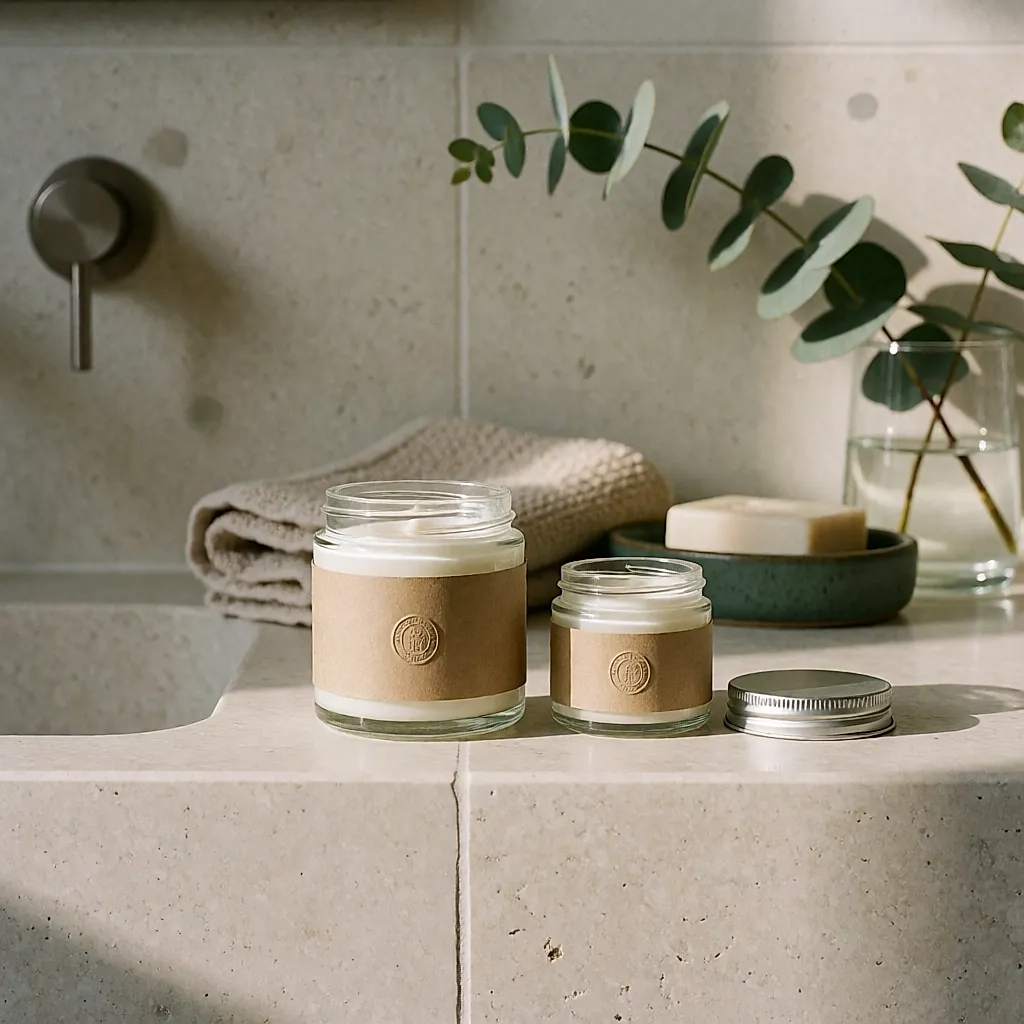
The quiet trick is a refill that's smaller than the original pot. Forty millilitres at £32 works out at £0.80 per millilitre: less appealing than the 50 ml refill, despite the 'eco' label. Get out your phone calculator; nobody will judge. In practice, the saving on a refill often sits around 15 to 30% compared with the full pot—an editorial benchmark, not an industry law, and some brands settle for 5%.
A refill has to outlast the pot
A refill is a promise of longevity: the life of the container you keep. But ranges change, shades disappear, formulas get reformulated, and the glass pot becomes a paperweight. Before investing in a pretty container, check how long the brand has been selling refills, and for how many products. One refill in a catalogue of twenty skincare products is a token gesture.

Also just ask at the beauty counter: 'Will this one still be around in two years?' Nobody has a crystal ball—we don't either; we haven't weighed every pot on the market—but an assistant who knows the company's policy will give you a straight answer. The reassuring signs: a container sold separately, refills available across the whole range, and a brand that has been talking about both for several seasons. Otherwise, you're collecting orphan pots.
Heavy glass versus thin plastic isn't the contest you think it is
Glass looks smart on the shelf, recycles well, doesn't yellow and survives house moves. It's often heavier than a plastic pot, and that weight has a transport cost. Thin plastic, meanwhile, can be mono-material and therefore recyclable—provided it's put into the right recycling stream, which is never guaranteed. So the honest question isn't 'glass or plastic', but how long are you going to keep this container?
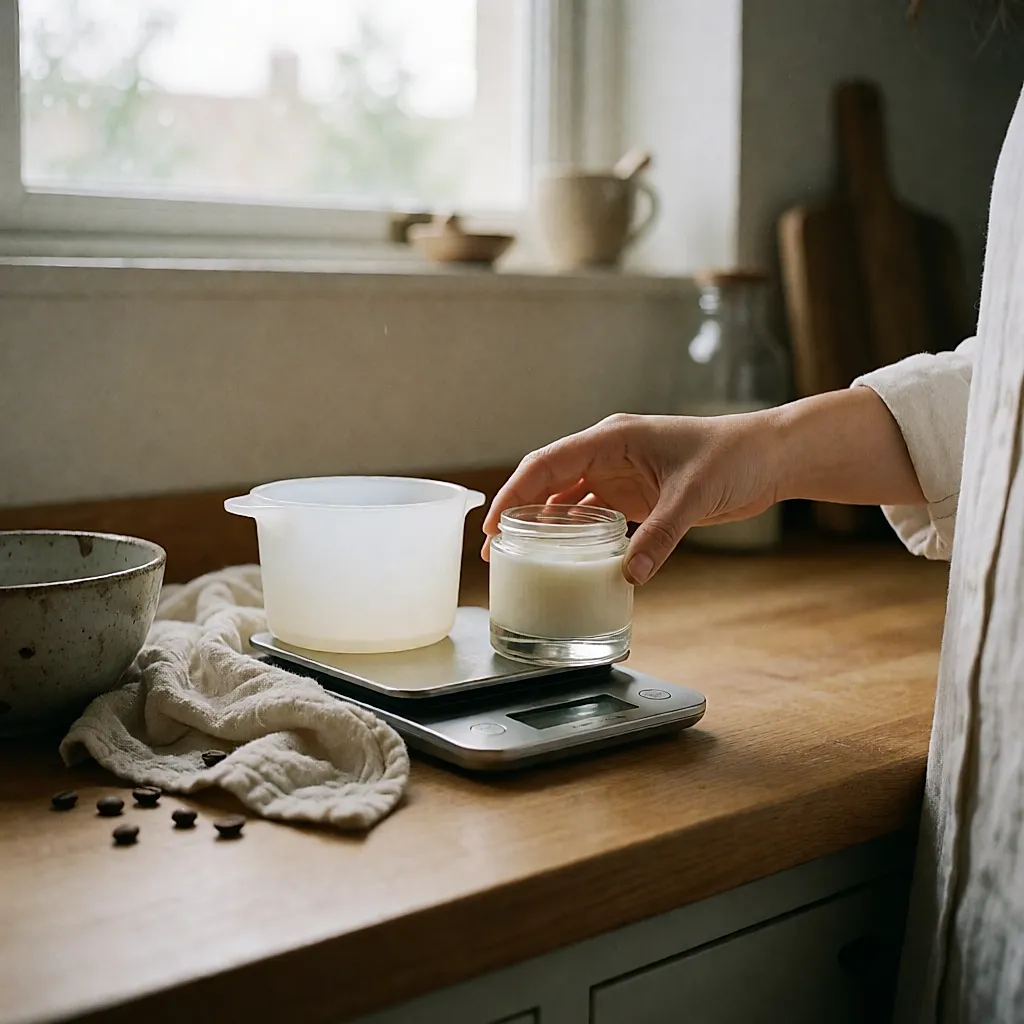
A container kept for a long time generally has a better environmental footprint than a disposable pot, provided you don't replace it often. So check three things: a lid that screws on and wipes clean, a pot wide enough to finish the product with your finger, and a brand that sells the container on its own if yours breaks. A double-walled pot, a pump built into the lid, a shape that stops you reaching the bottom: these are all small complications that end up as a new container.
The insert that cancels everything out
Here's the detail that tips the balance. An airless pump, a capsule, an inner cup, a plastic-and-rubber pipette: the insert is the part that is neither the pot nor the lid; it's often multi-material, and therefore often non-recyclable depending on local recycling streams. If every refill comes with a new pump, the benefit of the container you've saved goes in the bin with it.
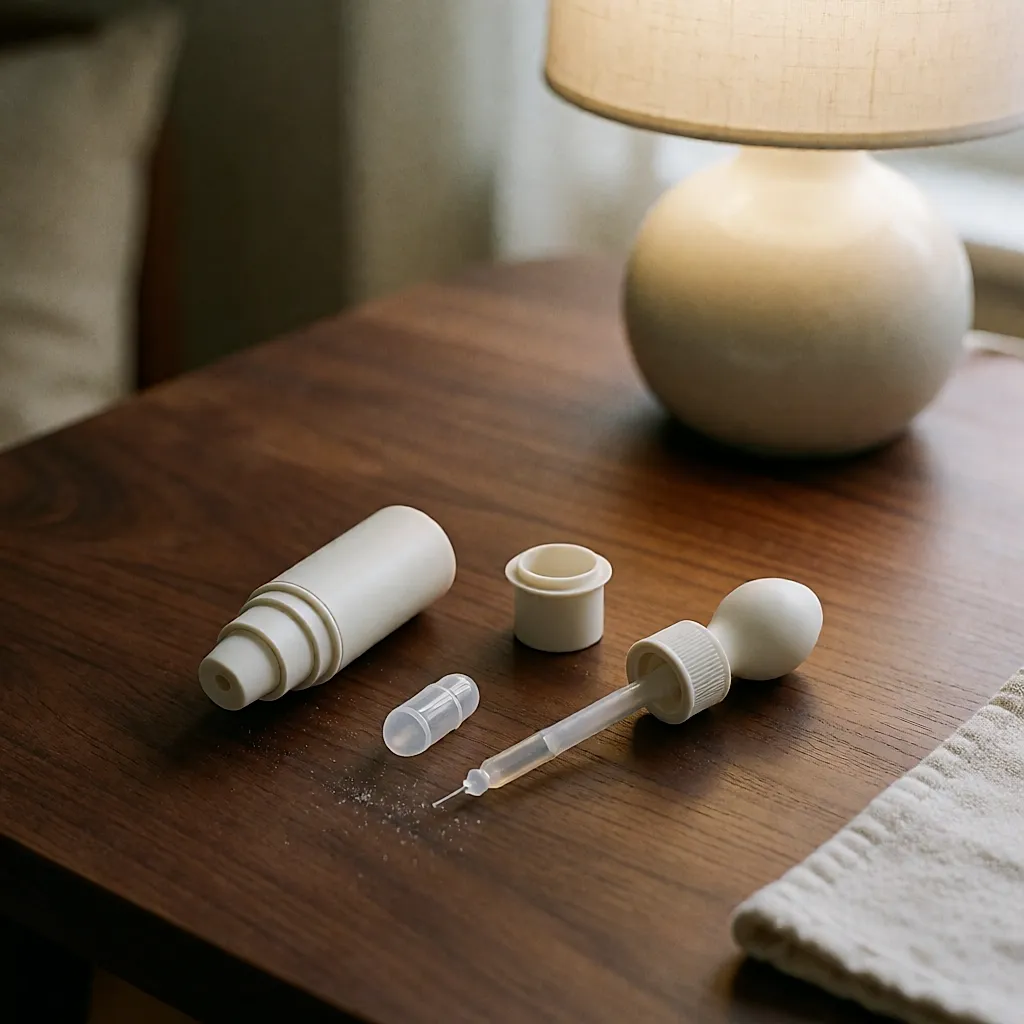
The test is simple: does the pump unscrew? Can you buy it separately? Is it a single piece of plastic? Some textures suit this better than others—a rich balm in a wide pot, a fluid in a pump; not everyone has the same luck. And there's no getting around it: a refill with a disposable insert means one less pot and one more piece of waste.
Before you pay, three questions, in this order: how many millilitres for what price? Will this refill still exist in two years? What am I throwing away each time? If the third answer makes you squirm, keep your old pot and use it right to the bottom.
Budget
Expect to pay broadly £25 to £45 for a 50 ml face-skincare refill in a department-store beauty hall, against £35 to £70 for the full pot; for organic skincare at specialist shops, refills often sit around £15 to £30, with some brands selling the container separately for between £8 and £20. You'll find these formats in beauty halls, organic shops and on the brand's website—sometimes the only place that stocks every variant—and the container itself is yours to keep.
Solid soap and bulk formats often remain the cheapest per gram, if the texture suits you. And if the refill is more expensive than the new pot, badly designed and impossible to find in two years, remind yourself that a pot used right to the last drop is still a perfectly decent eco gesture.
The gesture that counts isn't the one you make once with pride; it's the one you can repeat without thinking. A refill you buy every two months, without calculations or a trek through the brand's website, is a repeatable ritual—and that's when, and only when, beauty becomes genuinely clean. If yours asks more of you than the cream does, don't feel guilty: you weren't the problem; the format was.


Comments
Your opinion matters: rate the article, react and reply to comments.
Comments are moderated; AI-assisted comments are flagged. Text emoticons (8-), :-), <3…) are automatically shown as images.