
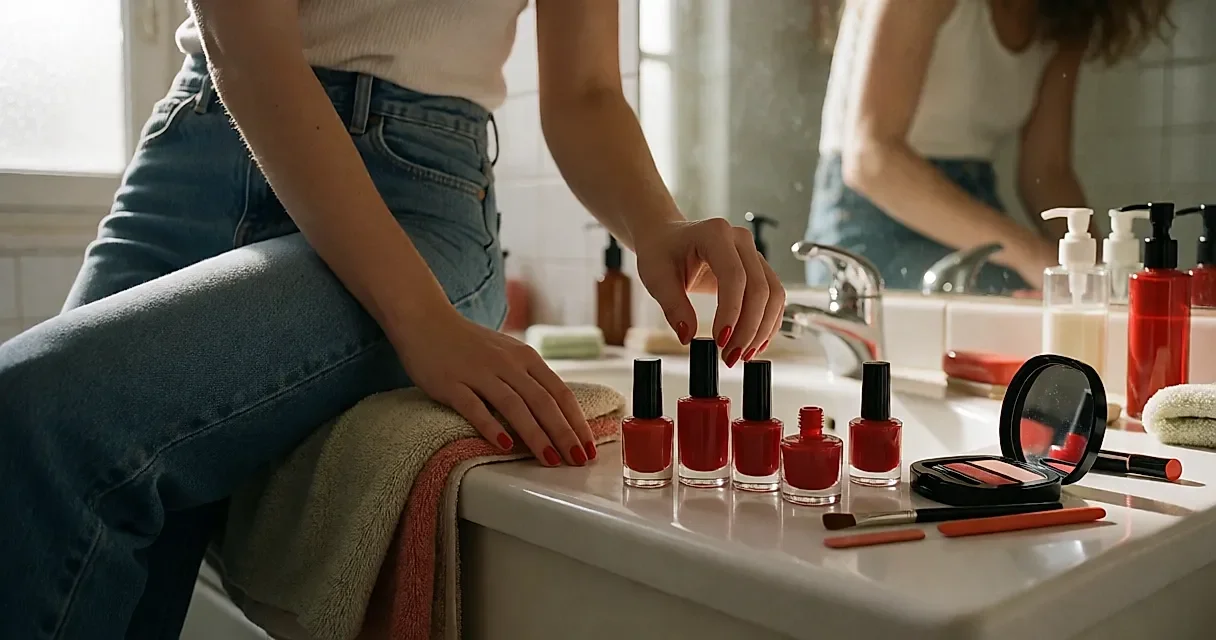
One dinner rolls into the next, the end-of-year drinks pile up, and the polish you applied the night before has already chipped by lunchtime the following day. When you have back-to-back evenings from November to January, a red nail polish that lasts—and can be touched up in minutes—earns its place more than elaborate make-up you have no time to redo. This edit brings together six pieces chosen around that pressure point: deep reds, formulas that are easy to apply without a lamp, and the prep steps that make the biggest difference to wear. We look at coverage, the brush, the texture—which should not overload the nail—and shades that work across several skin tones, whether you are a beginner on a budget or after a quick manicure. Each entry is documented from product data and prices noted at the retailers cited, but none of these polishes has been tried by the editorial team: documented, not tested.
The almost-black glossy burgundy
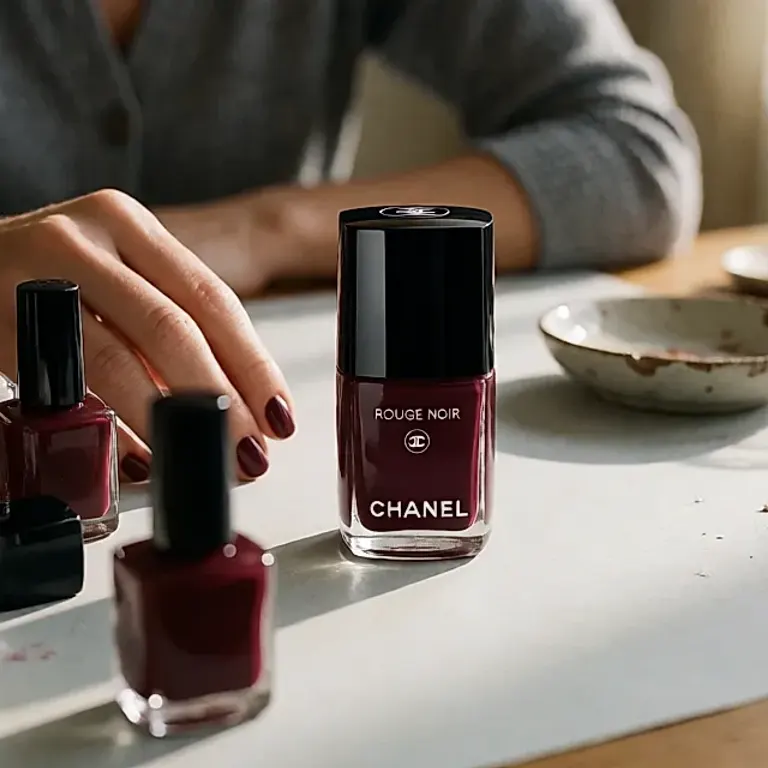
Chanel’s Rouge Noir is the darkest shade in the edit: a near-black burgundy with a very glossy, lacquered finish, in a 13 ml square bottle with a glossy black cap. It is the most dressed-up piece of the lot, the one to keep for an end-of-year dinner or a meeting where you would rather have discreet hands than jewellery. On short nails, the depth of the shade still reads clearly; on long nails, it leans fully into evening.
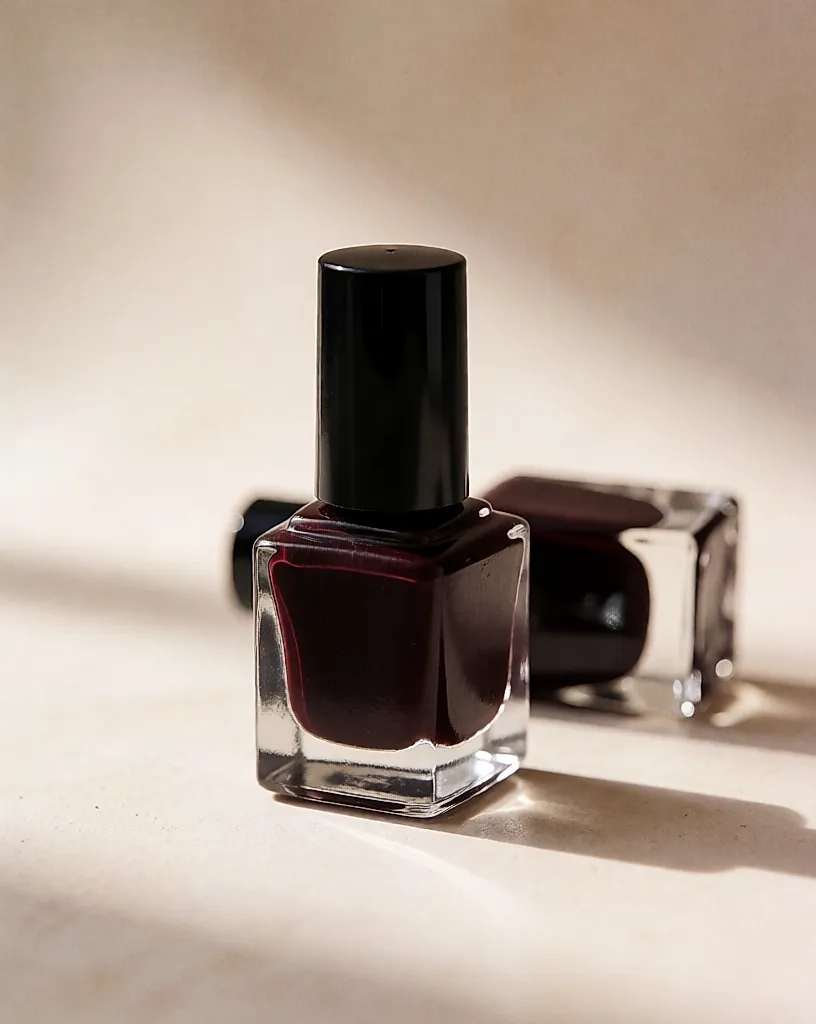
For application, two thin coats are better than one thick one: a near-black red is less forgiving of brush marks, and the second coat smooths out the finish. Because the pigment is strong, a protective base coat is worth using before every application; otherwise the pigments can stain the nail when you remove it. Allow drying time between coats, too—that is what helps avoid bubbles and smudges when you close your hand too soon.
The true red with a wide brush
Next to the Chanel bottle, OPI’s I’m Not Really a Waitress plays a different game: an intense, bright, true red in a 15 ml format—the most generous in the edit alongside the Manucurist base. It is one of the most affordable options here, at about €15 at Bixoto, a French retailer (roughly low teens in pounds; check UK stock and the final £ price before ordering). It has a wide brush that covers the nail in one or two passes and saves you endless corrections if you are not used to painting your own nails.
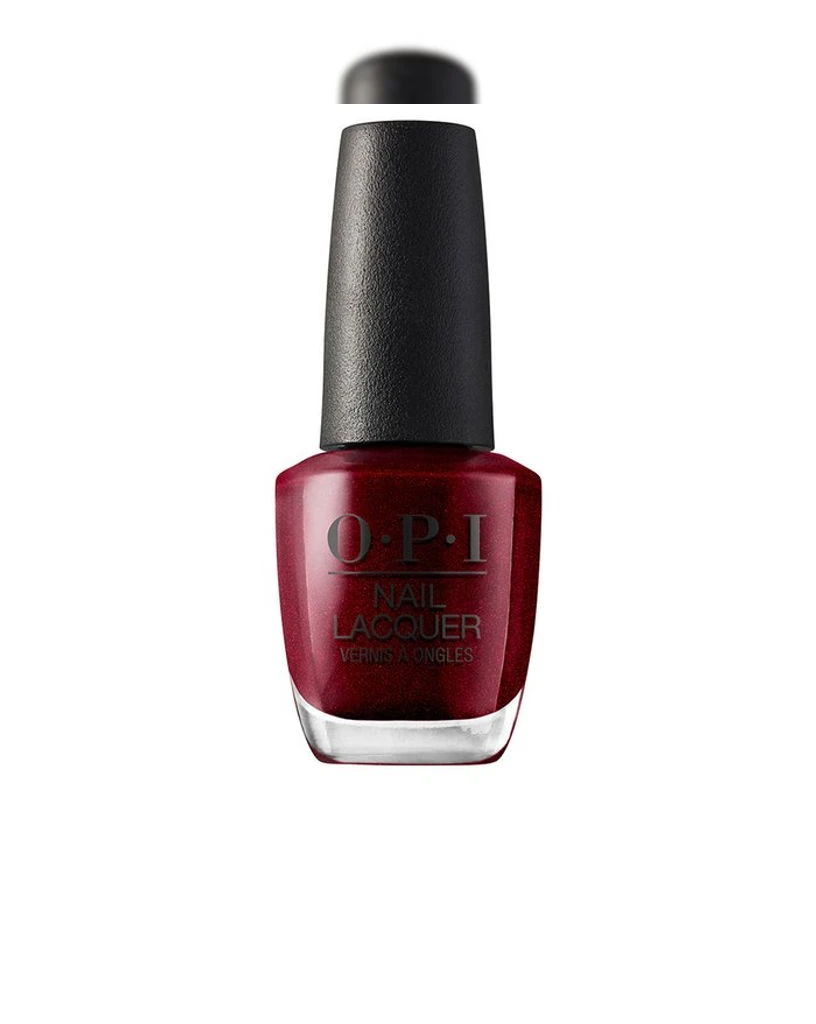
Its salon-style formula and highly covering colour make application more forgiving than a dark red: small wobbles in the brushwork show less. The habit that makes the biggest difference is still the same: degrease the nail before applying, then brush from the free edge back towards the base without going back and forth. Two coats are usually enough for even colour, and a glossy top coat keeps the shine going between evenings.
The warm brown-red with a gel finish
Not every skin tone feels at home in a pure red, which is where Dior Vernis 664 Sienna comes in: a warm brown-red with a gel-effect finish, in a 10 ml bottle. It is the softest shade in the edit, one you can wear to a daytime appointment without feeling as if you are dressed for a party. It is the most expensive of the references whose price we noted, with a range of €25–35 at Sephora, depending on shade and retailer (roughly £21–30 as a guide; check the current UK price).
The gel-effect finish gives volume without a thick layer, which matters when the nail is thin or ridged: one coat of colour, pulled neatly, followed by a thin second coat, is often enough. Let the first set before starting the second, and cap the tip of the nail with polish—the free edge is the first place to chip. For end-of-year everyday wear, this brown-red slips more easily than a bright red under both a light jumper and a dark outfit.
The quick-drying true red
Kure Bazaar’s 40 Frenchie comes with a different argument: fast drying, for anyone who wants to apply a true red in the morning and head out. The 10 ml bottle, with its brush-cap, fits easily into a bag, and the shade stays in classic-red territory, brighter than Chanel’s burgundy. Expect to pay €20–25 on Amazon.fr (roughly £17–21 as a guide; check Amazon UK for current £ pricing and delivery).
Fast drying means adapting your method: rather than applying two coats back to back, apply the first, let it set, then apply the second, without touching anything for the first few minutes. Quick drying does not replace base coat: on bare nails, a red can leave a stain after repeated applications. And as with any polish, a bottle that is tightly closed and stored away from light will keep a more fluid texture for longer.
The base coat that protects the nail
Before we talk colour, there is one step that often gets skipped: base coat. Manucurist’s Natural Base Coat, in a 15 ml bottle, does exactly that—it protects the nail from red pigments and gives the polish a surface it can grip. It is the only piece in the edit you cannot see, and yet it is the one that helps the colour last without a lamp.
The key is the dose: a thin layer, applied from the free edge back towards the base, then allowed to dry before colour. Too much base and the polish slides about, which creates streaks and makes drying take longer for no reason. A 15 ml bottle covers plenty of manicures, and it is the kind of product you do not repurchase often—worth keeping in mind when you are doing red manicures all winter.

The budget prep kit
A good red applied over a badly filed nail is a result that catches and chips at the first edge of a table. The 12-piece flintronic kit brings together the essentials of prep: a 100/180 grit file, a cuticle pusher, cuticle scissors, and an ingrown-nail tool with a file and buffer function. It is the most affordable piece in the edit, at around €12 on Amazon.fr (roughly £10 as a guide; check Amazon UK), and the only one that contains no polish.
Using it is simple but does require a little method: file in one direction rather than back and forth, gently push back the cuticles without cutting them right down, then buff any ridges before base coat. Note that the product listing does not detail the full contents of the kit, nor whether a nail clipper or stick is included depending on the batch: check the contents listed when you order. For a beginner, this kit already covers the core of the routine; add a remover if you need one.
What it costs
The references whose prices we noted range from around a dozen euros to a little over thirty euros, with a real gap between the kit that gets you set up and the polish you buy for pleasure. At the bottom, the flintronic prep kit is around €12 on Amazon.fr (roughly £10), and OPI’s I’m Not Really a Waitress sits at about €15 at Bixoto (roughly low teens in pounds). Then come Kure Bazaar’s 40 Frenchie, at €20–25 on Amazon.fr (roughly £17–21), and Dior Vernis 664 Sienna, at €25–35 at Sephora depending on shade and retailer (roughly £21–30). The other two pieces—Chanel’s Rouge Noir and Manucurist’s Natural Base Coat—did not come with a price in our notes, and we are not going to estimate one in their place.
What changes the price is first the brand and format (10 ml for Dior and Kure Bazaar, 13 ml for Chanel, 15 ml for OPI and Manucurist), then the type of product—protective base, salon-style polish, prep kit—and finally the sales channel, whether an online pharmacy, a brand site or a marketplace. Because our price notes were taken in France in early November 2026, the euro figures are the ones we actually recorded; the £ figures are only a rough guide to the order of magnitude, not verified UK retail prices. Prices move quickly, especially on marketplaces, so check the current £ price and delivery before ordering. Second-hand does not really make sense here, for hygiene reasons. Some links on this site may be affiliate links, with no effect on the pieces we choose or the price you see.

Comments
Your opinion matters: rate the article, react and reply to comments.
Comments are moderated; AI-assisted comments are flagged. Text emoticons (8-), :-), <3…) are automatically shown as images.