

Feeling, assessing, pressing, regretting: your index finger has already found the little bump on your chin, even though you promised yourself you were going to sleep. A spot patch does nothing spectacular. It stops you doing the thing you were about to do. That is already quite a lot.
What the patch actually does
A patch is a hydrocolloid dressing cut into a disc: a flexible material that sticks to the skin, forms a dome and keeps the spot undisturbed. Dressings like this have long been used on wounds to maintain a moist environment and act as a barrier. On a spot, the useful part is that barrier: the film keeps the blemish away from your fingers, from friction against the pillow and from the strand of hair that always falls back in the same place.
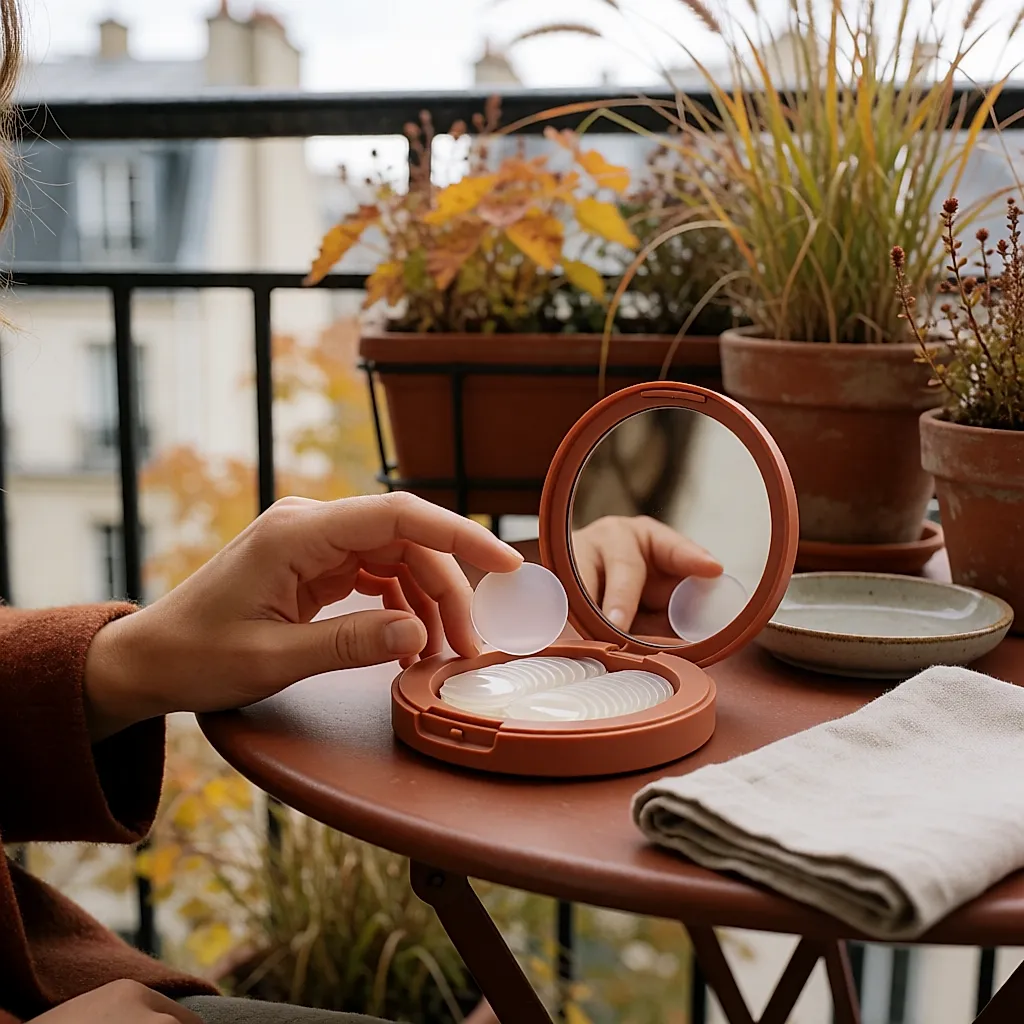
What doesn't it do? The deep clean. You will see it claimed here and there that it 'draws out' sebum like a tiny handheld vacuum: that is a convenient image, not proof. What can be said without overreach is that it protects the spot and makes it considerably less interesting to fiddle with. The rest is marketing.
And that is where the patch wins: it removes the gesture. No pressure, no fingernail, no bathroom mirror at midnight. A spot left alone rarely flares up again; a spot that has been picked at often does.
Whiteheads, open spots and under-the-skin lumps
Not every spot deserves a translucent disc. One with a visible white head, already popped or about to be, is the ideal candidate: the patch acts as a discreet dressing and stops you going back in. Apply it to dry skin, with no greasy product underneath, or the film will slide and you'll wake up with a little white flag on the pillow.
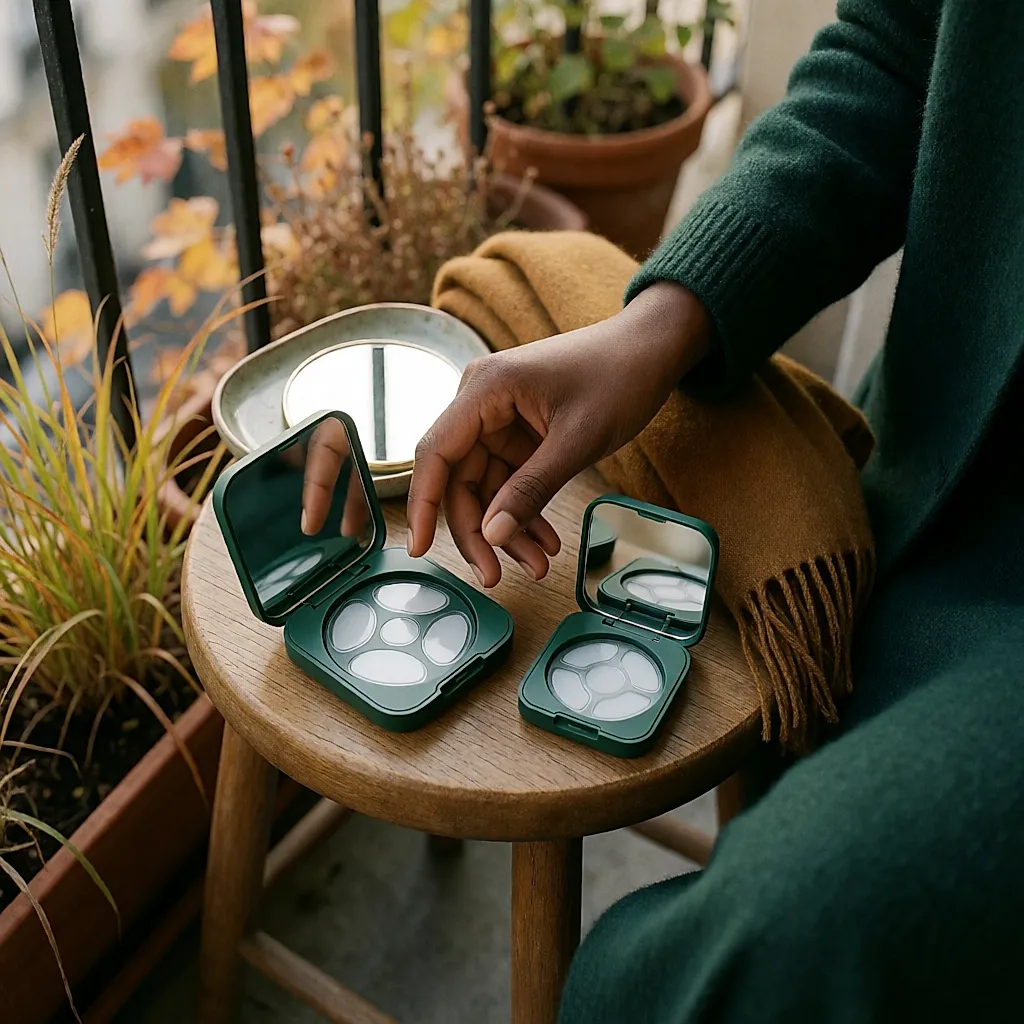
The trickier case is the spot under the skin: red, hard, painful and with no head. A patch won't change anything there—there is nothing to cover, and putting film over a tight area doesn't move things on. Keep your fingers away, keep an eye on it, and if it feels hot, grows or persists, have it looked at by a healthcare professional.
Microneedle patches, sold specifically for these under-the-skin spots, promise more. There isn't enough solid evidence to say more than that, and a promise has never produced a result.
Three seconds that make the difference overnight
Clean, thoroughly dry skin, no greasy product under the film, and press all around the edge with a fingertip so it adheres properly. If it burns, itches or the area spreads under the patch, remove it and have the area looked at by a healthcare professional.
One piece of waste every night
Let's do the maths. One patch a night is 365 patches a year, before you count the backing sheet and, depending on the box, the individual sachet. A used patch is tiny—but it is daily waste. That counts, doesn't it?

So look at the packaging before the contents: a cardboard box or a plastic dispenser, individual sachets (handy for travel, unnecessary in the bathroom). The film itself varies little from brand to brand; the real lever is applying it when it is useful, not as a reflex every night on a spot that never asked for one.

What it costs
Expect to pay around £6 to £15 for a box of 24 to 36 patches from a pharmacy or health and beauty retailer; some premium ranges cost more than £20. They are also sold in supermarkets and online, though a pharmacy is handy if you want advice while choosing between formats.
The price gap tells you almost nothing about the result: a patch works because of its cut and its adhesive. If it peels off at 2am, it can be as pretty as it likes—it isn't doing its job. The useful calculation isn't the price of the box, but the number of patches you will actually use. How many are left at the back of the drawer?
What about your finger, then?
The patch isn't skincare; it's a guard rail. It won't replace gentle cleansing, sleep, or stopping yourself scrutinising your chin in the lift mirror. It buys you one quiet night—and sometimes that is exactly what you needed.
Keep a box for nights when you know you'll give in, and let other spots live their lives. The one move to make when you have only five minutes: apply the patch, turn off the light and let your skin get on with it. And put the pocket mirror away—that bit is free!

Comments
Your opinion matters: rate the article, react and reply to comments.
Comments are moderated; AI-assisted comments are flagged. Text emoticons (8-), :-), <3…) are automatically shown as images.