
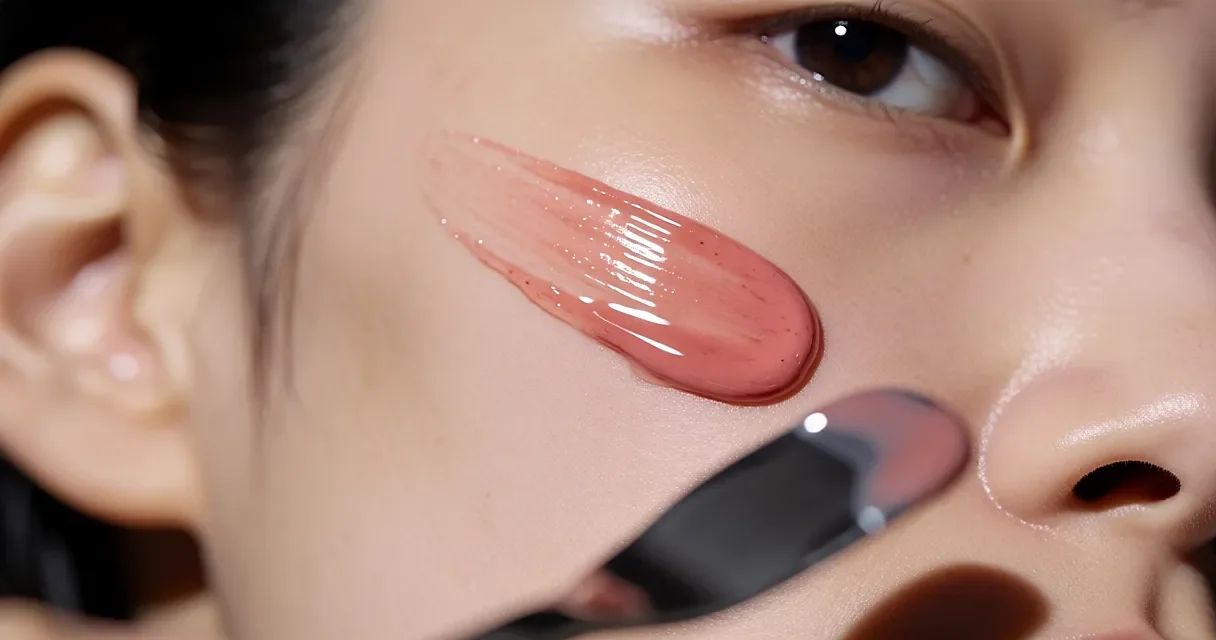
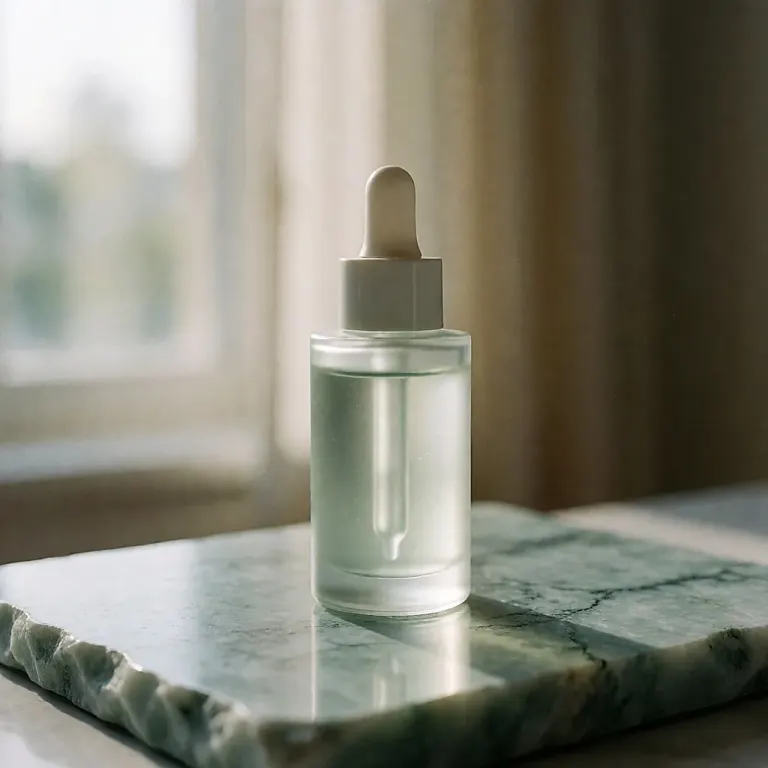
A serum on a shelf and a syringe in a clinic can carry the same word on the label, and still be doing completely different jobs. The bottle is a retail cosmetic; the injection is a medical procedure, carried out in a clinic. Between the two floats a vocabulary — PDRN, polynucleotide, "salmon DNA" — that has travelled a great deal faster than the evidence.
PDRN: three letters, one fuzzy family
Behind the acronym sits a very long word: polydeoxyribonucleotide. In practice, fragments of DNA extracted from salmon milt or sperm, purified, then used in aesthetic medicine, mainly as injections — the "skin booster" that has become a familiar reference in Korean skin-care circles. One commonly cited name in Korean clinics is Rejuran, and other labs sell products from the same family.
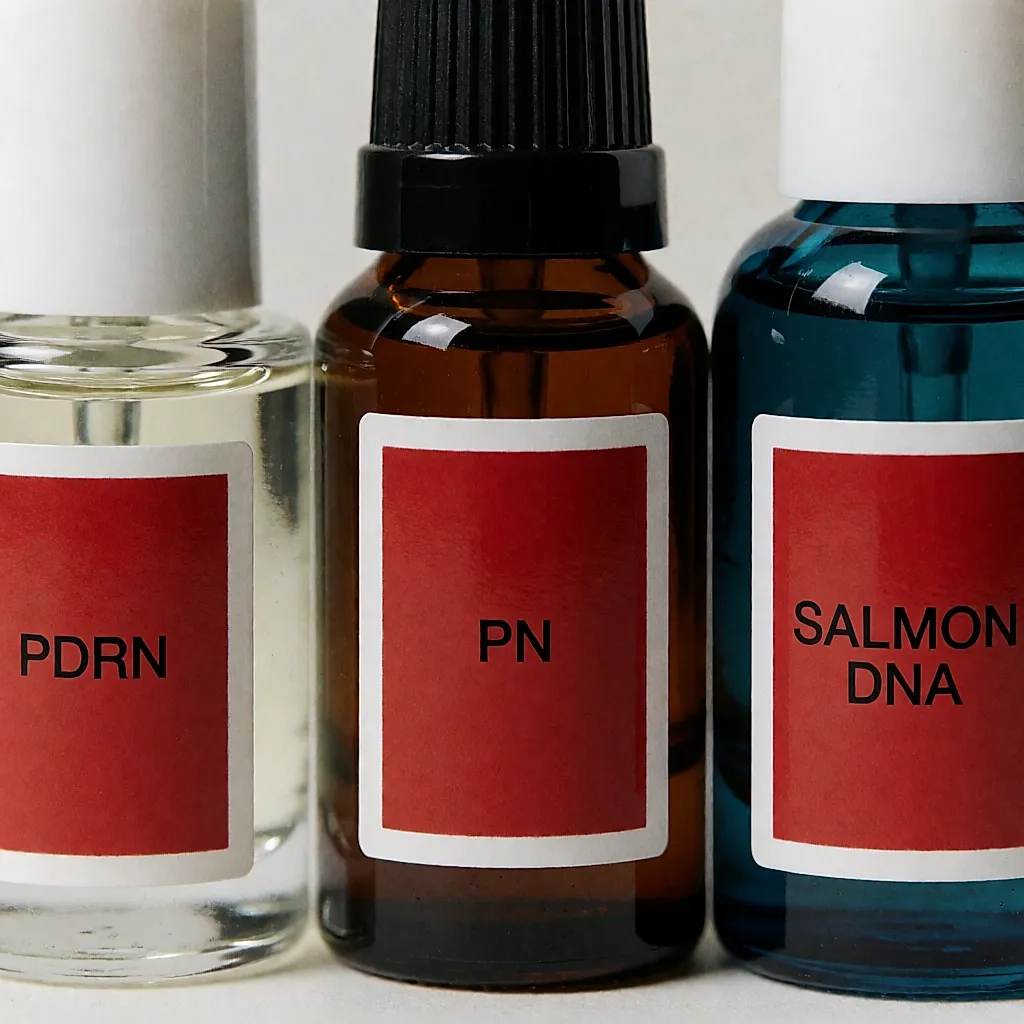
Where it gets complicated is that "PDRN" doesn't describe a single molecule. Depending on the manufacturer and the process, the fragments aren't the same length, and both purification and concentration vary. "Polynucleotide" is often used for close cousins, and "salmon DNA" often serves as the more sellable English version of the same idea. Three labels, three industrial realities — which is why a mention on a jar tells you almost nothing on its own.
From clinic to cream jar: the big leap
What sent the word into orbit was its reputation in clinics: plumper skin, a glass-like glow. A reputation, not a demonstration — and even less a demonstration that transfers to a cream. Because there's a world of difference between injecting something into the dermis and smoothing it on before your morning coffee. A cosmetic largely stays on the surface: its first job is to hydrate, protect and visually smooth. DNA fragments, for their part, don't necessarily stroll through the skin barrier.
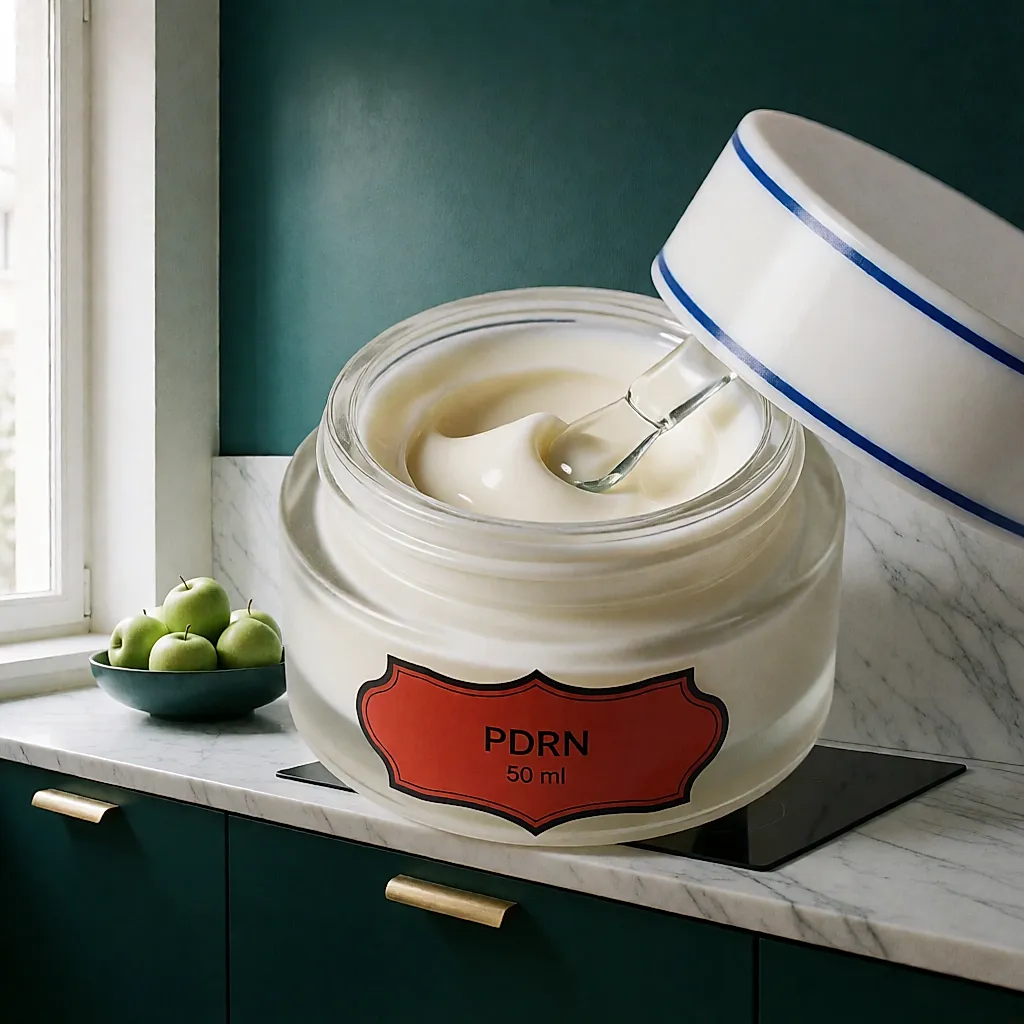
So what do formulas that print the word in big letters on the bottle actually do? They carry the PDRN in a base that does much of the visible work: glycerin, hyaluronic acid, panthenol, peptides, niacinamide depending on the product. That base is often what gives the "plumped skin" effect when you wake up, and that's perfectly good. It's just that you can't credit the salmon for what the glycerin is doing. In the UK, cosmetic claims are expected to be substantiable: a cream shouldn't promise to repair DNA or act on your cells without evidence behind it.
What you're actually reading on a label
First reflex: where it sits in the INCI list. Ingredients are listed in descending order of concentration down to 1%; below that, they can appear in any order the brand fancies. A PDRN listed at the end isn't absent — it's there at a low concentration. Second reflex: the exact name of the raw material, which isn't always written in three letters, depending on the supplier of the active. A serious brand should be able to tell you where its ingredient comes from and at what dose it's used; if the answer boils down to a fish emoji, walk away.
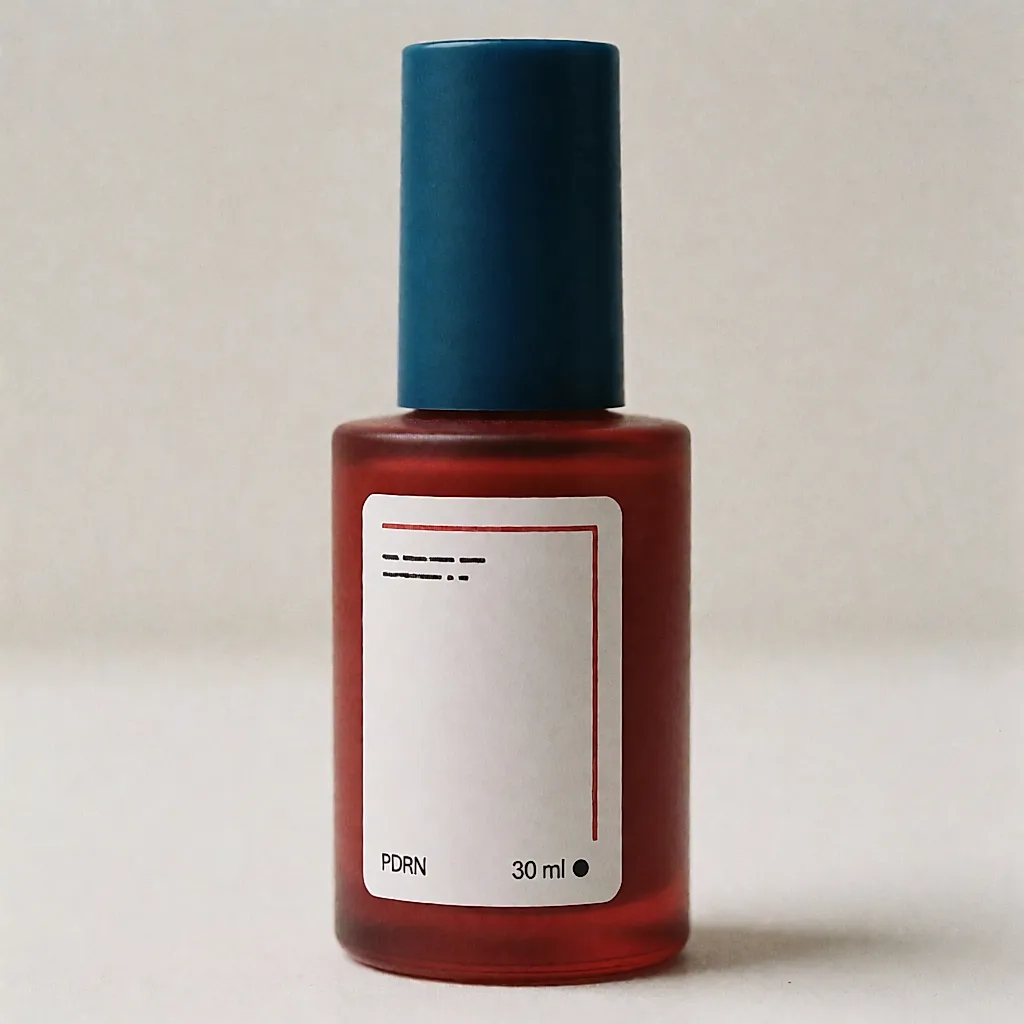
Third reflex, and the most useful: read the rest. A pleasant texture, a bottle you actually finish, a fragrance-free formula if your skin reacts — that's what makes the difference in use, not the salmon's name. And if you're after a refill so you don't have to buy a whole new jar, check that one genuinely exists before you buy.
Three questions before you pay:
- Is the PDRN near the top or the bottom of the INCI list?
- Does the brand state a concentration, or just the word?
- Is the packaging refillable, or at least easy to empty completely?
What it actually costs
As a rough guide, a 30 ml serum tends to sit somewhere in the £20–£45 bracket depending on brand and retailer, and a 50 ml jar of cream more often in the £15–£35 bracket. They're easiest to find in online K-beauty shops, sometimes in a high-street pharmacy, and less often in the big supermarkets. Prices swing a lot with shipping and seasonal promotions, so be wary when a site halves the price without explaining why.
Injections, on the other hand, aren't something you buy. They're medical procedures, carried out by a doctor in a regulated setting, and availability varies by clinic and country. The cost of a session therefore doesn't compare with the cost of a jar of cream. As for packaging, many Korean bottles still come in plastic with a double cap and a spatula: if a refill exists, take it; if not, finish the jar before opening another.
So, do we buy it?
Honestly, to our knowledge, the published data on PDRN concern mostly injections, with a specific product, a specific dose and a specific route of administration — none of which transfers automatically to a daytime moisturiser. And we still don't know what PDRN actually does in a low-concentration topical formula.

What can you expect from a good cream of this kind? Comfort, hydration, a smoother texture to the touch, a less dull complexion — not nothing when November is doing its worst. What it can't promise: cellular repair, an effect "on your DNA", transformed skin. If the word intrigues you, take it for what it is: a moisturiser with a nice story attached, not a treatment.
Then there's the routine, always the same: a small amount on clean skin, in a thin layer, and close the jar. The salmon, meanwhile, is likely to keep making headlines — and that, at least, is easy to agree on.


Comments
Your opinion matters: rate the article, react and reply to comments.
Comments are moderated; AI-assisted comments are flagged. Text emoticons (8-), :-), <3…) are automatically shown as images.