
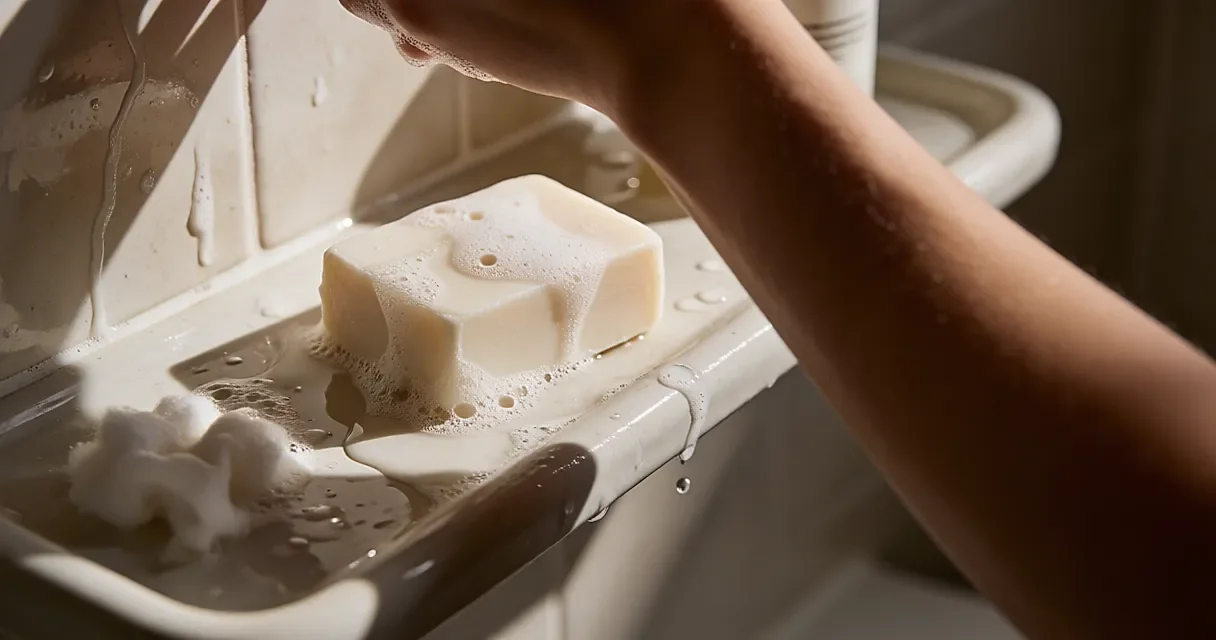
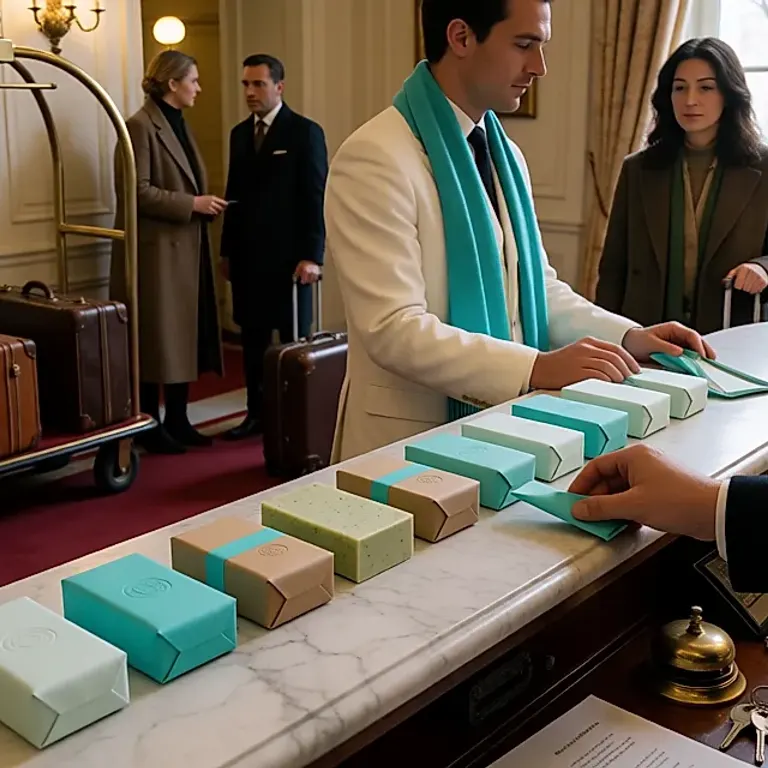
A hard soap and a soap-free bar can look identical — same shape, same paper wrap, same promise of softness. The difference often comes down to two lines on the label: pH and fat content. And as usual in cosmetics, those are the two lines many of us rarely read. Let's be honest: an oil-enriched soap won't turn your shower into a spa treatment. It just puts a little fat back into a product that often has little to begin with.
Three bars, three promises
The classic hard soap is usually the simplest and least expensive of the three. It's made from a fat reacting with an alkali, cleans aggressively, and often sits at a high pH — in other words, it can be harder on the skin's barrier. There's usually no added-oil reserve in the bar to compensate, which can explain that tight, pulled feeling some people get the moment they step out of the shower. That doesn't make it the enemy: if your skin doesn't react, it's a solid, economical bathroom staple that lasts for ages.
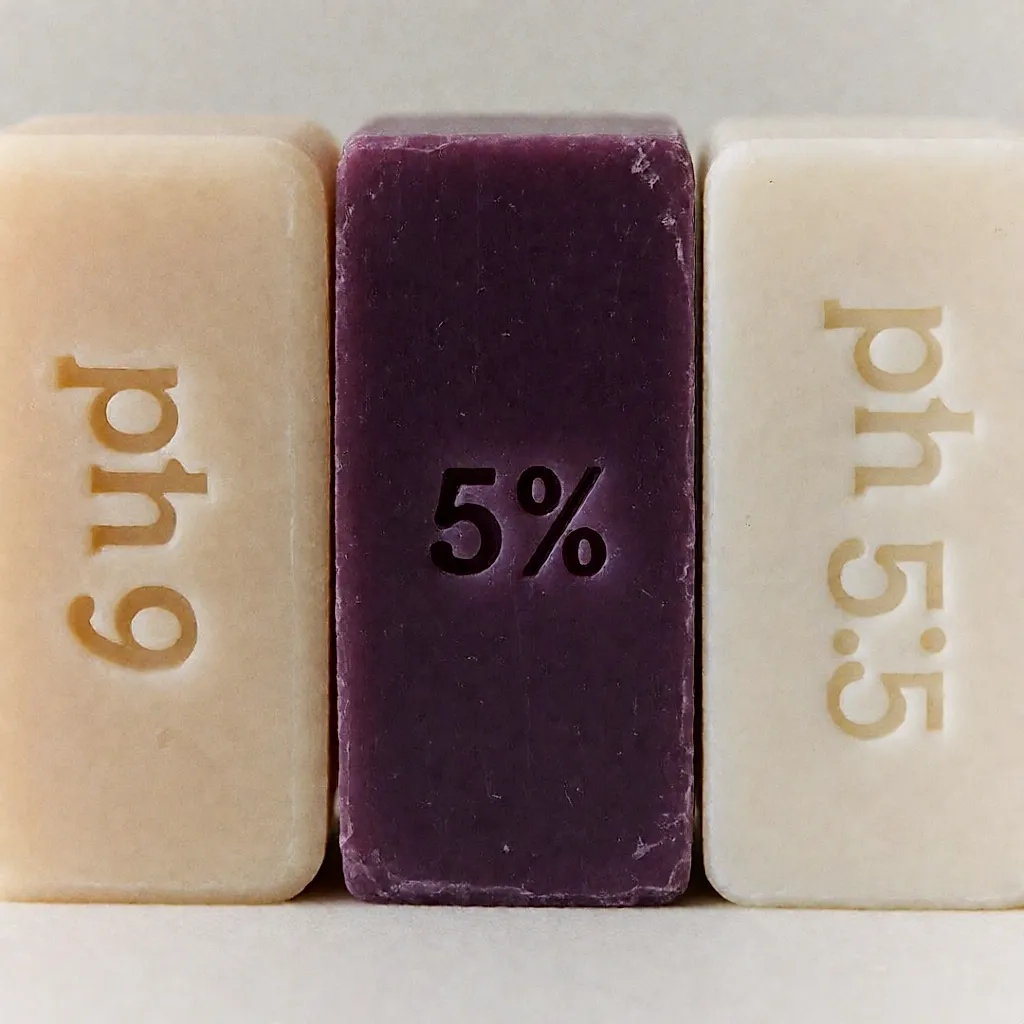
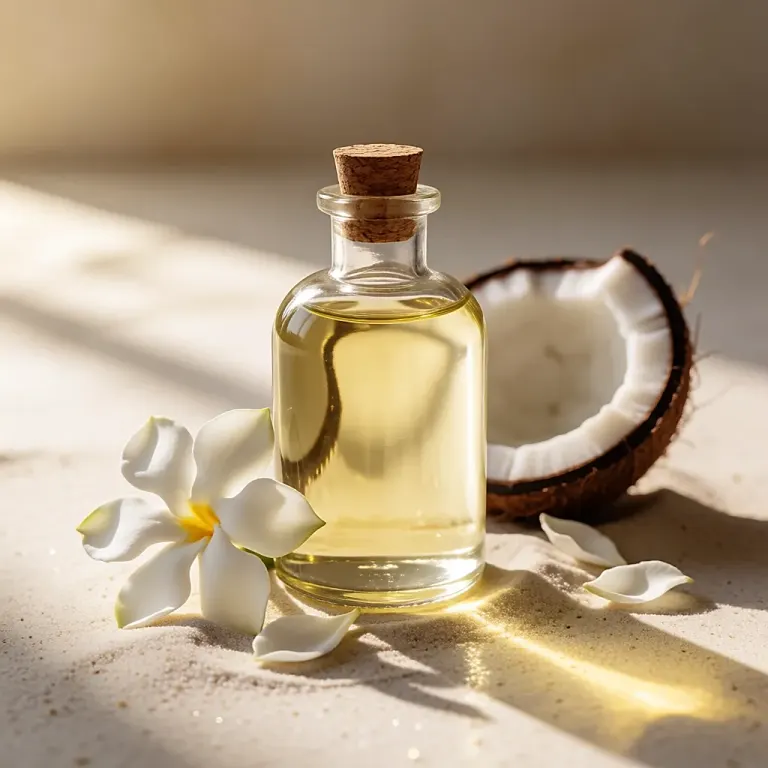
The oil-enriched bar is the compromise. A few per cent of oil — olive, shea, sweet almond — goes into the formula, leaving a little fat on the skin at rinse-off. Is it worth paying more? Sometimes, yes: for some people, skin may feel less dry and more supple afterwards. But be clear on the limits: the added oil doesn't replace a moisturiser, and it doesn't radically change the soap's pH. It's extra comfort, not a transformation.
The soap-free bar is the most technical of the three. It contains no soap in the strict sense, but synthetic surfactants, with the pH adjusted to sit closer to the skin's own. This is the one to look at when skin already feels tight, flushes easily, or reacts to standard soaps with a tugging sensation. An important nuance: "soap-free" doesn't mean "no cleansing", and it doesn't automatically mean "more natural". A syndet bar can be very gentle… or loaded with fragrance.
How to read the label
First move: look for the percentage of added oil. A "3%" or "5%" claim tells you far more than the word "enriched" on the front of the pack. The higher the percentage, the more likely the bar is to leave a comfortable film — but it also depends on which oil is used and what else is in the formula. Then look for glycerin: it helps the skin hold on to water and appears in many gentle bars. Where it falls in the INCI list gives you a clue, though it won't do the thinking for you.
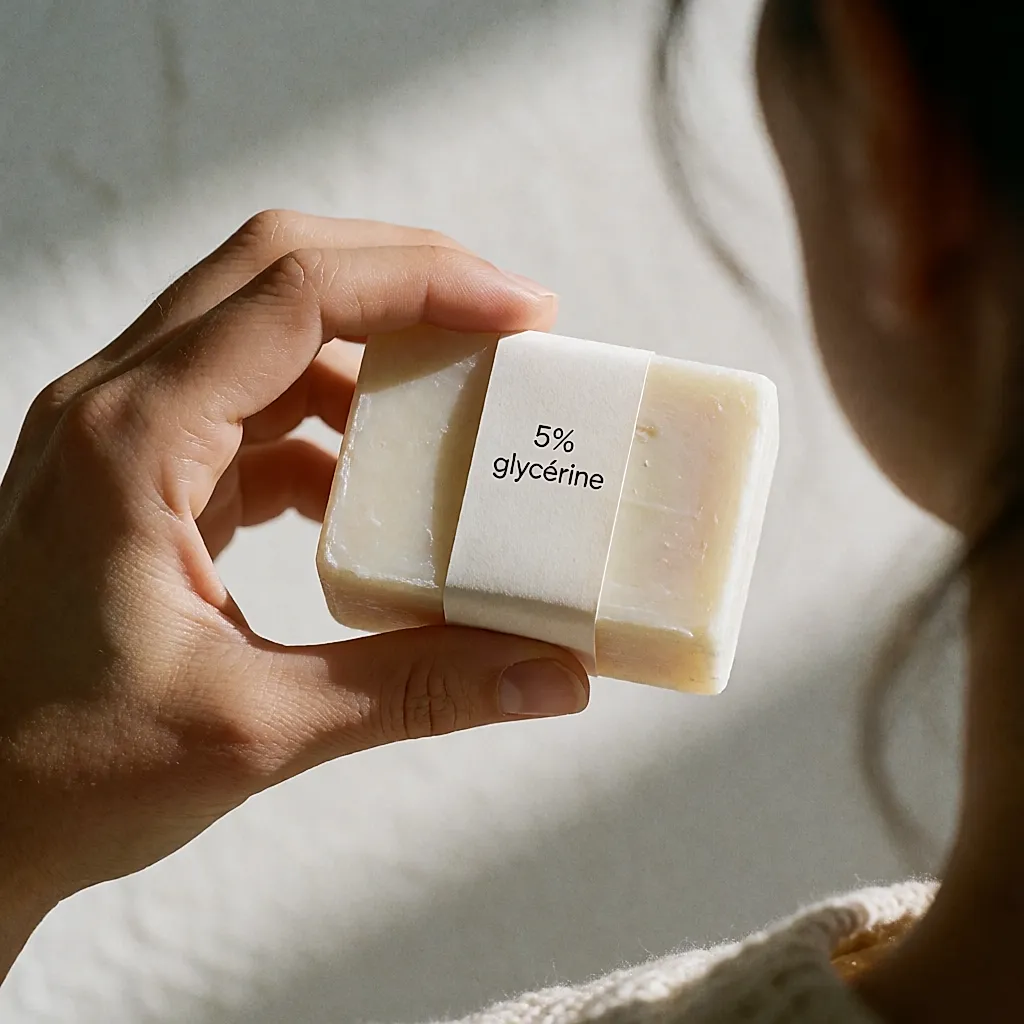
The "soap-free" claim is useful, but it doesn't excuse you from reading the rest of the list. A pH-adjusted bar can suit dry or reactive skin, especially if it's free from fragrance and essential oils. On the other hand, an organic soap scented with lavender essential oil can be heavily perfumed, so it's not necessarily the best choice for skin that reacts. Is organic better? Not automatically: it usually comes with stricter rules on certain ingredients, but it doesn't guarantee every individual skin will tolerate it.
Before you buy, turn the bar over: the percentage of added oil, the glycerin and the "soap-free" claim tell you more than the word "gentle" printed in large letters. And if the ingredient list is impossible to read, walk away — you're not there to decipher a novel.
How you use it matters as much as what you buy
A good product used badly is still a bad moment in the shower. Warm water is enough: the hotter it is, the more it can strip, and the tighter your skin may feel afterwards. Rinse quickly, and don't leave the lather sitting for three minutes like in an advert. You don't need much lather. Two passes over the areas that need it — underarms, feet, back — and the rest of your body doesn't need scrubbing.
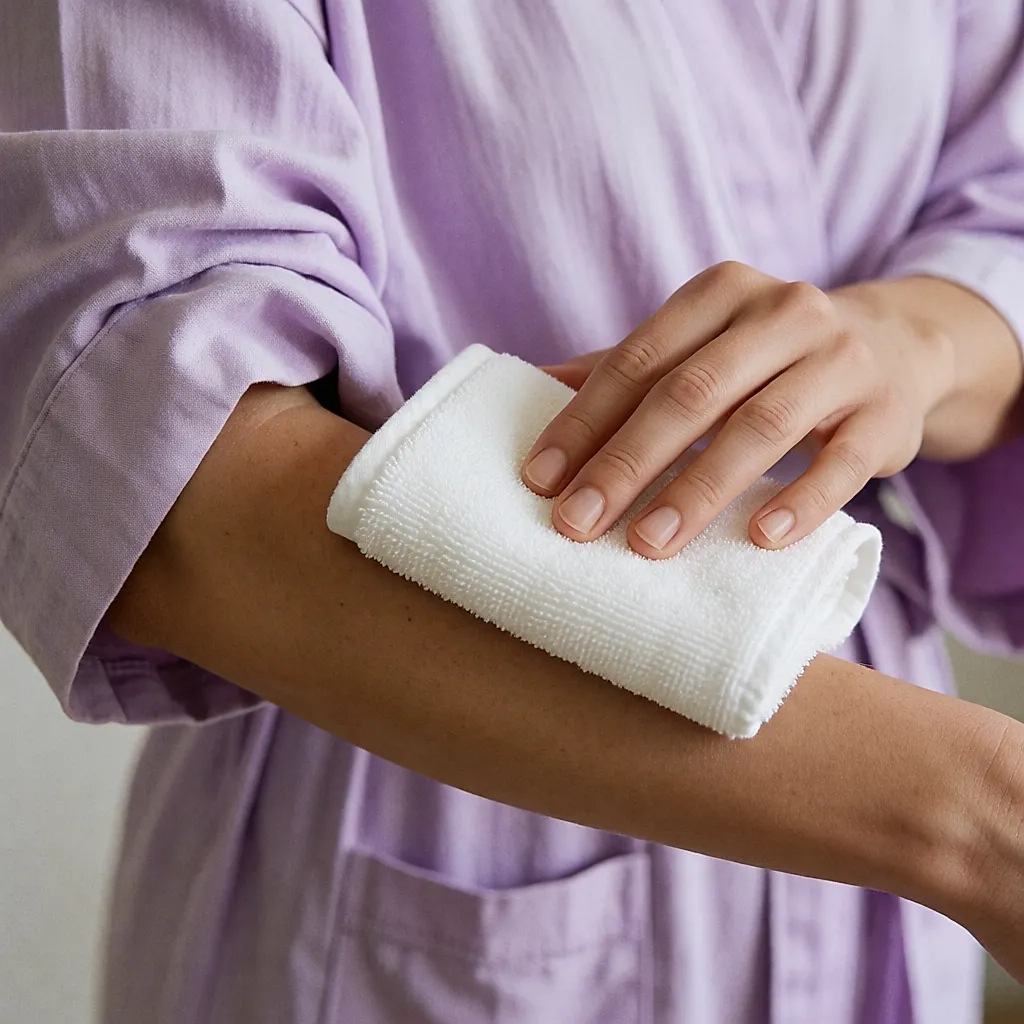
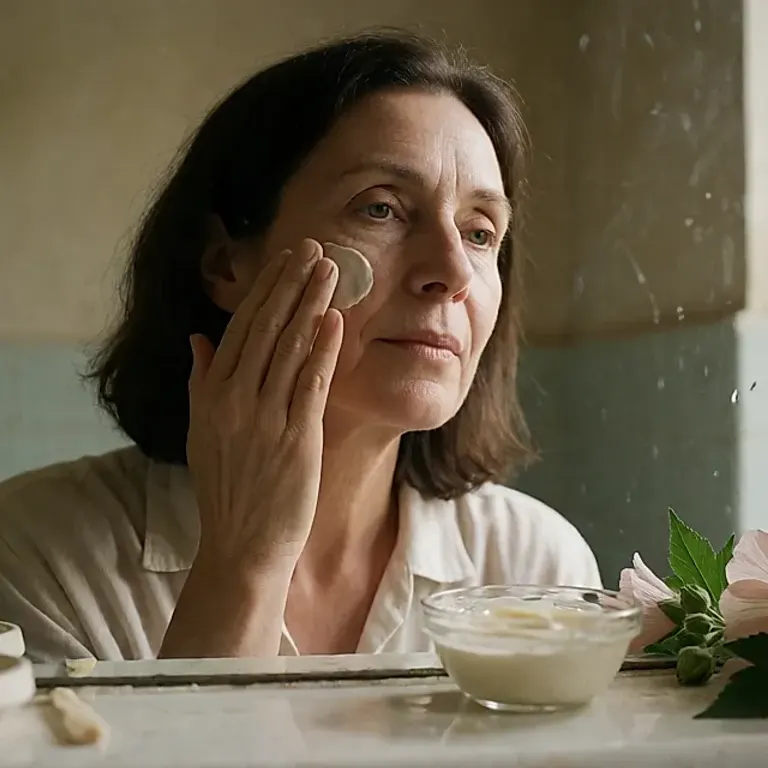
Above all, pat rather than rub. The towel should soak up the water, not exfoliate your skin. Then apply your moisturiser quickly, while skin is still slightly damp: that's when comfort is easiest to lock in. If you only have five minutes, that's the step to keep. The rest is decoration.
Budget
On price, expect roughly £1 to £3 for a classic hard soap in a supermarket, around £3 to £8 for an oil-enriched bar from a health and beauty retailer or a health food shop, and £5 to £12 for a pH-adjusted soap-free bar from a pharmacy or online. Prices vary, and the difference you're paying for is added fat, pH balance and comfort claims — not magic. A solid bar generally lasts a long time and avoids a plastic bottle, which softens the bill a little.
Where to find them? Supermarkets for the classic; health and beauty retailers and health food shops for the enriched bar; pharmacies and brand websites for the soap-free one. If money is tight, a standard soap plus a moisturiser can be enough; if your skin already feels tight, put a few pounds towards a fragrance-free soap-free bar instead. It's often the more sensible compromise.
The best soap isn't the one that promises the most, but the one that lets you step out of the shower without wanting to scratch your forearms. Choose for your skin, not for the packaging. And if you only hold on to one step, keep the moisturiser within minutes of towelling off — even when you're in a rush.
Comments
Your opinion matters: rate the article, react and reply to comments.
Comments are moderated; AI-assisted comments are flagged. Text emoticons (8-), :-), <3…) are automatically shown as images.