

You know the heroic session: out comes the rasp, ten minutes of scrubbing and you finally have baby-soft feet. That's usually where it goes wrong. Going at it too hard can irritate the skin and encourage reactive thickening — a possibility worth keeping in mind rather than a certainty. You think you've won; mostly you've just given yourself a job to redo.
Blades that cut — those little foot shavers sold for exactly this — fall into the same trap, only worse. They take off a layer of thickness the skin never chose to lose, and leave micro-cuts in an area that lives in the dark and the damp, in contact with the bacteria on your shoes. A nick on the heel can take a while to heal, especially for people in higher-risk groups. And if you have diabetes, poor circulation or reduced sensation in your feet, don't improvise: that's one for a healthcare professional.
The right method: short passes, dry skin
The rasp doesn't cut, it files. The catch is that it has to be used on dry skin — skin softened by a shower comes away far too easily, and you end up taking off more than you needed. In practice, a few short passes a week is plenty, depending on how much callus you have: gentle strokes, in one direction if you can, and stop before the skin feels warm. You're not aiming for baby-pink, you're aiming for a supple heel.
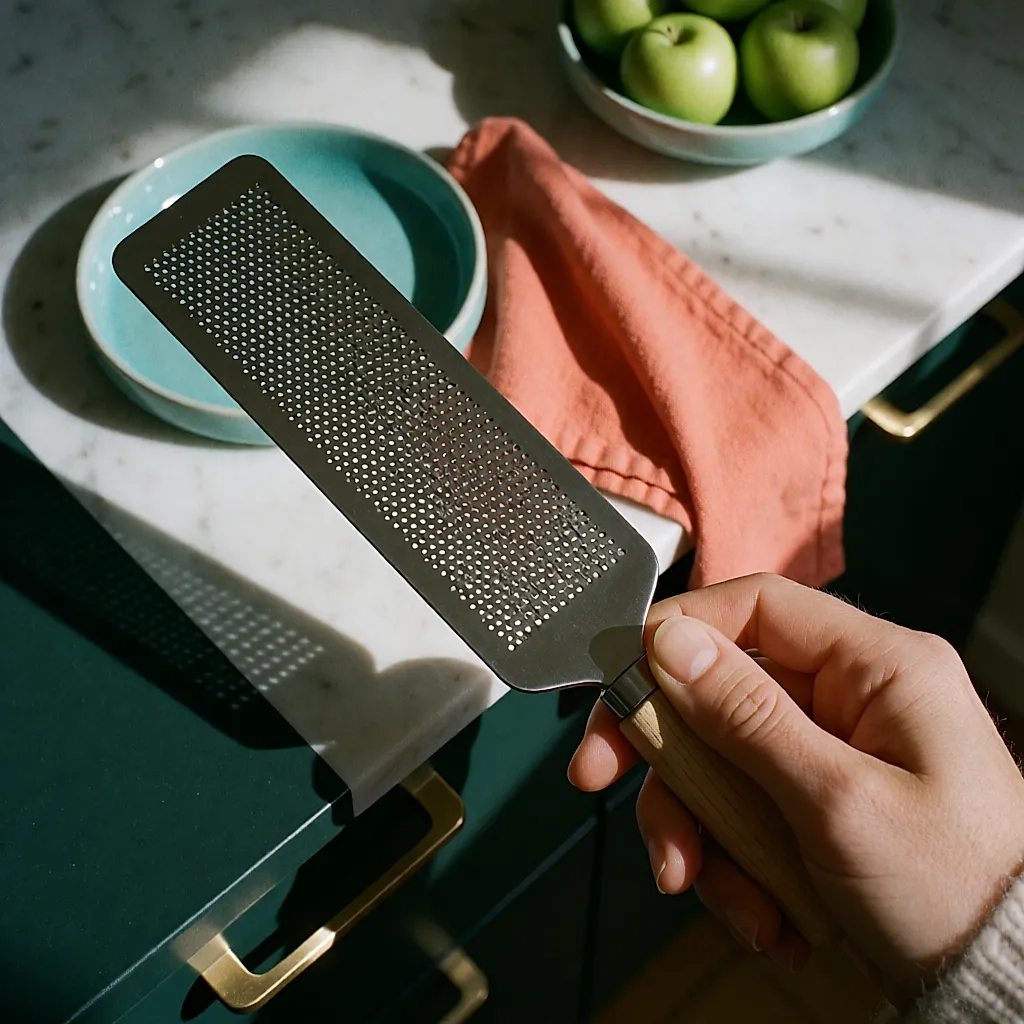
Rinse the tool under running water and leave it to air-dry — a damp rasp shut in a drawer soon turns into a small breeding ground. And if your schedule only allows five minutes, a few passes beat one heroic session every three months. What changes things isn't force, it's consistency.
The benchmark: choose a medium grain, not sandpaper and not a wood file. A stainless steel rasp cleans up with hot soapy water and dries head-down; a frosted glass one just needs a rinse. Replace it as soon as the grain has smoothed — a worn rasp rubs without filing, which is the worst of both worlds.
At night, seal it in
After the rasp — or on the evenings you don't rasp at all — the real work starts: keeping the water where it is. Urea is still the classic; it's a natural component of skin, and the highest-strength formulas are designed for very thick, hardened areas. A pea-sized amount per foot, massaged in circles, with extra attention around the edge of the heel.
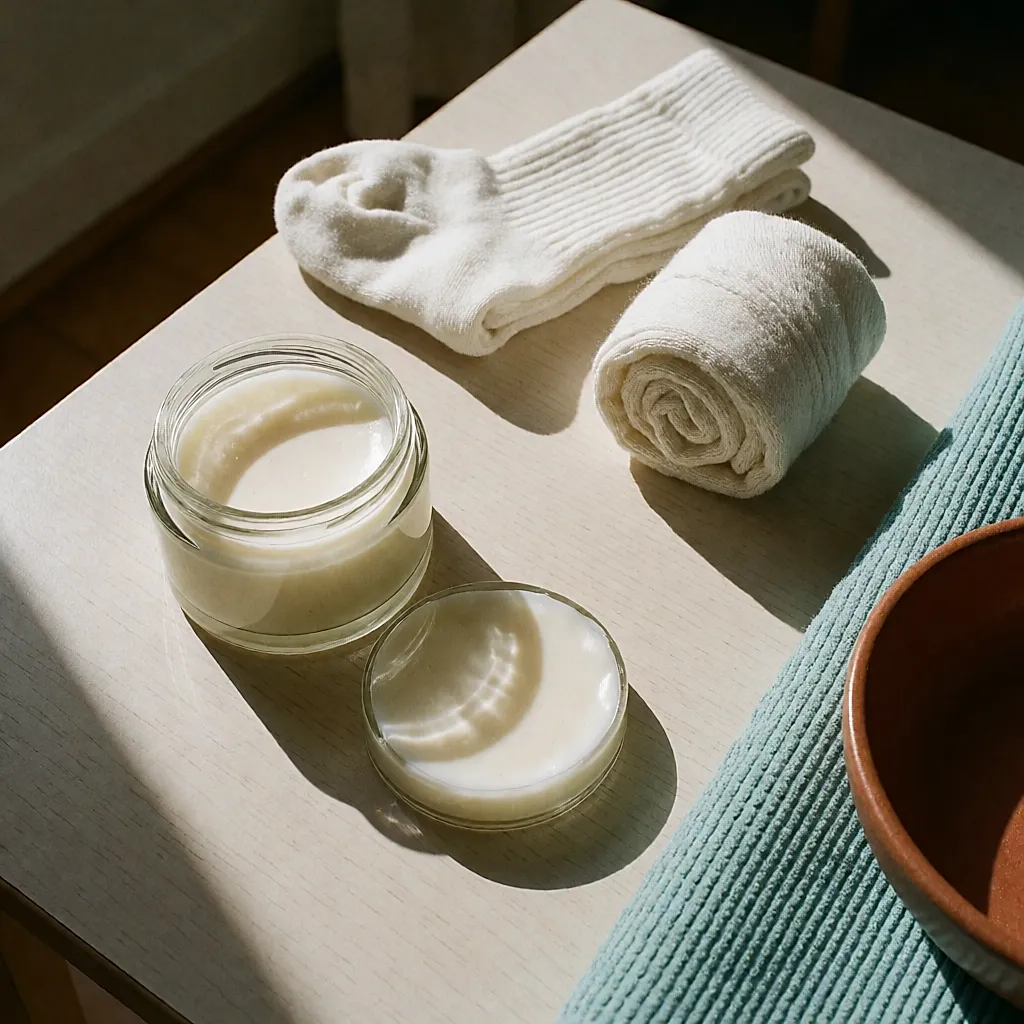
If your heel is really dry, an occlusive layer does the rest: a rich balm — shea, wax, oil — then an old cotton sock over the top, and off to bed. Ten seconds of effort, supple skin when you wake up. One honest question remains: how long does it take? It's hard to give a reliable timescale, because it varies so much from one person to another — on callus that's been there for years, expect several weeks of consistency before you see the difference.
What it costs
Nothing ruinous, thankfully. A decent rasp sits at around £5–12 in a supermarket, chemist or beauty retailer; glass or stainless steel versions, which last longer, tend to be more like £12–25. A urea cream usually comes in at £5–15 depending on size and strength, from a pharmacy, beauty retailer or supermarket. For a shea-based balm, budget roughly £7–20 — it'll earn its keep on elbows and hands too.
On packaging, go for a glass jar or a refill where one exists, and a balm that's lightly fragranced or fragrance-free with a short ingredient list: on a thick, hard-working area, a simple formula does the job, and the jar gets reused. Nothing to make a fuss about.
Ultimately the foot rasp is a modest tool, and it asks only one thing: don't expect it to do everything in one go. A few short passes, a cream at night, and you can stop chasing brand-new skin every three months. Your feet will thank you — especially in a few months' time, when the sandals come back out.


Comments
Your opinion matters: rate the article, react and reply to comments.
Comments are moderated; AI-assisted comments are flagged. Text emoticons (8-), :-), <3…) are automatically shown as images.