
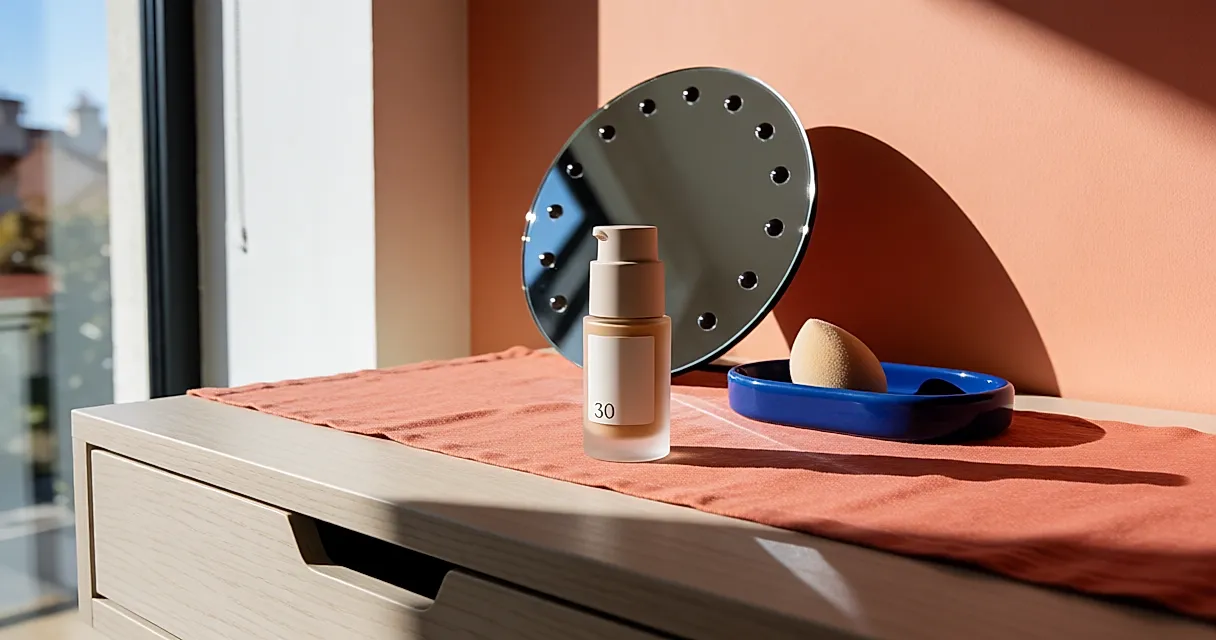
Foundation is the one beauty product we judge in the worst possible conditions. Under the spotlights at a beauty counter, every shade seems to have your best interests at heart; outside, only one tells the truth. And as the choice expands — with fashion and fragrance houses increasingly moving into make-up — the question 'which one is mine?' comes up more often than it used to.
Why undertone comes last
A foundation is chosen on two criteria, and one of them is often forgotten. Depth — light, medium, dark — is obvious; it's the one brands line up neatly on the display. Undertone is what decides whether your complexion looks alive or whether your face seems to have borrowed someone else's foundation.
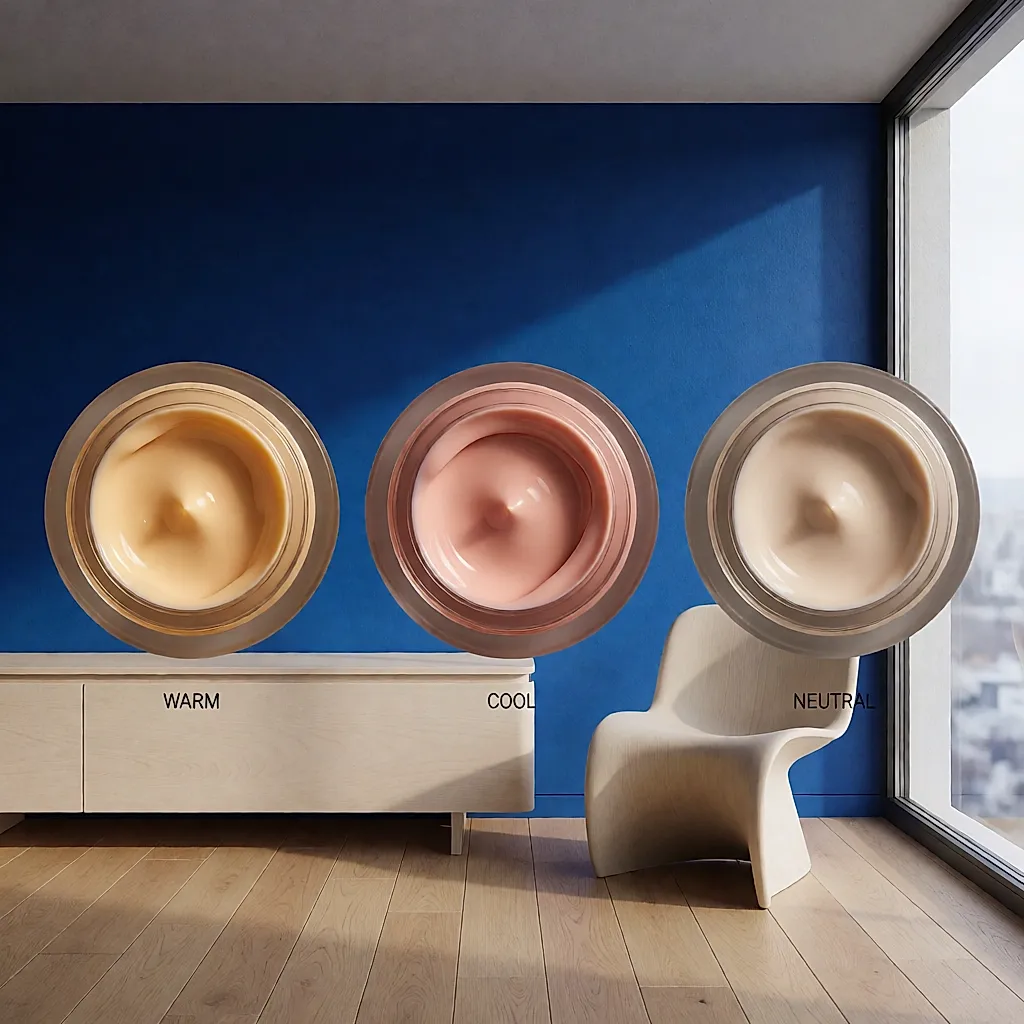
In practice, a warm undertone leans yellow and golden, a cool one leans pink and bluish, and neutral sits in the middle with no obvious cast. The two axes don't move together: you can be fair and warm, or olive-skinned and cool. Hence the classic mistake — coming home with the right depth and the wrong temperature, then discovering an ashy complexion under office lighting, or a distinctly orange one in party-season photos.
Jawline first, then the window
The move that matters has two steps. Draw a stripe along your jawline — not on the back of your hand, which resembles no other part of the face — and blend it down towards your neck. Then leave your comfort zone: near a window, out of direct sunlight, and daylight will tell you in three seconds what counter spotlights flatter.

Why the jawline? Because that's where the transition to the neck shows. A shade that stops dead there is the infamous mask effect — and few people have ever been complimented on their mask.
The mirror in the shop, meanwhile, is lit to sell: white light, a side halo that smooths everything, sometimes a cool spotlight right on your worst cheek. Ask to step outside with the stripe still on your face. You may get a few odd looks in the queue; that's the price of getting your shade right.
Two shades beat one
We judge better by comparison than in the abstract. Ask for two shades of the same depth, one slightly warmer and one slightly cooler, and place them side by side along your jawline. The one that disappears wins; the other tells you exactly what was wrong. It tells you more than a single swatch, and it's far quicker than taking it back to the till.
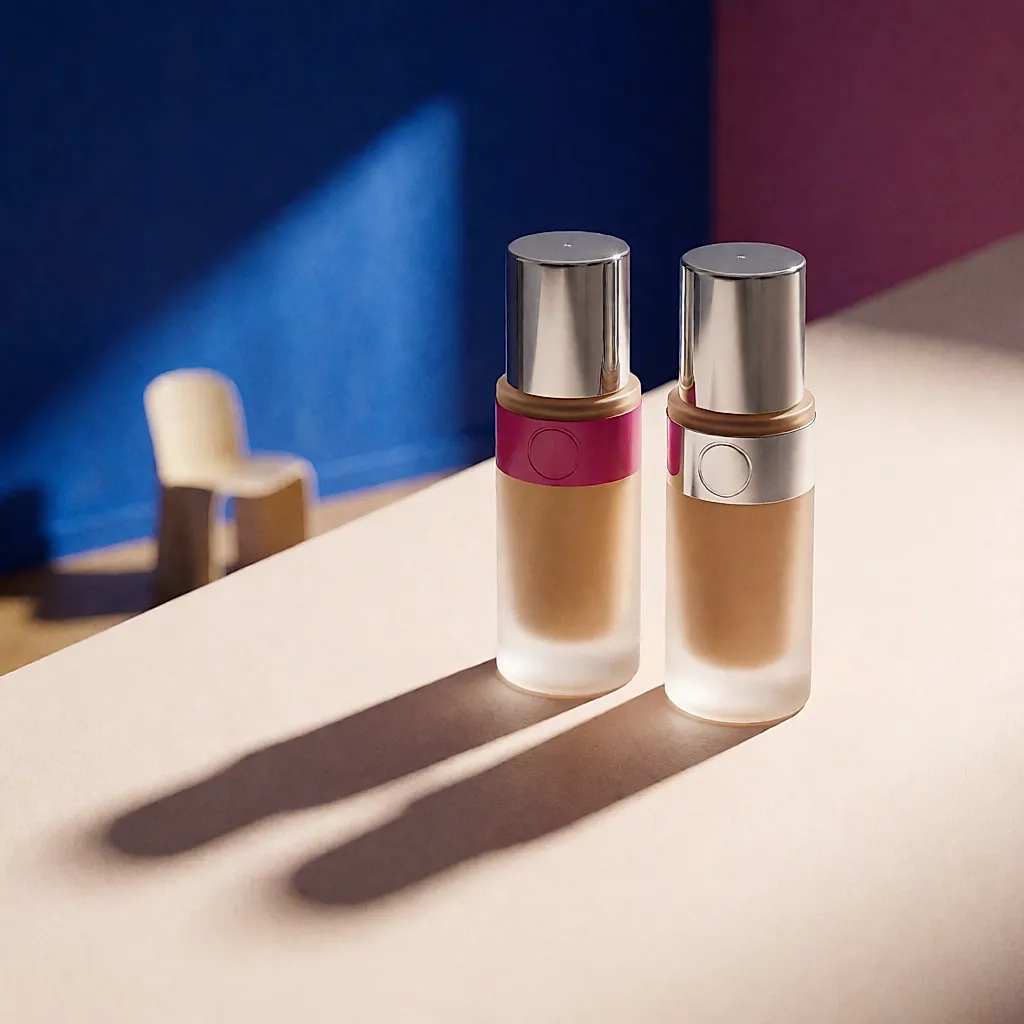
Then there's wear, which no mirror can show. A texture that turns grey within three hours or catches on dry patches doesn't deserve its place, even with the perfect shade: that's the whole difference between a good colour match and a good buy. Some formulas dry down and darken slightly by the end of the day, while others stay stable — a sample applied on a weekday morning tells you more than any shop mirror. I don't have a magic formula to sell you: the same numbers often mean very little from one shade range to the next.
And if the counter has no sample? Take the more discreet shade, not the most flattering one. A complexion that's slightly off is easier to forgive than a face that has changed colour.
If you're leaving in a hurry, remember one move: the stripe on the jawline, then the window. Two extra minutes, and you are far less likely to end up with the wrong shade — or to decide to walk away, which is also a win.
What the bottle doesn't tell you about budget
As a rough guide at the time of writing, expect to pay about £10–£25 in supermarkets, high-street shops or pharmacies, £25–£45 at department-store beauty halls and brand counters, and £55–£80 from luxury houses. The price doesn't follow how right the match is: a well-chosen £15 shade beats an almost-right £70 one, and your complexion doesn't read the label.
Also look at the packaging. A 30 ml bottle usually lasts several months, and mini sizes, refills or glass bottles — when the brand offers them — help limit waste. For skin that gets shiny, or for anyone who prefers a short ingredient list, mineral powders are an honest alternative — provided you accept lighter coverage and a less supple finish on dry areas.
The right shade is the one you forget about during the day: no blend line to keep an eye on, and little need for a midday touch-up. Make a note in your phone of the shade reference and the light you approved it in — in six months, when the season changes, you'll know whether it still holds. And the next time an assistant hands you a mirror under a cool spotlight, have the presence of mind to smile, then walk towards the glass door.


Comments
Your opinion matters: rate the article, react and reply to comments.
Comments are moderated; AI-assisted comments are flagged. Text emoticons (8-), :-), <3…) are automatically shown as images.